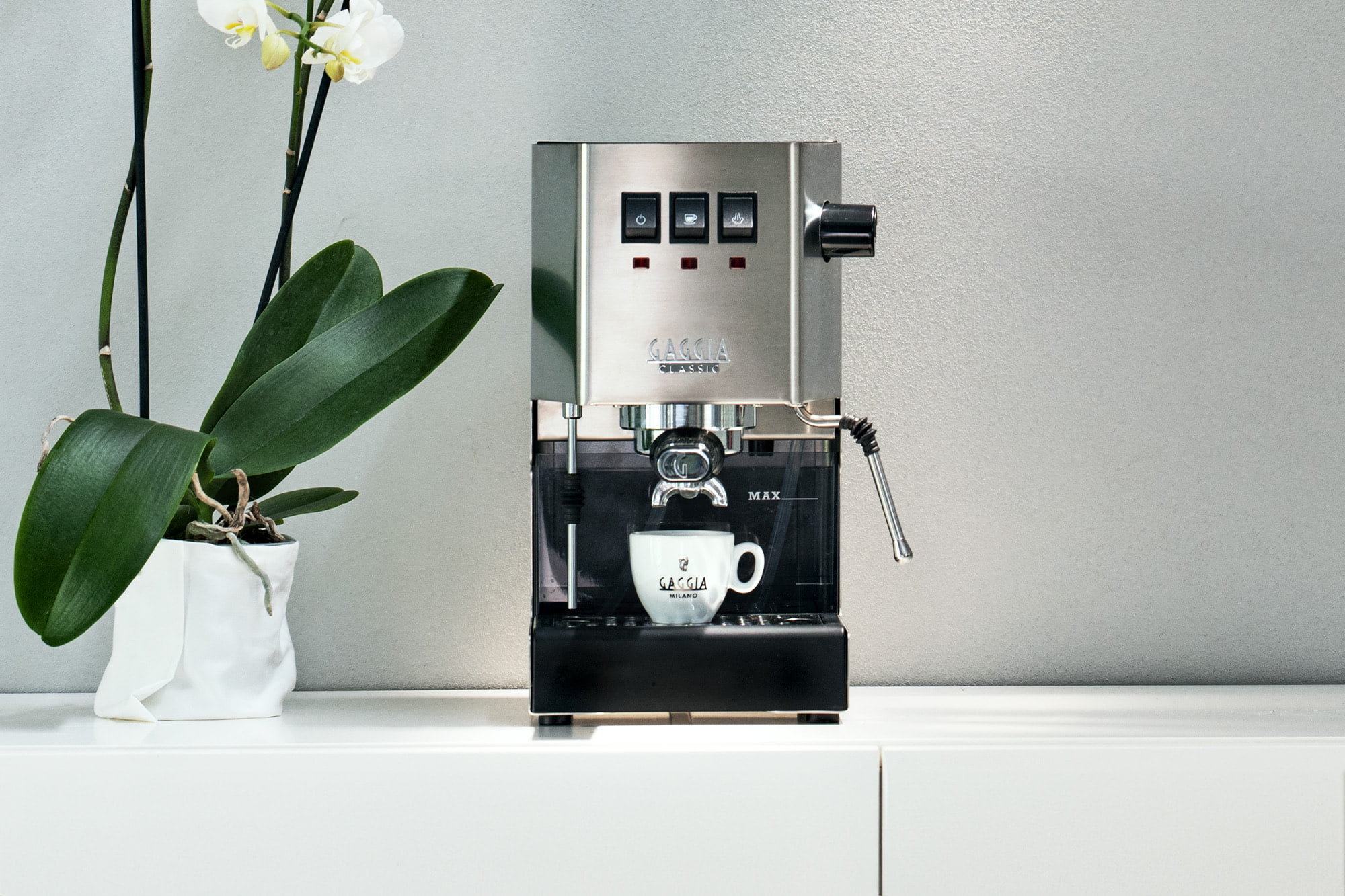
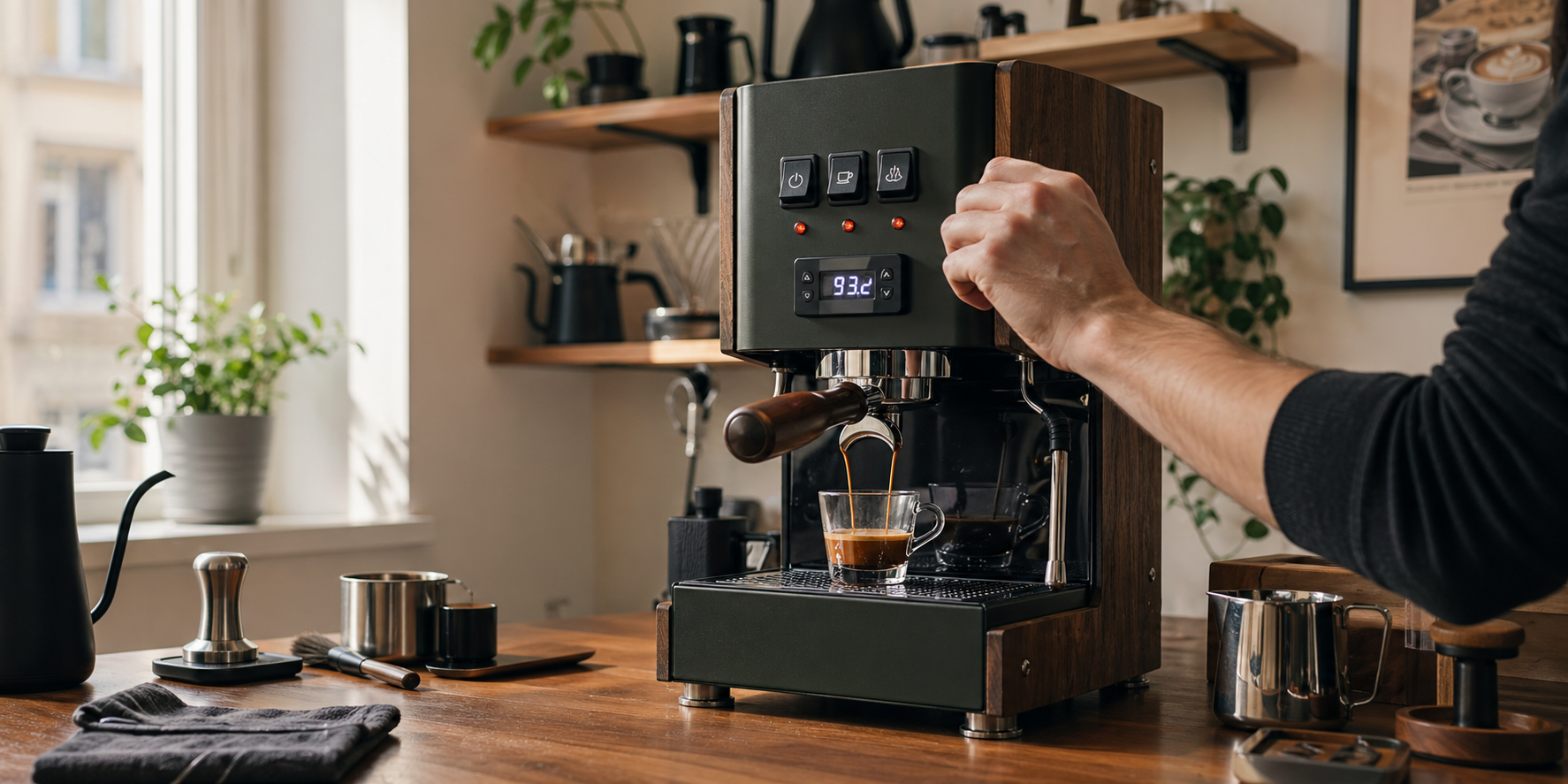
A PID can improve repeatability on the Gaggia Classic Pro. But the display does not remove the need for a good warm-up routine.
Many owners install a PID and expect the machine to be ready as soon as the number looks correct. In practice, the machine needs a little more time. The boiler, the group area, and the water path do not warm in exactly the same way or at the same speed.
30-second answer
A PID helps most when the whole machine is warm. A stable display number is useful, but it is not the same thing as a fully stabilized brew path.
Table of Contents
- What the PID number tells you
- What the PID number does not tell you
- A simple warm-up routine
- A fast check before the first shot
- Common mistakes after installing a PID
- When to adjust temperature and when not to
- Preguntas frecuentes
What the PID number tells you
The PID display gives you a controlled boiler target. That is already a major improvement over a less predictable stock cycle. It helps the user return to the same starting point more easily.
This is the key benefit. A stable target gives better shot-to-shot logic. It makes recipe changes easier to judge.
| The display is useful for | Why it helps |
|---|---|
| Returning to the same boiler target | It creates a repeatable starting condition |
| Reducing rough temperature surfing | It removes one large source of guesswork |
| Building a daily routine | It makes your workflow easier to repeat |
The PID number is a strong guide. It is not a complete picture of machine readiness.
What the PID number does not tell you
The display does not prove that every part of the brew path is equally warm. The group area still needs time. The metal mass still needs time. Small single-boiler machines warm unevenly before they settle.
This is why a machine can show the right target and still produce a first shot that feels less stable than the second one. The lesson is simple. Boiler control improves the system, but warm-up discipline still matters.
Reference box
Think in two layers. The PID controls the boiler target. Your warm-up routine helps the rest of the brew path catch up.
A simple warm-up routine
This routine is intentionally simple. It gives a stable starting point without turning daily brewing into a long ritual.
| Step | Action | Practical goal |
|---|---|---|
| 1 | Turn the machine on and let the PID reach target | Reach the boiler set point |
| 2 | Wait beyond the first stable display reading | Give the group area more time to warm |
| 3 | Run a short blank flush if that fits your workflow | Reduce the temperature gap in the water path |
| 4 | Lock in the portafilter before the shot | Keep the brewing path more thermally settled |
| 5 | Pull the first shot only after the routine is consistent | Make the first shot more meaningful as feedback |
Checklist
- Use the same warm-up method for several days before changing it.
- Keep your first comparison shot as similar as possible each day.
- Do not judge a new coffee before the machine and workflow both settle.
A fast check before the first shot
If you want a simple rule, ask one question before brewing. Does the machine feel settled, or only powered on?
| Fast check | If the answer is no |
|---|---|
| The PID has held target long enough | Wait longer before using the first shot as feedback |
| The portafilter is warm and locked in | Give it more time in the group |
| Your routine matches yesterday’s routine | Do not compare today and yesterday too quickly |
Common mistakes after installing a PID
Many mistakes after a PID install are not electrical mistakes. They are expectation mistakes.
| Common mistake | Better interpretation |
|---|---|
| Trusting the display number too early | Boiler target is ready, but the whole brew path may not be ready |
| Changing grind after one unstable first shot | Warm-up inconsistency may be the bigger problem |
| Changing temperature, dose, and grind together | Keep one variable steady so the cup teaches a clear lesson |
Reading note
A PID improves control. It does not remove the need for a stable pre-shot routine.
When to adjust temperature and when not to
Adjust temperature when the machine is already warm, the workflow is stable, and the coffee still points you toward a clear flavor problem. Do not adjust temperature first when the machine is not fully settled or when puck prep is changing from shot to shot.
If you need a practical starting point by roast level, use the PID temperature reference page. If you are still deciding whether PID should be your next purchase, read Por qué la estabilidad de la temperatura importa más de lo que muchos principiantes esperan.
Next step: build a more useful workflow
Save these pages for later.
Preguntas frecuentes
Does a PID remove the need for warm-up time?
No. It improves control, but the group area and the rest of the brew path still need time to settle.
Can the first shot still be less stable after a PID install?
Yes. This often happens when the display number is stable but the rest of the machine is not fully warm.
Should I change temperature after one bad first shot?
Usually no. First make sure the machine, portafilter, and routine were all stable.
Does a blank flush always help?
It can help many workflows, but it should be used consistently. The value comes from repeatability, not random variation.
What should I read next?
Use the PID temperature reference page for roast-level starting points, or go back to the broader temperature stability guide if you are still learning the upgrade logic.
References
 English
  Italiano
  Deutsch
  Español
  Français
  العربية
  日本語
日本語  한국어
한국어  香港中文
香港中文  Nederlands
  Português