Your Gaggia makes one good shot. Then it acts shy the next morning.
A PID does not make the machine magical. It makes one important variable quieter: brew temperature. That gives you cleaner feedback when you change grind, dose, or routine.
Quick answer
A PID is best when your workflow is already decent, but the cup still feels hard to repeat. It helps you read the machine with less guessing.
Think of it as taking one noisy friend out of the group chat. Grind still talks. Puck prep still talks. Coffee age still talks. Temperature just stops shouting so loudly.
Table of Contents
- Start with the real problem
- Best match: when a PID makes sense
- What changes in the cup
- What changes in your routine
- What a PID still cannot fix
- PID value matrix
- FAQ
Start with the real problem
Most owners do not want a PID because they love tiny screens. They want fewer mixed signals.
Forum threads repeat the same pattern. One owner gets a sweet shot. The next shot tastes sharper, flatter, or more bitter, even when the recipe looks the same. Then the guessing starts. Was it grind? Was it warm-up? Was it the stock thermostat cycle? Was the machine just being dramatic before breakfast?
This is the real pain point. A stock Gaggia Classic Pro can make good espresso, but it can make learning slow. The machine can move in the background while the user is trying to learn cause and effect.
The practical question is simple:
Do you need better control, or do you need better basics first?
That question matters because a PID is not the best first upgrade for every owner. It is a strong upgrade when the main problem is repeatability. It is weaker when the main problem is grinder quality, puck prep, stale beans, or a rushed warm-up.
Best match: when a PID makes sense
A PID is a best match when your espresso is close, but not dependable.
Best match
You have a capable grinder. Your prep is fairly stable. You can make a good shot. You just cannot repeat it with enough confidence.
This is where a PID starts to feel valuable in daily brewing. It gives the boiler a more stable target. That does not mean the brew water is perfect at every second. It means the machine gives you a cleaner starting point.
That cleaner starting point changes how you learn. If the shot tastes harsh, you can judge grind and temperature with less doubt. If the shot tastes thin, you can adjust with a calmer hand. The machine becomes less mysterious. Tiny screen, big relief.
This is why the topic stays active in the long-running Gaggia Classic PID Reference Thread. Owners are not only asking for a number on a display. They are asking for a steadier baseline.
What changes in the cup
The cup usually changes in a quiet way first.
Many owners expect drama. They expect one upgrade to turn the machine into a completely different espresso setup. That is not the right expectation. The useful change is more practical: fewer surprise swings.
On a stock thermostat, two shots can start from different heat points. That can make the same recipe taste different. A PID reduces that background movement. The result is not automatic sweetness. The result is cleaner feedback.
Use this rule:
For roast-level starting points, use the Gaggia Classic Pro PID temperature reference after the machine and routine are stable enough to make those numbers meaningful.
What changes in your routine
A PID makes the routine feel less like a timing game.
Without a PID, many owners build rituals around the heating light, blank shots, and temperature surfing. Some routines work. Some become a little too ceremonial. The machine starts to feel like it needs a small weather report before every espresso.
A PID does not remove warm-up discipline. It gives that discipline a clearer anchor. You still need the group area and portafilter to warm properly. You still need a repeatable first-shot routine. The display number is useful, but it is not the whole machine.
That is the nuance beginners often miss. The PID controls the boiler target. Your routine helps the brew path catch up.
For the first shot, pair this article with the Gaggia Classic Pro First-Shot Checklist. The two ideas work together. One controls a variable. The other keeps your daily habit from wandering.
What a PID still cannot fix
A PID is not a skill replacement.
It will not rescue a weak grinder. It will not make stale coffee lively. It will not fix channeling. It will not make a cold machine fully ready just because the display looks calm.
This is good news, not bad news. It keeps the buying logic clean.
If the grinder still hides the cup’s real story, buy clarity before complexity.
Reddit discussions around temperature surfing show the same split. Some owners can make good coffee without a PID, but they rely on timing and routine. Others add temperature control and finally feel that their adjustments make more sense. Both groups can be right. The difference is the problem they are trying to solve.
If you are still choosing the first upgrade, read How to Choose Your First Gaggia Classic Pro Upgrade before buying parts. If you already know repeatability is the pain point, a PID moves much higher on the list.
PID value matrix
Use the symptom first. Then decide.
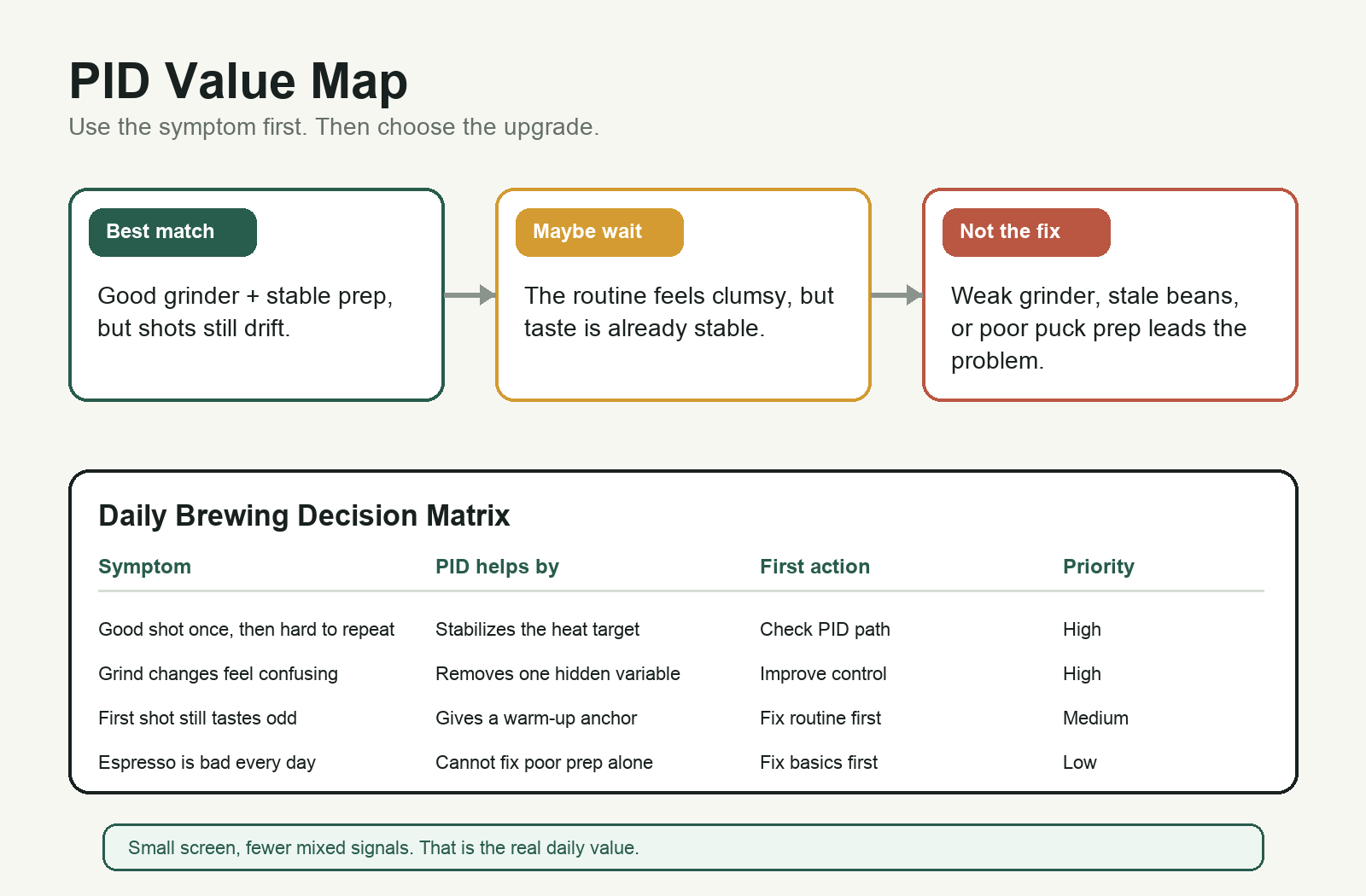
This is the cleanest way to think about the upgrade:
This is also the upgrade-order logic behind A Practical Upgrade Order for the Gaggia Classic Pro. Control matters most when control is the real bottleneck.
FAQ
Can I make good espresso without a PID?
Yes. A PID is not required for good espresso. It reduces guesswork and makes repeatability easier, especially when your grinder and prep are already solid.
What is the clearest sign that I need a PID?
You can make a good shot, but you cannot repeat it with confidence. That is the strongest sign.
Will a PID fix bitter or sour shots?
Not by itself. It can reduce temperature-related confusion. It cannot fix stale beans, poor puck prep, or a bad recipe.
Should a beginner install a PID first?
Only if the beginner already has a capable grinder and a stable routine. Otherwise, basics usually deserve attention first.
What should I read next?
Start with the first upgrade guide, then use the PID temperature reference when you are ready to test roast-level settings.
Small screen. Fewer mixed signals. That is the real daily value of a PID.
References and image credit
- Coffee Forums UK: The Gaggia Classic PID Reference Thread
- Reddit: Gaggia Classic Pro Evo temperature surfing discussion
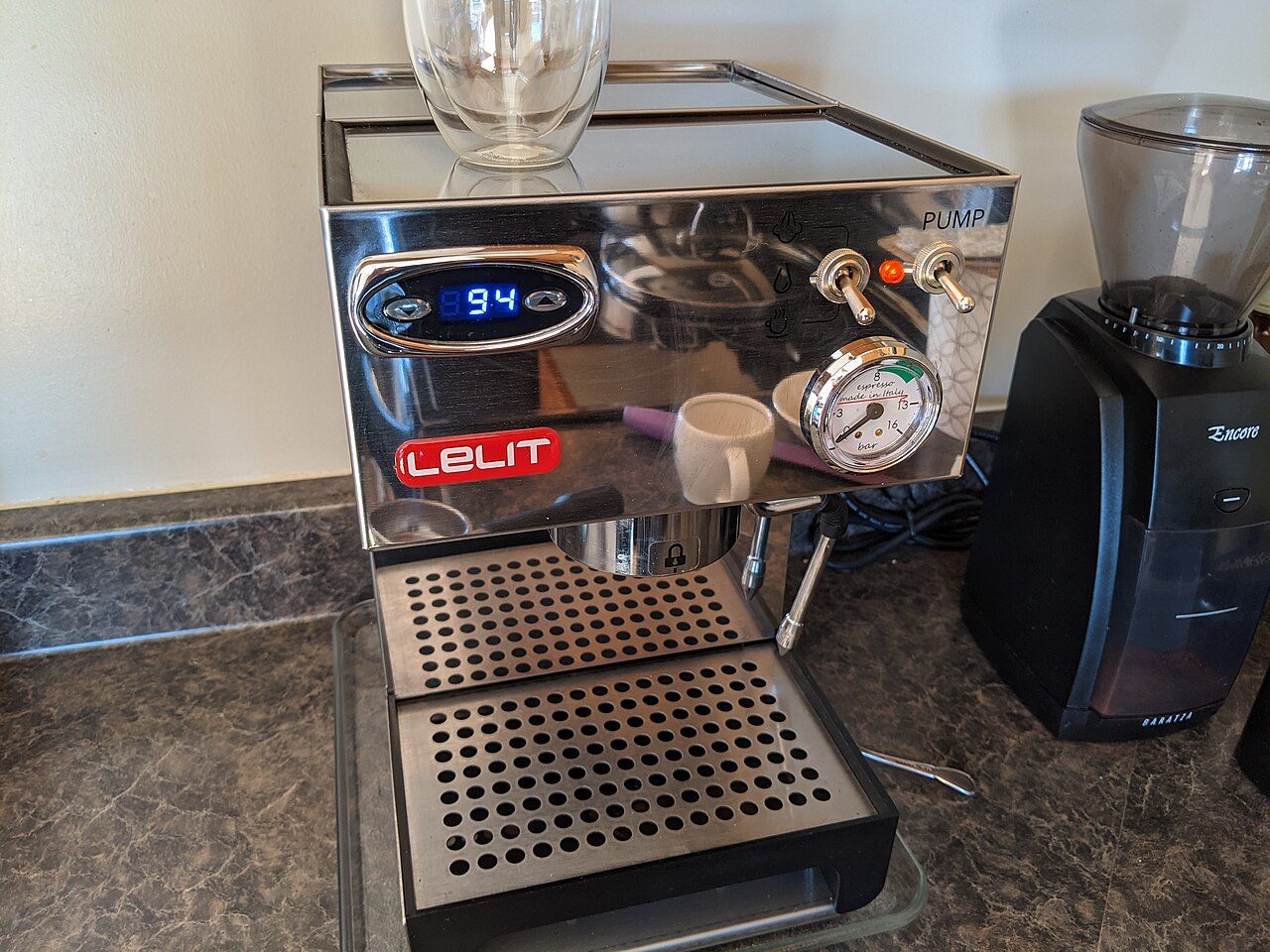
- Featured image: Dorian Bodnariuc / massage-techniques, Wikimedia Commons, CC BY-SA 2.0
 English
  Italiano
  Deutsch
  Español
  Français
  العربية
  日本語
日本語  한국어
한국어  香港中文
香港中文  Nederlands
  Português