Du hast den Mahlgrad geändert. Die Tasse bewegte sich trotzdem. Nervige kleine Espresso-Wendung.
Temperature stability matters because it makes the Gaggia Classic Pro easier to learn from. It does not make every shot perfect. It makes each bad shot easier to read.
Quick answer
Temperature stability matters most when the same recipe gives different results. A steadier temperature helps you judge grind, dose, roast level, and routine with less guessing.
This is not a fancy-machine problem. It is a feedback problem. If the machine changes in the background, your taste test becomes messy. The shot may be sour because the coffee needs a finer grind. It may also be sour because the machine was cooler than last time.
That is why many Gaggia owners care about stability after the first few weeks. They are not chasing a number for fun. They want the machine to stop playing hide-and-seek with cause and effect.
Table of Contents
- The real problem is confusing feedback
- How temperature changes taste
- Best match: when stability should move up the list
- When temperature is not the main problem
- Temperature stability signal map
- How to use temperature without overthinking it
- FAQ
The real problem is confusing feedback
The Gaggia Classic Pro can make very good espresso. The hard part is reading the machine.
On a stock machine, the thermostat cycle can add one more moving part to an already sensitive process. Grind size moves extraction. Dose moves extraction. Puck prep moves extraction. Coffee age moves extraction. Then temperature can move too.
That is a lot of tiny drama before breakfast.
Forum discussions around Gaggia temperature surfing often show the same pain. Owners can make one good shot, then struggle to repeat it. Some use timing routines. Some watch the brew light. Some add thermometers. Some move to PID control. The shared goal is simple: reduce one hidden variable.
Here is the useful way to think about it:
The point is not that temperature explains everything. It does not. The point is that unstable temperature can make every other decision harder.
How temperature changes taste
Temperature changes how easily water extracts flavor from coffee.
Cooler brewing tends to pull less from the puck. The cup can taste sharp, thin, or underdeveloped. Hotter brewing tends to pull more. The cup can gain body and sweetness, but it can also become bitter or harsh if the rest of the recipe is already aggressive.
This is why professional espresso specs care about brew temperature. The Specialty Coffee Association competition machine specifications use a brew temperature window of 90.5-96 C and define reproducibility requirements for espresso machines. That tells us something important. Temperature is not decoration. It is part of repeatable extraction.
But here is the small trap. A displayed boiler number is not always the same as the temperature at the coffee puck. Small single-boiler machines have heat paths, metal mass, incoming water, and warm-up behavior. So you should treat temperature as a control tool, not as a magic truth screen.
That is why the best daily rule is simple:
Keep temperature stable first. Then adjust temperature slowly.
If you change temperature, grind, dose, and yield in the same morning, the cup cannot teach you much. The little espresso detective gets no evidence.
Best match: when stability should move up the list
Temperature stability should move up the list when your basics are already decent.
Best match
You have a capable grinder. Your puck prep is repeatable. Your recipe is close. The shot still changes more than it should.
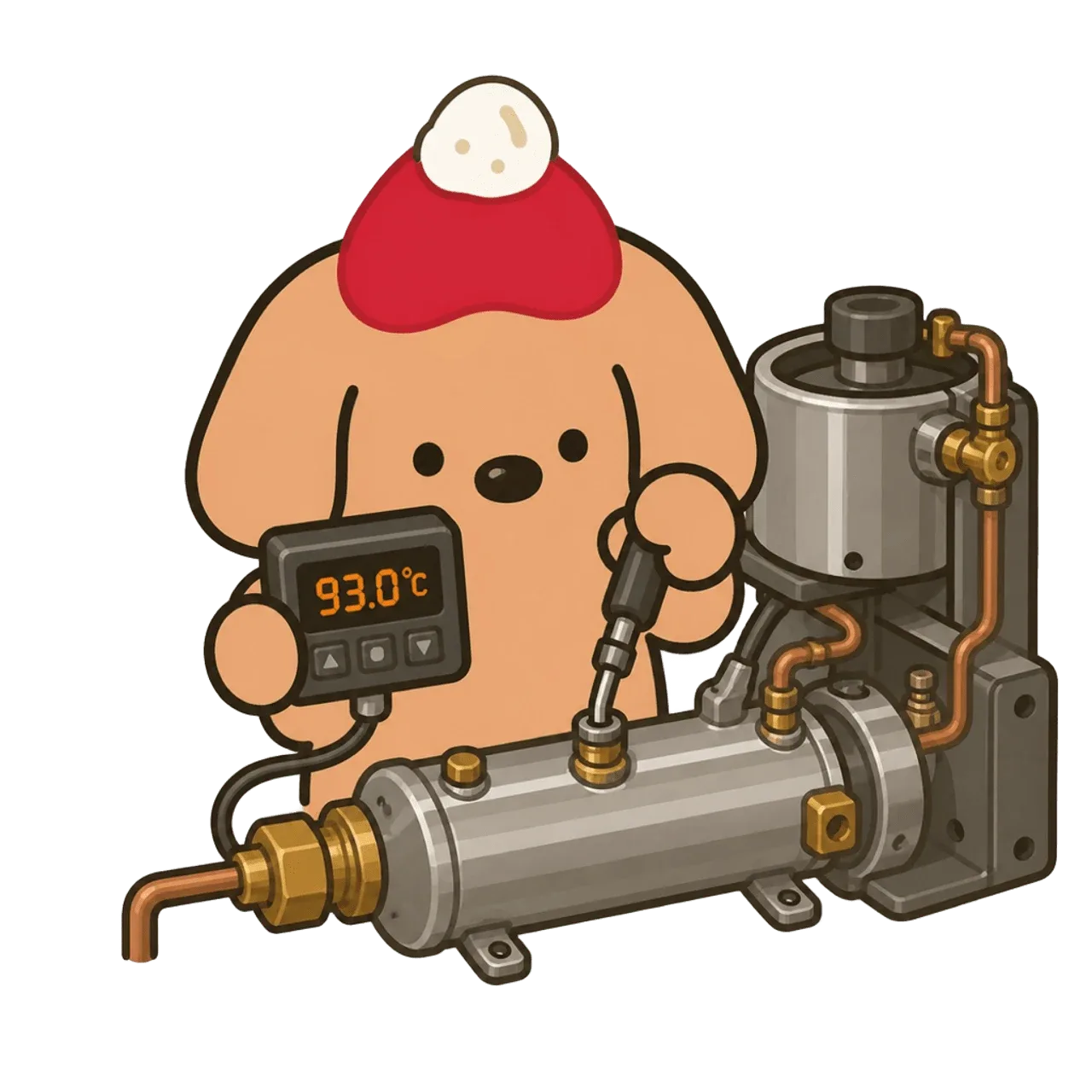
That is the moment stability becomes more than a technical talking point. It becomes a learning tool.
For many Gaggia owners, this is where PID control starts to make sense. A PID does not guarantee the perfect cup. It gives the boiler a steadier target, so your other adjustments become easier to judge. If a grind change improves the shot, you can trust that result more. If it makes the shot worse, you can reverse course without blaming five different things.
This article connects directly with Was ein PID-Regler im täglichen Brauen verändert. That page explains the daily workflow value. This page explains why stability matters before you even start shopping.
For roast-level settings, use the Gaggia Classic Pro PID temperature reference after your routine is stable. The keyword is after. Numbers help most when the rest of the workflow is not wobbling.
When temperature is not the main problem
Temperature can confuse you. It can also become a convenient excuse.
If the grinder cannot make fine, even adjustments, fix that first. If puck prep changes every shot, fix that first. If the coffee is old, fix that first. If the machine is still cold when you pull the first shot, fix the warm-up routine first.
Temperature stability works best after the basics can show a clear signal. Otherwise, you may add control to a workflow that still cannot report clean information.
Use this simple priority check:
This is also why Wie Sie Ihr erstes Gaggia Classic Pro Upgrade auswählen starts with the symptom, not the product. The best upgrade is the one that solves the problem you actually have.
Temperature stability signal map
Use taste changes as clues, not as panic buttons.
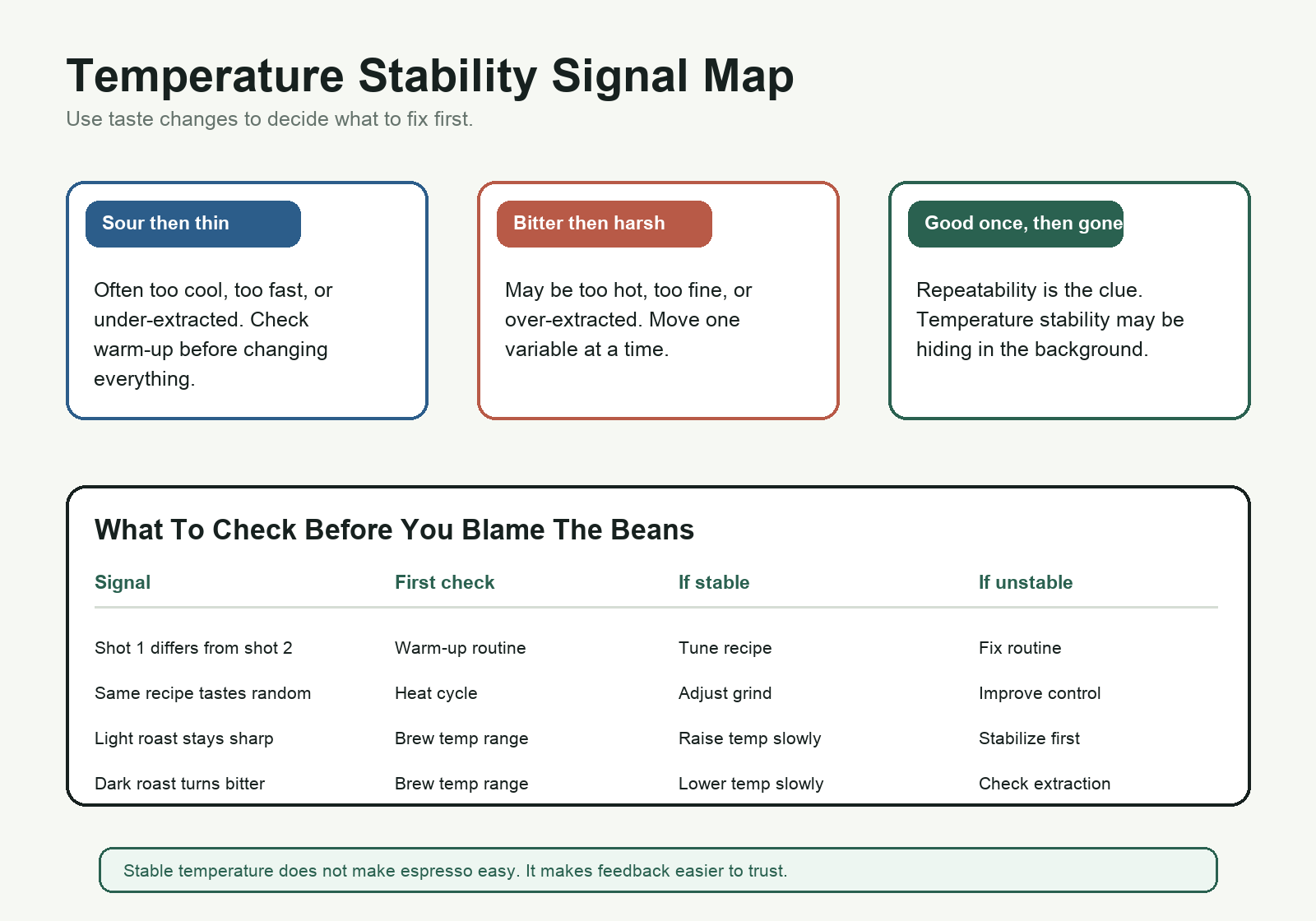
The strongest clue is repeatability. One strange shot can happen for many reasons. A repeated pattern matters more.
If shot one differs from shot two every day, look at warm-up first. If the same recipe tastes random across days, look at the heat cycle and routine. If light roasts stay sharp even after careful dial-in, temperature may deserve attention. If dark roasts keep turning bitter, do not only lower temperature. Check extraction, ratio, and grind too.
This is the practical difference between “temperature matters” and “temperature explains everything.” The first statement is useful. The second one makes people buy parts too early.
How to use temperature without overthinking it
Do not turn temperature into a guessing game with more buttons.
Start with a stable routine. Warm the machine the same way. Keep the portafilter locked in. Use the same dose and yield. Pull enough shots to see a pattern. Then change one thing.
For daily use, this order works well:
- Stabilize warm-up.
- Set a reasonable baseline temperature.
- Dial in grind and yield.
- Taste the pattern.
- Adjust temperature only if the pattern points there.
For a light roast, you may test a slightly higher temperature after grind and yield are close. For a dark roast, you may test a slightly lower temperature if bitterness keeps showing up. Make small moves. Give each move a fair test.
This is where a PID becomes useful. It does not make taste decisions for you. It gives you a more repeatable starting point so your taste decisions become less chaotic.
If your first shot still feels unreliable, pair this with the Gaggia Classic Pro First-Shot Checklist. If you are planning several upgrades, compare it with Eine praktische Upgrade-Reihenfolge für die Gaggia Classic Pro.
FAQ
Does temperature stability matter more than grind?
No. Grind is still one of the main controls. Temperature stability matters because it makes grind changes easier to read.
Is a PID required for good espresso on a Gaggia Classic Pro?
No. Many owners make good espresso without a PID. A PID helps most when repeatability is the problem.
Why does the first shot often taste different?
The machine may not be fully warmed through. The boiler number, group area, portafilter, and brew path do not all stabilize at the same speed.
Should I change temperature for every coffee?
Not at first. Use a stable baseline. Change temperature only after grind, dose, yield, and warm-up are repeatable.
What is the best next page after this?
Lesen Was ein PID-Regler im täglichen Brauen verändert if repeatability is your main issue. Use the PID temperature reference when you are ready to test settings.
Stable temperature does not make espresso easy. It makes the machine easier to trust. That is already a big win.
References and image credit
- Specialty Coffee Association: Competition Espresso Machine Specifications 2021
- Perfect Daily Grind: How does temperature stability affect espresso extraction?
- Reddit: Advantages of using a thermometer on your Gaggia Classic
- Reddit: Gaggia Classic Pro temperature surfing discussion
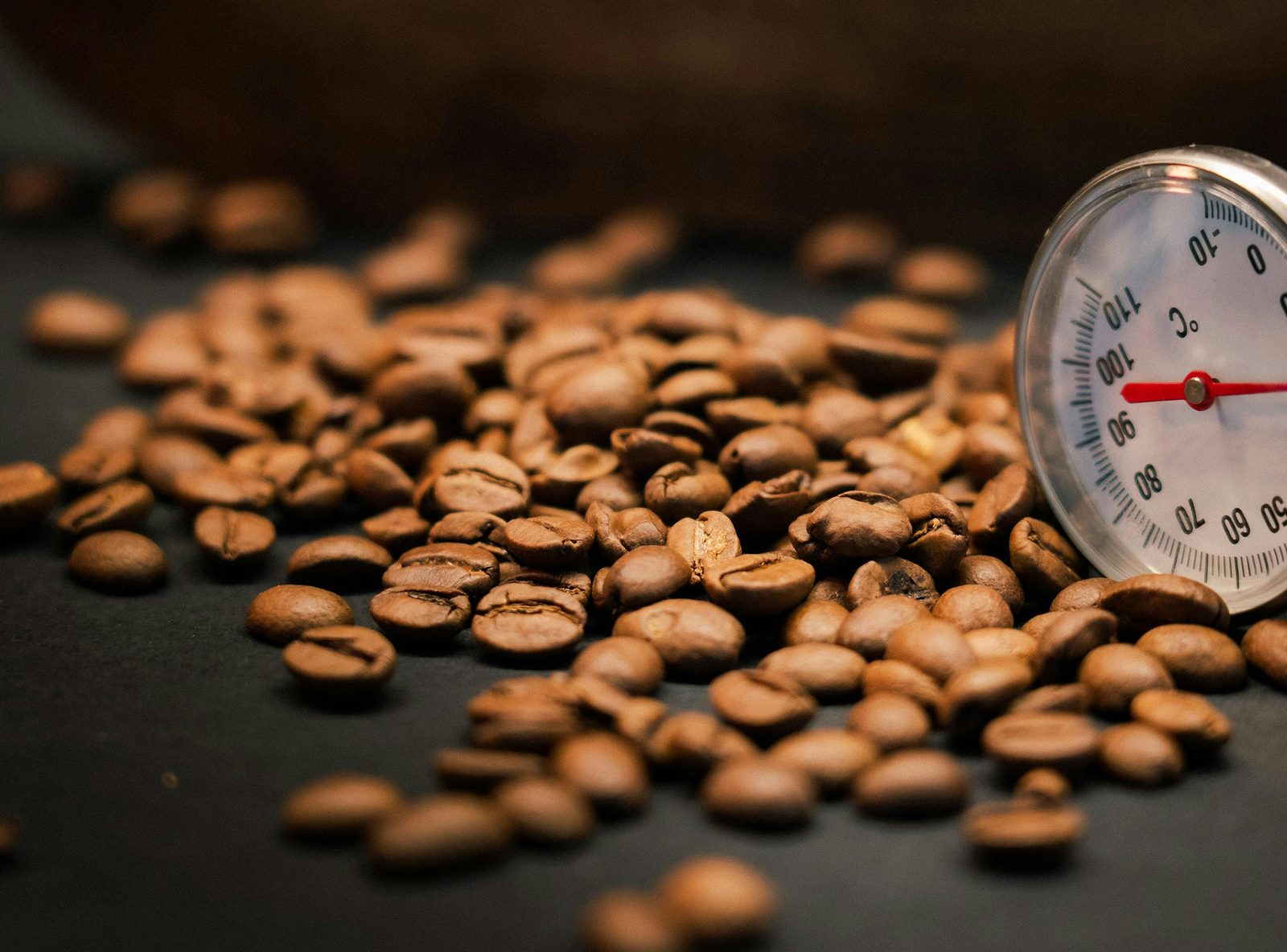
- Featured image: Jakub Zerdzicki on Pexels, used under the Pexels License
 English
  Italiano
  Deutsch
  Español
  Français
  العربية
  日本語
日本語  한국어
한국어  香港中文
香港中文  Nederlands
  Português