Arabica vs Robusta: What Actually Changes?
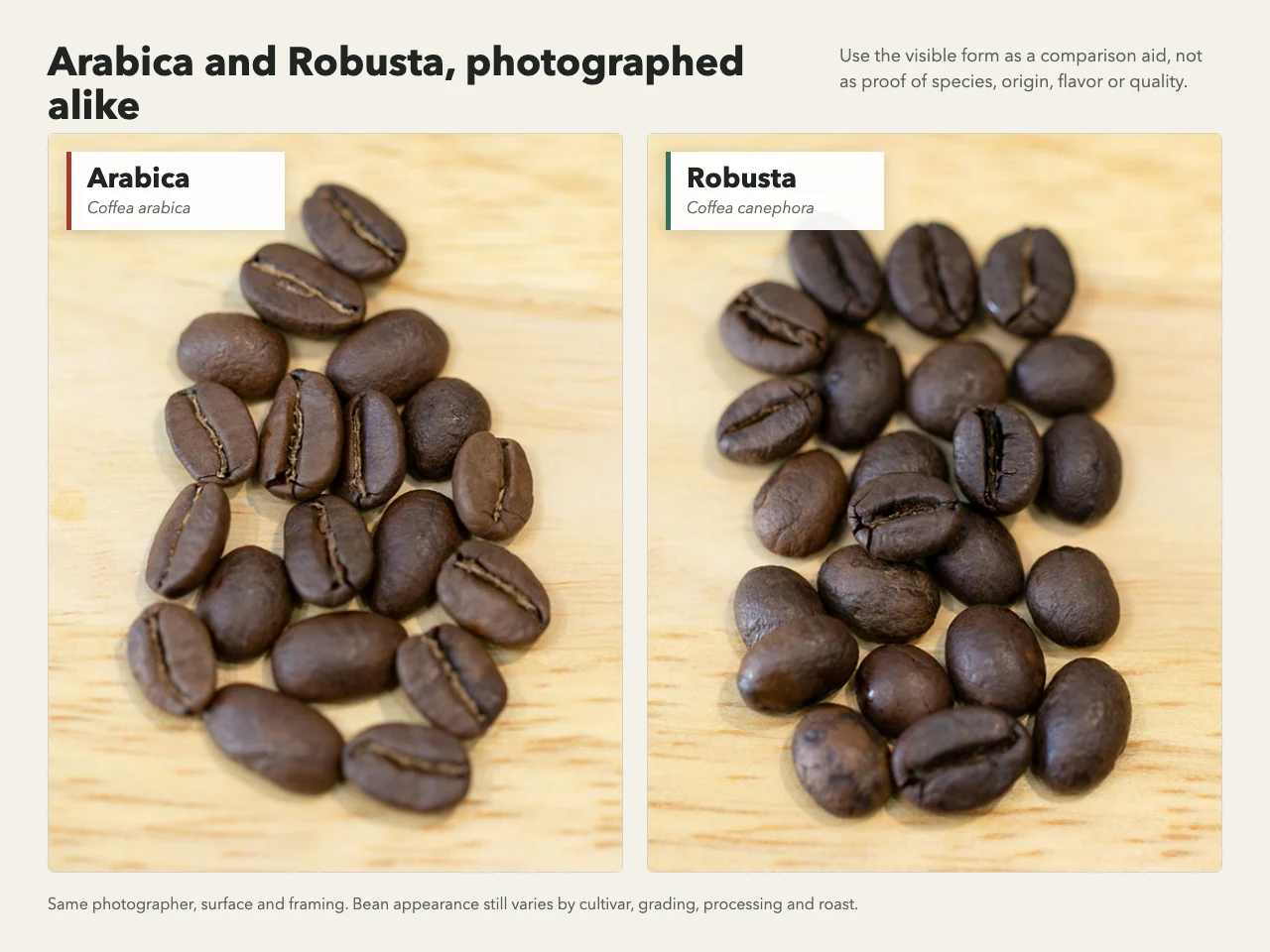
Arabica and Robusta name different coffee species. Robusta is commonly linked to Coffea canephora. The plant matters, but it does not settle the whole cup. Roast, freshness, blend, dose and yield can still move the result.
How do Arabica and Robusta compare?
Arabica and canephora are separate species records. The useful differences are tendencies, not promises attached to every bag.
| Buyer check | Arabica | Robusta / canephora | Still confirm |
|---|---|---|---|
| Botanical reference | Coffea arabica | Coffea canephora | The exact variety, lot and blend disclosure |
| Common cup direction | Often described as mild and aromatic | Often described as bold, bitter or heavy | Origin, process, roast, age and recipe |
| Caffeine signal | Lower in many measured comparisons | Higher in many measured comparisons | Bean basis, dose, yield and drink size |
| Espresso context | Common as a single-species coffee or blend base | Common in some espresso blends and instant coffee | Blend ratio, roast date and intended recipe |
| What the label cannot prove | Quality, freshness or one fixed flavor | Poor quality, strong crema or one fixed flavor | The result in your grinder and basket |
Are Arabica and Robusta different species?
Yes. The checked GBIF records accept Coffea arabica and Coffea canephora as species. The common Robusta name is linked to canephora in trade and consumer use.
A species name is not the end of the label. Arabica can include named varieties. Canephora lots can differ by producer, place and handling. Neither name tells you the roast date, process or brew recipe.
See all four coffee bean types →How do Arabica and Robusta taste different?
Industry guides often describe Arabica as milder and more aromatic, while Robusta is often described as bolder and more bitter. Treat those words as a starting direction, not a verdict.
Arabica
Arabica bags often use language around aroma, sweetness or acidity. That does not mean every Arabica coffee will taste light or bright.
- A dark roast can mute origin and variety differences.
- Age can flatten aroma before the species label changes.
- Process and recipe can move acidity and body.
Robusta
Robusta bags and blends often use language around intensity, bitterness or body. The actual lot and roast still deserve their own reading.
- A named producer gives more information than the species alone.
- A blend ratio matters when Arabica and Robusta appear together.
- Milk can change which traits remain obvious in the cup.
Origin, variety, processing, roast, storage, grinder, water, dose and yield can all change what you taste. A useful comparison names those variables instead of blaming or praising the species alone.
Does Robusta have more caffeine than Arabica?
Measured comparisons commonly find more caffeine in canephora than arabica. That answers a species-level question. It does not give the caffeine dose in your finished drink.
Bean mass, blend ratio, roast, dose, extraction and beverage size all matter. A double espresso from one recipe cannot be compared with a large brewed coffee by species name alone.
Read the caffeine metabolism study →Direction only. This graphic is not a universal ratio and does not estimate milligrams in a cup. Use a method-specific source before publishing a number.
Which is better for espresso: Arabica or Robusta?
Neither species wins every espresso. Start with the cup you want, then check the actual bag and blend.
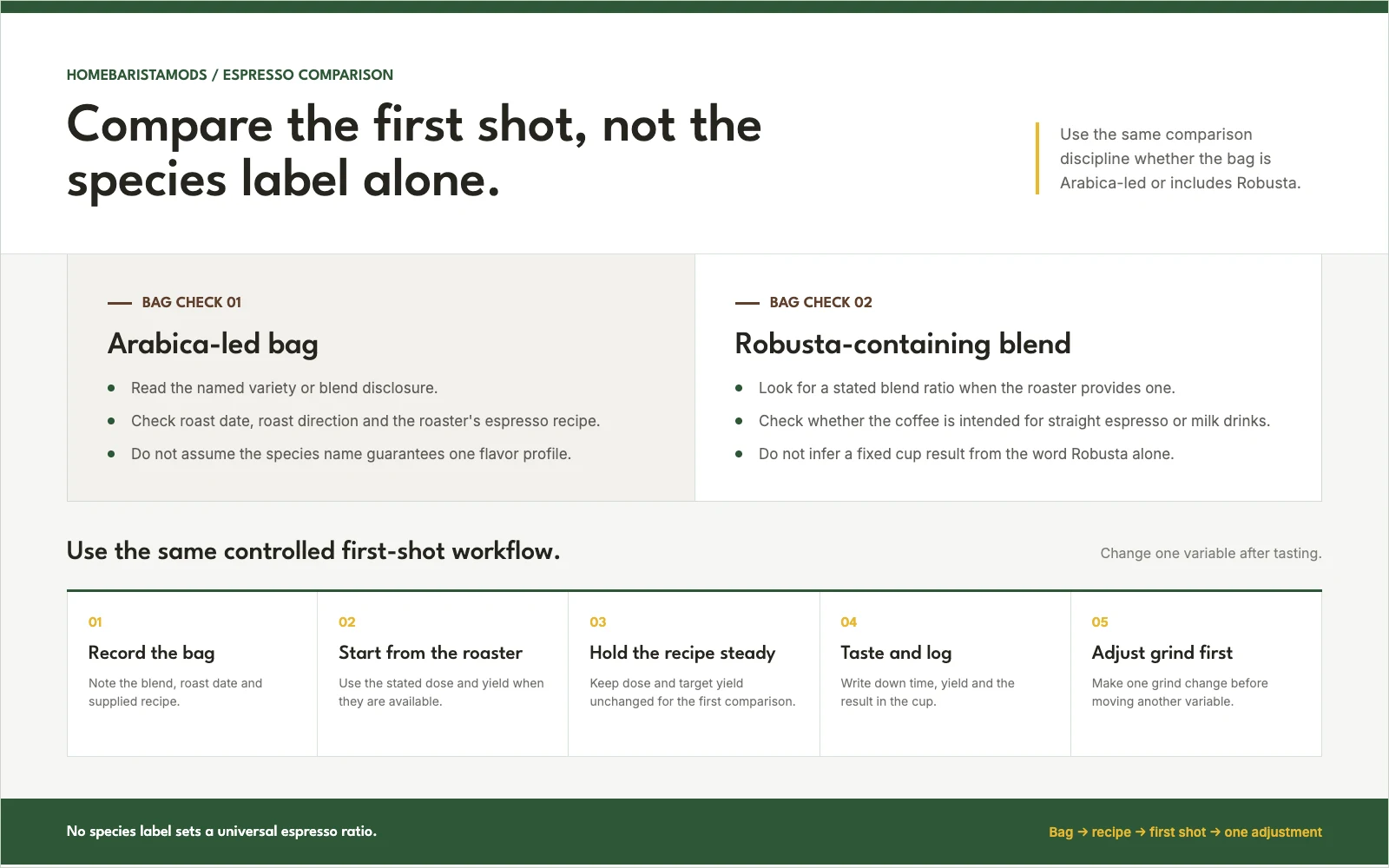
Start with an Arabica-led bag. Confirm roast date, roast direction and the roaster's espresso recipe.
Try a transparent blend that includes Robusta. Check the blend ratio and do not assume every blend behaves the same way.
Buy small bags. Keep dose and yield steady. Adjust grind after the first result instead of changing everything at once.
What should you check before choosing?
The species line is useful. Six other details usually sit closer to the cup you will make.
Species or blend disclosure
Look for Arabica, canephora/Robusta or a stated blend. Record the ratio only when the roaster supplies it.
Roast date
Freshness can change aroma and dialing behavior even when the species stays the same.
Roast direction
Light, medium or dark language is not perfectly standardized, but it gives a more useful starting point than species alone.
Origin and producer
A named place or producer narrows the coffee. A country name still covers many farms and lots.
Process
Washed, natural and other process labels answer a different question from Arabica versus Robusta.
Starting recipe
Use the supplied dose, yield or brew guidance for the first test. Keep a note before you change the grind.
What does the species name not prove?
Quality
Arabica does not automatically mean specialty grade. Robusta does not automatically mean poor quality.
Freshness
The plant name cannot tell you when the coffee was roasted or how it was stored.
Cup caffeine
Species affects the direction. Dose, blend, extraction and drink size still affect the serving.
Your preference
A label cannot decide whether you prefer a straight espresso, a milk drink or a filter cup.
Four questions worth answering without a slogan.
Which is better, Arabica or Robusta coffee?
Arabica coffee is not universally better than Robusta coffee. The useful choice depends on the actual lot, roast, freshness, blend and drink. Arabica often suits buyers seeking aromatic separation. A transparent Robusta blend may suit someone who wants more bitter intensity in espresso or milk.
Does Robusta coffee always have more caffeine than Arabica coffee?
Robusta coffee commonly has more caffeine than Arabica coffee in measured species comparisons. A finished drink still depends on the blend ratio, coffee dose, extraction and beverage size. Do not turn a bean-level comparison into a universal milligram claim for every espresso or brewed coffee.
Is Arabica or Robusta coffee better for espresso?
Arabica coffee and Robusta coffee can both work for espresso. An Arabica-led bag may suit a more aromatic cup. A Robusta-containing blend may suit stronger bitter intensity or a milk drink. Check the blend, roast date and roaster recipe before choosing a starting dose and yield.
Can Arabica and Robusta coffee be blended together?
Arabica coffee and Robusta coffee are commonly blended together in some espresso products. The blend ratio, roast and freshness matter more than the word blend alone. Use the roaster's stated recipe when available, then hold dose and yield steady for the first comparison in your own setup.
 English
  Italiano
  Deutsch
  Español
  Français
  العربية
  日本語
日本語  한국어
한국어  香港中文
香港中文  Nederlands
  Português