Der erste gute Schuss kommt an. Dann verschwindet er. Sehr unhöfliches Verhalten von einer kleinen Maschine.
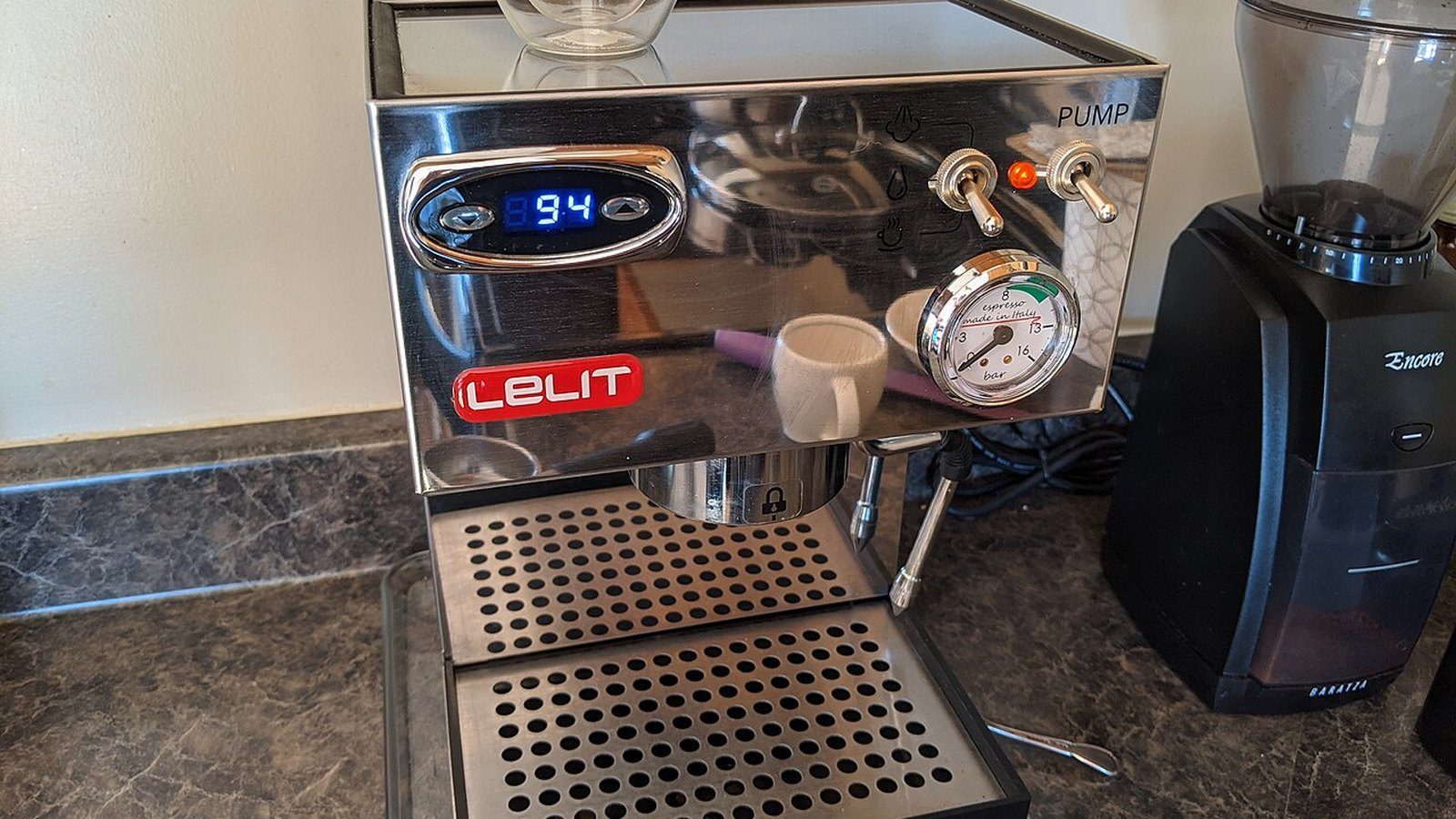
Many Gaggia Classic Pro owners start with a PID because repeatability becomes the first serious frustration. A PID gives the machine a steadier temperature target, so daily espresso becomes easier to read.
Quick answer
Owners often start with a PID because it attacks a common Gaggia problem: good shots are possible, but hard to repeat. Better temperature control makes each adjustment easier to trust.
This is not only about a shiny screen. The screen is nice. The real value is calmer feedback. When temperature stops moving so much in the background, grind and recipe changes become easier to understand.
That is why the PID conversation appears so often in Gaggia communities. The upgrade sounds technical. The reason behind it is very human: people are tired of guessing.
Table of Contents
- What owners are really trying to fix
- Why PID becomes the first serious upgrade
- When PID is too early
- What changes after the upgrade
- PID start decision map
- How to decide your next step
- FAQ
What owners are really trying to fix
Most owners are not trying to build a laboratory machine. They are trying to stop the cup from sending mixed signals.
The Gaggia Classic Pro has a strong reputation because it is simple, repairable, and moddable. It can make very good espresso. The problem is that many new owners reach the same strange stage. They can make one good shot, but they cannot always make it again.
That creates a specific kind of frustration. The owner changes grind. The cup still moves in a confusing way. The owner improves puck prep. The next shot still tastes different. Then the question appears: is this my recipe, my grinder, my warm-up, or the machine’s temperature cycle?
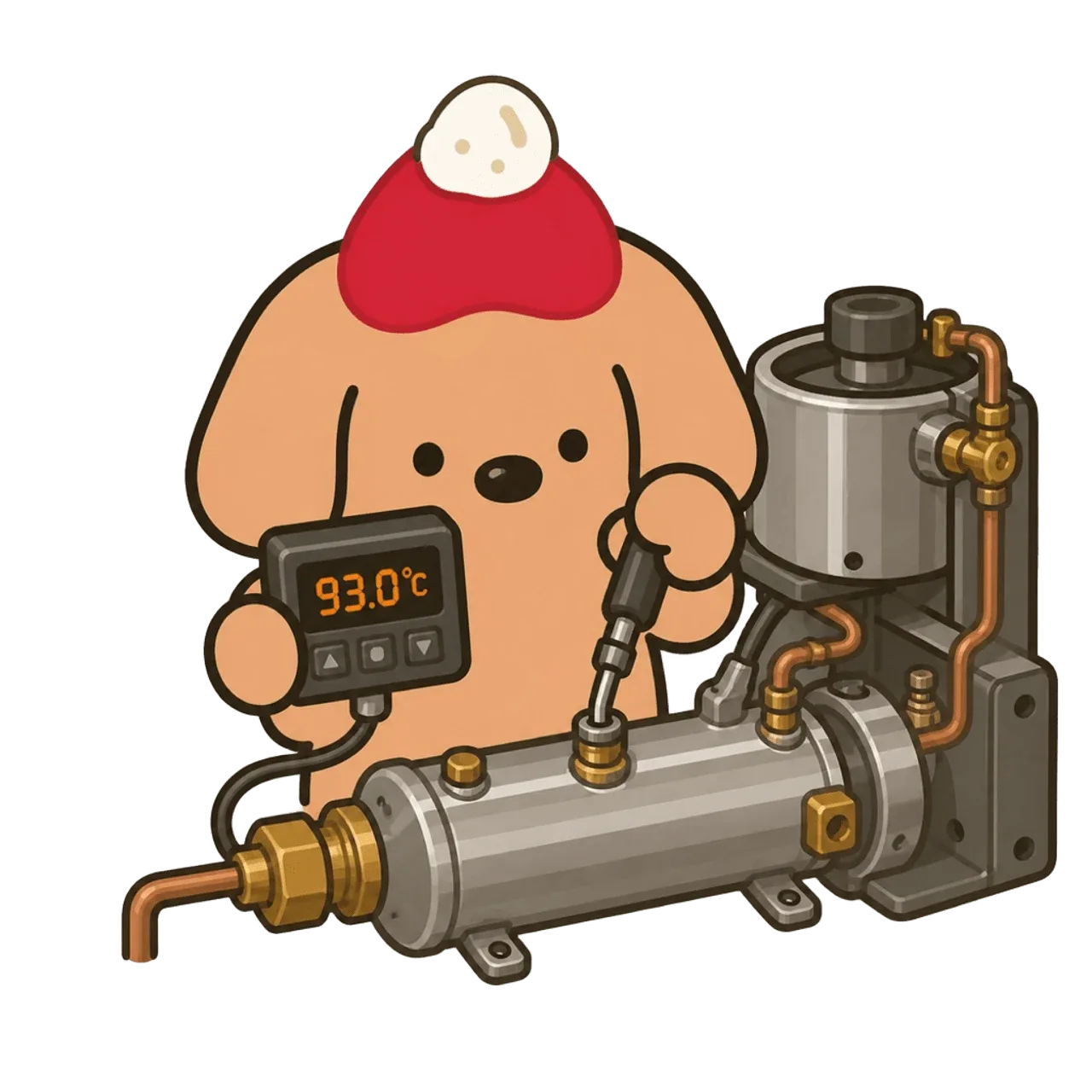
That is the real reason a PID becomes attractive. It promises fewer hidden variables. It does not promise perfect espresso. It promises a cleaner conversation between the machine and the person using it.
Forum discussions show this pattern again and again. In long Gaggia PID threads, owners talk less like collectors and more like people who want a stable baseline. They want to know whether the next grind change actually helped. That is a practical goal.
Why PID becomes the first serious upgrade
A PID often becomes the first serious upgrade because it improves learning speed.
On the stock thermostat workflow, temperature can move in the background while the user is trying to make a recipe decision. That makes cause and effect messy. If the cup is sharp, the user may grind finer. But the cup may also be sharp because the machine was cooler than last time.
A PID gives the boiler a more stable target. That matters because it makes other changes easier to judge.
Use this simple reading:
This is why many owners think of PID control as a workflow upgrade, not only an electronics upgrade. The part goes inside the machine. The benefit shows up in daily decisions.
For the full daily-use version, read Was ein PID-Regler im täglichen Brauen verändert. That article explains the workflow side in more detail.
When PID is too early
PID is useful. PID is not a magic wand with wires.
If the grinder is weak, start there. If puck prep changes every shot, start there. If the machine is not fully warmed before the first shot, fix the routine first. A PID can make a good workflow clearer. It cannot make a messy workflow honest.
This is where many buyers need a calm pause. A PID can be the right upgrade, but not always the first upgrade. The right timing depends on whether your setup can already show useful feedback.
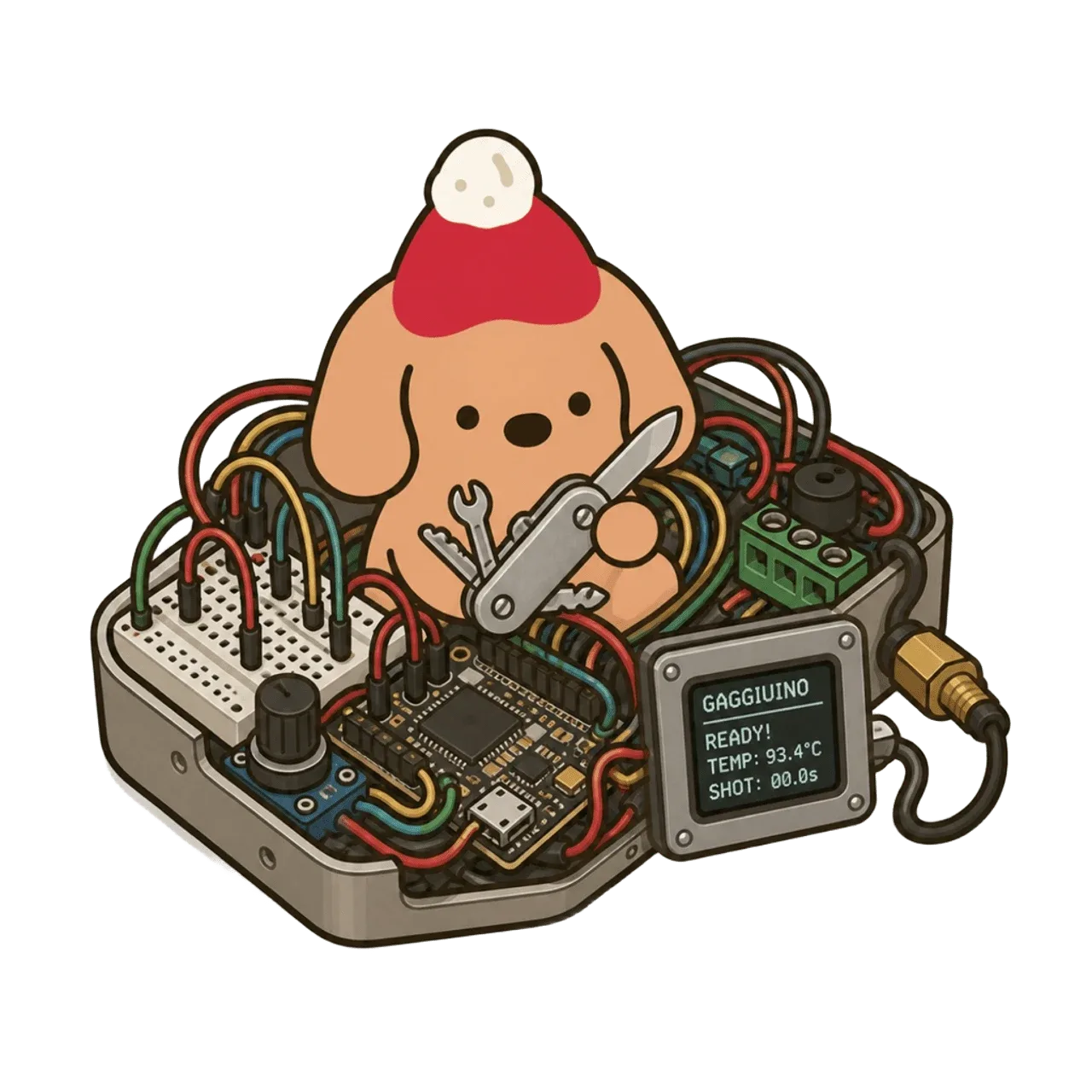
Use this quick filter:
This is also why Eine praktische Upgrade-Reihenfolge für die Gaggia Classic Pro matters. It keeps the PID decision inside a broader buying path.
What changes after the upgrade
The upgrade usually feels less dramatic than people expect, but more useful than they expect.
Most owners do not suddenly get perfect espresso. They get a machine that feels calmer. The temperature target becomes easier to repeat. The routine becomes easier to trust. A bad shot becomes easier to diagnose.
That difference is important. A PID does not remove the need for a good grinder. It does not remove the need for good puck prep. It does not remove warm-up behavior. The boiler target can be stable while the group, portafilter, and brew path still need time.
But the learning experience changes. If a grind change improves the cup, you can trust that result more. If a new coffee needs a different temperature, you can test that more cleanly. If the first shot still tastes odd, you know to look at warm-up and workflow instead of blaming everything at once.
The result is not only better control. It is better confidence.
PID start decision map
Use the situation first. Then decide.
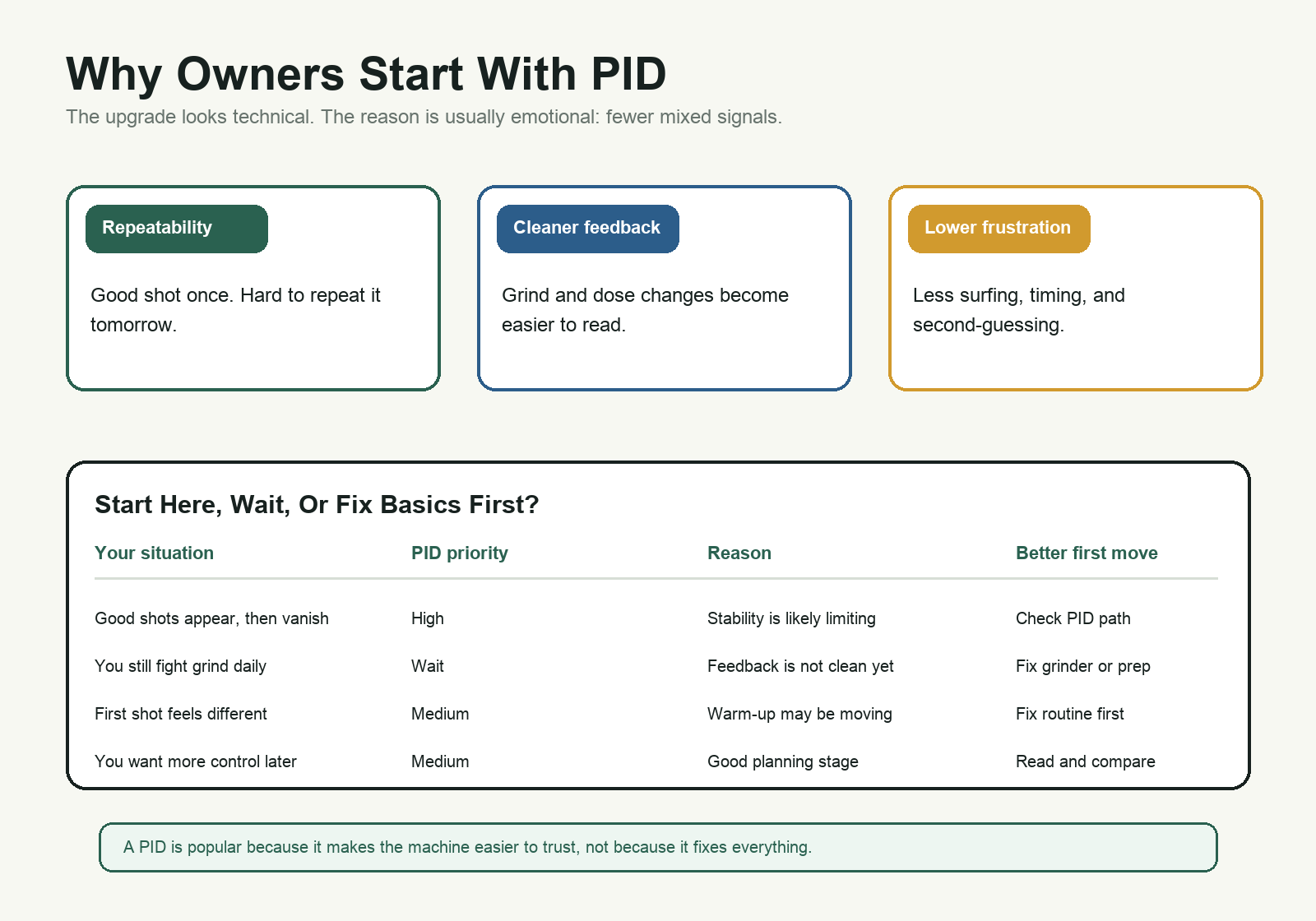
The strongest PID fit is not “everyone with a Gaggia.” The strongest fit is the owner who already has decent basics and still feels repeatability pain.
If good shots appear but vanish, PID deserves attention. If grind still feels unclear, do not rush. If first shots differ from later shots, improve warm-up discipline. If you want more control in the future, start reading now and buy when the problem is clearly named.
This is a healthier way to shop. It turns a mod list into a decision path.
How to decide your next step
Use a three-question check before buying.
- Can I describe the problem in one sentence?
- Are my grinder, dose, yield, and puck prep stable enough?
- Would better temperature control make my next adjustment easier to read?
If the answer is yes, PID may be the right next step. If the answer is no, wait. Waiting is not failure. Waiting is how you avoid buying a clever part for the wrong problem.
For temperature logic, read Warum Temperaturstabilität bei der Gaggia Classic Pro wichtig ist. For practical set points, save the Gaggia Classic Pro PID temperature reference. If you are still choosing your first upgrade, start with Wie Sie Ihr erstes Gaggia Classic Pro Upgrade auswählen.
FAQ
Does every Gaggia Classic Pro owner need a PID?
No. A PID is most useful when repeatability is the problem and the basics are already stable enough to show the benefit.
Why do people often choose PID before cosmetic upgrades?
Because PID can improve how the machine behaves. Cosmetic upgrades improve ownership feel, but they do not solve confusing shot feedback.
Should I buy a PID before a grinder?
Usually no. If the grinder is still the weak point, grinder clarity may matter more than machine control.
Does a PID remove temperature surfing?
It reduces rough temperature surfing a lot. It does not remove warm-up discipline or the need for a stable routine.
What should I read next?
Read the PID daily brewing guide if you want the workflow view. Use the temperature reference page when you are ready to test actual set points.
Many owners start with PID because they want fewer mixed signals. That is the heart of the upgrade: less guessing, clearer learning, and a machine that feels easier to trust.
References and image credit
- Coffee Forums UK: The Gaggia Classic PID Reference Thread
- Reddit: Gaggia Classic Pro Evo temperature surfing discussion
- Featured image: cropped from Dorian Bodnariuc / massage-techniques, Wikimedia Commons, CC BY-SA 2.0
 English
  Italiano
  Deutsch
  Español
  Français
  العربية
  日本語
日本語  한국어
한국어  香港中文
香港中文  Nederlands
  Português