Light roast vs dark roast: choose by the cup.
Light roast usually keeps more origin character and acidity. Dark roast usually brings more roast flavor, bitterness and weight. Neither label tells you the whole recipe or caffeine dose.
I treat roast level as the first clue on the bag. The coffee, roaster, dose and brew method decide what lands in the cup.
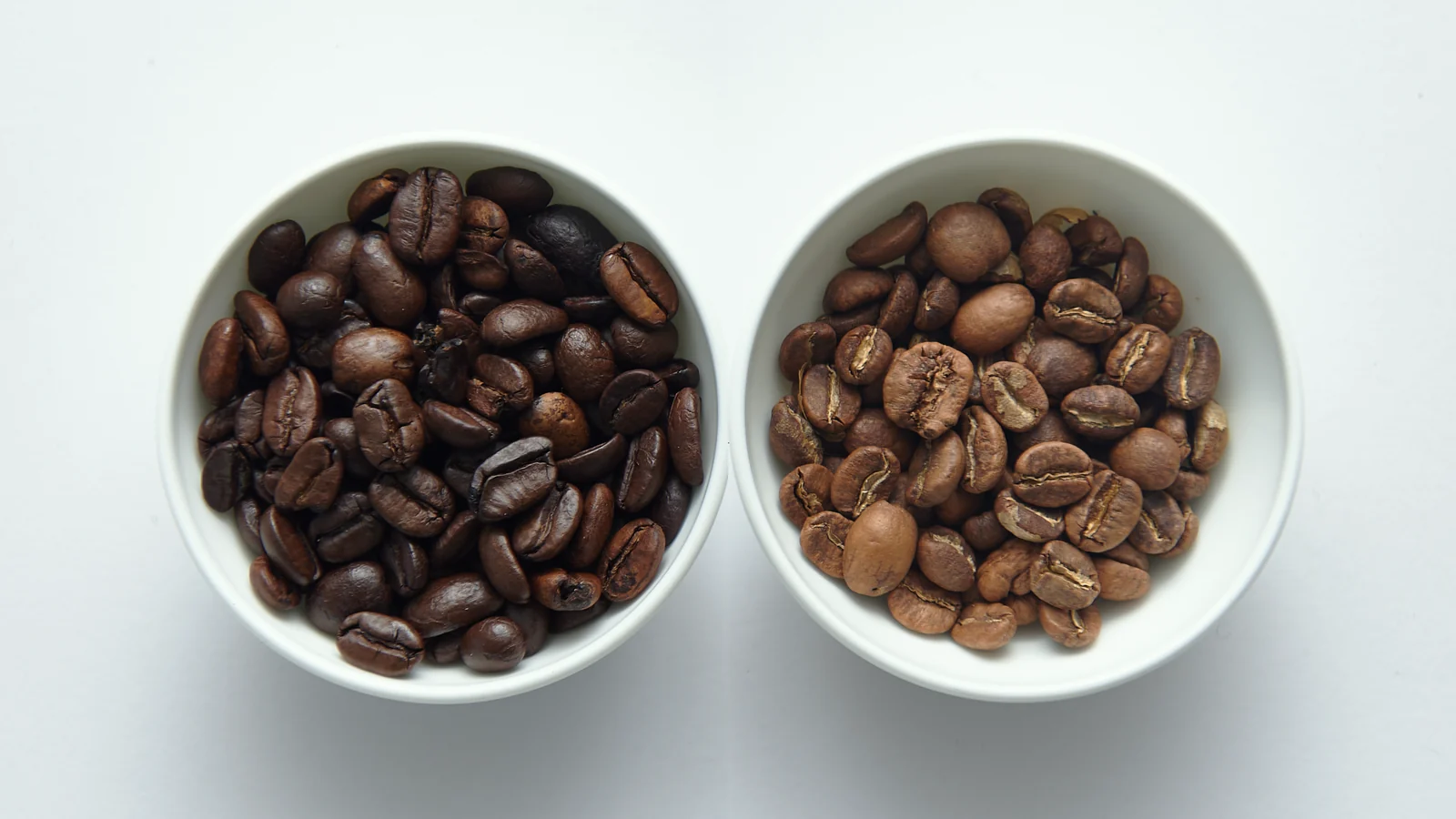
What changes between light and dark roast coffee?
Light roast leans toward origin, acidity and a denser bean. Dark roast leans toward roast flavor, bitterness, solubility and a more brittle bean.
These are tendencies, not promises. Variety, processing, roast skill, freshness and the brew recipe can move either cup away from the shorthand.
| Compare | Tueste claro | Tostado oscuro |
|---|---|---|
| Flavor direction | More origin-led fruit, floral, tea-like or bright notes are common. | More roast-led cocoa, smoke, caramelized bitterness or deep sweetness is common. |
| Acidity | Often more noticeable in the cup. | Usually lower in perception, though brewing still matters. |
| Body | Can feel lighter or more delicate. | Can feel heavier, rounder or more roast-forward. |
| Bean structure | Denser and less brittle. | More porous and easier to extract. |
| Surface | Usually matte. | Oil is more likely to appear, especially with deeper development or time after roasting. |
| Brewing tendency | Often needs more extraction help. | Often needs a gentler recipe to avoid harshness. |
The Coffee Roast Levels guide explains where medium roast and espresso roast fit between these ends.
How do light and dark roast taste different?
Light roast often lets the farm, variety and processing stand out. Dark roast gives the roasting process a louder voice.
A washed Ethiopian coffee and a natural Brazilian coffee will not taste alike simply because both bags say light roast. The label narrows one variable; it does not erase the coffee underneath.
The same caution applies to dark roast. One bag may taste clean and bittersweet. Another may taste smoky or ashy. Development and green-coffee quality still count.
Choose light
Start here if you enjoy clear acidity, fruit, flowers or a stronger sense of origin. Expect to spend more time finding the grind and extraction that suit the coffee.
Choose dark
Start here if you prefer low perceived acidity, familiar roast flavor or coffee that remains easy to taste with milk. Avoid assuming darker always means richer or better.
Choose medium
If both ends sound too narrow, medium roast is a useful first bag. It can keep origin character while offering more solubility and roundness.
Dark flavor does not prove a higher caffeine dose.
Which has more caffeine, light or dark roast?
Roast color alone cannot settle the caffeine question. Compare the same coffee by weight and the same finished serving before drawing a useful conclusion.
Dark roast tastes stronger to many drinkers, so it is easy to confuse bitterness with caffeine. Measuring by scoop adds another complication because darker beans expand and lose more mass during roasting.
Coffee species can move the result more than the roast label. The Arabica vs Robusta comparison covers that difference without treating every bean as interchangeable.
Should you brew light and dark roast the same way?
Use the roaster's recipe first. If no recipe is available, give light roast more extraction help and approach dark roast more gently.
Change one variable at a time. A new grind, dose, temperature and ratio in the same brew will hide which change fixed the cup.
If light roast tastes sour or thin
The cup may be under-extracted, although an intentionally bright coffee can also be unfamiliar.
- Try a finer grind.
- Use hotter water if your brewer allows it.
- Extend contact time or increase the water-to-coffee ratio.
- Keep the dose steady while you test.
If dark roast tastes bitter or dry
The cup may be over-extracted, or the roast character may simply be darker than you enjoy.
- Try a slightly coarser grind.
- Use cooler water.
- Shorten contact time or reduce the brew ratio.
- Clean the brewer before blaming the bag.
Keep one anchor: weigh the coffee and water. A repeatable dose makes the next grind or temperature change easier to judge.
Which roast works for espresso, filter and milk drinks?
Choose from the drink you make most often. Medium is the safest neutral start, while light and dark move the cup in clearer directions.
Use light roast for more origin detail. Move toward medium if the cup feels too sharp or the brewer struggles to extract it.
Medium offers an easier reference point. Light espresso can be vivid but demanding; dark espresso can become harsh quickly.
More developed coffee often stays present after milk adds sweetness and dilution. Stop before roast bitterness takes over the drink.
A balanced medium roast usually gives the widest testing range across filter, espresso and milk drinks.
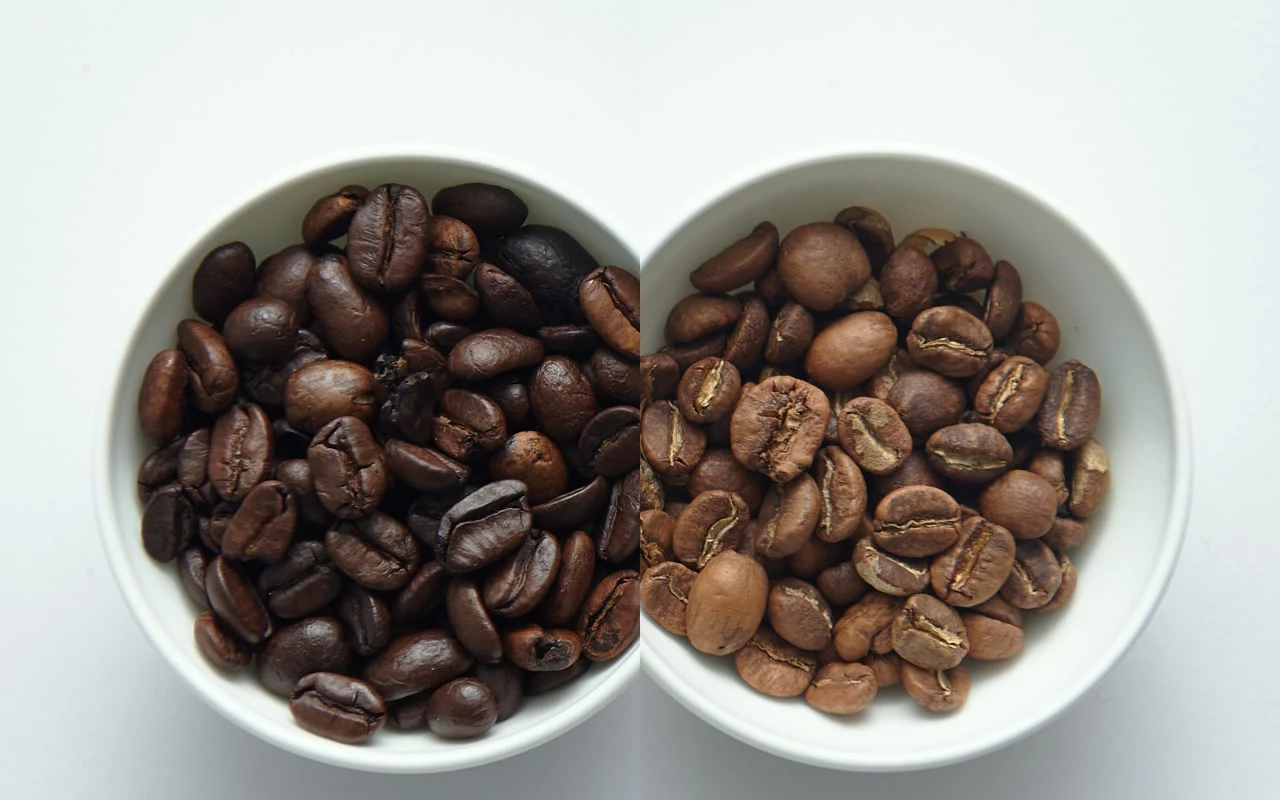
Can the bean color or oil tell you which bag is fresher?
Color and surface oil can suggest roast development. They cannot confirm freshness on their own.
Dark beans are more likely to show oil because roasting changes the bean structure. Oil may also move to the surface during storage. A matte light roast and an oily dark roast need different visual expectations.
How can you compare both roasts at home?
Use two small brews with matched coffee weight, water weight and brewer. Record what changes before adjusting either recipe.
- Choose comparable bags.Use the same species if possible and check that both bags are reasonably fresh.
- Match the dose and water.Weigh both instead of using scoops. Keep the brewer and water source the same.
- Start with one neutral recipe.The first brew is a comparison, not a contest to perfect both coffees at once.
- Taste after the cups cool slightly.Note acidity, sweetness, bitterness, body and which flavors remain clear.
- Adjust each coffee separately.Give the light roast more extraction help if it is sour or thin. Treat the dark roast more gently if it is bitter or drying.
Sources for the roast comparison
The first source explains common roast categories and their limits. The research paper is useful because roast chemistry does not support a simple claim that one roast is always healthier.
Light and dark roast questions
Is light roast stronger than dark roast?
Light roast coffee can taste brighter and more acidic, while dark roast coffee can taste stronger because bitterness and roast flavor are more obvious. Neither roast is automatically stronger in every sense. Coffee dose, brew ratio, species, grind and extraction change flavor intensity and caffeine in the finished cup.
Does dark roast have more caffeine than light roast?
Dark roast coffee does not automatically contain more caffeine than light roast coffee. A useful comparison needs the same species, coffee weight and finished serving. Scoop measurements can produce a different result because dark roasted beans expand and become less dense, so volume does not hold coffee mass constant.
Is light roast more acidic than dark roast?
Light roast coffee usually has more noticeable acidity than dark roast coffee, although origin, processing and brewing can change the cup. Bright acidity can taste crisp and fruity when extraction is balanced. Sourness from under-extraction is different and may improve with a finer grind, hotter water or longer contact time.
Is light roast or dark roast better for espresso?
Light roast coffee can make vivid, origin-led espresso but often needs careful grinding and extraction. Dark roast coffee is more soluble and can suit traditional or milk-based espresso, yet it may turn bitter quickly. Medium roast coffee is a practical first choice when you are still learning a grinder or machine.
Is light roast healthier than dark roast?
Research does not support one simple verdict that light roast coffee is always healthier than dark roast coffee. Roasting changes phenolic compounds and antioxidant activity in non-linear ways, while the finished drink depends on the coffee and preparation. Treat broad health claims as incomplete unless they name the measured compound and method.
 English
  Italiano
  Deutsch
  Español
  Français
  العربية
  日本語
日本語  한국어
한국어  香港中文
香港中文  Nederlands
  Português