
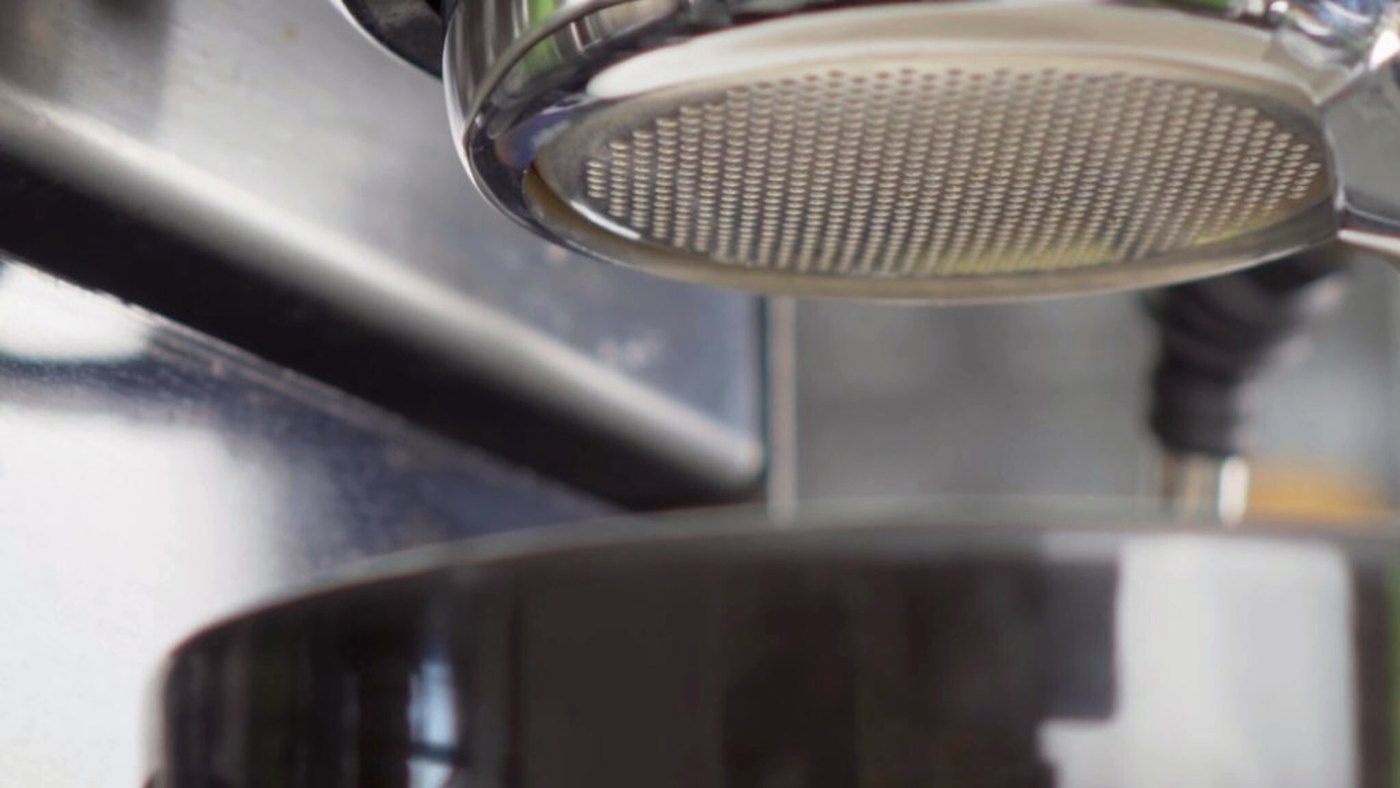
Wasser scheint harmlos. Dann blockiert Kalk ein Ventil, oder seltsames Wasser lässt Kaffee fad schmecken. Erst messen.
Good water for a Gaggia Classic Pro should reduce scale risk, protect metal parts, and still extract coffee well. Do not rely on TDS alone. Measure hardness and alkalinity, avoid very hard water, and avoid unknown ultra-low-mineral water unless it is remineralized with a known recipe.
This is a practical maintenance guide. It keeps the machine easier to service and the coffee easier to understand.
Table of Contents
- Why is water a repair topic, not just a flavor topic?
- What water numbers should Gaggia owners measure?
- Why is hard water dangerous for the Classic Pro?
- Can very soft or distilled water create new problems?
- Which water choices are practical for home users?
- How should descaling change by model and water?
- What routine should you use from now on?
- FAQ
Why is water a repair topic, not just a flavor topic?
Water is inside the boiler every day. It is not just an ingredient. It is also a maintenance decision.
Water affects scale, corrosion risk, taste, flow, temperature stability, and service life. In a Gaggia Classic Pro, bad water can block the solenoid valve, damage boiler surfaces, and make troubleshooting harder.
This is why forum posts about “no water from the group” often become water conversations. Scale can break loose and block the three-way solenoid. The pump still sounds alive. The steam wand may still flow. The group head may slow down or stop. Now a water choice has become a repair problem.
Water also changes taste. High alkalinity can mute acidity and make espresso taste flat. Very low buffer can make shots taste sharp. Too much hardness can build scale. Too little useful mineral content can make coffee taste thin. The machine and the cup are both affected, so the right answer cannot be “just use whatever is clear.”
Use this basic map:
Good water is controlled water. It is not always the water with the lowest number on a cheap TDS pen. That number is useful, but it does not show which minerals are present.
For a symptom-based repair example, read the Gaggia Classic Pro no-water diagnostic guide. Scale is one reason a simple morning shot can become a tool session.
What water numbers should Gaggia owners measure?
The best water plan starts with three numbers. They are not scary once named.
Measure general hardness, alkalinity, and TDS. General hardness points to scale potential. Alkalinity affects flavor and buffering. TDS gives a rough total, but it cannot show which minerals are present.
The Specialty Coffee Association water standards are a useful reference because they separate hardness, alkalinity, TDS, chlorine, and pH. Barista Hustle also uses GH and KH when building water recipes. That split matters. Two waters can have the same TDS and behave very differently inside a boiler.
Use this translation table:
Drop kits from aquarium stores can measure GH and KH cheaply. A TDS meter can add quick context. A local water report can help, but it may not match the water at your tap every day. Barista Hustle notes that direct readings can be better than relying only on local averages. That is especially true if your building has old pipes, a softener, or seasonal water changes.
For home use, you do not need laboratory precision. You need enough information to stop guessing. If you can say, “My water is hard and high alkalinity,” your next step is different from “My water is soft but high chloride,” or “My RO water has almost no minerals.”
Why is hard water dangerous for the Classic Pro?
Hard water does not need to attack all at once. It can win slowly.
Hard water can form limescale inside the boiler, solenoid valve, group path, and steam circuit. Scale reduces flow, traps heat, breaks loose during descaling, and can create repeated clogs.
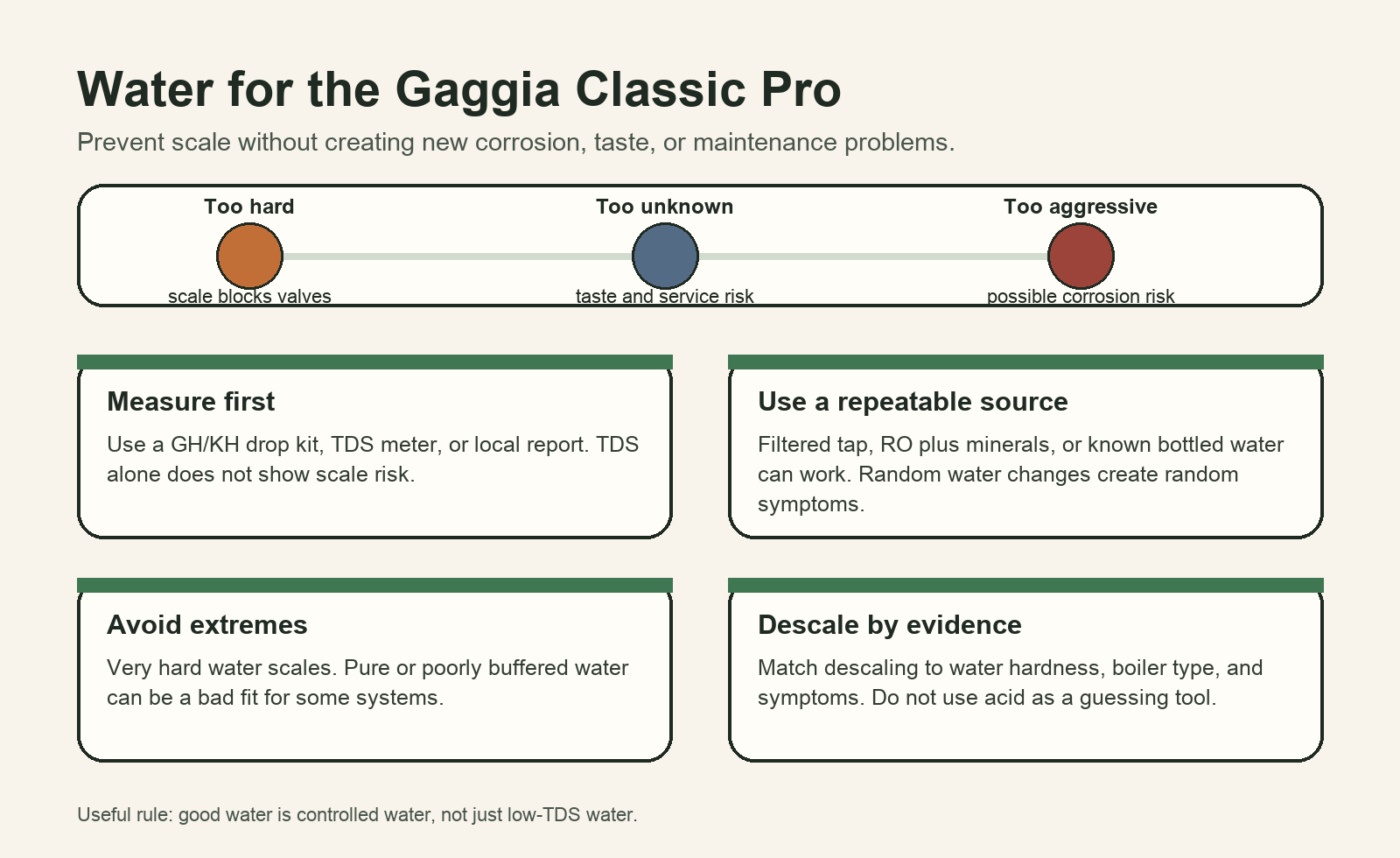
The Gaggia Classic Pro has small water passages. The solenoid valve has even smaller passages. A small piece of scale can create a large symptom. This is why owners sometimes descale a neglected machine and then see a new blockage. The acid loosens mineral deposits. The loose deposits move. Then they sit in the wrong place.
Hard water also makes diagnosis messy. A shot may taste bitter because of grind, temperature, ratio, or scale-related flow restriction. Steam may weaken because of buildup. The group head may slow because the shower screen is dirty, or because scale is restricting water before the group. Bad water makes the machine give mixed signals.
Watch for these signs:
If your tap water is hard, a simple charcoal taste filter may not remove enough calcium and magnesium. It can improve taste and remove chlorine, but it may not solve scale. That is a common forum pain point. The pitcher makes the water taste cleaner, but the boiler still collects minerals.
The practical answer is not always “descale more.” The better answer is “put better water in, then descale only as needed.” Prevention is easier than cleaning small passages after they clog.
Can very soft or distilled water create new problems?
The opposite extreme can also confuse people. Low scale risk is not the same as good machine water.
Pure distilled, deionized, or RO water should not be used blindly. If you use purified water, add a known mineral or buffer recipe that fits espresso machines and your machine material.
This topic causes arguments because words get mixed. “Distilled water” can mean pure water with nothing added. It can also mean a base water that later receives potassium bicarbonate, sodium bicarbonate, magnesium sulfate, or commercial packets. Those are different water choices.
Pure or poorly buffered water can taste flat or sharp. It may also create corrosion or sensor concerns in some machines. On the other hand, many home baristas use distilled or RO water as a clean base and then add measured minerals. That can be a very good approach when the recipe is known and repeatable.
Use this distinction:
Forum users often mention RPavlis-style water because it aims to prevent scale by avoiding calcium hardness and using bicarbonate for buffering. That idea can be useful, but this article should not turn into a recipe contest. If you make water, use a respected recipe, accurate scale, food-safe minerals, clean containers, and repeatable measurements.
The key rule is simple. Do not confuse “low TDS” with “safe and good.” Low TDS only says there is not much dissolved material. It does not say whether the water is buffered, pleasant, or appropriate for your machine.
Which water choices are practical for home users?
The best choice is the one you can repeat. Fancy water that changes every week is not helpful.
Practical options include tested filtered tap water, softened or blended water, RO water with remineralization, distilled water with a known recipe, or a bottled water with published mineral content.
Pick by your starting water:
Commercial packets are the easiest path for many users. They cost more per liter, but they remove measurement stress. DIY recipes cost less, but they require accuracy. Bottled water is convenient, but the label may not show everything you need. Tap water can be excellent in one city and scale-heavy in another.
If you use a water softener, understand what kind it is. Some softeners exchange calcium and magnesium for sodium or potassium. That can reduce scale, but it may not improve taste, and it may not be ideal for every coffee recipe. A softener is not the same as a complete coffee water plan.
If you use a tank filter, rinse it well and replace it on schedule. A neglected filter can add its own confusion. If you see black dust-like particles after changing a filter, test water without the filter before blaming the boiler. The black flakes guide covers that type of diagnosis.
How should descaling change by model and water?
Descaling should follow evidence. It should not be a monthly ritual done from fear.
Descale more often with hard water, less often with controlled low-scale water, and always follow guidance for your boiler type. A 2023 Evo lined boiler, older aluminum boiler, and E24 brass boiler may need different caution.
Gaggia manuals emphasize regular descaling because scale is a real risk. But “regular” does not mean the same interval for every home. Someone using hard water daily may need more maintenance than someone using low-scale remineralized water. Someone using a brass E24 may have a different material context than someone using a coated Evo boiler.
Use this model-aware table:
Do not use vinegar as a casual shortcut. It can leave smell, and it is not the same as a manufacturer-approved descaler. Do not repeat strong acid cycles because a blockage did not disappear. If scale physically blocks a solenoid, solution may not reach the blockage well enough.
A good descaling plan starts before scale appears. Measure water, choose a stable source, and watch flow. If the group flow changes, diagnose early. If you wait until no water comes from the group, maintenance becomes repair.
For internal work, read the Gaggia Classic Pro mod safety matrix before opening the machine. Water problems often lead people inside the case. That is where safety matters.
What routine should you use from now on?
A simple routine beats a perfect plan that nobody follows.
Test your water, choose one repeatable source, write it down, monitor group flow, and adjust descaling only when the water data or machine symptoms justify it.
Use this owner routine:
- Test GH and KH with a drop kit.
- Check TDS only as a supporting number.
- Read your water report for chloride if available.
- Choose a water source you can repeat.
- Rinse filters and containers before use.
- Run a monthly no-coffee flow check.
- Clean the shower screen and group path.
- Descale only with the right product and interval.
- Re-test water when you move or change filters.
- Keep notes beside your recipe notes.
This routine helps because it reduces random variables. If coffee suddenly tastes different, you know whether water changed. If flow slows, you know whether scale is likely. If black particles appear, you know whether a filter change happened. The machine becomes easier to understand.
Water also belongs in upgrade planning. Do not add PID, OPV, or steam parts while the machine is full of scale or unknown water residue. A clean, stable water routine makes every upgrade easier to judge. The upgrade order guide should start with machine health before performance parts.
FAQ
Can I use tap water in a Gaggia Classic Pro?
Yes, if it tests within a reasonable range and does not create scale quickly. Hard tap water should be filtered, blended, or replaced with controlled water.
Is distilled water safe for a Gaggia Classic Pro?
Do not use pure distilled water blindly. Distilled or RO water can be a good base when you add a known mineral or buffer recipe.
Is TDS enough to choose espresso water?
No. TDS only shows total dissolved solids. You still need hardness and alkalinity to understand scale and taste.
How often should I descale my Gaggia Classic Pro?
It depends on water hardness, use, and model. Hard water needs more attention. Controlled low-scale water may need much less descaling.
What water prevents scale best?
Low-scale remineralized water is usually the most controlled path. It should contain enough buffer for taste and machine suitability, without heavy calcium hardness.
Water is a maintenance choice. Measure it, control it, and your Gaggia will give clearer symptoms, cleaner flow, and better coffee.
References
- Specialty Coffee Association: Coffee Standards
- Barista Hustle: DIY Water Recipes Redux
- Espresso Aficionados: Water Guide
- Reddit: Gaggia Classic Pro boiler corrosion and scale discussion
- Reddit: 70/30 water, scale, and Gaggia Classic solenoid clogging
- Gaggia Classic Pro Manual
Start with measurement. The machine does not need perfect water. It needs water you understand.
 English
  Italiano
  Deutsch
  Español
  Français
  العربية
  日本語
日本語  한국어
한국어  香港中文
香港中文  Nederlands
  Português