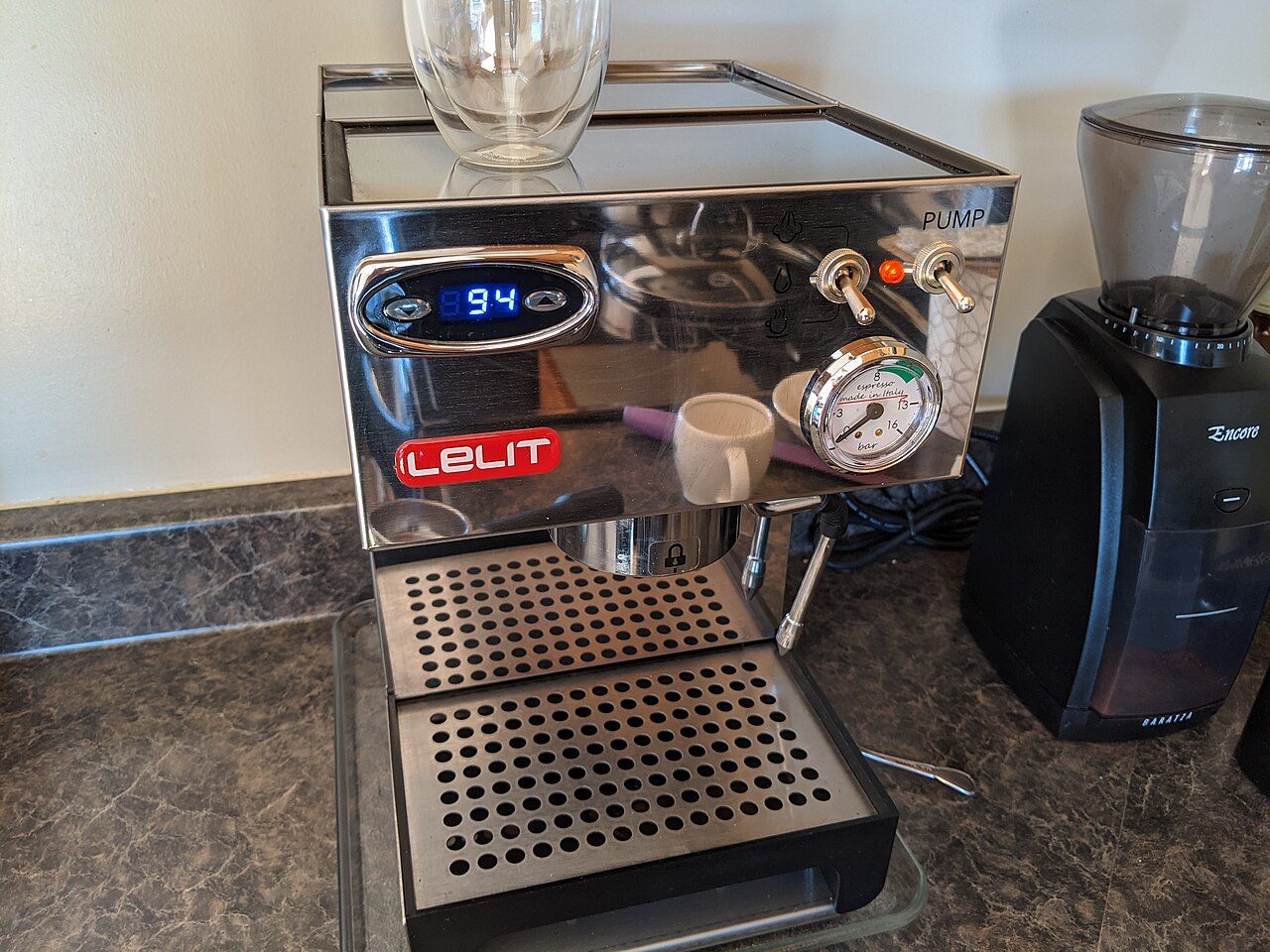
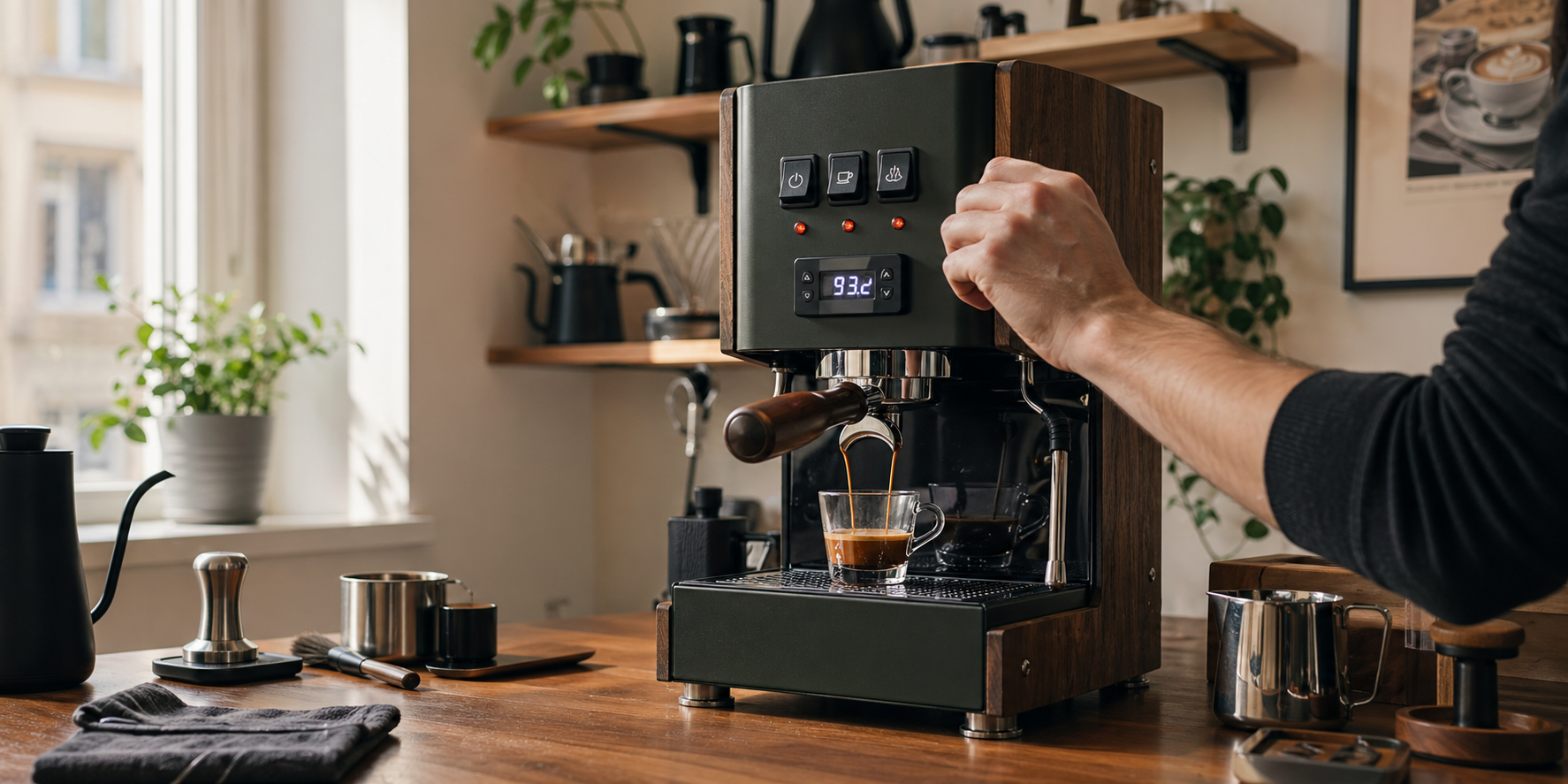
At some point, many Gaggia Classic Pro owners start asking the same question. Is it time for a PID, or is that still not the real bottleneck?
It is a fair question, because a PID is not the right answer for every setup at every stage. Sometimes the machine is ready for it. Sometimes the grinder still matters more. Sometimes the real issue is simply that the workflow is not stable enough yet.
That is why this decision can feel harder than it looks. A PID is one of the most talked-about Gaggia upgrades, but it creates the most value only when it solves the problem you actually have.
Short answer
Your Gaggia Classic Pro is usually ready for a PID when the grinder is already decent, your routine is reasonably consistent, and the cup still feels harder to repeat than it should.
Table of Contents
- Why this upgrade question keeps coming back
- Three signs that a PID may now make sense
- When a PID is probably not the first fix
- What the upgrade usually feels like in daily use
- A simple decision table
- Where to go next
- 자주 묻는 질문
Why this upgrade question keeps coming back
The Gaggia Classic Pro sits in a very interesting place. It is affordable enough for serious beginners, but capable enough that people keep growing with it. That means the machine often reaches a stage where the owner can already make good espresso, yet still feels that the results are not fully settled.
This is where the PID conversation keeps returning. Not because the machine is bad, and not because every owner needs the same solution, but because temperature control becomes more visible once the easy mistakes start to disappear.
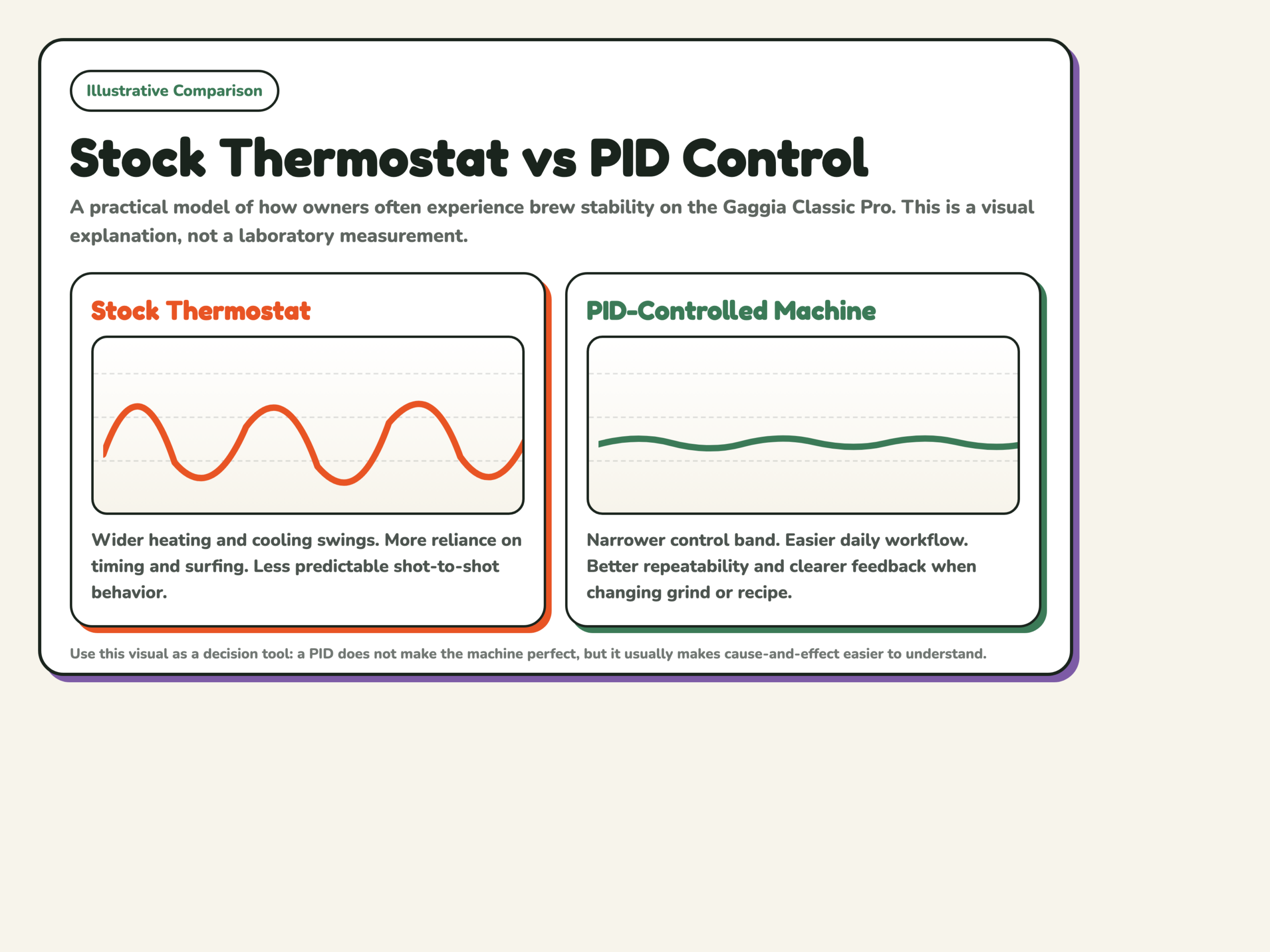
When you are no longer fighting obvious grind problems or very inconsistent puck prep, the small thermal swings of the stock workflow can become easier to notice in the cup. That is usually the moment when a PID starts to move from “interesting idea” to “real next step.”
A PID becomes valuable when the machine starts hiding lessons from you. Better control helps the cup speak more clearly.
Three signs that a PID may now make sense
The strongest signal is not that you want a more advanced-looking machine. The strongest signal is that your workflow already has some structure, but your shot feedback still feels too loose.
| Sign | What it usually means |
|---|---|
| You can dial in a coffee, but the next shot still moves around more than expected | Your routine may be stable enough that machine temperature is now easier to feel |
| You often wonder whether the problem is grind or heat | Too many variables are still changing at once |
| You want clearer feedback from recipe changes | Better temperature control may improve the learning process |
Many people reach this point slowly. They do not wake up one morning and suddenly need a PID. Instead, they notice a pattern over a few weeks. The machine can produce very good shots, but it asks for more guesswork than they want to keep doing.
A practical way to think about it
If the machine still feels unpredictable after your basic workflow has improved, the next useful investment may be control, not another accessory.
When a PID is probably not the first fix
A PID is not the first fix when the setup is still struggling with the basics. If the grinder is not consistent enough, or if dose and puck prep are changing a lot from shot to shot, better temperature control will not solve the real problem yet.
The same is true if the machine is mostly used for casual milk drinks and the owner is not yet trying to compare straight espresso with much precision. In that case, the value of the upgrade may be real, but it may not be urgent.
This is why upgrade order matters. A PID gives the best return when it lands on top of a setup that is already ready to benefit from it.
| Situation | What usually matters more first |
|---|---|
| The grinder still produces unstable results | Grinder quality and grind consistency |
| The puck prep changes a lot from shot to shot | Routine and prep discipline |
| The machine is mostly used for forgiving milk drinks | Daily workflow comfort, not yet fine thermal control |
What the upgrade usually feels like in daily use
For most owners, the benefit does not feel dramatic in the way a marketing page might suggest. It feels calmer than that. The machine becomes easier to read. The shot routine becomes easier to repeat. Recipe changes stop feeling quite so noisy.
That is an important distinction. A PID does not turn the Gaggia Classic Pro into a different class of machine. What it often does is make the machine easier to trust.
HomeBaristaMods는 명확한 설명으로 시작하여 실제 작업 흐름 문제를 해결하는 제품을 제공합니다.
Reading note
Many upgrades change the look of a machine. A PID mainly changes how honest the machine feels during learning.
A simple decision table
If you want a clean way to think about the decision, use this table.
| If this sounds like you | The most likely next step |
|---|---|
| “My shots are getting better, but they are still hard to repeat.” | A PID is worth serious attention |
| “I still fight grind and prep errors every day.” | Fix the basics first |
| “I mostly want the machine to look and feel more personal.” | Cosmetic parts may fit better for now |
| “I want to understand recipe changes with more confidence.” | Better temperature control can help a lot |
Quick checklist
- Your grinder is already good enough to reveal small shot differences.
- Your basic prep routine is mostly repeatable.
- You want less guesswork, not just a more complex machine.
Where to go next
If you are close to buying, the next helpful move is not only to compare prices. It is to compare workflow value. A good kit should make the upgrade easier to install, easier to understand, and easier to live with after the first week.
That is also why we treat the HomeBaristaMods shop as part of a wider learning path, not a random parts list. If you want the broader reasoning behind the upgrade, read Why Temperature Stability Matters More Than Many Beginners Expect. If you want practical roast-level starting points, save the PID temperature reference page.
Next step
Save these pages for later.
자주 묻는 질문
Does every Gaggia Classic Pro owner need a PID?
No. The upgrade creates the most value when the workflow is already fairly stable and the user wants better repeatability.
Can a PID matter more than a cosmetic upgrade?
Yes. If the machine still feels hard to read in daily use, better control often creates more value than visual upgrades.
Should I buy a PID before improving my grinder?
Usually not if the grinder is still the weak point. Grinder quality can still matter more first.
What does the upgrade usually feel like in practice?
It usually feels calmer and clearer. The machine becomes easier to repeat and easier to judge.
What should I read next?
Read the temperature stability guide for the full logic, or save the PID temperature reference page for day-to-day use.
References
 English
  Italiano
  Deutsch
  Español
  Français
  العربية
  日本語
日本語  한국어
한국어  香港中文
香港中文  Nederlands
  Português