
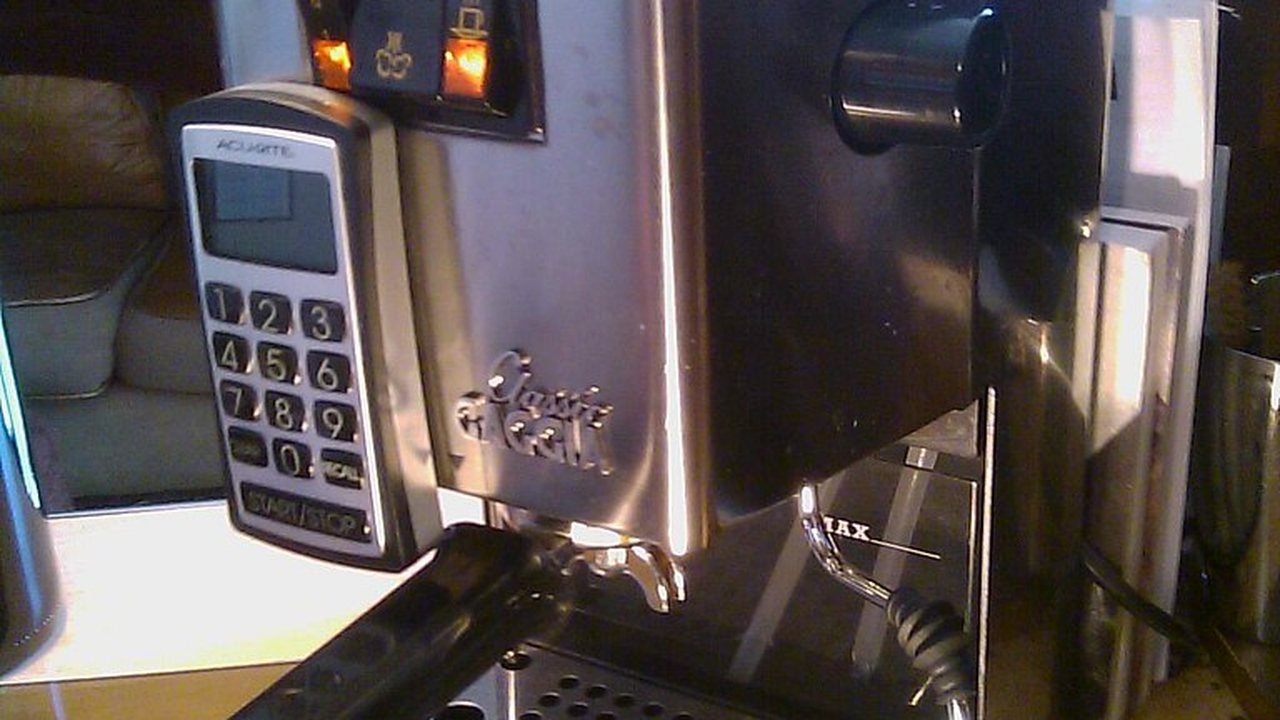
Open full transcript
To learn how to descale Gaggia Classic safely, use an approved descaler, run it through the brew and steam paths, then rinse until the water is clean.
Scale hides inside the machine. Flow drops. Steam weakens. Then the espresso gremlin starts blaming your grinder.
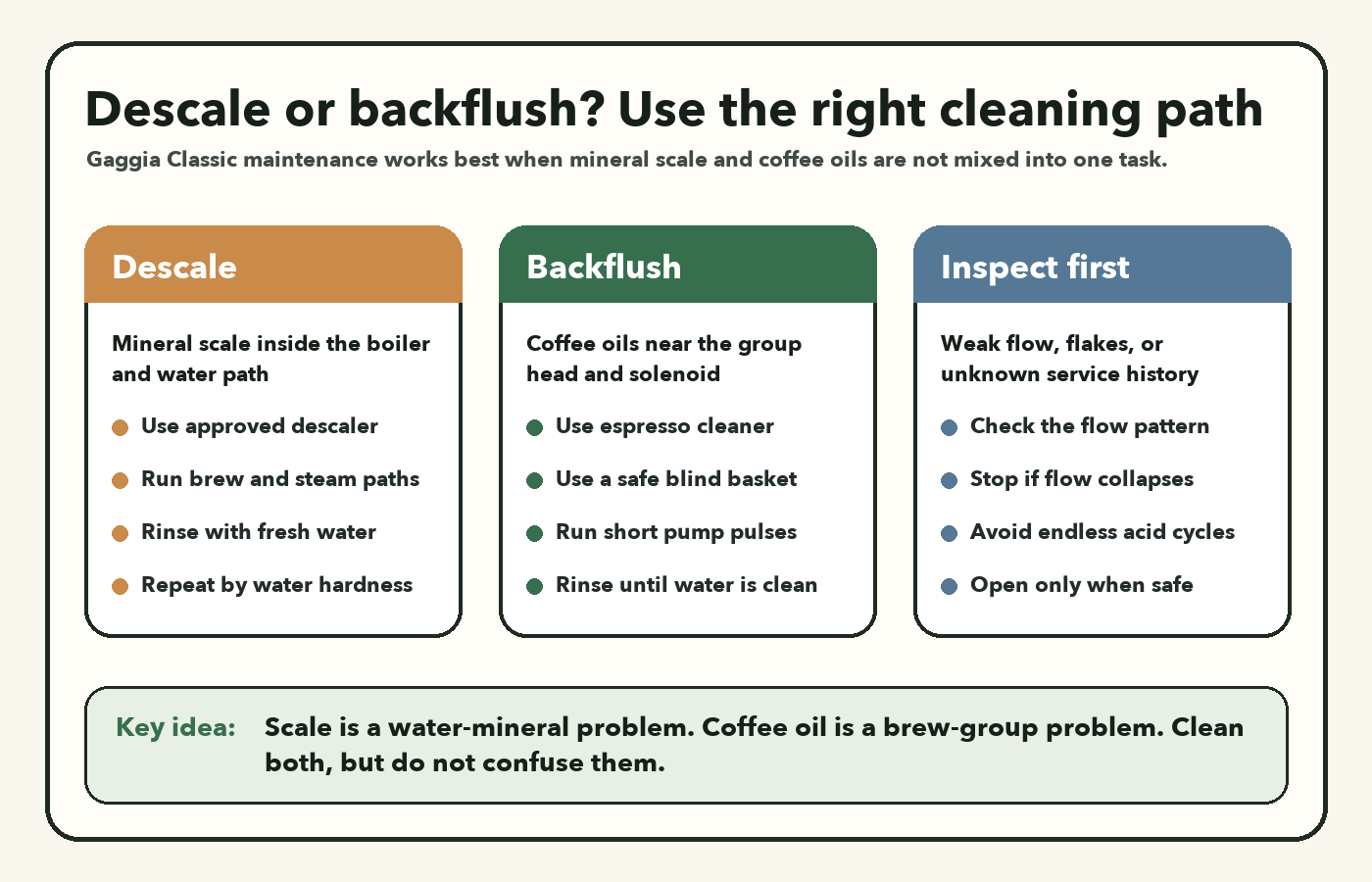
The safe answer is simple: descale minerals, backflush coffee oils, and do not mix those jobs into one messy ritual.
This guide turns the common forum confusion into a clean home workflow. It is based on owner pain points from Gaggia Classic discussions, maintenance guides, iFixit repair notes, Gaggia guidance, and service-style advice from espresso suppliers.
What does descaling a Gaggia Classic actually clean?
How to descale Gaggia Classic starts with one idea: descaling cleans mineral scale inside the boiler, tubes, brew path, and steam path.
It does not clean coffee oils from the shower screen or the portafilter. That job belongs to backflushing and manual group cleaning. Many owners mix these two tasks because both involve water, cleaner, and waiting near the machine like a worried kitchen scientist. The machine does not see them as the same job.
If you want to clean both areas in one maintenance session, keep the tasks separate. Descale first when mineral scale is the concern. Backflush later with espresso cleaner if your model and basket setup support it. The Gaggia Classic backflush guide covers that oil-cleaning job in more detail.
Tiny Map Before We Touch Anything
How do you know your machine needs descaling?
How to descale gaggia classic becomes the right question when flow, steam, or water behavior changes without a recipe reason.
Look for weak water from the group, slower warm-up, weaker steam, pale flakes, or a machine that has used hard tap water for months. These signs do not prove scale every time. They tell you to check the water path before you chase grind settings forever. The little espresso gremlin loves a false diagnosis.

Signal Check
If group flow stops but the steam wand still gives water, use the no-water diagnosis for solenoid, scale, or pump issues before you run endless acid cycles.
Can you use vinegar to descale a Gaggia Classic?
How to descale Gaggia Classic safely means you should not use vinegar when an approved espresso-machine descaler is available.
Vinegar is cheap, but cheap can become noisy here. It can leave odor, attack some materials, and create a long rinse problem. Gaggia and many espresso maintenance guides point users toward machine-safe descaling products instead. Use products made for espresso machines, such as Gaggia descaler or another compatible descaler from a trusted espresso supplier.
Cleaner Choice Matrix
What should you prepare before descaling?
How to descale gaggia classic is easier when you prepare the machine, cleaner, water, containers, and safety space first.
You need approved descaler, fresh water, a large container under the group, another container near the steam wand, and time for a full rinse. Remove coffee from the workflow. Empty the drip tray. Keep the portafilter out unless your machine instructions say otherwise. If you plan to open the machine because flow is already strange, stop and read the safety checks first.
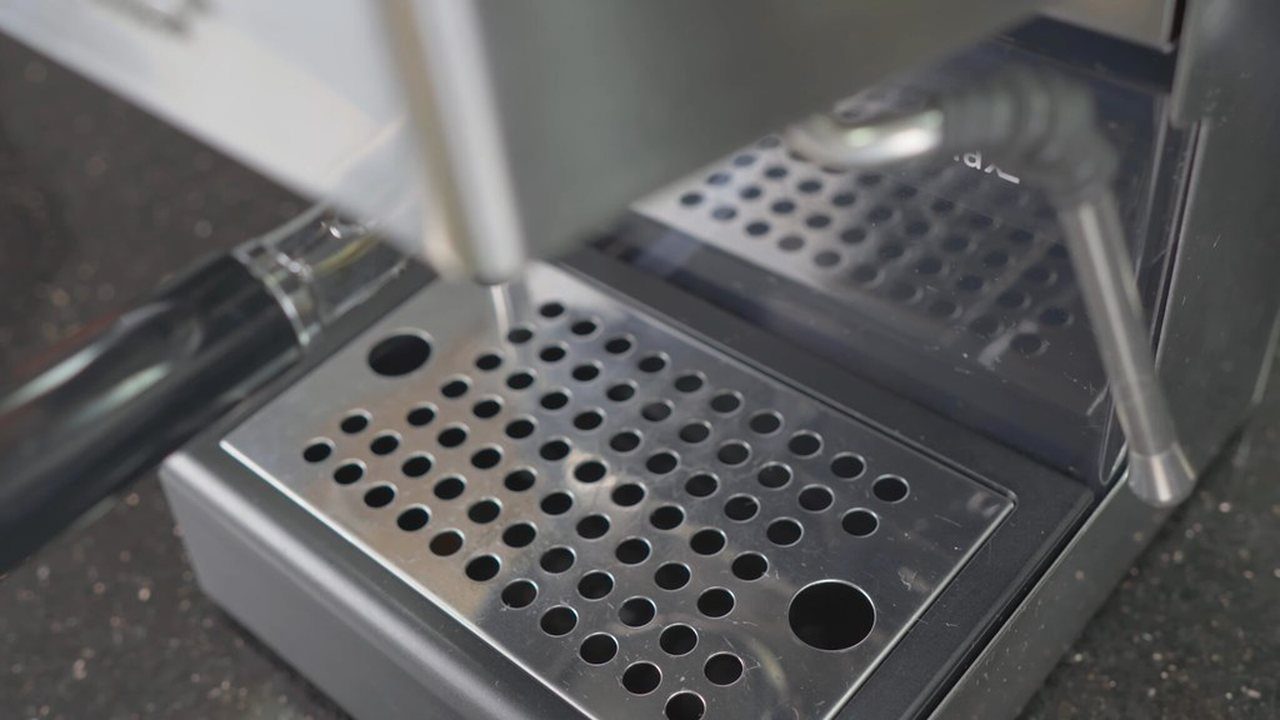
Preparation List
How do you run the descaling solution?
How to descale Gaggia Classic works best when you move solution through both the brew path and the steam path in short cycles.
Mix the descaler according to its label. Fill the tank with the solution. Turn on the machine and place containers under the group and steam wand. Run solution through the brew button for short bursts. Then open the steam valve and run solution through the wand in short bursts. Let the solution sit between cycles if the product instructions require it.
Step Sequence
How much should you rinse after descaling?
How to descale gaggia classic is not finished until fresh water has fully replaced the descaling solution.
Rinse more than your impatient brain wants to rinse. Fill the tank with fresh water. Run clean water through the group and the steam wand. Repeat until the water smells neutral and shows no foam or cleaner trace. Pull a blank water flush before brewing coffee. If flakes appear after the rinse, do not assume the problem is solved. Loose scale may be moving through the machine.
Rinse Decision Table
How often should you descale a Gaggia Classic?
How to descale gaggia classic frequency depends on water hardness, drink volume, and the machine model.
There is no honest universal calendar. A daily user with hard tap water may need descaling much sooner than a light user with low-scale water. A user with a water recipe designed for espresso may need it less often. The better habit is to test your water, watch flow, and record maintenance dates. Your future self will thank you. It may even stop glaring at the sink.
Frequency Matrix
What can go wrong after descaling?
How to descale Gaggia Classic can reveal old scale, so flow may change, flakes may appear, or a small passage may clog after the first flush.
This is the part forums often talk about because it feels unfair. The owner tries to clean the machine. Then the machine acts worse. In many cases, the descaler did not create the original problem. It loosened scale that was already there. That loose material can move toward the solenoid, group path, or steam valve.
After-Descale Troubleshooting
How should Evo and older Classic owners think about risk?
How to descale gaggia classic should match the exact machine version, because boiler materials and service history matter.
Older Gaggia Classic machines, Classic Pro models, Evo-era machines, and E24 machines do not all create the same risk picture. Some owners worry about coating flakes. Some owners deal with aluminum oxide or scale. Some owners buy used machines with unknown water history. Do not treat every particle as the same problem. If the machine is new, under warranty, or showing repeated dark flakes, contact support before more chemical cleaning.
Model-Aware Check
What is the safest full maintenance workflow?
How to descale Gaggia Classic safely means you keep water quality, descaling, backflushing, and inspection in one simple routine.
Start with water. Use a scale-safe water plan. Clean the group before coffee oils become old glue. Descale before scale blocks tiny passages. Inspect flakes instead of guessing. If you later upgrade pressure, temperature, or workflow parts, do it on a healthy machine. Mods work better when the machine is not secretly hosting a mineral cave.
Complete Maintenance Path
자주 묻는 질문
Can I descale my Gaggia Classic with the portafilter locked in?
Usually no. Descaling is about the water path, not coffee extraction. Follow your machine manual and descaler instructions. Do not add coffee.
What is the best descaler for a Gaggia Classic?
Use a Gaggia-approved descaler when possible. A compatible espresso-machine descaler can also work. Avoid random household acids when safer products exist.
How do I know if I rinsed enough?
The water should run clear and neutral. If you smell cleaner, see foam, or taste chemical notes in a blank flush, keep rinsing.
Can descaling fix no water from the group head?
Sometimes. It may help if scale is light and still reachable. If the solenoid or group path is blocked, use a flow diagnosis before more descaler.
Should I descale before installing upgrades?
Yes, if scale is likely. A clean water path gives better results from PID, pressure, and workflow upgrades.
References
- Gaggia Classic Evo official manual PDF
- The Home Baristas: Maintaining and descaling your Gaggia Classic
- iFixit: How to descale and maintain Gaggia Classic Espresso Machine
- Whole Latte Love support article on Gaggia Classic Pro cleaning and descaling
- Home-Barista forum discussion on backflushing and cleaning the Gaggia Classic
Keep the machine boring in the best way: clean water, clean group, clean flow. Then visit the HomeBaristaMods reference library for the next smart step.

 English
  Italiano
  Deutsch
  Español
  Français
  العربية
  日本語
日本語  한국어
한국어  香港中文
香港中文  Nederlands
  Português