Coffee roast levels, made useful.
Light, medium and dark are starting directions, not fixed recipes. Use the roast label to set expectations, then check the roaster's notes, roast date and brew guidance before you change the grind.
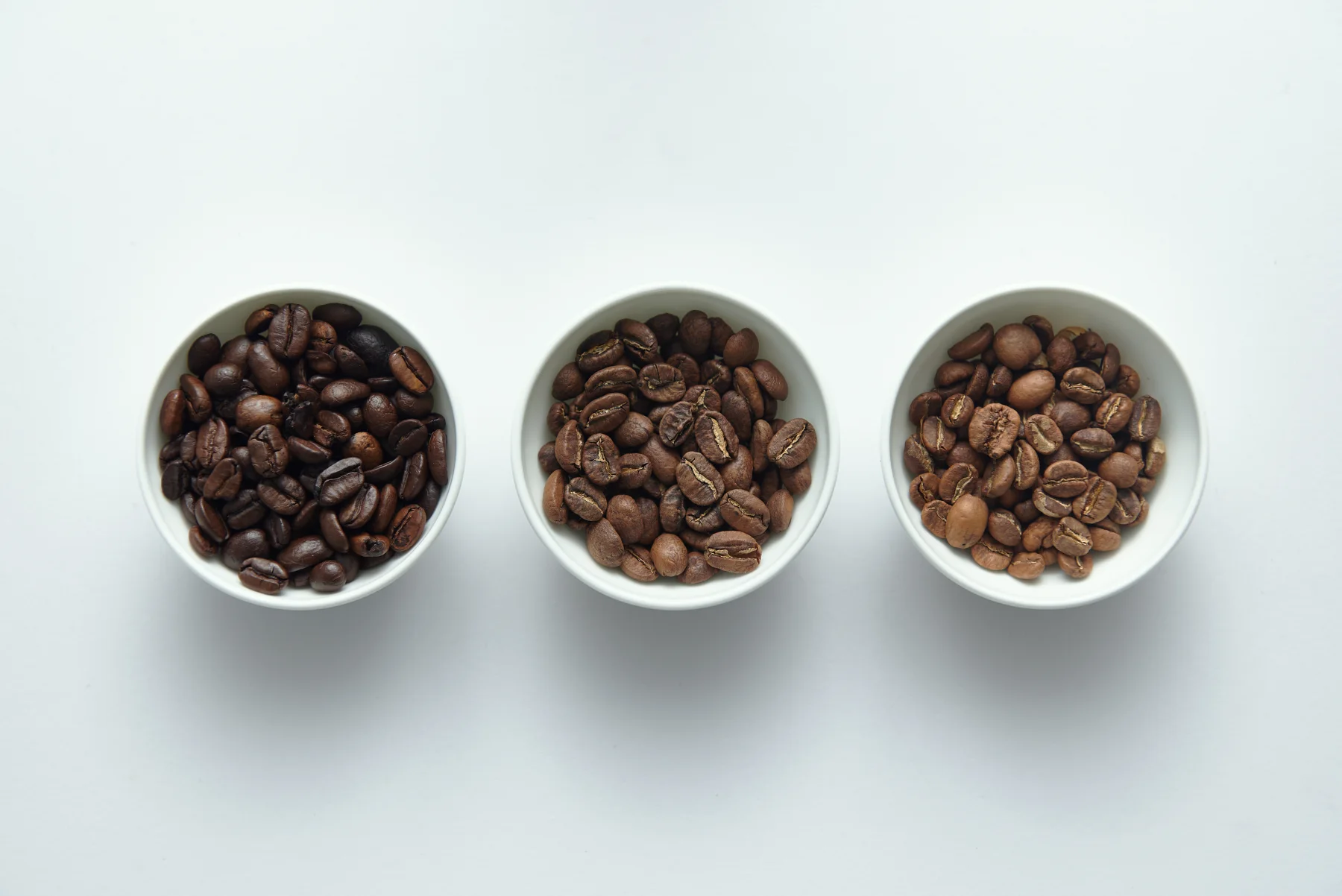
What do light, medium and dark roast mean?
The label usually describes roast development and color. It can suggest where the cup may lean, but origin, variety, processing, freshness and brewing still matter.
Light roast
Often chosen when the drinker wants more origin character, brighter acidity or a clearer view of floral and fruit notes.
- Usually matte rather than oily
- Can ask more of the grinder and recipe
- A sensible filter starting point
Medium roast
Often keeps some origin character while adding more caramelized sweetness and a rounder, easier-to-place profile.
- Commonly used across brew methods
- A practical first bag for a new setup
- Can work straight or with milk
Dark roast
Often moves toward deeper roast character, lower perceived acidity, heavier bitterness and flavors that stay present through milk.
- Surface oil becomes more likely
- Needs care to avoid harsh extraction
- Familiar in traditional espresso styles
Keep the labels loose. "City," "Full City," "French" and "Italian" may appear on bags, but the same word does not guarantee the same color or cup from every roaster. Use the light roast vs dark roast comparison when you want the two ends side by side.
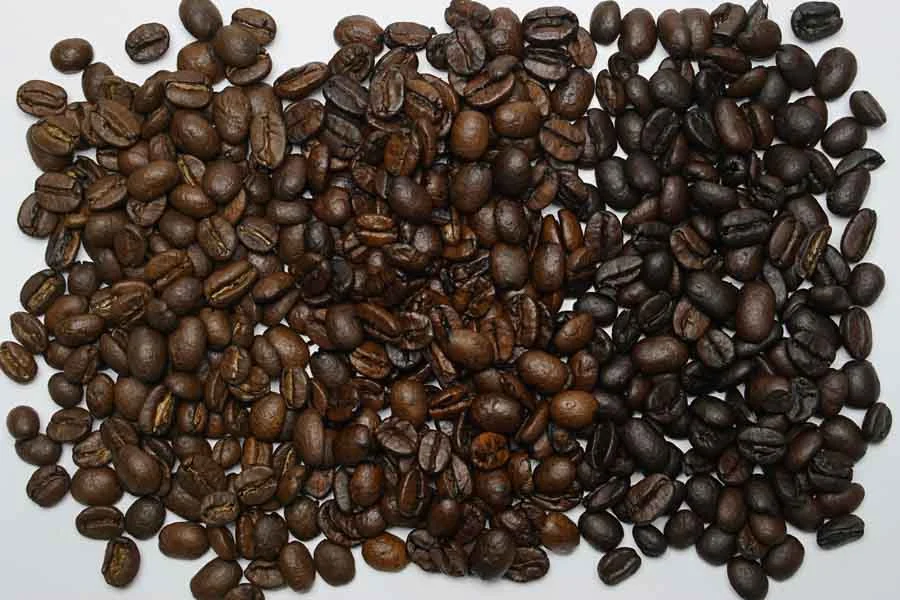
A roast label is only the first clue.
Dark beans can look glossy, and light beans are usually more matte. That is useful at a glance. It still cannot tell you whether the coffee is fresh, whether the roast suits your brew method or whether you will enjoy the flavor.
Which roast level should you try first?
Start with the drink you make most often. These are testing directions, not rules; the roaster's own recipe should win when one is provided.
Straight espresso
It gives a broad middle ground. Move lighter for more origin detail or darker for more roast-led weight.
Pour-over or drip
This range often keeps more of the coffee's origin and processing character visible in the cup.
Cappuccino or latte
More developed flavors can remain easier to taste after milk adds sweetness and dilution.
New grinder or machine
A medium or medium-dark coffee with a published recipe can make early dialing less confusing.
Does "espresso roast" mean dark roast?
Not necessarily. "Espresso roast" usually means the roaster developed or selected the coffee with espresso in mind. Some are dark and traditional; others are medium or light enough to keep more acidity and origin character. The espresso roast guide explains what to read on the bag and how to choose a first test.
Does dark roast have more caffeine?
Dark roast tastes stronger to many people, but that flavor does not prove a higher caffeine dose. The National Coffee Association notes that light roast beans can retain slightly more caffeine. Your dose, how you measure it, the coffee species, drink size and extraction still shape the finished cup.
If caffeine is the decision, compare the actual serving and recipe. Roast color is too blunt to settle it.
See how dose, species and serving change caffeineSee what changes during roasting.
James Hoffmann follows the roasting process from green coffee through heat, first crack, development and cooling. It is useful context when a bag's roast label feels too vague.
Watch on YouTube
Video: Coffee Roasting Explained, James Hoffmann.
Read five details beyond the roast name.
A useful bag gives you enough context to make a first recipe, then decide whether the coffee suits your taste.
Roast date
It says more about freshness than a best-before date alone.
Brew guidance
Look for espresso, filter or a specific ratio before choosing a method.
Origin
Country, region, producer and lot narrow the coffee more than "100% Arabica."
Process
Washed, natural and other methods can change what you notice in the cup.
Tasting notes
Use them as a direction for tasting, not a promise that every setup will match.
Check the label, then check the claim.
These pages cover roast terminology, bean types and freshness without asking one label to explain the whole coffee.
Questions that come up at the bag shelf.
What do coffee roast levels mean?
Coffee roast levels describe how far the beans were developed during roasting, usually with color and surface appearance as visible cues. Light, medium and dark labels can suggest flavor direction, but the names are not perfectly standardized. Origin, processing, freshness and brewing still affect the finished cup.
Is dark roast coffee stronger than light roast coffee?
Dark roast coffee often tastes stronger because roast-led bitterness, smoke or heavier caramelized flavors are easier to notice. That does not automatically mean more caffeine. Coffee strength in the cup also depends on dose, drink size, coffee species, brew ratio and extraction, not roast color alone.
Does light roast coffee have more caffeine?
Light roast coffee can retain slightly more caffeine in the bean, according to the National Coffee Association, but the serving difference is not settled by color alone. Measuring beans by volume or weight changes the comparison, while dose, species, drink size and extraction determine how much caffeine reaches the cup.
What coffee roast level is best for espresso?
A medium roast is a practical first test for espresso because it sits between bright light-roast profiles and heavier dark-roast profiles. The best coffee roast level still depends on the drink, grinder and recipe. Follow the roaster's espresso guidance first when the bag provides dose, yield and time.
 English
  Italiano
  Deutsch
  Español
  Français
  العربية
  日本語
日本語  한국어
한국어  香港中文
香港中文  Nederlands
  Português