
Silvia vs Gaggia Classic: which should you mod?
The two machines that define home espresso modding, compared by someone who's rebuilt both. Brass boiler vs aluminum, single-hole vs double-hole steam, adjustable OPV vs spring-swap, Boilergate, and which one actually wins for your budget and your tinkering appetite.
Buy the Rancilio Silvia for a ten-year machine. Buy the Gaggia Classic Pro for cheap entry into modding. I've rebuilt both platforms, and the right pick depends on how deep you plan to go.
Budget picks the Gaggia Classic Pro at $449, half what a Silvia costs. Geek depth favors Gaggia too - Gaggiuino turns it into a Decent DE1 rival. Steam belongs to Silvia - 300ml brass plus a single-hole wand sustains vortex through consecutive lattes. Durability also goes Silvia: bare brass outlasts coated aluminum after Boilergate.
Both machines share an Ulka vibration pump. Gaggia adds a 58mm commercial group. Architecture separates them fast - brass versus aluminum, single-hole versus two-hole, adjustable OPV versus spring-swap. Walk through each decision point. Read our Gaggia Classic page or Rancilio Silvia page for context.
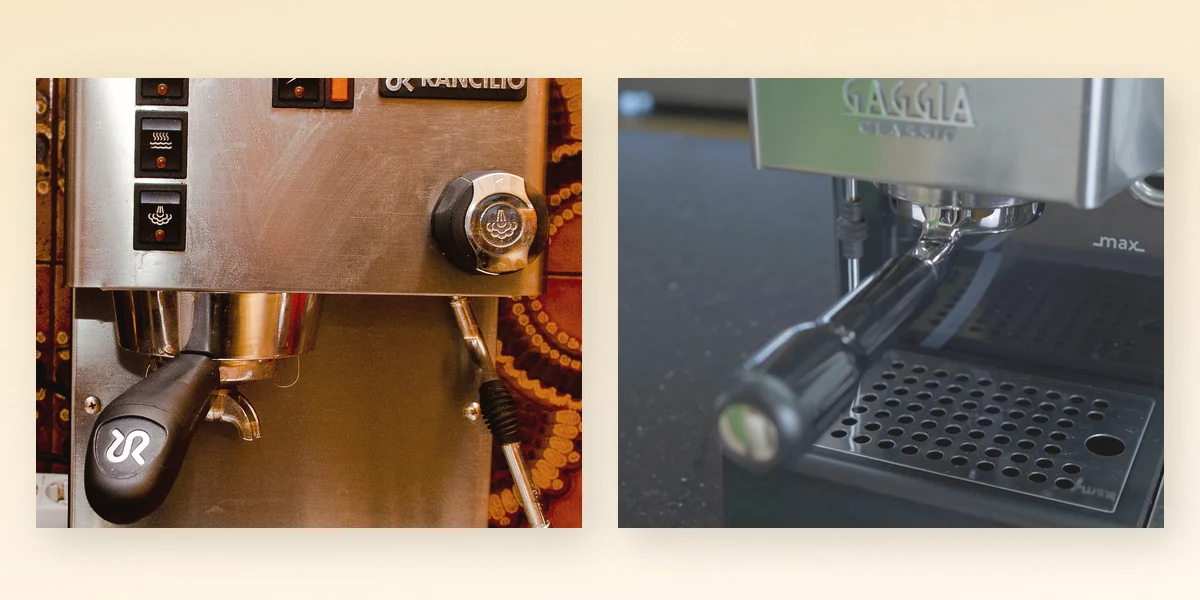
| Core spec | Rancilio Silvia (V6/M) | Gaggia Classic Pro (GCPE) |
|---|---|---|
| Boiler | 300ml marine-grade forged brass | 100ml die-cast aluminum |
| Steam system | Commercial single-hole ball-joint wand | Commercial two-hole fixed axial rotation wand |
| Water path | Factory 12-15 Bar, physical adjustment nut | Factory 15 Bar, non-adjustable |
| Net weight | 14.0 kg (30.8 lbs) | 8.5 kg (18.7 lbs) |
| Price (MSRP) | ~$995 | ~$449 |
| Group head | 58mm commercial | 58mm commercial |
| Pump | Ulka vibration | Ulka vibration |
| 3-way solenoid | Yes | Yes |
| Preheat time | ~20 minutes | ~5 minutes |
Is the Silvia brass boiler worth the extra money?
A Rancilio Silvia asks $995 against Gaggia Classic Pro at $449. That $546 premium buys 300ml of marine-grade forged brass instead of 100ml die-cast aluminum. Brass holds heat stubbornly - brew water stays within ±1°C once warmed, where Gaggia's micro-boiler dives 8-12°F during a 30-second extraction. Twenty-minute preheat is the cost. I've pulled Silvia shots at minute 25 that matched minute 5 of a Gaggia session, every single time, because thermal mass doesn't lie. Boilergate sealed this argument for me - bare brass never coated, never flaked, never sent black polymer specks through anyone's steam wand. You pay once, drink clean for a decade. Brass also resists electrochemical corrosion that pits bare aluminum under aggressive descaling. Save your money elsewhere if $449 stretches you. Pay the premium if you can. Boilers outlast chassis, every time.
Key takeaway: Pay the $546 if your budget allows. Brass gives you thermal stability, contamination-free water, and decades of service - aluminum gives you fast heat and a lower entry tag.
Which is easier to mod for a beginner?
The Gaggia Classic Pro wins on beginner modding, for three reasons. A 58mm commercial group means baskets, tampers, and screens transfer from any cafe tool kit. The chassis opens with standard Torx bits. Gaggia's OPV sits on top of the boiler, visible, not buried behind panels. Adding an SSR-40DA and a PID takes an afternoon if you can read a schematic. Silvia demands more respect from builders. Drain the boiler, relocate your factory steam thermostat into brew position, route RTD wires through a back-panel grommet - every step punishes sloppy hands. Auber's kit ships with good documentation, but PT100M RTD leads are hair-thin with no strain relief. Twist them once during threading and the metal filament snaps. I broke my original RTD that way. Gaggia's spring-swap OPV is more annoying than Silvia's wrench-adjustable nut, but Gaggia's platform forgives beginners otherwise. If you have never opened an espresso machine, start with Gaggia - mistakes cost less.
Key takeaway: Gaggia forgives beginners with its open chassis. Silvia rewards careful, patient hands. Buy the Gaggia if this is your initial rebuild. Buy the Silvia when you trust your own wrench work.
Which has better steam for latte art?
Steam belongs to the Silvia, no contest. A 300ml brass boiler stores serious thermal energy, and the commercial single-hole ball-joint wand focuses that energy into a tight vortex. Microfoam comes easy on this wand. I've pulled six cappuccinos back-to-back at a dinner party without waiting for recovery. Gaggia's factory Panarello belongs in the bin - it aerates milk into dish soap foam, incapable of latte art. Pro/Evo upgrade wands use a two-hole tip, but that 100ml micro-boiler drops steam pressure too fast. Two holes split the flow when one hole would sustain a vortex. Back-to-back lattes on a Gaggia mean 60-90 seconds of recovery between cups. Silvia transplants fix this problem. A Silvia V2 wand bolts onto older Gaggia models with a single nut - best cost-to-benefit mod on the platform. The Silvia V3 ball-joint wand gives full vertical and horizontal articulation, but demands destructive chassis cutting. If you drink milk drinks daily, buy the Silvia. If you drink straight espresso, the Gaggia steam weakness matters less.
Key takeaway: Silvia wins steam by a wide margin. 300ml brass plus a single-hole wand sustains vortex through back-to-back drinks. Gaggia needs a Silvia V2 wand transplant just to compete.
Does the Gaggia Boilergate affect my choice?
Boilergate affects your choice if you buy a Gaggia Classic Pro Evo (GCPE) manufactured in 2023 or later. Gaggia lined that aluminum boiler with an EXELIA 3010 black polymer coating - a food-grade Teflon composite, modified for boiler use. Coating suffered defective polymerization at the factory. Under 10+ bar pressure, 130°C rapid heating, and aluminum's violent thermal expansion, adhesion collapsed within weeks. Thousands of owners found black chemical flakes and flocculent debris spraying from the steam wand and group head. Physical debris clogged the precision 3-way solenoid valve. Whole Latte Love swapped in uncoated older aluminum boilers under emergency replacement policies. FDA health concerns drove the response. Pre-Evo Gaggia Classic Pro boilers run bare aluminum, which is safe but pits under aggressive descaling. Silvia sits this whole problem out. Twenty years of bare brass castings, zero coatings, zero polymer failures. Boilergate validated Silvia's philosophy since V1 - no coatings inside a pressure vessel. Buy a pre-Evo Gaggia if you want aluminum. Buy a Silvia if you want peace of mind.
Key takeaway: Boilergate only affects 2023+ Evo Pro models with EXELIA 3010 coating. Pre-Evo bare aluminum is safe. Silvia is immune - no coatings, no polymer failures, ever.
Which holds resale value longer?
The Silvia holds value like a Toyota Land Cruiser. Two decades of benchmark status means used Silvias move fast on eBay and Reddit, often at 60-70% of MSRP years after purchase. Parts availability stays strong - Rancilio still ships OEM components, and the modding community built a deep aftermarket. A used Silvia with a fresh Auber PID and calibrated OPV sells inside a week at the right price. Gaggia Classic Pro resale runs 40-50% of MSRP, with a floor under Boilergate-affected Evo Pros. A bare-aluminum pre-Evo GCP holds value better than a coated Evo Pro. Gaggia parts also stay available, but the platform cycles generations faster - traditional, Pro, Evo, E24 - which fragments used market pricing. Silvia's V1 through V6 share 90% of parts, which keeps the resale floor high. I sold my 2014 Silvia in 2024 for $580, only $200 under what I paid. A same-vintage Gaggia would have fetched $180 at best. Buy the Silvia if you treat espresso gear as an asset. Buy the Gaggia if you treat it as a consumable.
Key takeaway: Silvia holds 60-70% of MSRP used. Gaggia holds 40-50%, less for Boilergate units. Stable part compatibility across V1-V6 protects Silvia resale.
Can a modded Gaggia beat a stock Silvia?
Yes, a full-mod Gaggia beats a stock Silvia on capability, no question. Gaggiuino adds closed-loop pressure profiling, flow profiling, and stop-on-weight to the Gaggia. A Decent DE1 rivals this at four times the price. Stock Silvia gives you thermal mass and a bimetal thermostat - no profiling, no flow data, no stop-on-weight. The trade-off is baseline shot quality. Stock Silvia pulls better espresso than stock Gaggia out of the box, because 300ml brass holds brew temperature where 100ml aluminum dives mid-shot. Once you mod both machines, the gap flips. A Gaggiuino Gaggia with a brass boiler swap pulls shots a stock Silvia cannot match. But that build costs $449 plus $300 in parts plus a brass boiler kit, and demands real maker skill. A modded Silvia with Auber PID plus Gaggiuino closes that capability gap, but Gaggiuino community built for Gaggia originally. Silvia Gaggiuino builds exist, but they are rarer and less documented. For deep modding, buy a Gaggia. For best stock shots, buy a Silvia.
Key takeaway: A Gaggiuino Gaggia with a brass boiler swap beats a stock Silvia on capability. Stock Silvia beats stock Gaggia on baseline shot quality. Modding budget decides the winner.
Which is quieter on a morning counter?
Both machines ship with the same Ulka vibration pump, so stock noise runs roughly equal. A 50Hz or 60Hz piston reciprocating against a metal chassis makes itself heard through your kitchen counter. Silvia wins quietness after mods. Silvia's 14kg chassis dampens vibration through sheer mass. Gaggia at 8.5kg transmits more pump buzz into your counter and cup. Silvia's modding path includes a Quickmill Pulsor - a diaphragm pulse dampener that bolts onto pump output via a 1/8" BSP adapter. Pulsor shapes sawtooth pulsed flow into a smooth linear pressure ramp, and the loud metallic whine drops to a low background tone. I installed one on my daily driver and my spouse stopped complaining about morning noise. That's your real-world validation metric. For extreme builds, an OLAB K09541 Silent Green pump replaces your factory Ulka with superior soft-start characteristics. Silvia plus Pulsor plus OLAB runs below conversation level. You'll hear your grinder more than the machine. Gaggia owners can install that same Pulsor and OLAB pump, but lighter mass means more residual vibration reaches your cup.
Key takeaway: Stock, both run equal noise. With a Pulsor, Silvia runs quieter thanks to 14kg of chassis mass. Gaggia needs the same dampener, still transmits more buzz.
Which machine survives back-to-back milk drinks?
The Silvia survives back-to-back milk drinks better than any single-boiler in its price class. A 300ml brass boiler stores enough thermal energy for four to six cappuccinos in a row, with maybe 20 seconds of recovery between cups. I've done six lattes in 12 minutes at a brunch without watching the steam light blink. The single-hole wand focuses steam into a sustained vortex - microfoam stays consistent from cup one to cup six. Gaggia's 100ml aluminum boiler runs dry after two milk drinks. Steam light cuts out, you wait 60-90 seconds for reheat, then you steam your third cup. That's fine for solo mornings, brutal for hosting. A brass boiler swap fixes this, but the swap pushes total build cost above a stock Silvia. If you entertain, buy the Silvia. If you drink alone, the Gaggia limitation never bites. If you drink milk drinks twice a day, every day, Silvia pays back that premium in saved mornings.
Key takeaway: Silvia handles 4-6 back-to-back milk drinks without recovery. Gaggia tops out at two before a 60-90 second reheat. Hosts need Silvia for entertaining.
Which gets to flow profiling cheaper?
The Gaggia wins flow profiling on cost, by a wide margin. Gaggiuino grew up on Gaggia, with the largest community, best documentation, and most proven install path. A Gaggiuino build on a Gaggia Classic Pro runs about $200 in parts - STM32U585 board, pressure transducer, thermocouple, wiring harness, OLED display. Add the $449 machine and you sit under $700 total for Decent DE1-class features. Silvia also accepts Gaggiuino, but the build is rarer, less documented, and demands custom M3 thermocouple work plus high-voltage isolation skills. The Silvia Gaggiuino community is small and expert-only. A common Silvia path runs Auber PID with pre-infusion and manual pressure profiling through a steam wand relief hack - cheap, but not closed-loop. If flow profiling is your goal, Gaggia gets you there for half the Silvia's total cost. If you want thermal stability up front and flow profiling as a future upgrade, start with Silvia plus Auber. You can always add Gaggiuino later. Both machines land at the same destination - Gaggia just arrives cheaper.
Key takeaway: Gaggia hits flow profiling under $700 total. Silvia Gaggiuino exists but stays expert-only. Gaggiuino documentation and community favor Gaggia by a wide margin.
Which should I buy if I only own one grinder?
The Silvia, no question about it. A single grinder means you dial in one bean, one grind, one dose, every morning. Silvia's thermal mass rewards that repetition - once you find 228°F and 18g in, 36g out, the machine hits that target every single day. Gaggia's 17°C thermostat swing punishes single-grinder workflow. You dial in today, then tomorrow's opening shot runs hot because the bimetal thermostat cycled differently. Add a PID and Gaggia closes that gap, but stock versus stock, Silvia wins consistency by a mile. A 300ml brass boiler also forgives small dose errors - 0.5g off and your shot still tastes balanced, because thermal mass absorbs variation. Gaggia's 100ml boiler magnifies every error. A half-gram underdose drops puck resistance, drops brew temperature, drops shot quality in a chain reaction. Silvia gives you a wider sweet spot, which matters when you cannot adjust grind between beans. If you own multiple grinders or single-dose on demand, Gaggia's limitations fade. If you own one grinder and want repeatable mornings, buy the Silvia.
Key takeaway: Silvia gives repeatable shots with a single grinder. Gaggia's stock thermostat swing punishes single-grinder workflow. Add a Gaggia PID and the gap closes.
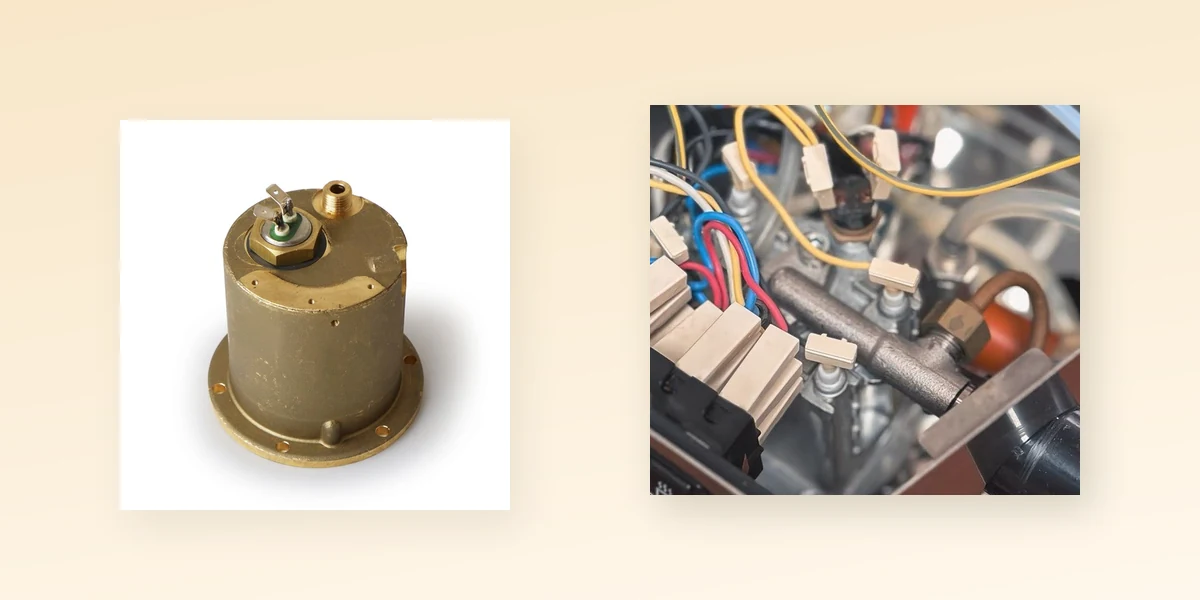
| Mod | Silvia | Gaggia |
|---|---|---|
| PID install | Medium - PT100M RTD in thermowell, SSR routing | Easy - SSR-40DA, accessible wiring |
| OPV to 9 bar | Easy - wrench on adjustment nut | Medium - third-party spring kit swap |
| Steam wand upgrade | Easy - factory V3 ball-joint bolts on | Hard - Silvia V3 needs destructive chassis cut |
| Pump dampener | Easy - Quickmill Pulsor on 1/8" BSP | Easy - same Pulsor fits |
| Gaggiuino | Hard - rare build, custom thermocouple | Medium - mature community, proven parts |
| Brass boiler swap | N/A (already brass) | Hard - full teardown, $200+ kit |
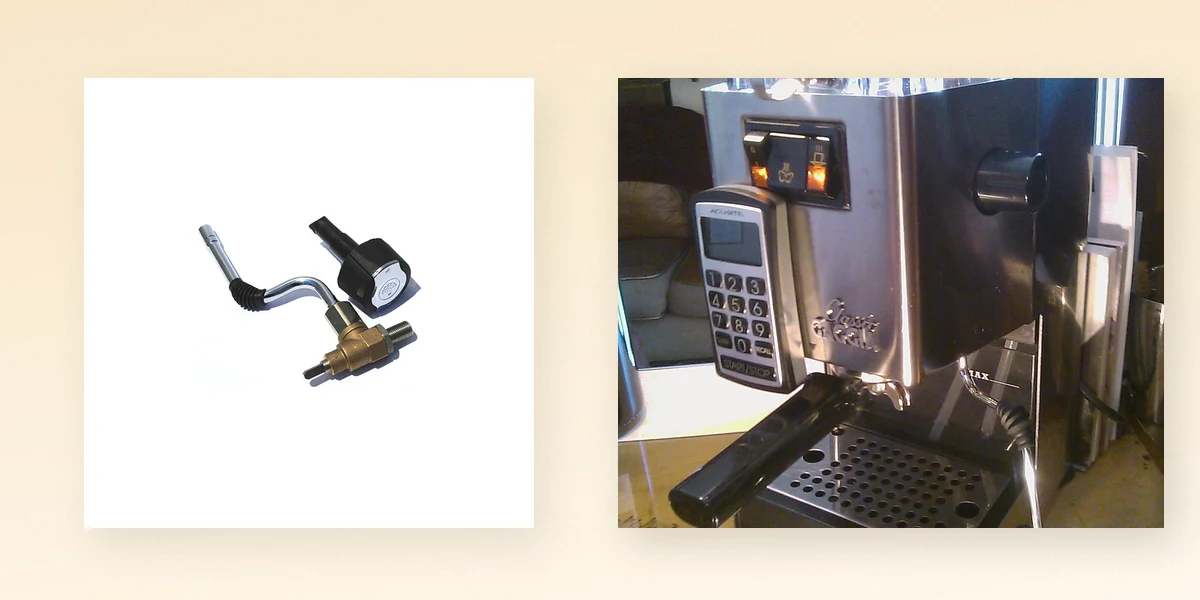
| If you want... | Buy this | Why |
|---|---|---|
| Budget entry under $500 | Gaggia Classic Pro | $449 plus $200 in mods gets you profiling |
| Ten-year durability | Rancilio Silvia | Brass boiler outlasts coated aluminum |
| Daily latte art | Rancilio Silvia | 300ml + single-hole wand = sustained vortex |
| Back-to-back drinks for guests | Rancilio Silvia | 4-6 drinks before recovery needed |
| Deepest modding ecosystem | Gaggia Classic Pro | Gaggiuino, brass boiler swap, dimmer mods |
| Flow profiling under $700 | Gaggia Classic Pro | $449 + Gaggiuino = Decent DE1 features |
| Quiet morning counter | Rancilio Silvia (modded) | 14kg chassis + Pulsor + OLAB pump |
| Resale value after 5 years | Rancilio Silvia | 60-70% MSRP vs 40-50% for Gaggia |
| Peace of mind on materials | Rancilio Silvia | Bare brass, no Boilergate exposure |
| Beginner rebuild | Gaggia Classic Pro | Open chassis, forgiving platform |
Frequently asked questions
Can I swap a Silvia wand onto a Gaggia Classic?
Yes, with caveats on which Gaggia generation you own. A Silvia V2 wand bolts onto older Gaggia Classic models with a single nut. Loosen that bolt joining stock plastic tube to brass tube, slip the V2 wand's top nut on, retighten. Sometimes that tube bend needs a light tap to widen its radius so your nut passes, but no destructive cutting. The V2 wand uses a hex single-hole tip with horizontal rotation. Best cost-to-benefit steam upgrade on the Gaggia platform. The Silvia V3 ball-joint wand is a different story. A ball-joint nut needs more internal clearance than stock, so you must open your chassis, cut and rebend that steam tube, and re-route mounting. Destructive, hardcore, and not reversible. Most Gaggia owners stop at the V2 wand and call it done. A V2 wand fixes 80% of Gaggia's steam problem for 20% of V3 effort.
What's the best starting mod for each machine?
On a Silvia, an Auber PID with pre-infusion tops your priority list, period. Without temperature control you are surfing a 30°F deadband bimetal thermostat and guessing when 93°C lands inside mechanical hysteresis. I poured more inconsistent shots down the drain from stock Silvias than from any other machine I've owned. Auber's kit compresses brew water fluctuation to ±1°C. It mounts an SSR on your chassis left panel, and runs a PT100M RTD in that steam thermowell. Install takes a full afternoon. On a Gaggia Classic Pro, that OPV spring swap tops your list. Factory ships at 15 bar, which channels pucks and blows shots. Drop to 9 bar with a third-party spring kit before any other mod. A PID comes second on Gaggia, OPV comes second on Silvia. Different machines, different priority moves. Both machines need both mods eventually - the order just changes. Add a V3 steam wand on Silvia third. Add a Silvia V2 wand transplant on Gaggia third.
How do I know if Boilergate affects my Gaggia?
Check your model name and purchase date. Boilergate hits Gaggia Classic Pro Evo (GCPE) sold from 2023 onward, with an EXELIA 3010 black polymer coating inside its aluminum boiler. Pre-Evo Gaggia Classic Pro (GCP) models run bare aluminum and are immune to the coating failure. Look for black chemical flakes or flocculent debris in your drip tray, steam wand output, or group head flow. If you see specks within two to three weeks of ownership, stop using the machine and contact your distributor. Whole Latte Love in North America issued emergency replacement policies and swapped in uncoated older aluminum boilers. Don't run factory descaler through a coated boiler - aggressive descalers accelerate coating detachment and chemical corrosion. If you bought an Evo Pro in 2023 or 2024, file a warranty claim before you tear down the boiler yourself. Opening your boiler voids warranty on most units. A bare-aluminum Gaggia from 2018-2022 is safe. A Silvia is fully immune - no coatings, no polymer, no Boilergate exposure.
Can I run Gaggiuino on both machines?
Yes, but the experience differs. Gaggiuino was built for Gaggia Classic originally, with the largest install base, best documentation, and most proven parts list. An STM32U585 board, pressure transducer, M3 thermocouple, OLED display, and wiring harness run about $200 total. Most Gaggia builds land in a weekend if you can solder and handle high-voltage isolation. Silvia Gaggiuino builds exist but stay rare. Silvia's internal layout differs, that thermocouple mount needs custom work, and community documentation runs thinner. Expect a Silvia Gaggiuino build to take two weekends, plus more troubleshooting. Both machines end up with the same capability - closed-loop pressure profiling, flow profiling, stop-on-weight, pre-infusion curves. The Gaggia path costs less and gets you there faster. The Silvia path rewards builders who want flow profiling on a brass boiler. If you want Gaggiuino and you have no machine yet, buy a Gaggia. If you already own a Silvia and want flow profiling, an Auber PID with pre-infusion helps. It gives you 80% of that benefit at 20% of effort.
How do I know if my Silvia needs an OPV recalibration?
Pull a 30-second blank shot through a naked portafilter with no coffee, and measure the output volume. Silvia's factory OPV ships at 12-15 bar, which runs too high for espresso. A calibrated OPV flows 130ml in 30 seconds at 9 bar. If your blank shot runs under 100ml, the OPV sits too tight and over-pressures pucks. If it runs over 160ml, the OPV sits too loose and starves extraction. Adjust with a wrench on the OPV nut. Turn clockwise for higher pressure, counterclockwise for lower. Silvia's adjustment nut makes this a five-minute job. Gaggia owners have a harder path. Factory OPV ships non-adjustable, so you must buy a third-party spring kit and swap springs for 9 bar. Once you hit 130ml in 30 seconds on either machine, lock the nut and stop fiddling. OPV calibration lives at the foundation of every other mod - PID, pre-infusion, flow profiling all assume 9 bar at your puck. Skip this step and no other mod works correctly.
Still split between the two? Talk to us - we've wrenched on both platforms for years. We can match a machine for your kitchen, your grinder, and your milk routine.
Pick one and start modding.
Both machines reward the same first two mods: a 9 bar OPV and a PID. If you're still split, talk to us about your shots and your budget - we'll tell you straight.
 English
  Italiano
  Deutsch
  Español
  Français
  العربية
  日本語
日本語  한국어
한국어  香港中文
香港中文  Nederlands
  Português