
Silvia vs Gaggia Classic: which should you mod?
Compare the current Rancilio Silvia and Gaggia Classic Pro E24 by the hardware each maker documents. Then follow the modification that matches your machine and the problem you want to fix.
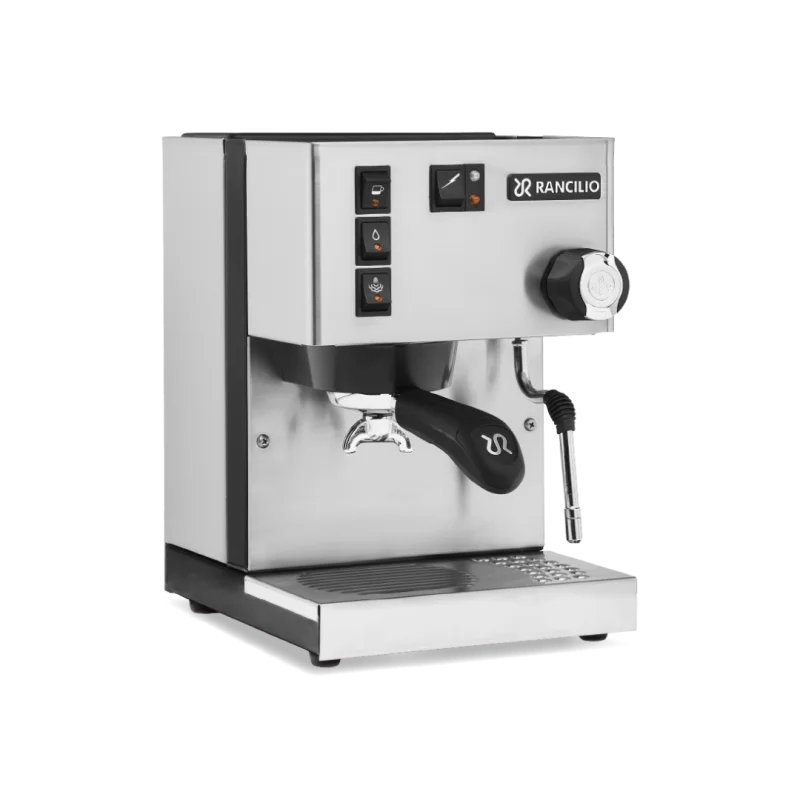
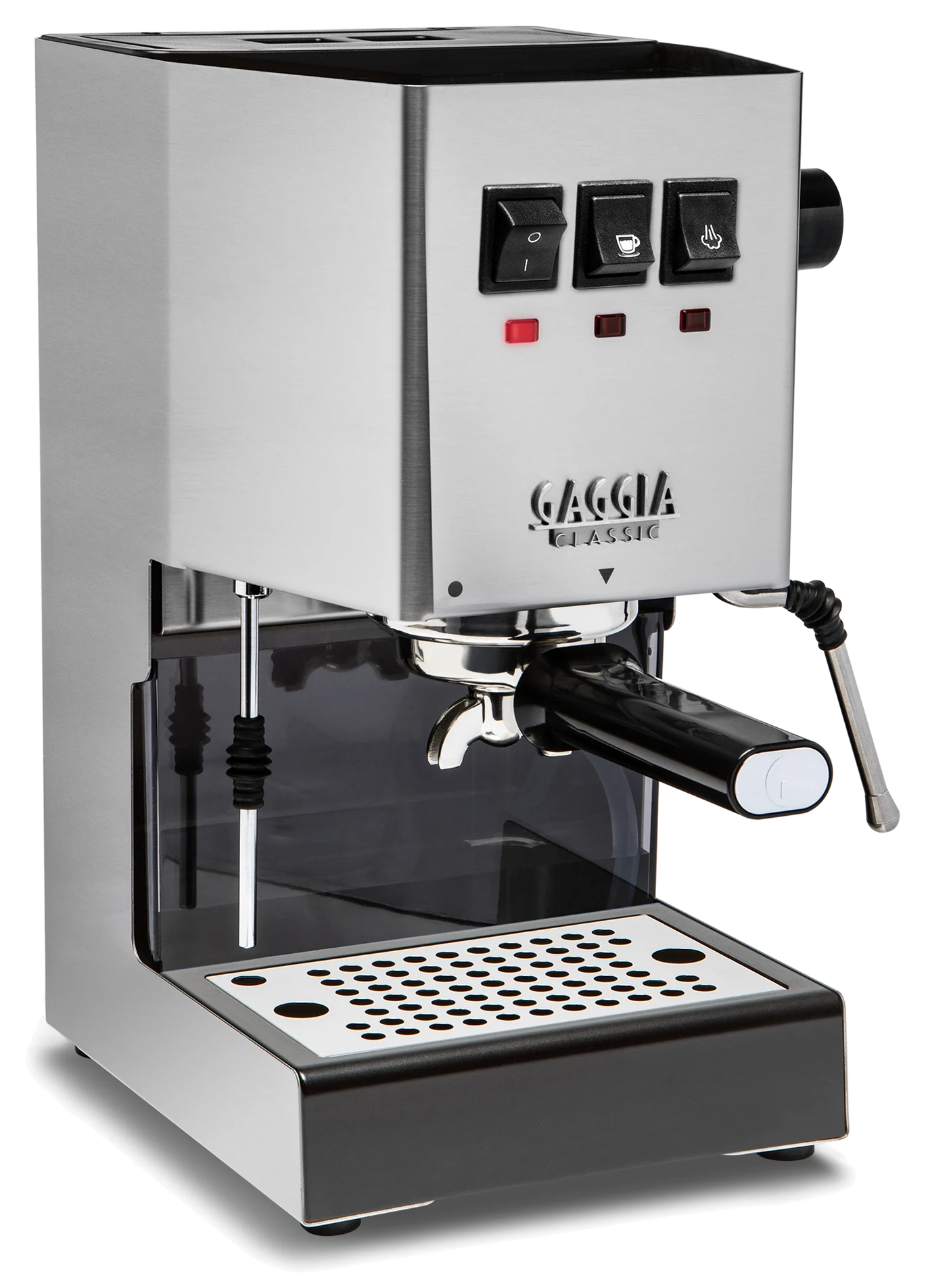
What do the current manufacturers actually document?
| Current specification | Rancilio Silvia | Gaggia Classic Pro E24 |
|---|---|---|
| Machine weight | 14 kg / 30.8 lb | 8.1 kg |
| Water tank | 2 L | 2.1 L |
| Boiler | 0.3 L coffee boiler | Lead-free brass boiler; Gaggia North America lists 3.5 oz for the current US E24 |
| Brewing group | Brass brewing group | Lead-free brass group; 58 mm stainless-steel filter-holder |
| Temperature control | Manual regulation with thermostat brew-temperature control | Current E24 product page does not list a factory PID; use the exact regional manual for control details |
| Pump / pressure wording | One vibration pump; current public product page does not give a universal OPV-adjustment target | 15 bar nominal pump; current Gaggia North America E24 lists OPV Calibration: 9 Bar |
| Steam | Stainless-steel steam wand | Professional stainless-steel steam wand; Gaggia North America lists a 2-hole tip on the current US E24 |
| Three-way solenoid | Confirm against the exact Silvia service documentation used for your machine | Yes on the current E24 product page |
Do not read the pressure row as a tie-breaker. Pump nominal pressure, OPV calibration and measured brew pressure are different specifications. The current US E24 is a good example: Gaggia lists a 15 Bar Ulka pump and 9 Bar OPV calibration on the same product page.
Which is easier to modify?
Your first modification depends on the exact machine, voltage and what you want to fix.
| Goal | Silvia route | Gaggia route | Use before opening the machine |
|---|---|---|---|
| Temperature control | Start from the current Silvia thermostat/manual-control design and the exact PID kit documentation. | Start from the exact Classic / Pro / Evo / E24 generation; current E24 does not make every older Gaggia PID guide interchangeable. | Check the machine guide and the exact PID kit instructions |
| Pressure question | Measure and identify the exact Silvia version before deciding an OPV change is needed. | Do not automatically install a 9-bar spring on a current US E24; Gaggia NA already lists 9 Bar OPV calibration. | Model/version + measurement method |
| Advanced controller | Use the live Gaggiuino compatibility/project documentation for the exact Silvia path. | Use the live Gaggiuino compatibility table for the exact Classic-family model and voltage. | Gaggiuino Gen 3 Planner |
| Steam workflow | Diagnose tip cleanliness, heat state and valve behavior before assuming a wand replacement is required. | Current E24 already has a professional wand; diagnose the symptom before treating older wand-transplant advice as current. | Machine-specific steam guide |
Does Silvia’s larger documented boiler make it automatically better?
Rancilio documents a 0.3 L coffee boiler on the current Silvia. Gaggia North America lists a 3.5 oz boiler for the current US E24, while Gaggia’s global page emphasizes the E24’s new brass boiler and improved heat storage.
Those specifications describe the hardware, not how many shots you can pull in a row or how the brew temperature behaves in your kitchen. A test needs to name the machine versions, warm-up method, measurement point and brew conditions before its numbers can settle that question.
If boiler behavior is your main concern, compare tests that name both machine versions, probe location and warm-up method.
Which machine needs a pressure modification first?
Neither should get a universal “pressure mod first” rule.
For the current US Classic Pro E24, Gaggia North America already lists OPV Calibration: 9 Bar. That means the old advice “every Gaggia needs a 9-bar spring before anything else” is not valid for the current E24.
Rancilio’s current Silvia product page documents the pump and boiler architecture but does not publish one universal OPV-adjustment target or a blank-shot volume formula. If pressure is the problem you are trying to solve, verify the exact Silvia version and use an appropriate measurement method before adjusting hardware.
What about temperature control and PID upgrades?
The current Silvia uses thermostat brew-temperature control with manual regulation. A PID changes how the boiler is controlled; its useful setting depends on the controller, sensor position and coffee.
The current Classic E24 product page does not list a factory PID. Whether a PID is worth adding depends on the exact generation and the problem you are trying to solve. Temperature control is different from pressure, grinder consistency, puck preparation and maintenance.
Which has better steam?
The current Silvia has a stainless-steel steam wand. The current Classic E24 also has a professional stainless-steel wand, and Gaggia North America lists a two-hole tip for the US E24.
That is enough to compare hardware descriptions, not enough to claim one machine makes a fixed number of back-to-back cappuccinos, recovers in a fixed number of seconds, or produces objectively better microfoam. Milk volume, starting temperature, boiler state, technique and machine version all change the result.
If steam is the problem, start with the symptom guide for your machine: Silvia weak steam or Gaggia weak steam.
Does “Boilergate” decide the whole Gaggia vs Silvia comparison?
No. It is a generation-specific Gaggia issue, not a permanent description of every Gaggia Classic.
The current Classic E24 uses a lead-free brass boiler. If you are evaluating an earlier Evo-era machine with black-flake or boiler-coating concerns, identify that exact generation and use the dedicated evidence page. Do not copy an Evo-era materials concern onto the current E24, and do not use “Silvia is immune forever” as a substitute for inspecting the machine you are actually buying.
What about Gaggiuino and deeper control projects?
Current Gaggiuino documentation includes paths for supported Gaggia Classic and Rancilio Silvia variants. The correct generation, PCB, UI, harness and machine-specific exceptions depend on the exact model and voltage.
Project cost and installation time change with the controller, supplier, region and release. Check the live parts list before comparing the two builds.
Use the refreshed Gaggiuino Gen 3 Planner and the live official project documentation on the day you build.
What if you are buying used?
Used-machine comparison is more complicated than the current-product table. A Gaggia Classic can mean Original Classic, Classic V2, Classic Pro, Eco, Evo or E24, while a used Silvia can come from different production revisions and prior modifications.
For either platform, record the model label, voltage, approximate production period, boiler/service history, existing PID/controller work, steam/valve condition and whether internal wiring is still stock. A well-documented older machine may be a clearer project than a newer machine with unknown modifications.
The problem decides the machine.
| If your priority is... | What to compare | Next page |
|---|---|---|
| A current, lighter Classic-family platform | Current E24 brass hardware, 9-bar OPV calibration in the US spec, region and exact modification compatibility. | Gaggia Classic guides |
| A current Silvia platform | 0.3 L boiler, thermostat/manual temperature control, exact modification documentation and your steam workflow. | Rancilio Silvia guides |
| PID / temperature control | Exact machine/version and controller evidence. | PID selection |
| Advanced controller / profiling | Live Gaggiuino compatibility for exact model and voltage. | Gaggiuino planner |
| A used machine | Condition, service history and generation before mod ecosystem size. | Machine guides |
No overall winner: choose the machine whose exact version and documented modification path fit the job you have in mind. A resale guess or an old retail price cannot settle that choice.
Frequently asked questions
Is the current Gaggia Classic E24 still an aluminum-boiler machine?
No. Current Gaggia E24 product pages document a lead-free brass boiler and brass group. Older Classic-family generations need their own material/version check.
Does the current E24 automatically need a 9-bar spring?
Not the current US E24 based on Gaggia North America’s published specification: it lists OPV Calibration at 9 Bar. Other generations/regions must be checked separately.
Does the current Silvia have a factory PID?
The current Rancilio Silvia page lists manual temperature regulation and thermostat brew-temperature control, not a factory PID.
Can I run Gaggiuino on both platforms?
Current project documentation includes supported Gaggia Classic and Rancilio Silvia paths. Compatibility still depends on the exact model, voltage and current project release. Start with the Gaggiuino planner.
Which one has better resale value?
There is no reliable resale percentage that covers every used Silvia or Gaggia. Value changes with region, age, condition, service history, modifications and the market when you sell.

The platform before the modification.
Start with the exact machine and the problem you want to solve. Pressure, temperature, grinder workflow, steaming and maintenance are separate decisions.
 English
 Deutsch