What is espresso roast? It is not one fixed color.
Espresso roast usually means the roaster developed or selected the coffee for espresso. It may be light, medium or dark, and the label is not standardized across roasters.
Use the name as an invitation to read the recipe, intended drink and tasting notes. The word espresso cannot choose the grind for your machine.
Is espresso roast a type of coffee bean?
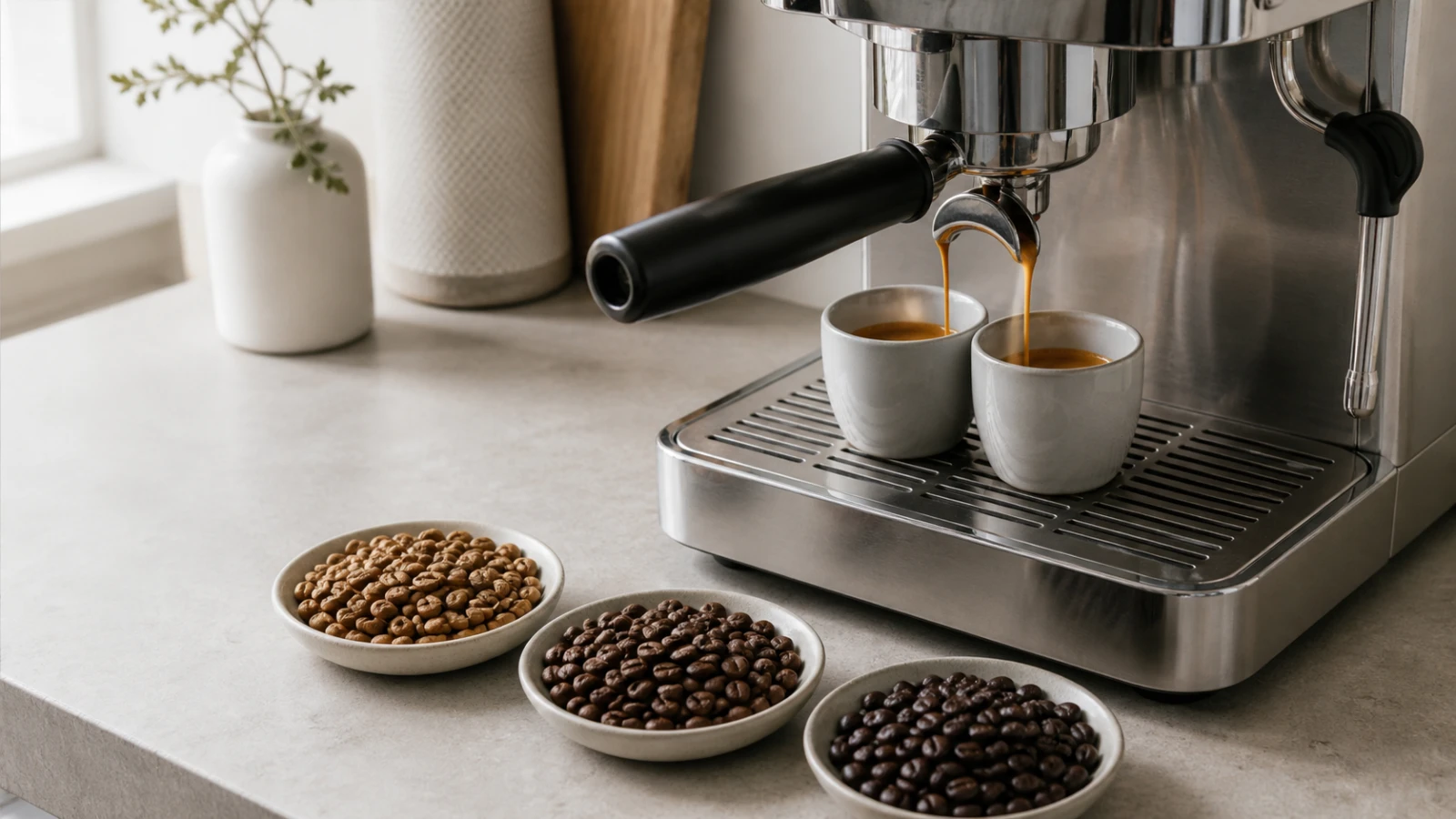
No. Espresso roast is a roast or use label, not a coffee species. Arabica, Robusta and blends can all be prepared for espresso.
The confusion comes from retail shelves that separate espresso bags from regular coffee. That shelf makes shopping easier, but it does not create a new botanical bean.
Does espresso roast always mean dark roast?
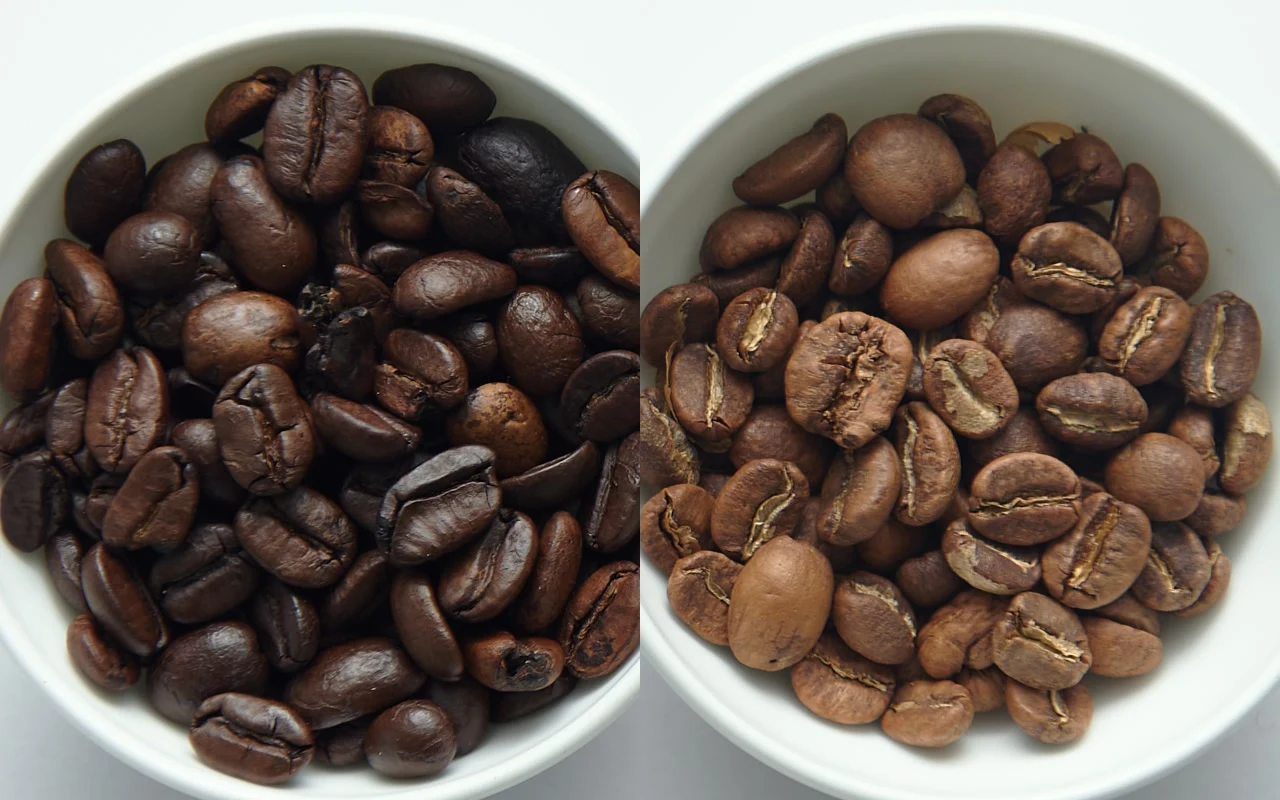
No. Traditional espresso often uses medium-dark or dark coffee, while modern specialty espresso may use medium or light roasts.
The roaster's own range matters more than the word espresso. One company's espresso roast may look lighter than another company's medium roast.
Lighter espresso roast
Expect more acidity and origin character. The coffee can be less soluble, so grinder quality, puck preparation and extraction become more noticeable.
Choose this direction for straight espresso when you enjoy fruit, florals or a more transparent cup.
Darker espresso roast
Expect more roast flavor, lower perceived acidity and easier solubility. The shot may become bitter or dry if the recipe is too aggressive.
Choose this direction for traditional espresso or milk drinks when you want the coffee to remain easy to taste.
What should you read on an espresso coffee bag?
Read the intended drink, roast date, tasting notes and supplied recipe. Those details are more useful than the espresso label alone.
Intended drink
A bag built for straight espresso may favor clarity. A milk-drink blend may favor body and chocolate-led flavors.
Roast date
Fresh coffee changes as it releases gas. The date helps you judge whether a moving shot is partly a freshness issue.
Dose and yield
Use the roaster's starting ratio when one is printed. It is a better first test than a recipe copied from a different bag.
Tasting notes
Chocolate, nuts and caramel point in a different direction from citrus, jasmine or berries. Treat notes as a target, not a guarantee.
Which espresso roast should you choose?
Choose from the drink and flavor you want. Medium is a calm first test, while light and dark ask for clearer preferences.
Move lighter for more origin detail. Stay around medium if you want sweetness and easier dialing without heavy roast flavor.
More developed coffee often remains clearer after milk adds sweetness and dilution.
Added water makes bitterness and acidity easier to notice. A balanced medium bag gives a useful reference point.
A published dose and yield remove one guess while you learn the grinder and machine.
How should the first shot change with roast level?
Start from the bag recipe and change one variable after tasting. Light coffee often needs more extraction help; dark coffee often needs a gentler approach.
Keep the dose and target yield written down. A repeatable baseline tells you whether the grind change improved the cup or simply made it different.
| What you taste | Possible direction | Try next |
|---|---|---|
| Sour and thin | Under-extraction is possible, especially with lighter coffee. | Grind finer or give the coffee more extraction time. |
| Bitter and dry | Over-extraction or a very dark roast may be dominating. | Grind slightly coarser, shorten the yield or use gentler heat. |
| Fast and uneven | The grind may be coarse or the puck may be channeling. | Check distribution before chasing a new temperature. |
| Good once, poor next | Dose, puck preparation or warm-up may be drifting. | Repeat the workflow before changing the recipe. |
Can you use filter roast for espresso?
Yes. Any suitably ground coffee can be brewed as espresso, but a lighter filter roast may need a finer grind, more extraction and a capable grinder.
The result can be bright and expressive. It can also be sour, thin or difficult to repeat when the setup cannot extract the dense coffee evenly.
You can also brew an espresso roast as filter coffee. Expect the roast character to stay present, then adjust the grind and water to taste.
The bag label predicts intent. Your grinder, machine and cup decide whether that intent survives brewing.
Are oily espresso beans bad for the grinder?
Oily beans are not automatically bad, but residue can build up faster in some grinders. Read the grinder maker's cleaning guidance and inspect the chute and burr area regularly.
Do not use shine alone to judge freshness. Deep roasting and storage can both move oil toward the surface.
- Clean on the schedule recommended for the grinder.
- Do not wash burrs unless the manufacturer explicitly allows it.
- Watch for sticky residue, clumping or a blocked chute.
Sources and related reading
The roast guide explains common labels and their limits. The comparison pages help separate roast level from coffee species and caffeine.
Espresso roast questions
What is espresso roast coffee?
Espresso roast coffee is coffee that a roaster developed or selected with espresso brewing in mind. Espresso roast coffee is not one species or standardized color. The bag may contain Arabica, Robusta or a blend, and the roast can range from light to dark depending on the roaster's intended flavor and recipe.
Is espresso roast stronger than regular coffee?
Espresso roast coffee may taste stronger because the bag can lean toward deeper roast flavor, body or bitterness, but the label does not prove more caffeine. Strength in a finished drink changes with coffee dose, beverage size, species and extraction. Compare the actual recipe instead of treating the roast name as a caffeine measurement.
Can any coffee bean be used for espresso?
Any coffee bean can be brewed as espresso when the grinder can make a suitable fine grind and the machine can extract it. Light coffee beans may need more careful grinding and extraction, while dark coffee beans can become bitter quickly. The roaster's espresso recipe is the most useful starting point when one is supplied.
Is medium or dark roast better for espresso?
Medium roast coffee is a practical espresso starting point because it often balances sweetness, solubility and origin character. Dark roast coffee can suit traditional shots and milk drinks, but it may taste bitter with an aggressive recipe. The better choice depends on the drink, grinder, machine and flavor you want.
Can espresso roast be used for drip coffee?
Espresso roast coffee can be used for drip coffee because espresso roast describes a roaster's intended use, not a brewing restriction. Grind the coffee for the drip brewer and adjust water and contact time by taste. A dark espresso roast may keep more roast flavor and bitterness in the larger filter cup.