
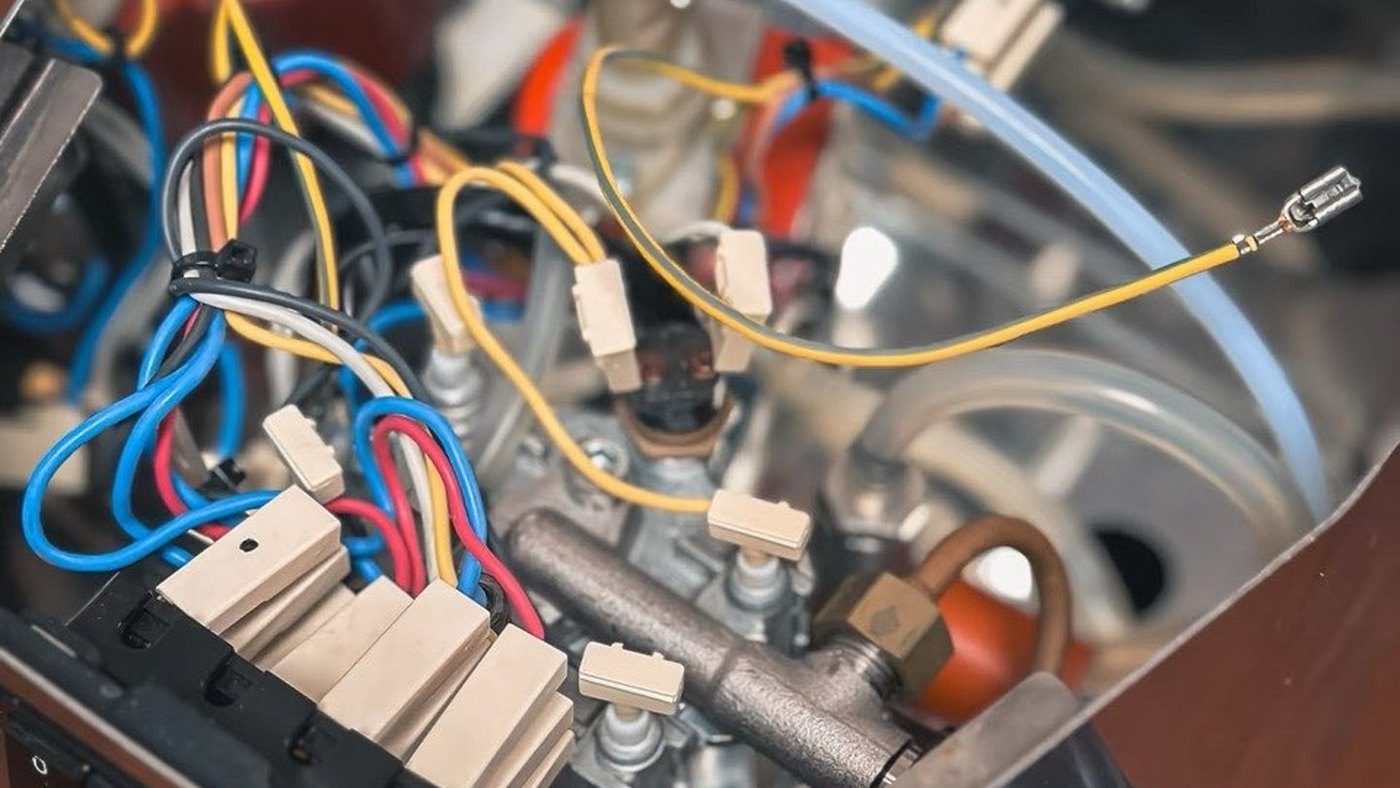
If your Gaggia Classic Pro makes pump noise but no water comes from the group head, do not replace the pump first. Remove the portafilter, test the group, then test water through the steam wand. That one split usually tells you whether to stay with priming/pump checks or move toward the group and three-way-solenoid path.
The steam-wand flow test comes first
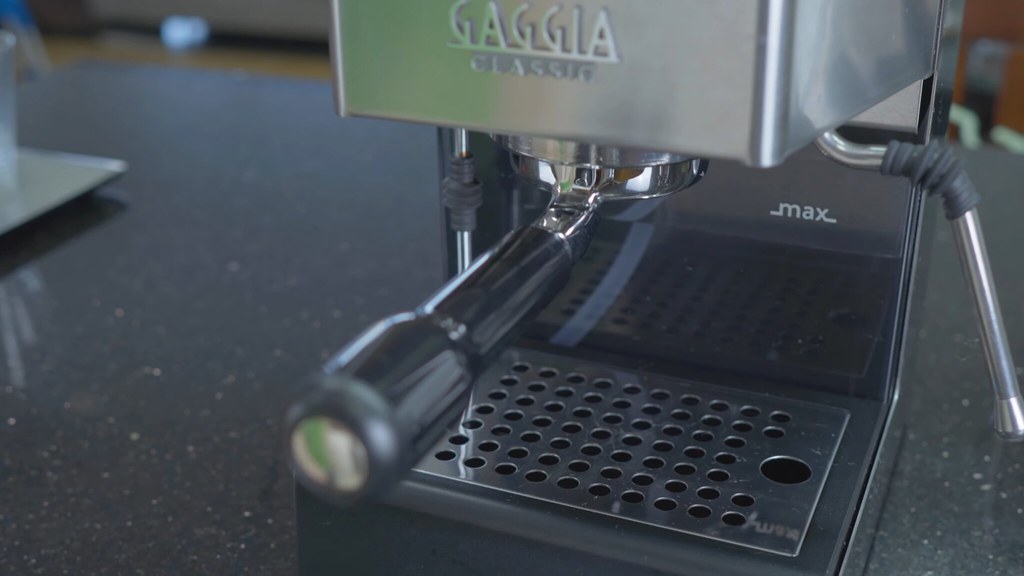
Test the machine without coffee and without the portafilter. Turn on brew and observe the group. Then open the steam/hot-water knob and check whether the pump can move water through the wand. Gaggia’s Classic Pro manual uses the steam-wand route to load the circuit when water does not initially come from the brew group.
| What you see | What it points toward | Next move |
|---|---|---|
| Steam wand has normal water flow; group has little or none | Group path or three-way solenoid moves up the list | Clean/check the group path before replacing the pump |
| Neither steam wand nor group has water | Tank feed, air lock/priming or pump path | Prime the circuit first |
| Group flows normally with portafilter removed | Machine flow may be healthy | Check basket, grind and puck resistance |
What should you check before opening the machine?
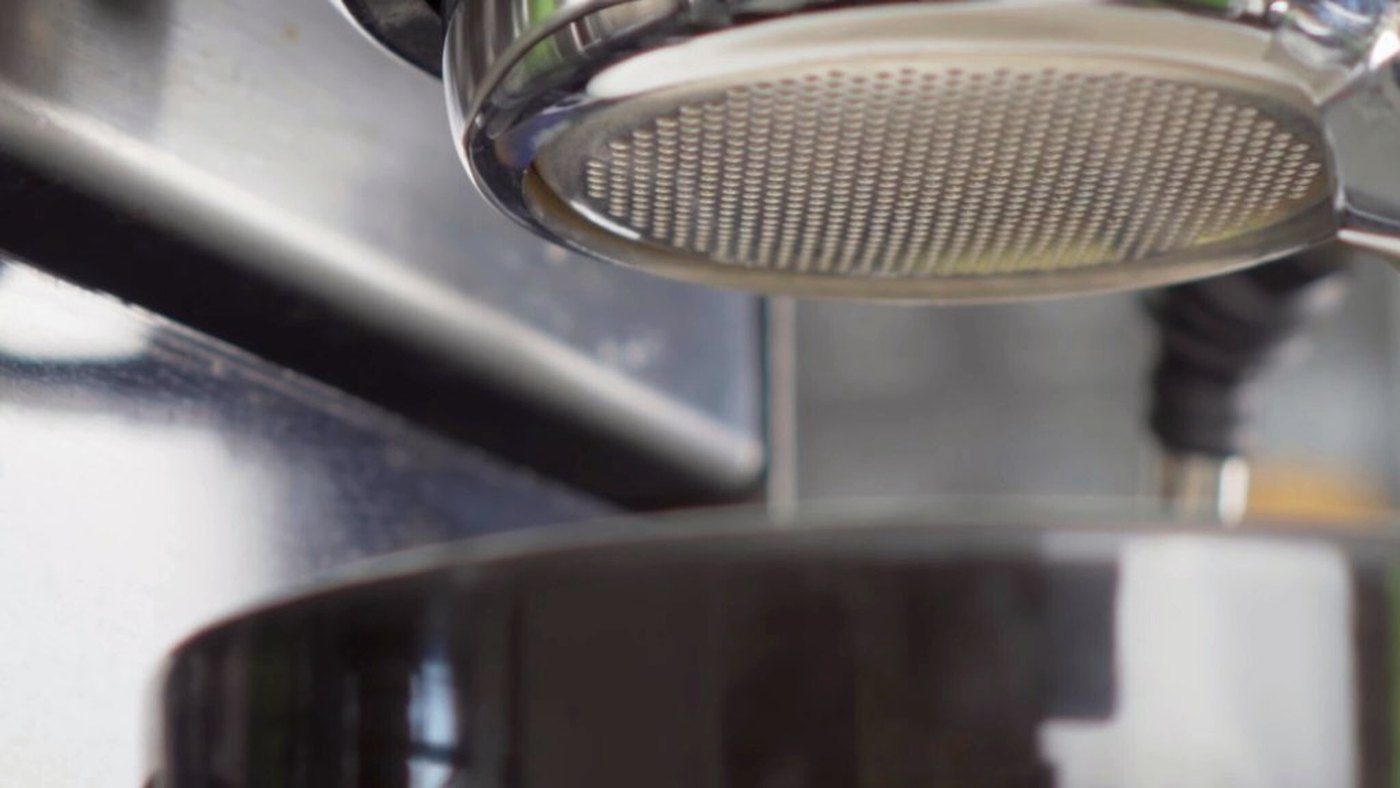
Keep the first pass external. Confirm the tank has water and is seated, make sure the intake tubes are in the tank, remove the portafilter, prime the circuit if needed, and look for obvious blockage around the shower screen. A clogged pressurized basket can also mimic a machine-flow problem, so diagnose with the portafilter removed.
If the machine was just emptied, moved, stored, or allowed to run dry, priming deserves priority. If it is new or still under warranty, use the seller/manufacturer support path before internal disassembly.
Steam flows but the group does not: is it the solenoid?
That pattern makes the three-way solenoid and nearby group path the leading suspects, but it does not prove the valve has failed electrically. Whole Latte Love’s current Classic Pro troubleshooting places no-brew-flow with working steam on the clogged-solenoid path and recommends cleaning/diagnosis before replacement.
Scale or debris can block the small solenoid passages. A blockage may also appear after descaling if loosened scale travels into the valve. If cleaning restores flow but the valve clogs again soon, remaining scale upstream becomes a more plausible explanation than an automatically defective replacement valve.
No water from the group or steam wand: prime before blaming the pump
When both paths are dry, start with the circuit-loading procedure. The Gaggia manual says that if water does not come from the brew group, open the steam/hot-water knob, activate the pump, let water come through the steam wand, then close the knob and stop the pump. That is the first recovery step for an air bubble or unprimed circuit.
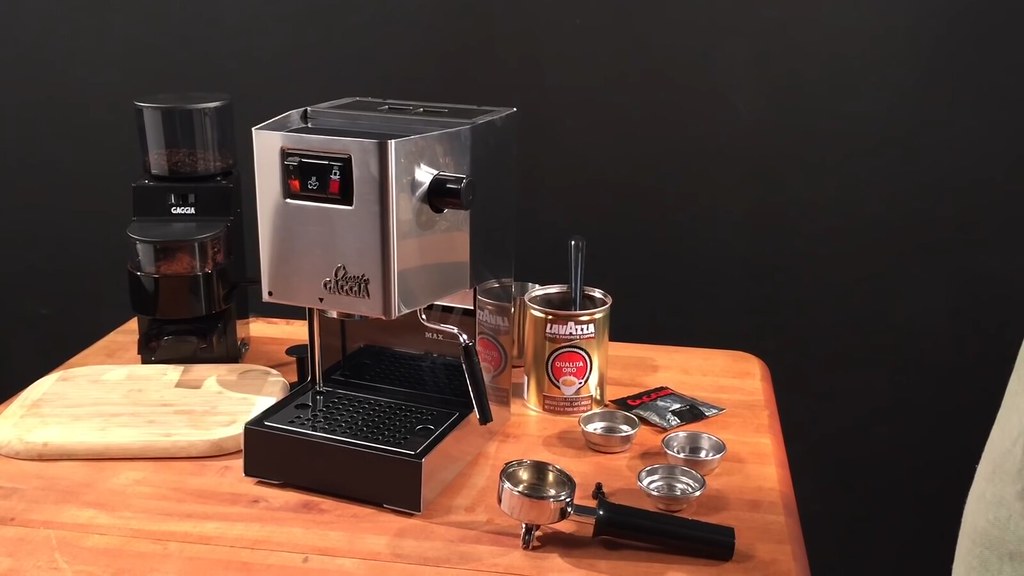
If correct priming does not restore either path, and the pump does not operate normally, move to pump/electrical diagnosis using the exact service material for your revision. Do not keep a dry pump running while hoping it will eventually catch water.
When should you clean the solenoid, replace it, or stop DIY?
Clean/diagnose the solenoid when the steam wand has water but group flow remains very weak or absent after basic group cleaning. Replacement belongs later, when cleaning does not restore the valve and the diagnosis points to a damaged or non-functioning valve rather than scale elsewhere in the machine.
- Stop repeated descaling if no solution can reach the blocked path or debris keeps returning.
- Stop blind backflushing when normal group flow is already absent; diagnose the blockage first.
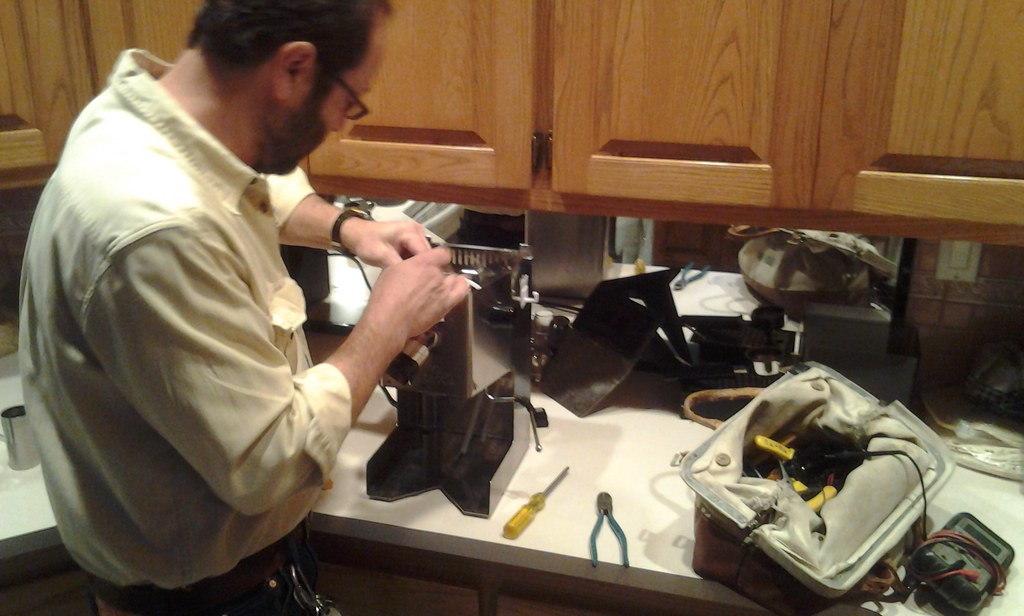
- Stop internal work if you are not comfortable around mains wiring, hot water and pressurized components.
- Use the exact service diagram/video for your Classic generation before disconnecting wiring or tubing.
After flow is restored, address the cause: suitable water, regular group cleaning, and model-appropriate descaling. Use the Gaggia descaling guide for mineral maintenance and the backflush guide for coffee-oil cleaning.
Should you clean the group head first?
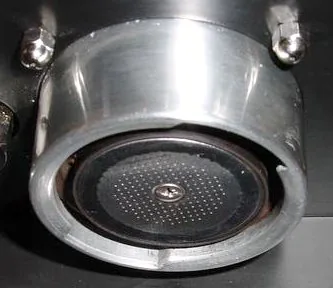
Yes, because it is less invasive. Gaggia North America publishes group-head cleaning instructions and also provides the Pro/Evo/E24 service manual and parts diagram. Clean the shower screen/group components according to the correct model documentation before assuming an internal part has failed.

Decision table
| Observation | Next step |
|---|---|
| Group flows with portafilter removed | Check basket, grind, dose and puck |
| No group flow, good wand flow | Clean group; investigate three-way solenoid |
| No group or wand flow, pump rattles | Prime pump / confirm tank feed |
| No group or wand flow, no pump sound | Electrical/pump diagnosis |
FAQ
Why does water come from the steam wand but not the group head?
The pump is moving water through at least one path, so the group/three-way-solenoid path becomes the leading place to investigate. It is a diagnostic clue, not proof that the valve must be replaced.
Does pump noise mean the pump is good?
No. Sound alone is not enough. Use actual flow through the steam wand and group head to separate priming/pump issues from a group-path blockage.
Can descaling fix a blocked solenoid?
It can help with accessible scale, but a physical blockage may require valve cleaning. Descaling can also loosen debris that later catches in the solenoid, so repeated acid cycles are not a substitute for diagnosis.
References
- Gaggia Classic Pro/Evo U.S. manual — circuit loading and priming
- Whole Latte Love — Gaggia Classic Pro: No Water Flow
- Whole Latte Love — solenoid valve troubleshooting
- Whole Latte Love — three-way solenoid valve cleaning
- Gaggia North America — Pro/Evo/E24 manuals, service manual and parts diagram
- Gaggia — semi-automatic maintenance
Image Credits
CC photo credits are listed under the reused photographs. Generic espresso images are used only for context and are not presented as hidden Gaggia internal parts.
 English
 Deutsch