
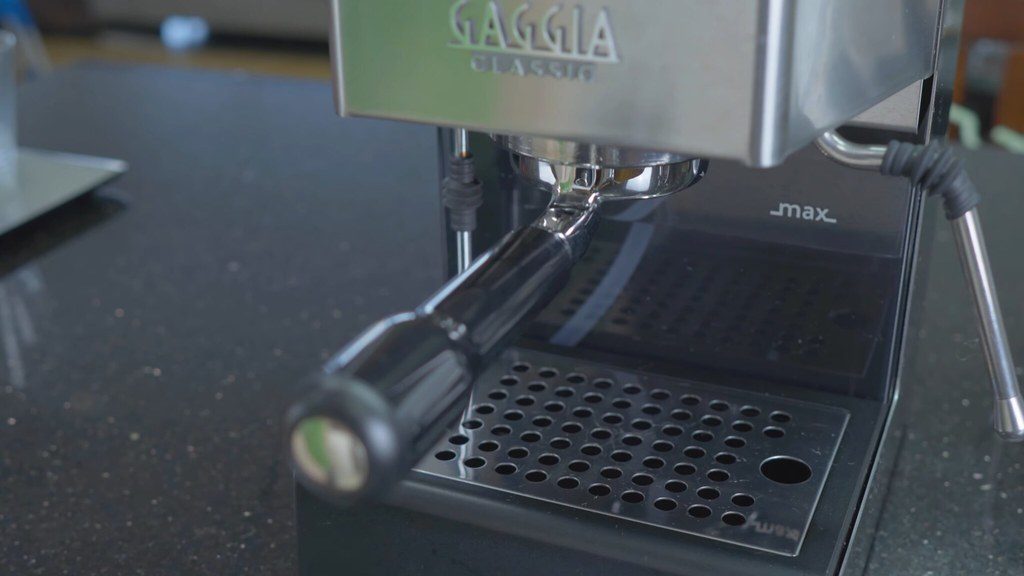
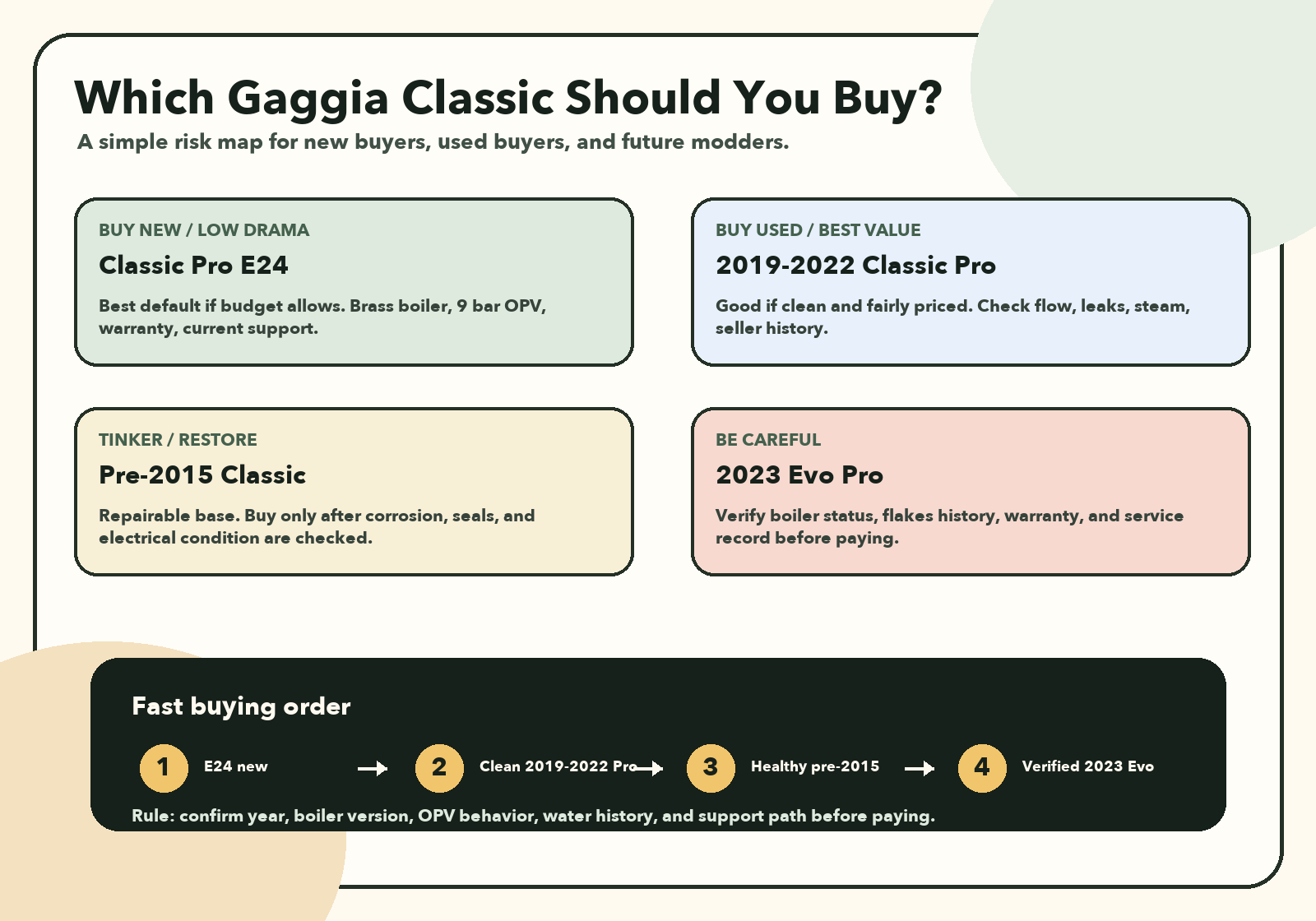
If you want a new Gaggia Classic in 2026, the current Classic Pro E24 is the easiest version to identify and support. If you are buying used, a clean 2019–2022 Classic Pro is a practical place to start. A healthy pre-2015 Classic can also be a good repair or mod base. A 2023 Evo Pro needs more checking when its boiler history is unclear.
Which Gaggia Classic should you buy in 2026?
Choose by purchase type rather than by reputation alone. For a new machine with current documentation and a straightforward warranty path, start with the E24. For used value, compare clean 2019–2022 Classic Pro machines. If you are comfortable inspecting and servicing an older machine, a pre-2015 Classic can make sense. Treat a 2023 Evo Pro with unknown boiler history as a machine that needs extra evidence before you pay.
| Buyer | First model to check | What still needs verification |
|---|---|---|
| Buying new | Classic Pro E24 | Region, voltage, seller and warranty terms |
| Buying used for daily use | 2019–2022 Classic Pro | Flow, steam, leaks, water history and service work |
| Repair or mod project | Healthy pre-2015 Classic or known Classic Pro | Exact revision, corrosion, wiring and existing modifications |
| Considering a 2023 Evo Pro | Only after history is clear | Boiler/service history, particles, seller records and current support options |
How do Gaggia Classic models change by year?
The names overlap across markets. “Classic,” “New Classic,” “Classic Pro,” “Classic Evo Pro” and “Classic Pro E24” can appear in listings that do not show the full model code. Use the rating label and the matching manual or parts diagram before ordering parts or assuming a machine belongs to a certain generation.
| Shopping shorthand | Typical period | Buyer check |
|---|---|---|
| Older / pre-2015 Classic | Before the 2015 redesign | Condition and region matter more than the label alone |
| 2015–2018 Classic variants | 2015–2018 | Confirm exact regional design and parts before treating it like a Pro |
| Classic Pro / New Classic | 2019–2022 | Common used target; inspect the individual machine |
| Classic Evo Pro | 2023 generation | Check boiler and service history if coating/particle concerns matter to you |
| Classic Pro E24 | Current generation in many markets | Official North American spec lists a lead-free brass boiler and 9 bar OPV calibration |
Those year bands are shopping shorthand, not a serial-number decoder. Gaggia publishes separate manual resources for older Classic machines and the Pro/Evo/E24 family. Use the documentation for the machine in front of you.
Should you buy the Gaggia Classic Pro E24?
The E24 is the current new-machine choice when you want a Classic with current support and fewer generation questions. Gaggia North America lists a solid lead-free brass boiler, 58 mm stainless portafilter, commercial-style steam wand and 9 bar OPV calibration for the current model.

The E24 still has the limits of a compact single-boiler machine. It does not remove the need for a capable grinder or a consistent brew routine. If your next question is temperature control, the E24 PID guide separates what the brass boiler changes from what a PID changes.
Is a 2019–2022 Gaggia Classic Pro a good used buy?
It can be, provided the machine is clean, tested and priced for its condition. Ask for the full model label, a cold-to-hot startup video, group flow, steam, drip-tray behavior and any service records. Water history matters because scale and corrosion can turn a cheap machine into a repair project.
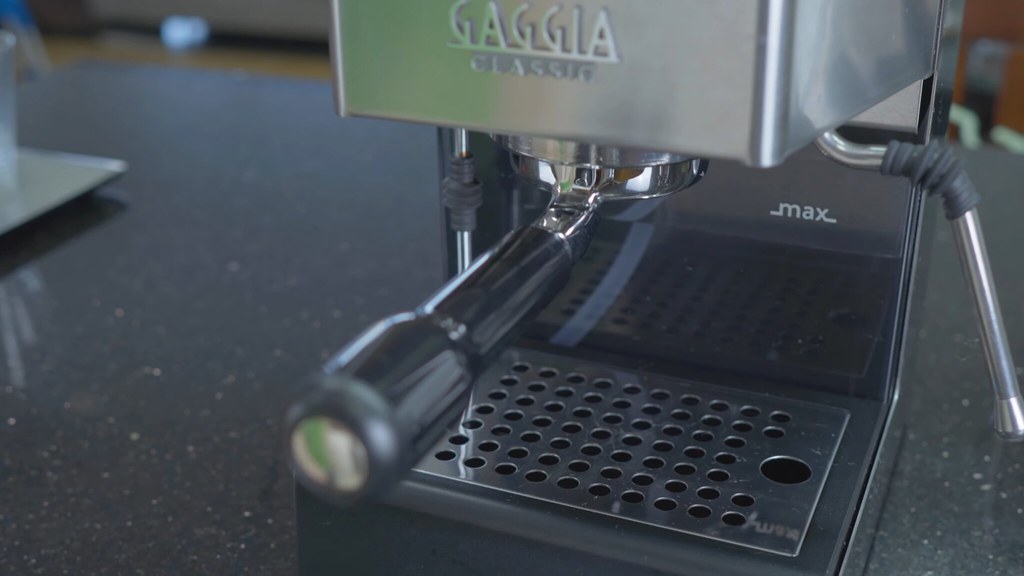
If a seller shows weak or missing group flow, do not assume the repair is minor. Use the Gaggia no-water diagnosis to understand the possible pump, solenoid and scale paths before you price the machine.
Which Gaggia Classic models need extra caution?
The strongest reason for extra caution is an uncertain 2023 Evo Pro boiler history. SaferProducts.gov contains a January 2024 consumer incident report for one 2023 RI9380/46 machine describing black flakes from the steam wand. Gaggia’s response on that report states that no harm was reported and that the product complied with the cited standards. That record is an incident report, not a recall and not a defect-rate estimate.
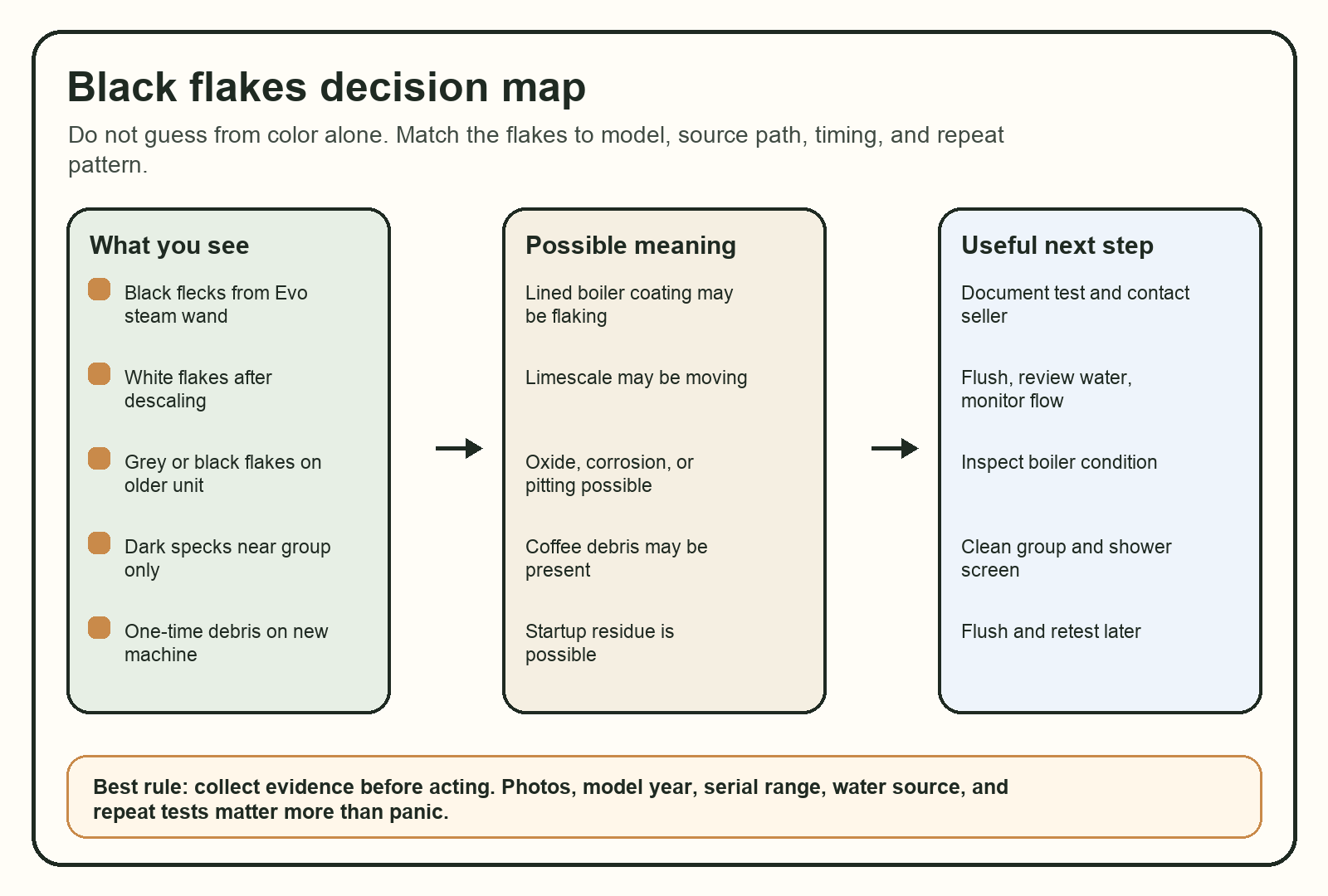
If you are considering a used Evo, ask whether the boiler was inspected or replaced, whether particles were reported, and whether the seller has service paperwork. Gaggia North America now sells a 2024 brass boiler assembly and lists it as compatible with the Classic, Classic Pro and Classic Evo Pro; the listing also says seals and hardware are sold separately. That current part option is useful context, but it does not prove what is installed in a particular used machine.
If you already see particles, use the black-flakes diagnosis before treating every particle as the same failure.
Is a pre-2015 Gaggia Classic still worth buying?
Yes, when the individual machine is in good condition and the price leaves room for normal service. Older Classics are useful to repair-minded buyers because the platform is well documented and many parts are still available. Age also raises the chance of tired seals, corrosion, scale, steam-valve wear or old electrical work.
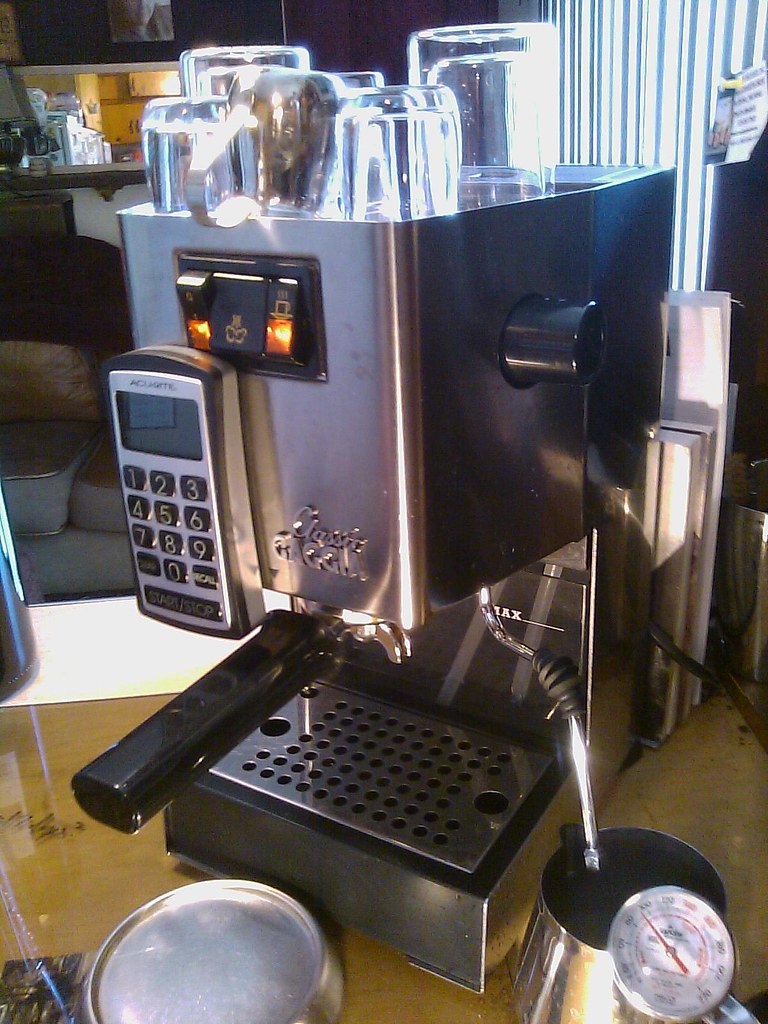
Do not pay a premium for “pre-2015” without checking the actual machine. A clean later machine can be a better buy than an older one with leaks or corrosion. For parts planning, use the Classic family compatibility guide before ordering.
Which Gaggia Classic makes sense for modders?
Choose a machine with known history and a layout you can document. A clean Classic Pro or E24 gives you a current platform. An older Classic can suit a restoration project. A machine with unknown wiring, active leaks or previous undocumented modifications is a poor starting point for more internal work.
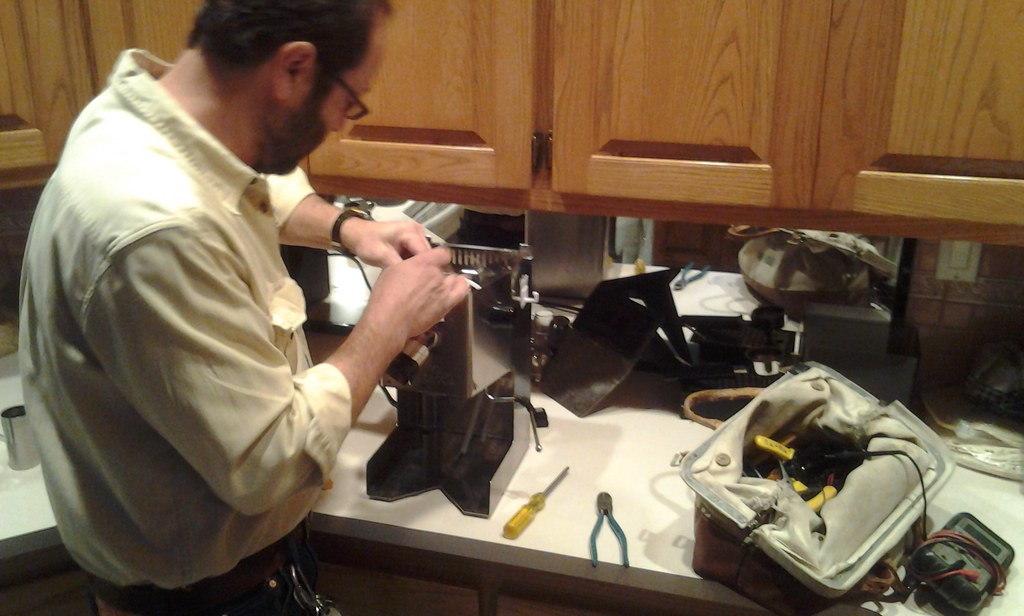
Internal modifications can involve mains wiring, hot water and pressurized components. Check the exact machine and modification documentation first. The Gaggia mod safety matrix covers the stop points before electrical work.
Which Gaggia Classic should budget buyers choose?
Start with total ownership cost, not the lowest listing price. Add any missing baskets or portafilter, cleaning supplies, seals, pump or valve work, and the grinder you still need. A used Classic Pro with clear history can cost less overall than a cheaper older machine that needs immediate service.
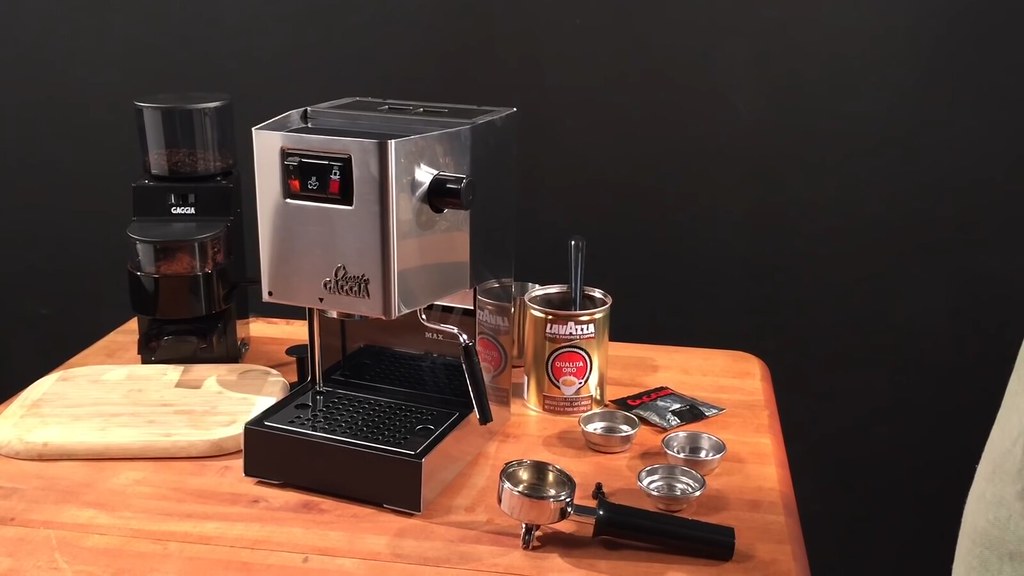
| Path | Main advantage | Budget risk to price in |
|---|---|---|
| New E24 | Current model and support path | Higher purchase price |
| 2019–2022 Classic Pro used | Often a strong used-value candidate | Scale, seals, pump, valve or missing accessories |
| Pre-2015 Classic used | Repair and mod appeal | Age, corrosion and prior work |
| 2023 Evo Pro used | Can be attractive at the right price | Boiler/service history needs documentation |
What should you check before buying a used Gaggia Classic?
Get evidence before you travel or pay. Ask for the model label, approximate purchase date, group-flow video, steam video, water history and service history. Ask whether the machine leaks, trips power, has produced particles, or has been modified.
| Check | Good evidence | Reason to slow down |
|---|---|---|
| Exact model | Readable rating label and purchase record | Seller cannot identify the machine |
| Group flow | Even water flow with no coffee installed | Weak, intermittent or no flow |
| Steam | Normal steam after warm-up | Leaks, water-only output or abnormal behavior |
| Water path | Clear maintenance and water history | Heavy scale, recurring debris or no history |
| Prior work | Receipts or clear documentation | Unknown wiring or improvised repairs |
What order should you check the models in?
For a buyer who wants the fewest unknowns, check a new E24 first. For used value, move next to clean 2019–2022 Classic Pro listings. Consider a pre-2015 Classic when you are comfortable with inspection and service. Consider a 2023 Evo Pro after its boiler and support history are documented.
The machine in front of you matters more than the shorthand. Keep the label, region, condition and service record in the same decision.
FAQ

What is the current Gaggia Classic model?
Gaggia North America currently sells the Classic Pro E24. Its published specification lists a lead-free brass boiler and 9 bar OPV calibration.
Which Gaggia Classic models should I avoid?
Avoid buying any used Classic without a readable model identity and a basic function check. A 2023 Evo Pro with unknown boiler history deserves extra caution because of the documented particle reports. That is different from saying every Evo has the same problem.
Is a 2019–2022 Classic Pro still worth buying?
Yes, if the machine is clean, tested and priced for its condition. Check flow, steam, leaks, water history and prior repairs.
Is an old Gaggia Classic automatically better?
No. A healthy older Classic can be a useful repair or mod base, but age can also bring scale, corrosion, worn seals and undocumented repairs.
Can the current brass boiler fit older Classic models?
Gaggia North America’s current brass-boiler listing says assembly GA-642001010420 is compatible with the Gaggia Classic, Classic Pro and Classic Evo Pro. It also says the boiler is sold without seals and hardware. Confirm the exact model, region and required parts before ordering.
What should you buy now?
If you want a new machine, start with the E24 and verify the regional specification. If you want used value, compare tested 2019–2022 Classic Pro listings. If you want a repair or mod project, inspect pre-2015 machines carefully. For a 2023 Evo Pro, buy only after the boiler and service history are clear enough for you to price the risk.
References
- Gaggia North America: Classic Pro E24 product specification
- Gaggia North America: Classic Pro / Evo / E24 manuals and service documents
- Gaggia North America: 2024 brass boiler assembly and compatibility statement
- SaferProducts.gov: 2023 Classic Evo Pro consumer incident report and Gaggia response
- JonDent: Gaggia Classic model-history reference
Image Credits
CC BY 2.0 photos above are credited in their captions. HomeBaristaMods diagrams are explanatory graphics and are not used as independent proof of model reliability, failure rate or performance.
 English
 Deutsch