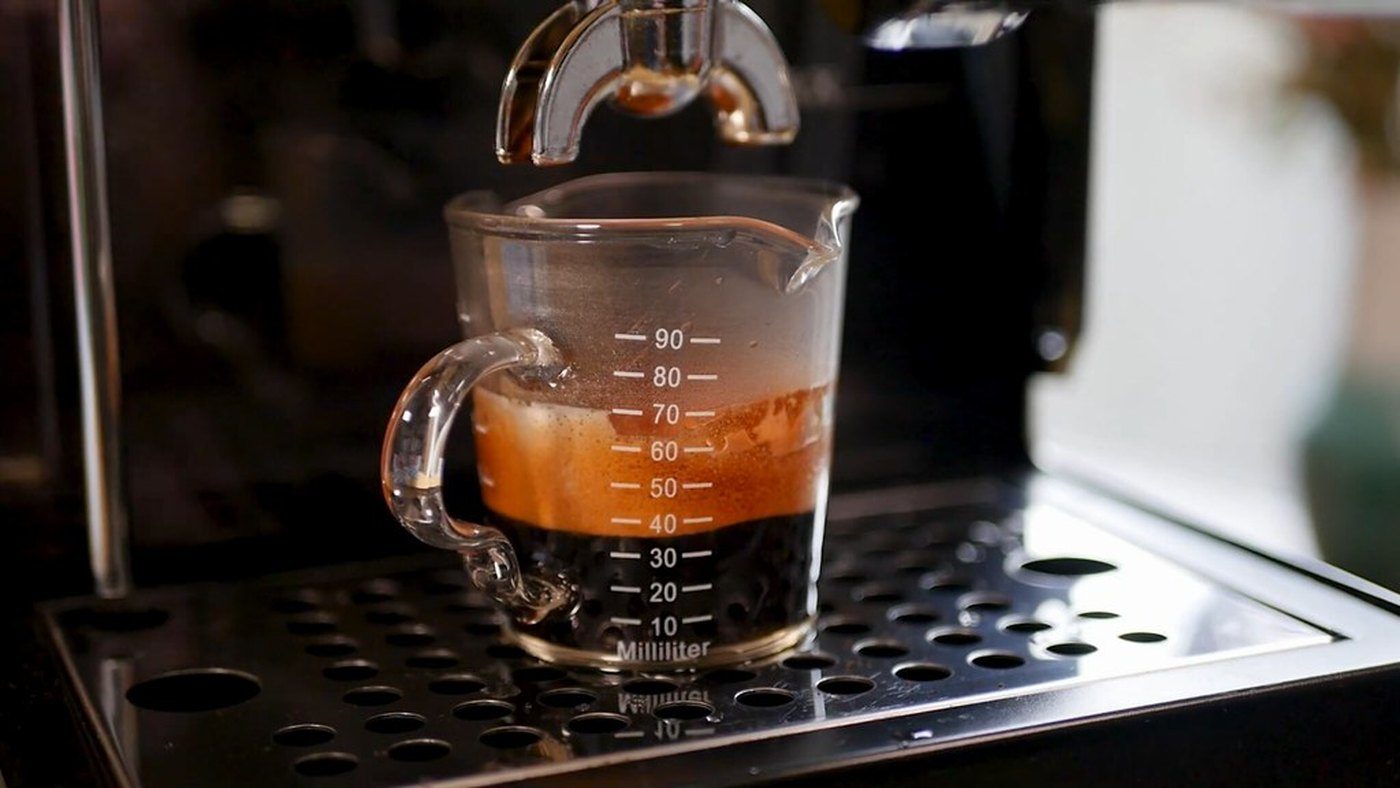
Black flakes from a Gaggia Classic are a reason to stop making drinks and identify the source path. Test water from the steam wand and group separately, record the exact machine generation, and watch whether the particles disappear or keep returning.
The model matters. A 2023 Classic Evo Pro with a coated aluminum boiler has a different failure history from an older uncoated Classic Pro or the current E24 brass-boiler machine. Gaggia now also sells a 2024 brass boiler assembly for the Classic family, so replacement decisions should use current parts information rather than old forum shorthand.
What should you do first when you see black flakes?
Start with a clean water-path test before opening the machine or ordering parts.
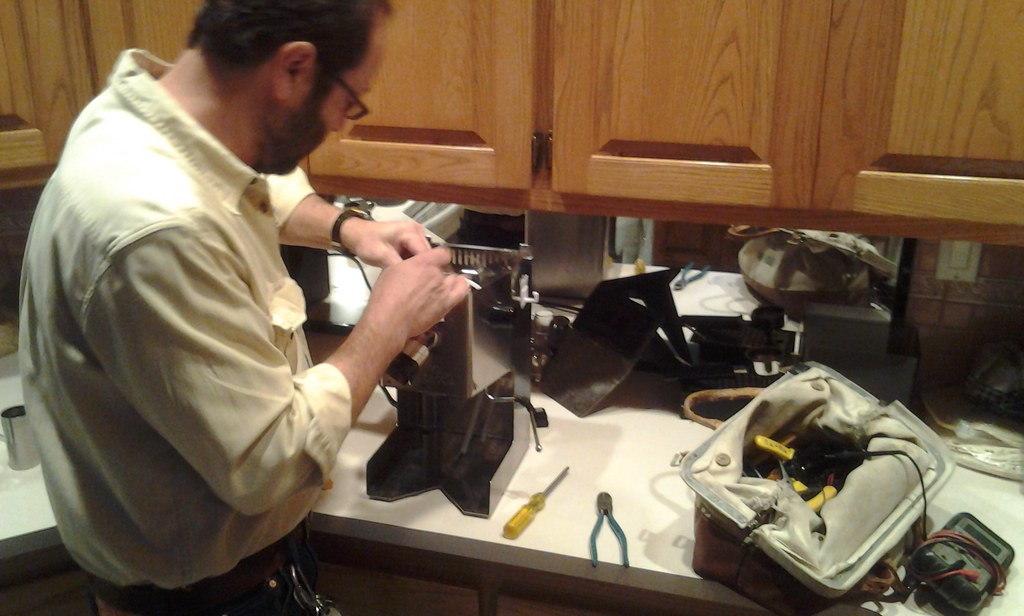
Remove the portafilter and use a white cup or bowl. Dispense water from the steam wand, then run water from the group head without coffee. Record where the particles appear, whether they appear again, and whether they decrease after a few flushes.
| Check | Record | Why it helps |
|---|---|---|
| Exact model and region | Classic / Pro / Evo / E24, label and market | Boiler construction and service parts change by generation |
| Steam-wand water | Clean / particles / color / repeat pattern | Removes coffee grounds from the diagnosis |
| Group water | Clean / particles / color / repeat pattern | Separates brew-group debris from boiler-path debris |
| Recent work | Descale, repair, storage, filter change | Service can loosen old debris |
| Repeat pattern | One-time / reducing / persistent | Persistent particles justify service or support |
A single speck after service is different from particles that return every time. If the steam wand stays dirty after repeated clean-water tests, coffee grounds are not a good explanation.
For low-flow symptoms at the same time, use the Gaggia no-water diagnostic rather than treating every particle problem as a boiler failure.
How do model year and boiler type change the diagnosis?
Identify the machine generation before assigning the flakes to a coated boiler.
The 2023 Evo coating discussion does not apply equally to every Classic. Older Classics and 2019–2022 Classic Pro machines use different boiler constructions from the coated Evo, while the current E24 uses a solid brass boiler.
Gaggia North America now lists a 2024 brass boiler assembly as compatible with the Gaggia Classic, Classic Pro and Classic Evo Pro. Its product page also states that it is the boiler only; seals and hardware are sold separately. That makes the current repair path different from the choices owners saw during the first Evo coating reports.
| Machine context | Boiler/repair context | What the particle test can tell you |
|---|---|---|
| Older Classic | Aluminum-boiler family; exact parts must match the model | Scale, oxide, seals and service history remain possible |
| 2019–2022 Classic Pro | Uncoated aluminum context | Persistent steam-path particles need inspection, not an Evo-coating assumption |
| 2023 Evo Pro | Coated aluminum history | Repeated dark flakes can justify support or boiler inspection |
| Later Evo service history | Boiler may already have been replaced | Verify what is physically installed before ordering again |
| Current E24 | Brass boiler | Evo coating failure is not the same diagnosis |
Gaggia’s current manual page separates the older Classic from the Pro/Evo/E24 family and provides service/parts documentation for the newer machines. Use that documentation and the machine label together.
How can you separate coating flakes from scale or coffee debris?
Use source path, model generation and repeat behavior together. Color alone is weak evidence.
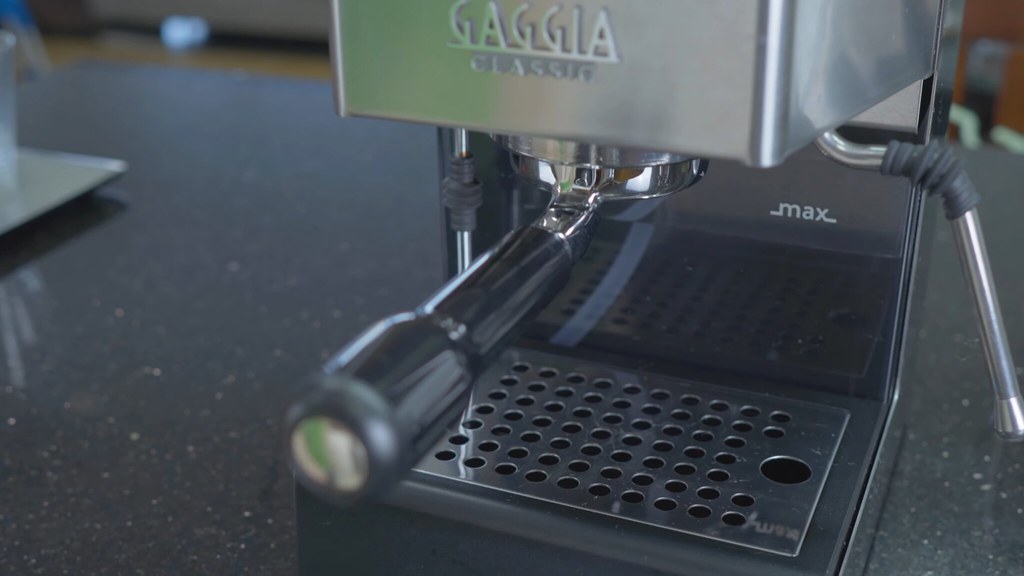
Dark particles from a 2023 Evo steam path deserve a coating check because that model has a documented coating history. Pale or chalky material is more consistent with scale. Dark material only from the group can still be old coffee residue or group-area debris.
The practical decision is:
| Pattern | More useful interpretation | Next step |
|---|---|---|
| Dark particles from steam wand on a coated Evo | Boiler-path problem is plausible | Document and contact seller/Gaggia support |
| Dark particles from steam and group | Upstream water-path source becomes more likely | Stop drinks and inspect/service |
| Dark particles only from group | Coffee oils, shower area or group debris remain plausible | Clean the group and retest |
| White/chalky pieces | Scale is more plausible | Review water and descaling history |
| Persistent particles on an uncoated machine | Oxide, scale, seals or other service debris remain possible | Do not label it “Boilergate” without inspection |
Do not identify a coating, oxide or gasket material from a kitchen photo alone. The article’s job is to narrow the source far enough to choose support, cleaning or inspection without inventing a material test.
Why is the steam-wand test useful?
The steam wand gives you a water sample that never passed through a coffee puck.
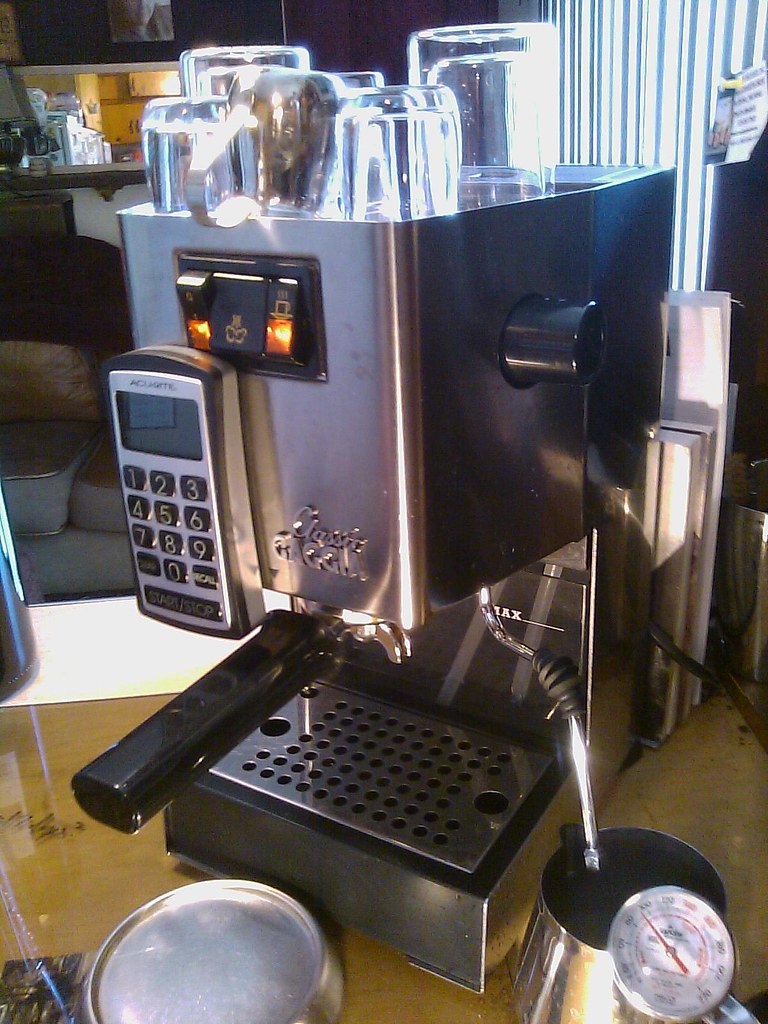
If particles appear from the wand with no coffee involved, puck prep and loose grounds cannot explain that sample. Compare it with group water in a separate white cup.
Keep the test simple:
1. Heat the machine normally.
2. Put a clean white cup under the wand.
3. Dispense water according to the machine’s normal hot-water workflow.
4. Let particles settle and photograph them.
5. Repeat with the group, with no coffee installed.
6. Compare the two samples.
You do not need to disassemble the boiler to get this first split. If the machine is under warranty, collecting clean evidence before opening it also gives the seller or service team a clearer starting point.
When should you stop flushing and contact support?
Stop treating flushing as a fix when particles remain persistent, increase, or return after the same clean-water test.
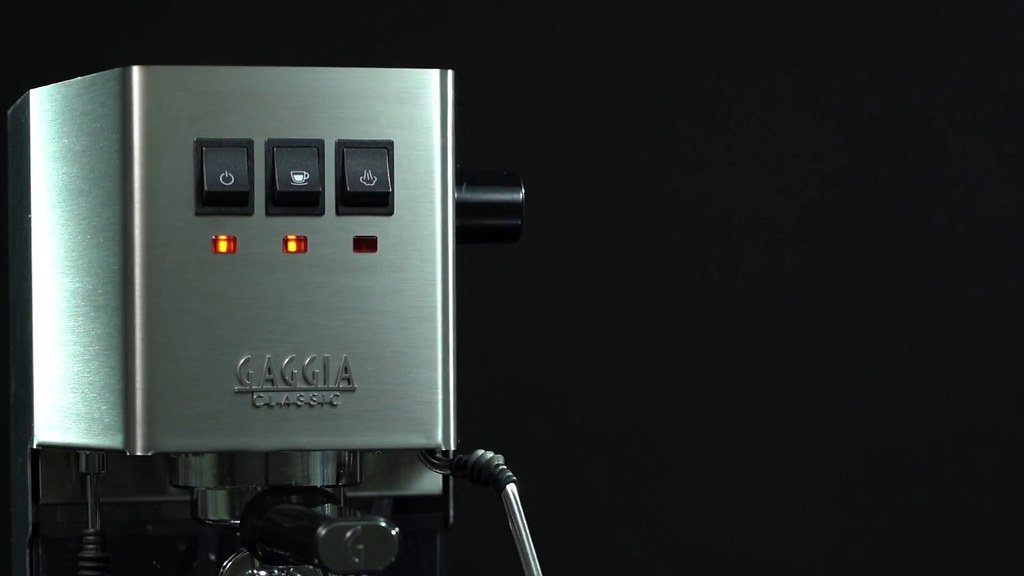
A useful support package includes the machine label, purchase date, seller, photos of the steam and group samples, recent descaling or repair history, and the number of clean-water tests already performed.
A recent September 2026 owner report describes an out-of-warranty Evo with recurring black flakes being returned through the reseller to a Gaggia service center and coming back with a brass boiler. That is one owner case, not a universal warranty promise, but it shows why current support options should be checked before assuming the only route is DIY.
Stop DIY sooner if you also see electrical damage, active leaking inside the case, repeated blockage, burned connectors, or other faults that are no longer a simple particle diagnosis.
Can water or descaling change what you see?
Yes. Scale and old deposits can break loose during cleaning, so the timing of the flakes matters.
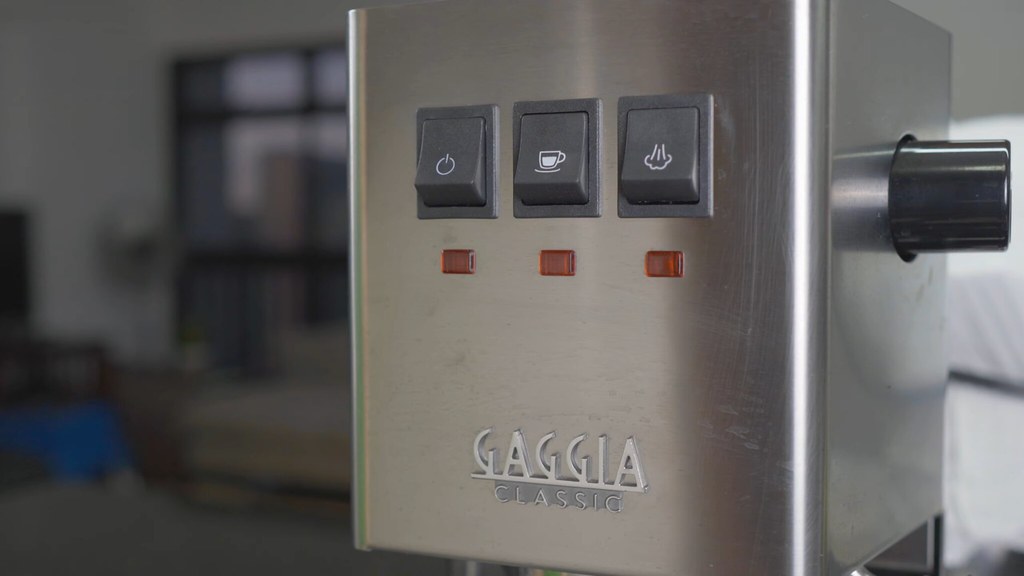
Hard water promotes scale. A long-overdue descale can release larger deposits. Repeating acid cycles without knowing the source can also move more debris through small passages and make the diagnosis harder.
Use the maintenance history as evidence:
– Did the particles start immediately after descaling?
– Are they pale and brittle, or dark and flexible?
– Do they decrease as the machine is rinsed?
– Were they present before the cleaning?
– Is the machine using an internal water filter that was recently changed?
Whole Latte Love’s maintenance video is useful here because it covers the maintenance path around the Classic Pro. It supports the maintenance workflow but does not identify a specific black particle as scale or coating.
For water choice and scale prevention, use the Gaggia water guide.
What repair or boiler-replacement path makes sense?
Choose the repair from the machine you own, not from the loudest forum thread.

For a persistent coated-Evo issue, support or an authorized repair can preserve options that disappear once the machine is modified. For an older out-of-warranty machine, inspection may show scale, damaged surfaces, seals or another service problem.
If the boiler itself needs replacement, current Gaggia North America parts pages give two important facts:
– the 2024 brass boiler 120/230V GAG Classic assembly is listed for the E24 and stated as compatible with the Classic, Classic Pro and Classic Evo Pro;
– Gaggia also still lists an aluminum boiler as a separate replacement part.
Do not turn those listings into a universal installation recipe. Confirm the exact machine, region, installed group/boiler hardware and the service documentation before ordering. The current brass-boiler product page says seals and hardware are sold separately.
Whole Latte Love’s current support article on boiler cleaning and replacement says visible pitting on the boiler or grouphead can be a reason the part needs replacement. That is a more useful threshold than replacing a boiler because of one unidentified speck.
If the machine must be opened, unplug it, let it cool and depressurize it first. Boiler work reaches heaters, thermostats, wiring and hot-water joints. Use the exact service manual or qualified service rather than a generic wiring sequence.
FAQ
Are black flakes always the Evo boiler coating?
No. Scale, oxide, seals, coffee residue and service debris can also produce particles. Model generation and source path matter.
Should I keep drinking espresso while the flakes continue?
No. Pause drinks until the source is identified and the water path is clean.
Can an older uncoated Classic still produce black particles?
Yes. Current owner reports and older cases show that uncoated machines can also produce dark debris. That does not prove one specific material without inspection.
Does the E24 use the same coated boiler as the 2023 Evo?
No. The current E24 product specification lists a solid lead-free brass boiler.
Can the current brass boiler be used on an older Classic or Classic Pro?
Gaggia North America’s current 2024 brass-boiler product page says it is compatible with the Gaggia Classic, Classic Pro and Classic Evo Pro. Check the exact model, region and required seals/hardware before ordering.
References
- Gaggia North America — 2024 brass boiler compatibility and included-parts boundary
- Gaggia North America — Classic Pro / Evo / E24 manuals, service manual and parts diagram
- Whole Latte Love — Classic Pro boiler cleaning and replacement support article
- Whole Latte Love — original Evo Pro coated-boiler design context
- r/gaggiaclassic — September 2026 owner repair outcome, used only as a bounded field case