
Coffee processing methods, read from the bag backward.
Washed, natural and honey describe what happened to the coffee fruit before roasting. They give you a useful clue, not a guaranteed flavor.
Keep process beside origin, variety, roast and freshness. The clearest bag tells you enough to choose a first brew without turning one production term into the whole story.
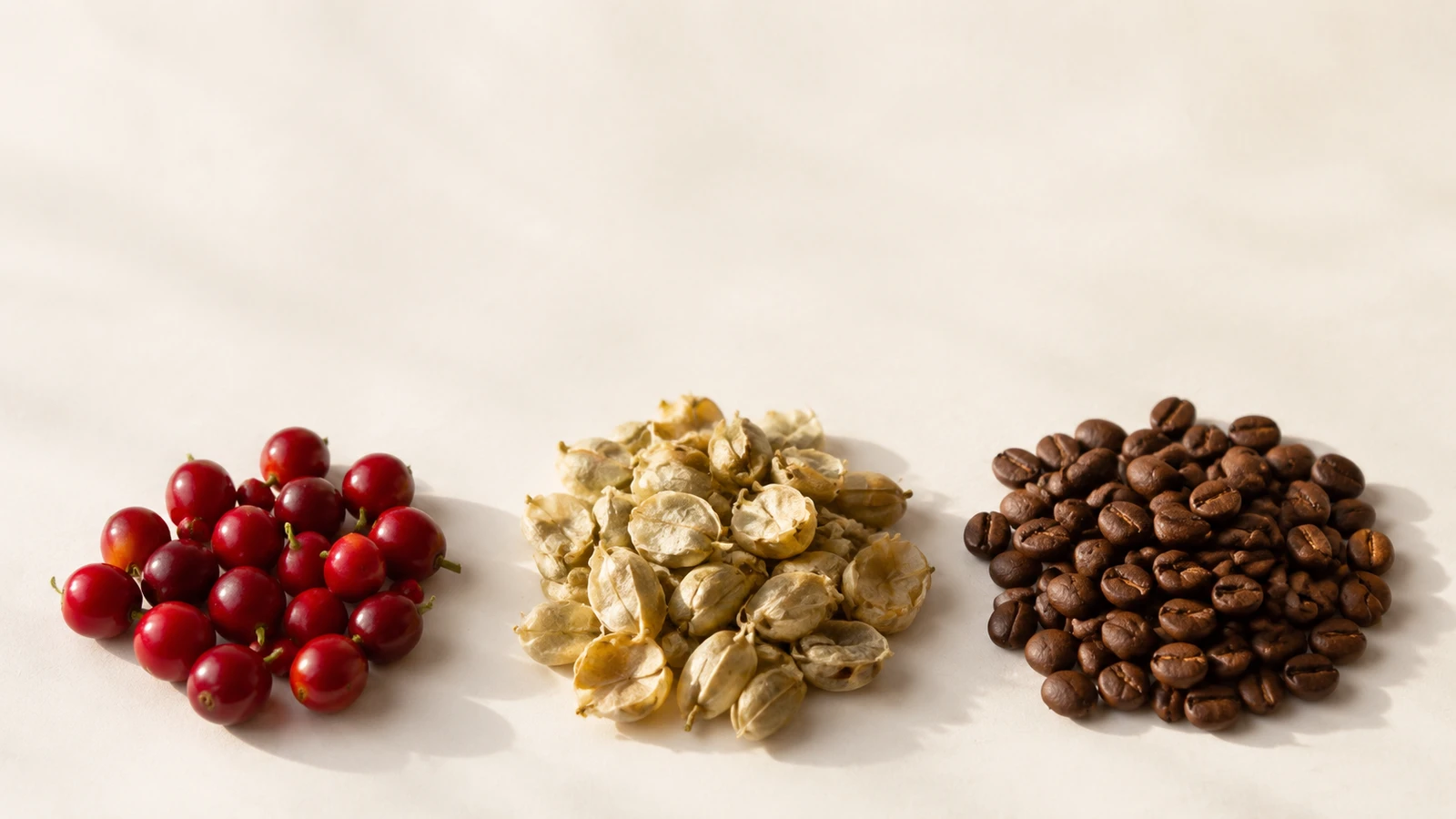
What does coffee processing mean?
Coffee processing removes the seed from the harvested cherry and dries it to a stable condition for storage, transport and roasting.
The National Coffee Association groups the classic routes into natural, washed and a hybrid often called honey or semi-washed. The practical difference is when the skin, pulp and sticky mucilage leave the seed.
TechnoServe describes washed coffee as pulped, fermented to loosen mucilage, washed and dried. Honey coffee is pulped and dried with mucilage intact. Natural coffee dries as a whole fruit.
That sequence matters, but it does not work alone. Ripeness, sorting, fermentation control, drying weather and storage can separate two lots carrying the same process name.
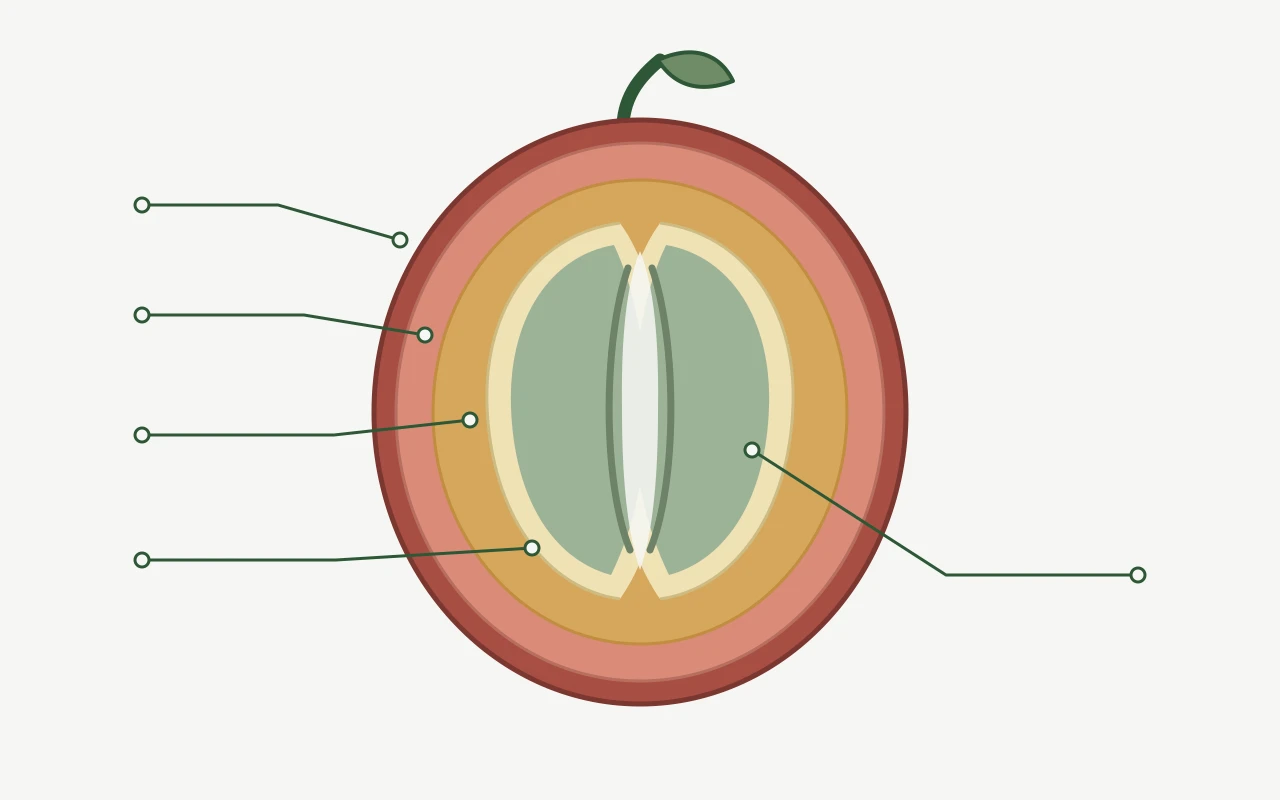
How do washed, natural and honey coffee differ?
The three routes mainly differ in how much fruit remains around the seed while it dries.
Use the route to set an expectation, then let the producer, roaster and cup confirm it.
Washed
The fruit is removed before drying. Fermentation or mechanical action helps remove the remaining mucilage, then the parchment coffee is washed and dried.
Understand washed coffeeNatural
The whole cherry dries around the seed. Careful turning, weather protection and sorting matter because the fruit stays in place for the longest part of the route.
Understand natural process coffeeHoney
The skin and pulp are removed, while some mucilage remains during drying. The name refers to that sticky layer; no honey is added to the coffee.
Understand honey process coffeeWhat can a process label actually tell you?
A process label describes the handling route more reliably than it predicts the exact cup.
| Method | Fruit during drying | Useful expectation | Do not assume |
|---|---|---|---|
| Washed | Skin, pulp and mucilage are removed before the main drying stage. | Often chosen when a roaster wants a clearer view of origin and variety. | Every washed coffee will be bright, light roasted or high in acidity. |
| Natural | The seed dries inside the whole cherry. | Fruit contact can support fuller, sweeter or fermented character when the lot is handled well. | Every natural coffee will taste like berries, wine or fermentation. |
| Honey | The skin is removed and some mucilage remains on the parchment while drying. | The route sits between full fruit removal and whole-cherry drying. | Honey was added, or color names follow one universal recipe. |

What should you expect from washed coffee?
Expect a route designed to remove the fruit before drying, not a promise that every cup will taste the same.
The National Coffee Association describes pulping, sorting, fermentation, rinsing and drying. Its overview places the fermentation stage around 12 to 48 hours, but farm conditions and equipment vary.
Washed coffees are often described as clean or clear because less fruit remains during drying. Origin, variety and roast can still move the cup from floral and tea-like to chocolate-led and full.
Use “washed” as a process fact. Let the tasting notes and roast description tell you where the roaster expects the cup to go.

What should you expect from natural process coffee?
Natural coffee dries inside the whole cherry, so ripeness, turning, airflow and weather protection become central to the result.
The National Coffee Association says cherries are spread out, raked and turned, then protected at night or during rain. Drying can take several weeks before the dried husk is removed.
Careful natural processing can produce fuller, sweeter and fruit-led coffee. Uneven cherry ripeness or poor drying can also make a lot inconsistent. The label tells you the route, not how well every stage was controlled.
A strong natural coffee should taste intentional. “Funky” is a preference, not a quality grade.

What should you expect from honey process coffee?
Honey coffee is pulped, then dried with some of the sticky mucilage still around the parchment.
Leaving more or less mucilage creates a range of local and producer-specific styles. Terms such as yellow, red and black honey can be useful within one producer's system, but they should not be treated as globally identical formulas.
TechnoServe notes that the industry does not use semi-washed terminology consistently, and pulped natural can overlap with honey depending on region. Read the producer's own description when the distinction matters.
The best clue is not the color word by itself. Look for how much mucilage remained, how the coffee dried and who processed the lot.
What about anaerobic, carbonic and wet-hulled coffee?
These labels add details about fermentation atmosphere, sequence or regional handling; they do not replace the need for a full process description.
Anaerobic
The producer limits oxygen during a controlled fermentation stage. The coffee may later continue through a washed, natural or honey drying route, so “anaerobic” alone is not the complete sequence.
Carbonic maceration
This term borrows from wine production and usually describes a carbon-dioxide-rich fermentation environment. Ask whether whole cherries or pulped coffee entered the tank and what happened after fermentation.
Wet hulled
Commonly associated with Indonesia, wet hulling removes parchment while the coffee still carries more moisture than export-ready green coffee. It is different from washed processing despite the similar English wording.
Experimental process
This is a broad description, not a method. A useful bag or product page should name the inputs, fermentation environment, time, temperature controls and final drying route rather than relying on novelty alone.
Should processing method change your brew recipe?
Use processing method to form a tasting expectation, but keep the first recipe controlled and adjust from the cup.
Start with the roaster's recipe when one is available. If you are comparing two coffees, keep dose, water, brewer and basic technique stable. A single controlled change teaches you more than a “natural recipe” or “washed recipe” copied across unrelated beans.
- If the cup feels sharp and thin, try a finer grind or slightly longer contact before making several changes.
- If the cup feels dry or hollow, reduce extraction pressure one step at a time.
- If roast character dominates, use the roast level guide before blaming the processing method.
- Record the bag, recipe and result so the next process label has a real reference.
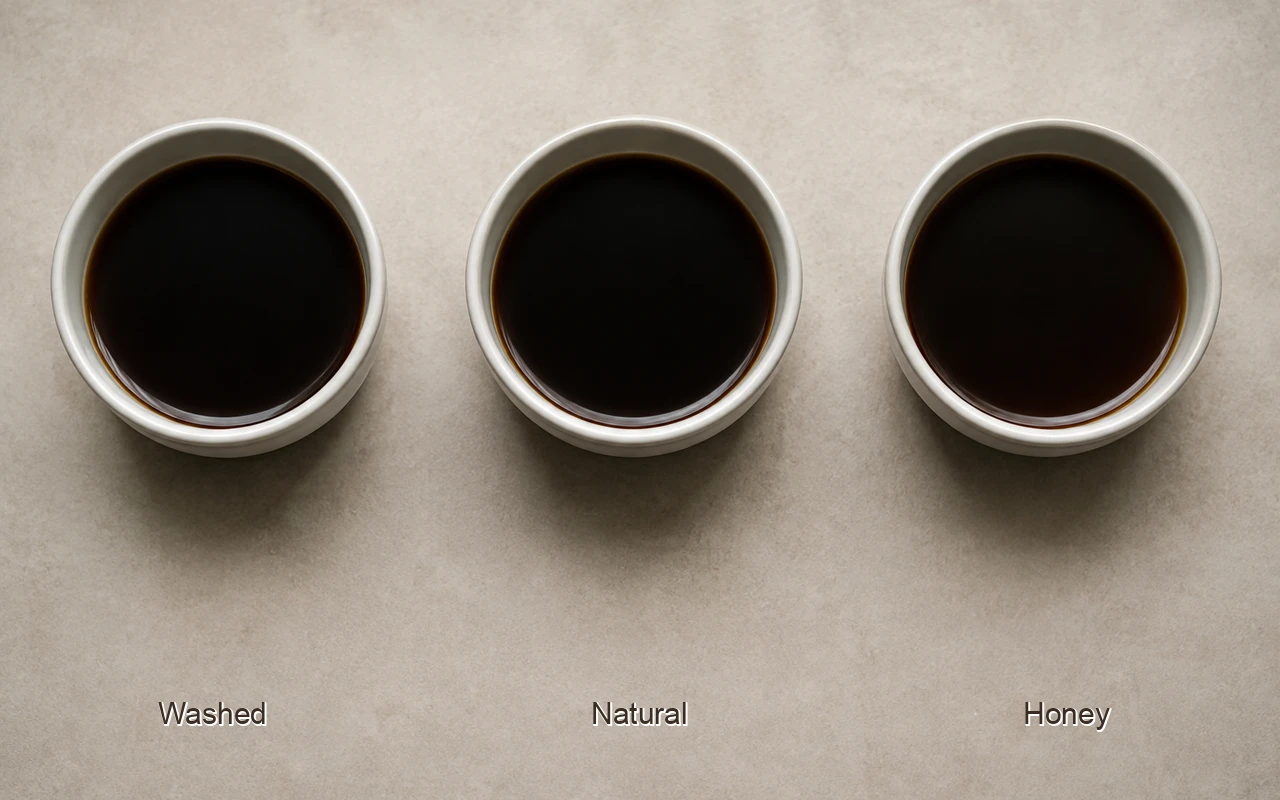
How should you compare washed, natural and honey in the field?
The useful comparison follows the physical route from cherry to green coffee and names the controls at each stage.
Cherry-to-green checkpoints
Compare whether fruit stays on the seed, when pulping happens, how mucilage is handled, how fermentation or washing is managed, and how the coffee is dried. Then connect those facts to the bag rather than to a fixed flavor promise.
Sources and further reading
These references support the process definitions, moisture guidance and terminology cautions used in this guide.
Coffee processing questions
What are the three main coffee processing methods?
The three main coffee processing methods are washed, natural and honey. Washed coffee removes the fruit before drying, natural coffee dries inside the whole cherry, and honey coffee is pulped but keeps some mucilage during drying. Regional terms and experimental fermentation can add more detail to those basic routes.
Does honey process coffee contain honey?
Honey process coffee does not contain added honey. The name refers to the sticky mucilage left around the parchment after the coffee cherry is pulped. Producers dry the coffee with some of that mucilage intact. Color terms may describe different handling choices, but the definitions can vary between farms and regions.
Is natural process coffee always fruity?
Natural process coffee is not always fruity. Whole-cherry drying can support fuller, sweeter or fermented character, but variety, origin, ripeness, drying control, roast and brewing still shape the cup. Treat natural process as a useful expectation and compare the roaster's tasting notes instead of assuming every natural coffee tastes like berries.
Is washed coffee better than natural coffee?
Washed coffee is not automatically better than natural coffee. Each route can produce excellent or flawed lots depending on cherry selection, fermentation, drying and storage. Choose washed coffee when you want a clearer reference, or natural coffee when you want more fruit contact, then judge the specific producer, roast and cup.
Does processing method change caffeine content?
Coffee processing method is not the most useful way to predict caffeine in the cup. Species, coffee dose, beverage size and extraction matter more for practical comparison. Washed, natural and honey describe post-harvest handling. Use the Arabica and Robusta guide when caffeine is the main question.