
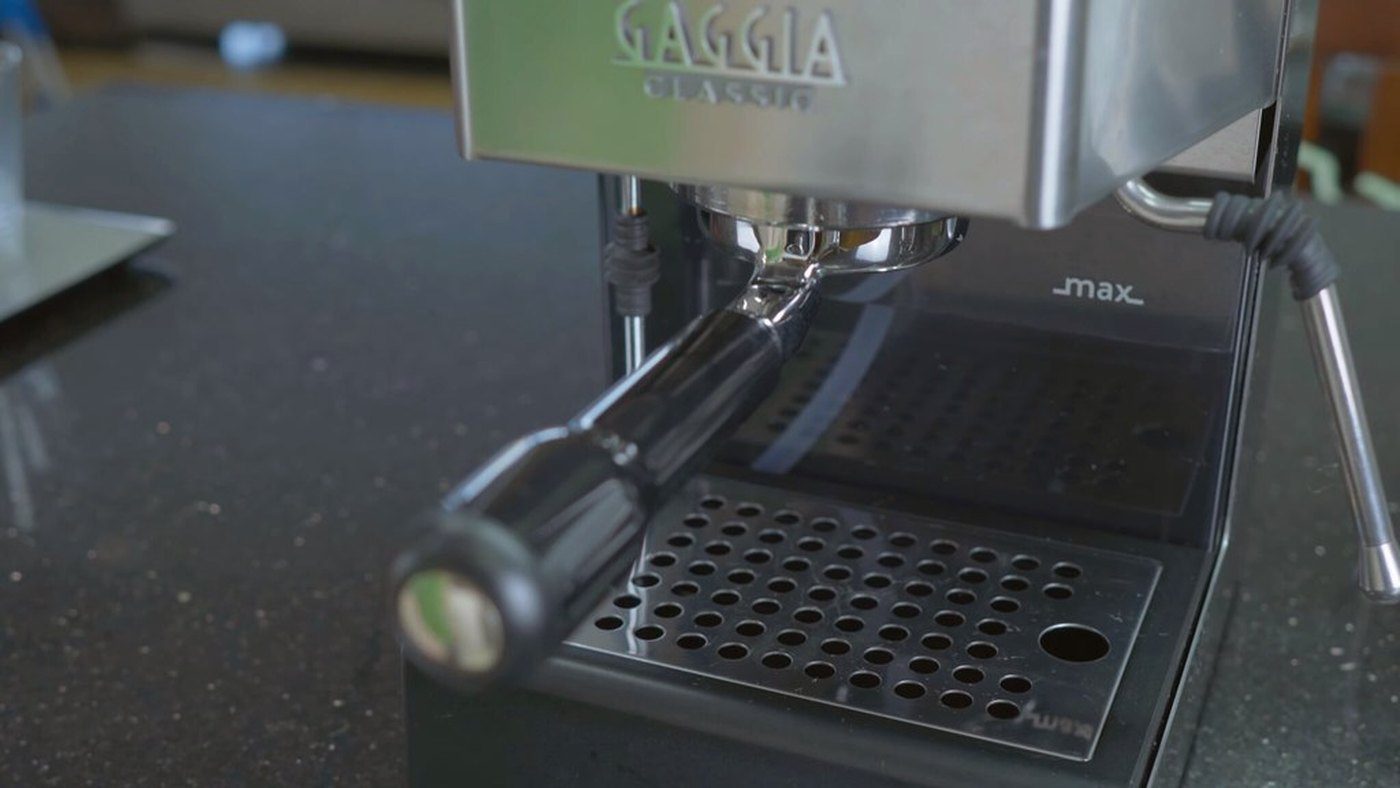
Short answer: the Gaggia Classic Pro E24 does not need a PID to make good espresso. Its brass boiler improves thermal stability, but the stock machine still uses thermostat control rather than a user-set brew-temperature controller. On a cold start, the brew-ready light tells you the boiler is ready; it does not mean the entire brew path has finished warming.
Gaggia North America currently lists a 3.5 oz lead-free brass boiler, 1370 W boiler heater, 58 mm portafilter, and 9-bar OPV calibration. Gaggia's E24 manual says the machine should be very hot before brewing and recommends keeping the filter holder installed to help maintain an even brew-unit temperature. Whole Latte Love measured the brew-ready light at about 90.5 seconds, then recommended a first warm-up closer to 10 minutes so the group head and portafilter can heat through.
What changed on the E24?
The E24's defining hardware change is its brass boiler. Gaggia North America lists it as a single-boiler, dual-use machine with a 3.5 oz lead-free brass boiler and 9-bar OPV calibration. That gives the E24 a different thermal starting point from earlier aluminum-boiler Classic models.
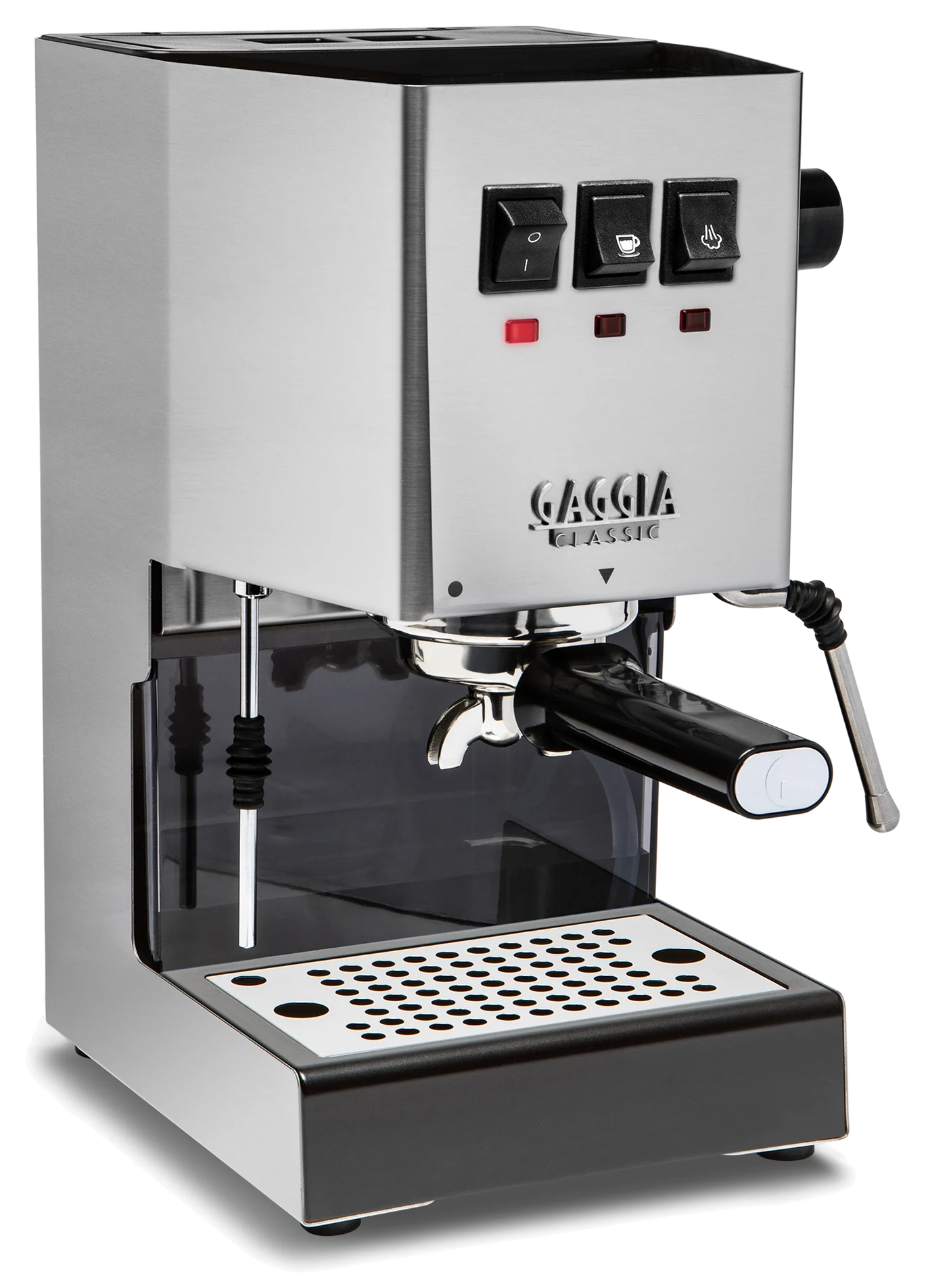
Whole Latte Love's E24 testing found fewer heater cycles during a five-minute hold and strong in-puck temperature stability. Its historical comparisons did not all use the same measurement method, so those results are best treated as one attributed test protocol rather than a universal promise for every E24.
The E24 can be stable without a PID. A PID becomes useful when you want direct control over a chosen temperature setpoint.
How long should the Gaggia E24 warm up?
The boiler reaches its thermostat threshold before the group head, portafilter, and basket finish warming.
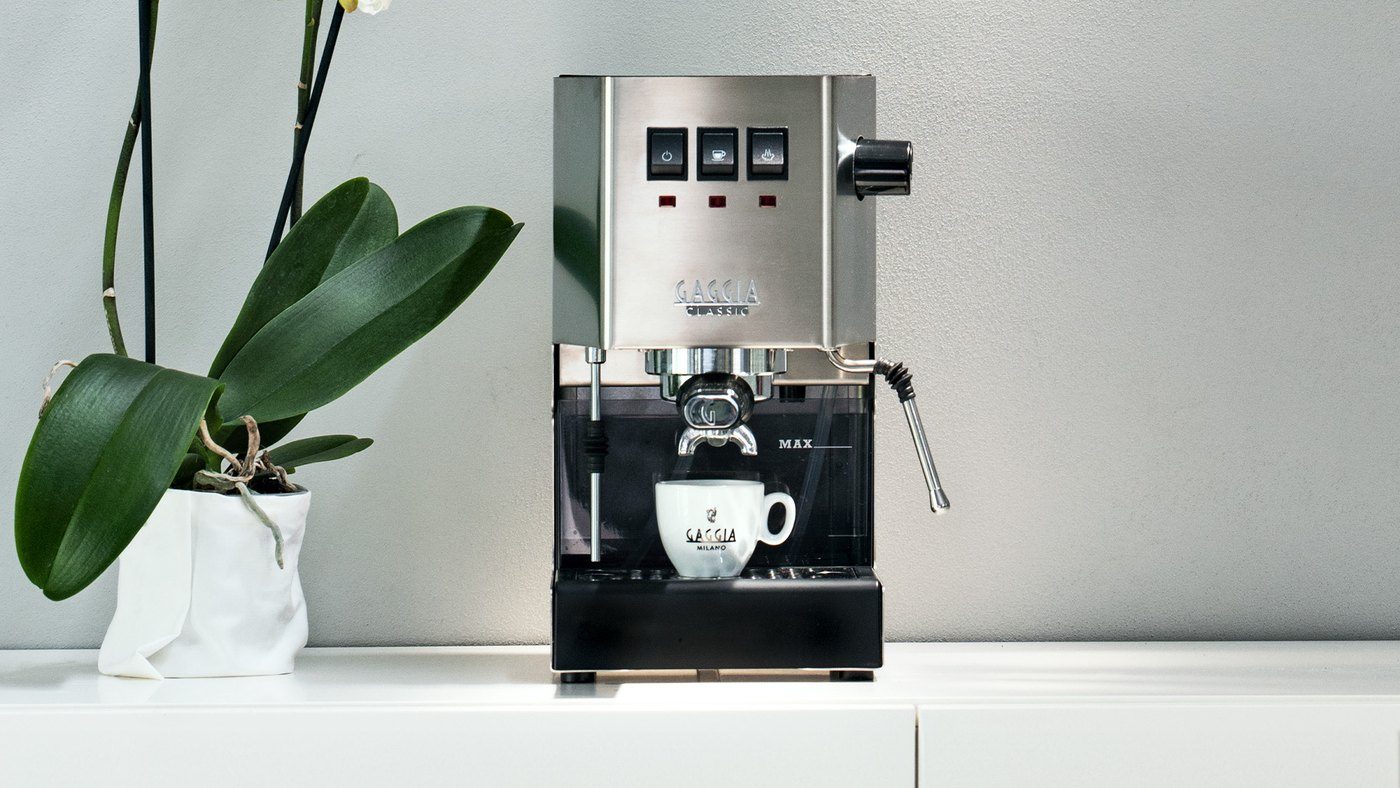
Gaggia's manual does not publish a universal 10-, 15-, or 20-minute heat-soak requirement. It says the machine should be very hot and that the filter holder should remain installed to help maintain a homogeneous temperature in the brew unit.
Whole Latte Love measured the brew-ready light at about 90.5 seconds from a cold start, but recommended warming the machine closer to 10 minutes before the first espresso so the group head and portafilter are hot. The owner discussion linked below reports roughly 10-15 minutes in daily use; that timing is community experience, not a manufacturer specification.
| Signal | What it tells you |
|---|---|
| Brew-ready light | The boiler has reached its ready condition; the rest of the brew path may still be warming. |
| About 10 minutes | A useful first-shot starting point from Whole Latte Love's E24 test, not an official Gaggia timer specification. |
| Repeatable results | If the same coffee, dose, yield, grind and warm-up routine produce consistent first shots, keep the routine rather than chasing a longer number. |
What does a PID change on the E24?
A PID gives you a controlled temperature setpoint. The stock E24 uses thermostats. The brass boiler improves thermal behavior, but it does not add user-selectable brew temperature.

A PID does not make the group head and portafilter instantly hot. Temperature control and physical heat soak remain separate parts of the workflow.
PID control is most useful when you deliberately compare brew temperatures, change coffees often, or want a repeatable temperature setpoint instead of relying on the stock thermostat cycle. A displayed controller number should not be assumed to equal puck temperature across different kits and machines.
Who benefits from adding a PID?
Keep the E24 stock if your shots are repeatable and you do not need direct temperature selection. Consider a PID when temperature control is a specific requirement you can name.

| Your situation | Next step |
|---|---|
| Grind, dose and yield still move around | Stabilize the recipe and warm-up routine first. |
| Stock E24 is repeatable and tastes good | A PID is optional. |
| You want to choose and repeat brew-temperature setpoints | A documented E24-compatible temperature-control solution addresses that requirement. |
If you choose a retrofit, use documentation for the exact kit, machine revision, and electrical market. This page is a decision guide, not an installation procedure.
A repeatable stock E24 routine before you modify it
Run the stock machine consistently for several sessions before deciding that temperature control is the missing piece.

- Start cold with the portafilter locked in. This follows Gaggia's instruction to keep the filter holder installed so the brew unit stays hot.
- Use roughly 10 minutes as a practical first-shot baseline. That comes from Whole Latte Love's E24 testing, not from an official Gaggia countdown.
- Keep coffee, dose, yield and puck prep stable. Change one variable at a time.
- Compare the first shot with the next shot. A repeatable first-shot difference points toward warm-up as one variable worth testing.
- Add a PID only for a defined need. Direct, repeatable temperature selection is a clear reason.
For the broader machine decision, see Which Gaggia Classic to Buy. For hardware choices, use the Gaggia Classic PID kit comparison after confirming exact E24 compatibility.

FAQ
How fast does the Gaggia Classic E24 heat up?
Whole Latte Love measured its E24 brew-ready light at about 90.5 seconds, but recommended closer to 10 minutes before the first espresso so the group head and portafilter can heat through. Gaggia does not publish a universal 10-minute full-heat-soak specification.
Should I wait 15 or 30 minutes?
There is no manufacturer rule requiring 15 or 30 minutes. Start with a consistent warm-up around the independently tested 10-minute mark, keep the portafilter installed, and extend it only if your own first-shot consistency gives you a reason.
Does a PID make the E24 warm up faster?
A PID changes temperature control around its sensor and setpoint. It does not remove the time needed to warm the group head, portafilter and basket.
Is the E24 stable enough without a PID?
It can be. Gaggia positions the brass boiler as a thermal-stability upgrade, and Whole Latte Love's E24 testing found strong temperature stability for a thermostat-controlled single boiler. A PID is still useful if you want direct temperature selection.
Watch: Gaggia Classic Pro E24 temperature workflow
References
- Gaggia North America - Gaggia Classic Pro E24 specifications
- Gaggia North America - Classic Pro / Evo / E24 manuals
- Whole Latte Love - Gaggia Classic Pro E24 Review and heat-up testing
- Whole Latte Love - E24 review video and temperature workflow
- r/gaggiaclassic - E24 owner warm-up discussion (community experience only)
- Image credit: "Barista prepares espresso at coffee shop" by Shixart1985, CC BY 2.0; no changes.
 English
 Deutsch