

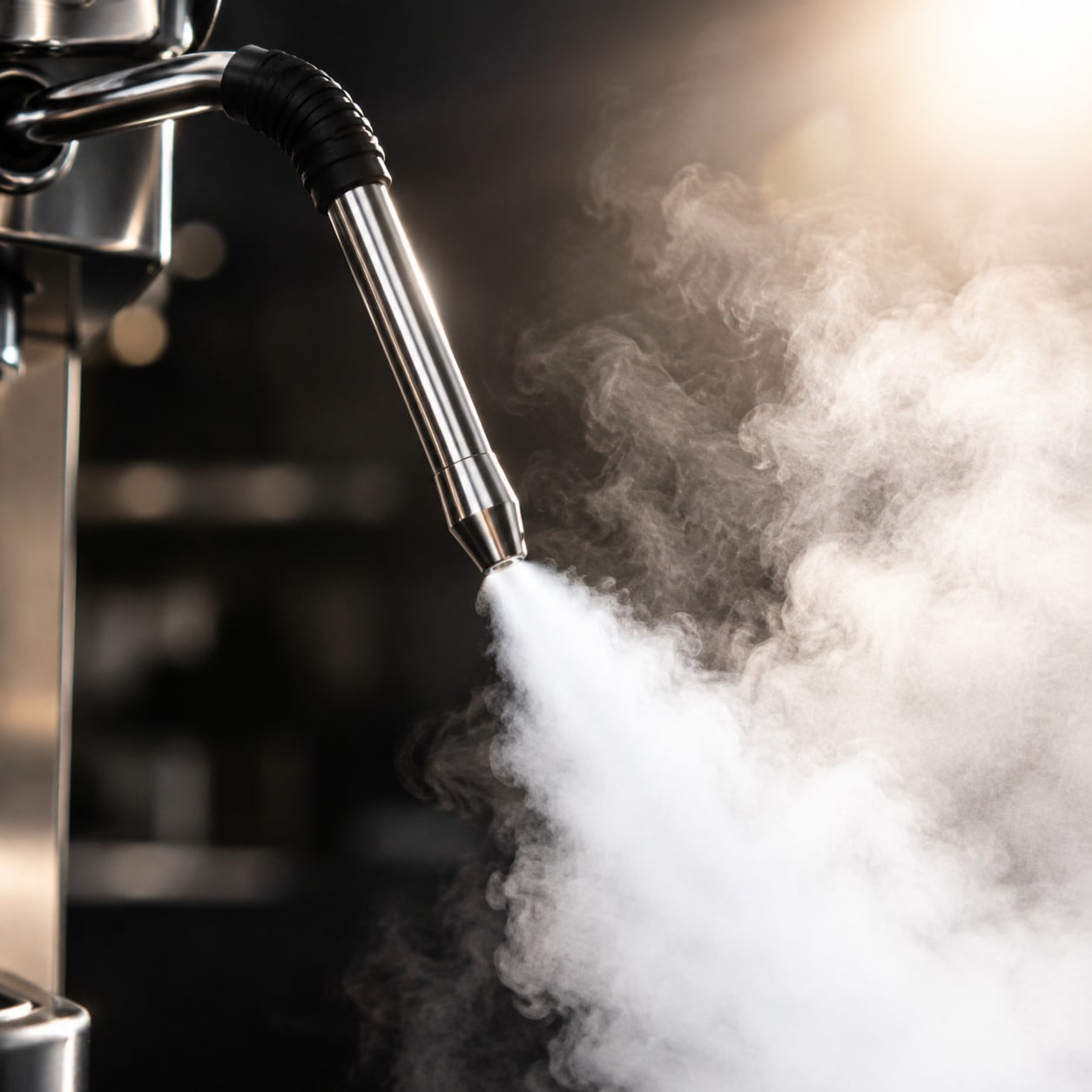
A dripping steam wand on a Gaggia Classic or Classic Pro is the most common wear fault on the machine. The internal valve uses a brass needle pressing into a tapered brass seat. Because the valve body is factory-crimped, replacing internal O-rings will not fix a deformed metal seat. If the wand drips with the knob turned completely off, you must replace the valve assembly.
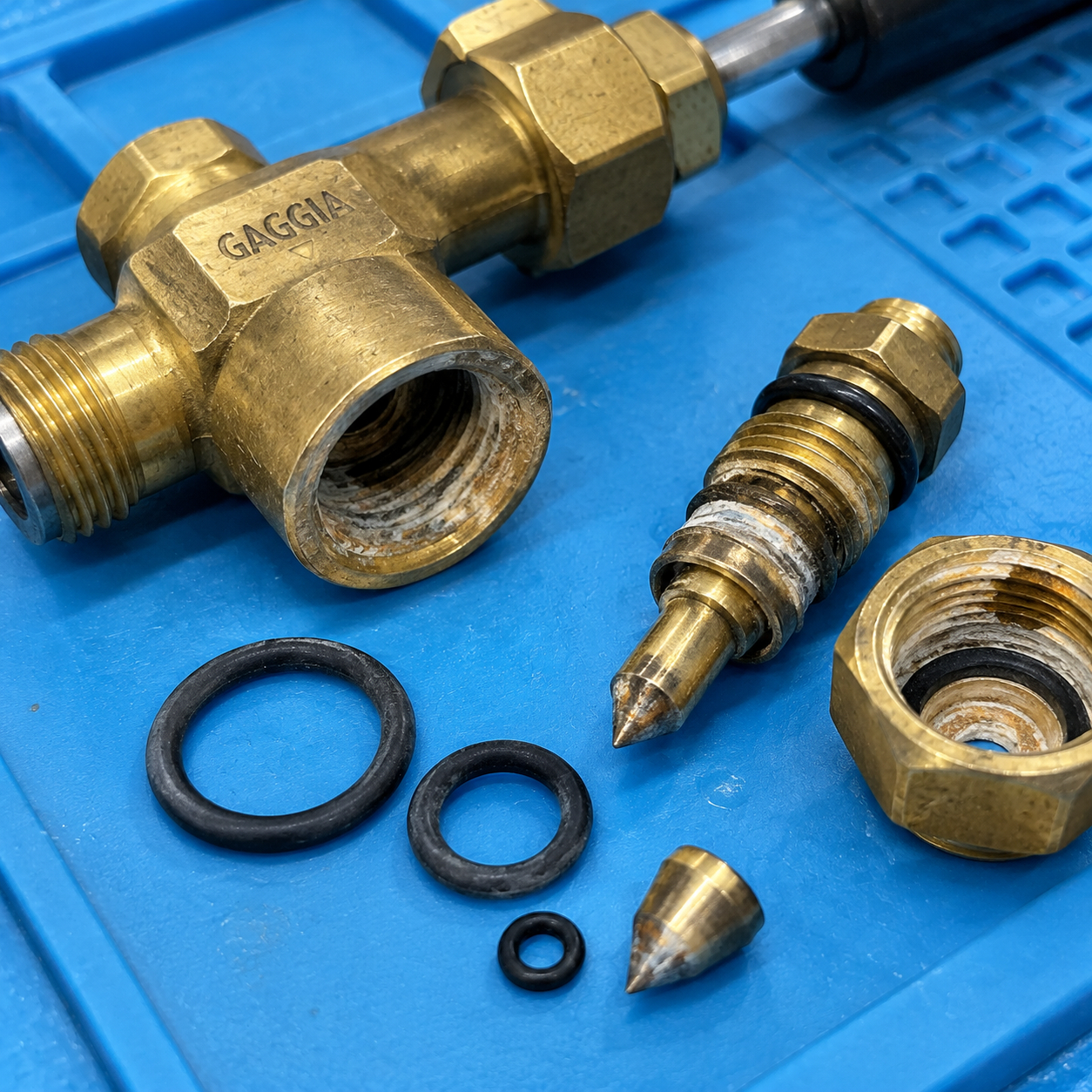
Why the Metal-on-Metal Needle Seat Fails
Unlike commercial steam valves that use replaceable rubber pads (like Rancilio Silvia or E61 valves), the Gaggia valve relies on metal-on-metal closure. When the wand begins a slow drip, owners instinctively crank down hard on the plastic steam knob to force it closed. This overtightening crushes the conical needle tip into the brass seat, creating permanent grooving. Once the seat is grooved, steam and hot boiler water bypass the seal continuously. Installing an Anti-Burn Steam Knob provides smoother rotation and prevents heavy hand leverage that destroys brass valves.
| Repair Approach | Tools & Labor Required | Long-Term Reliability | Cost & Recommendation |
|---|---|---|---|
| Complete OEM Valve Swap | 10 mm wrench, 15 minutes labor | Fully leak-free for 3–5 years | Recommended fix; reliable and simple |
| Drill Out Crimp & Replace O-Rings | Drill press, tap, Viton O-rings | Fails if needle seat is grooved | Enthusiast project; high failure rate |
| Grinding Needle Tip with Paste | Valve grinding compound, lathe/drill | Temporary fix (weeks to months) | Labor-intensive with inconsistent sealing |
| Silicone Modded Steam Tap | Aftermarket modded ball valve kit | Replaces internal needle entirely | Expensive aftermarket modification |

Leaking Around the Spindle vs Dripping from the Tip
Distinguish between two distinct leak paths. If water drips from the steam wand tip when the valve is closed, the needle seat is crushed (requires valve replacement). If steam hisses out from behind the knob spindle when the valve is open, the internal spindle shaft O-rings have dried out. If opening the chassis to service the boiler, inspect the Gaggia service kit ($24) to refresh the group gasket and dispersion block O-rings simultaneously.

How to Prevent Steam Valve Premature Wear
When closing the steam valve, turn the knob only until resistance is felt and flow stops. Never force the knob past its natural stopping point. Furthermore, regularly descale the boiler; mineral scale flakes settling on the needle seat prevent clean seating and encourage users to overtighten.
Frequently Asked Questions
Why does my Gaggia Classic steam wand drip constantly?
The brass needle valve seat has worn or crushed from overtightening, allowing pressurized boiler water to seep past the closed valve.
Can you rebuild a Gaggia Classic Pro steam valve?
The valve is crimped shut from the factory. While advanced hobbyists drill and tap the casing to replace O-rings, a crushed needle seat cannot be reliably repaired.
Does the steam valve leak cause boiler water loss during brewing?
Yes. A leaking steam valve bleeds off hydraulic pressure during coffee extraction, lowering effective pressure at the puck.
How hard is it to replace a Gaggia Classic steam valve?
It takes about 15 minutes. Unplug the machine, remove two top cover screws, disconnect the wand nut and two boiler mounting bolts, and install the new unit with fresh O-rings.
Does the Classic Pro use the same steam valve as the older Classic?
Yes. The fundamental brass steam valve body geometry has remained unchanged across Gaggia Classic and Classic Pro generations.
Related products: Pressure control.