

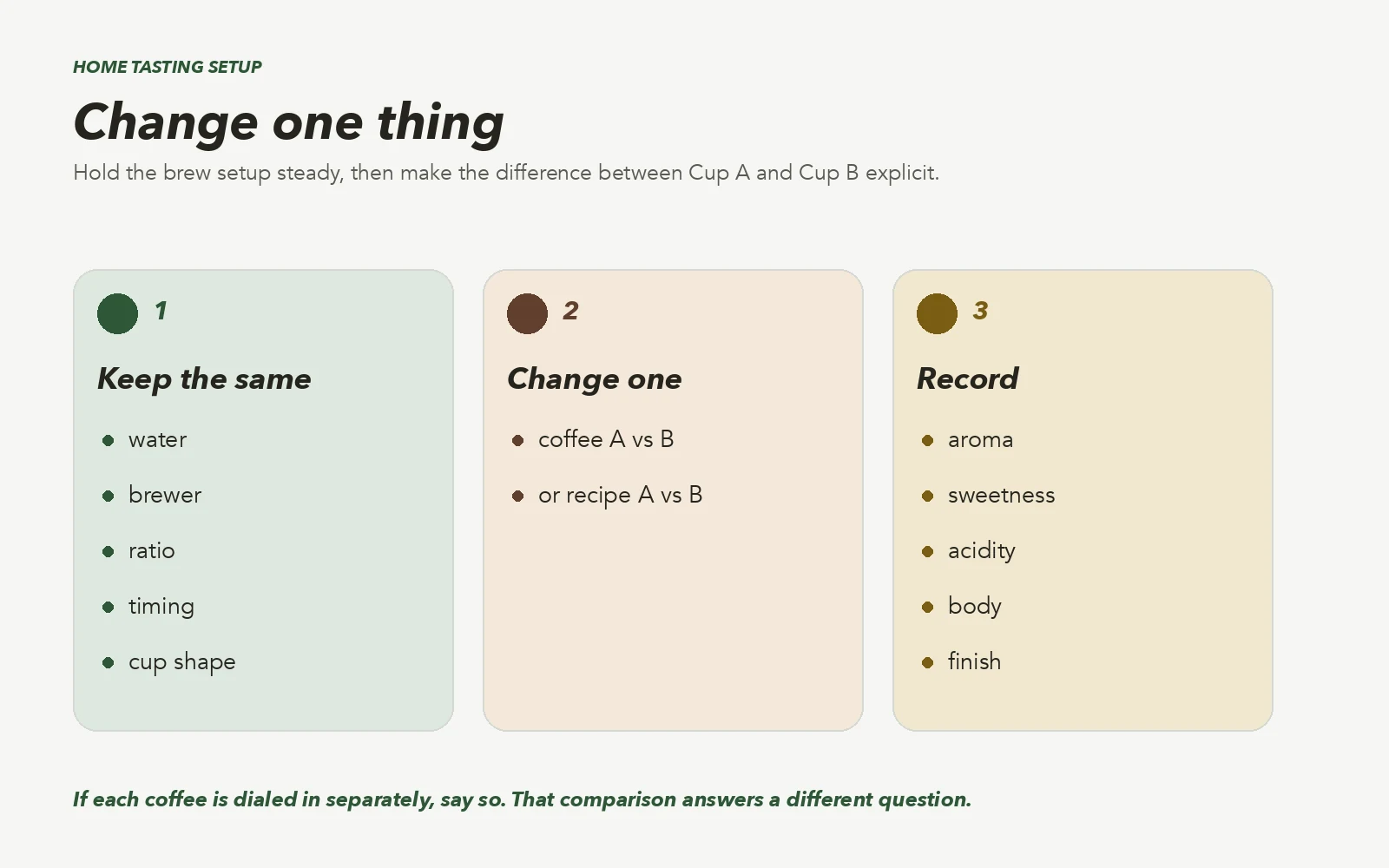
The easiest way to taste coffee at home is to compare two cups side by side. Use the same water, brewer, ratio, timing and cup shape. Label the cups A and B, hide the bags, and write the clearest difference you notice before searching for a flavor name.
Smell the dry grounds and brewed coffee, then taste both cups while they are hot, warm and cooler. Start with aroma, sweetness, acidity, bitterness, body and finish. Move toward words such as citrus, cocoa or jasmine only when the broader description is already clear.
The quickest useful home coffee tasting
- Choose two samples. Compare two coffees, or brew one coffee with two recipes.
- Label them A and B. Keep the bags and tasting notes out of sight for the first pass.
- Hold the setup steady. Use the same water, brewer, ratio, timing and cup shape.
- Smell before sipping. Compare the dry grounds, then the brewed aroma.
- Taste three times. Return to both cups while hot, warm and cooler.
- Write differences. Note which cup is sweeter, brighter, heavier or longer in the finish before choosing specific flavor words.
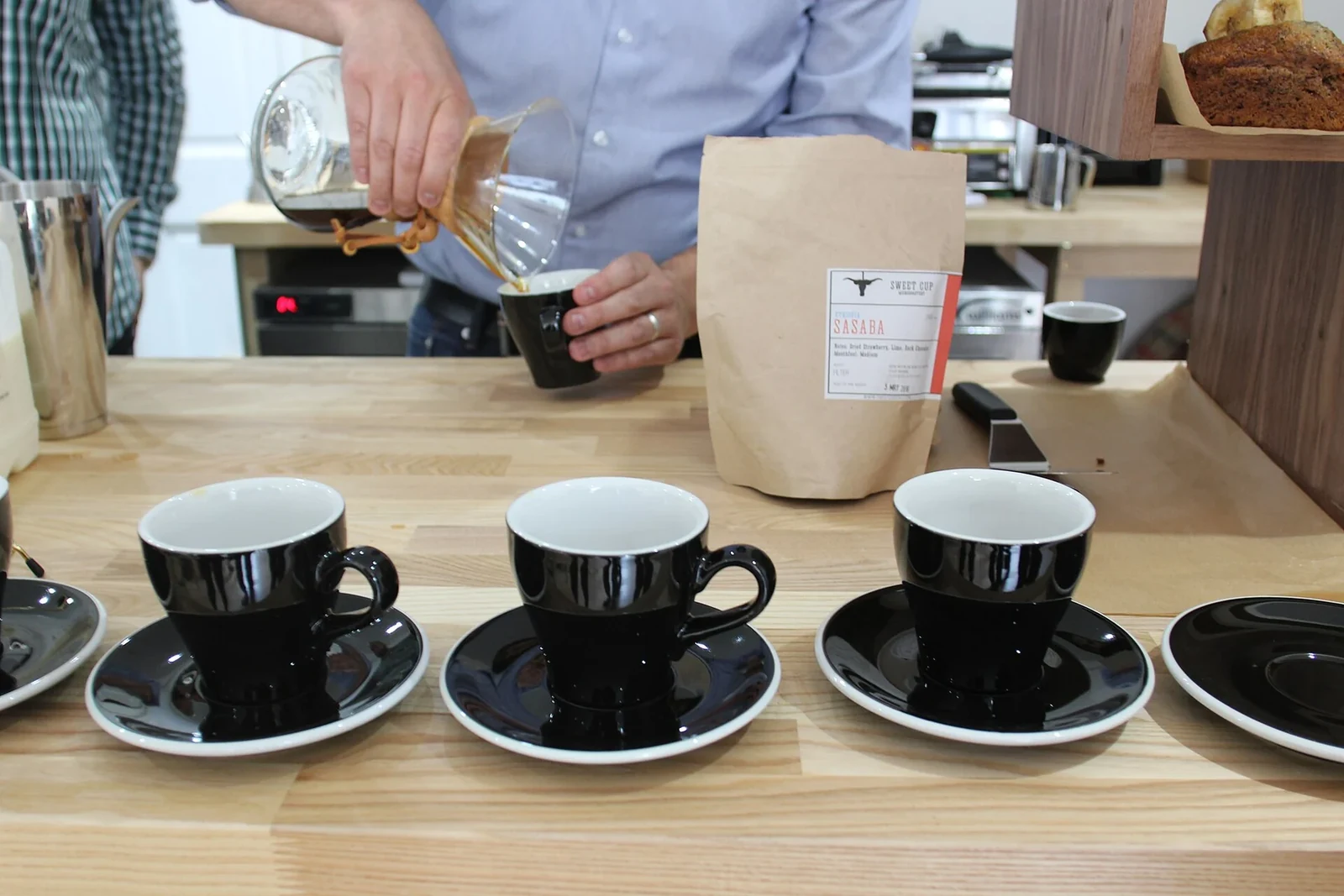
The tasting question comes before brewing
A fair test needs one clear question. If you compare two beans with the same recipe, you learn how they behave under the same conditions. One coffee may suit that recipe better, so the result does not identify each coffee's best possible cup.
If you dial in each coffee separately, you answer a different question: which finished cup do you prefer after giving each coffee its own recipe? Both tests are useful. Problems start when the notes say “same recipe” but one grind, ratio or water temperature changed along the way.
| Question | What stays fixed | What changes | What the result can tell you |
|---|---|---|---|
| Which bean do I prefer in this recipe? | Water, brewer, ratio, grind approach, timing and cups | Coffee A versus Coffee B | Preference under one shared recipe |
| Which recipe suits this coffee? | Coffee, water and brewer | One recipe variable, such as grind or ratio | Which adjustment improves that coffee in your setup |
| Which coffee is best after dialing in? | Tasting conditions and serving temperature | Coffee and its individual recipe | Preference between two optimized cups |
A fair two-cup setup
Use a brewer and recipe you can repeat. Weigh both coffee doses and water amounts. Use the same water source and identical cups when possible. Grind each sample immediately before brewing, clean loose grounds from the grinder between coffees, and record the order in which you prepared them.
Two identical brewers make the timing easiest to match. With one brewer, prepare the samples close together and wait until both cups reach a similar drinking temperature before judging them. Rinse the brewer well between samples. Keep milk, sugar and flavored syrup out of the first comparison; add them later if the real question is how each coffee works in your normal drink.

Ask someone else to label the cups if they are available. If you are tasting alone, put the beans into plain containers before brewing and reveal the names after your first notes. Let the cup make the first impression before price, origin and bag copy do.
Tasting the coffee hot, warm and cooler
Start by smelling the dry grounds. After brewing, smell both cups again before taking a sip. Write one or two words for each cup and move on. A long aroma list at the start makes it easy to talk yourself into flavors that are not clear.
Taste the cups in the same order, then reverse the order on the next pass. The first hot sip may be dominated by aroma and temperature. As the coffee becomes warm, sweetness, acidity and bitterness can become easier to compare. The cooler pass often makes body and aftertaste easier to describe.
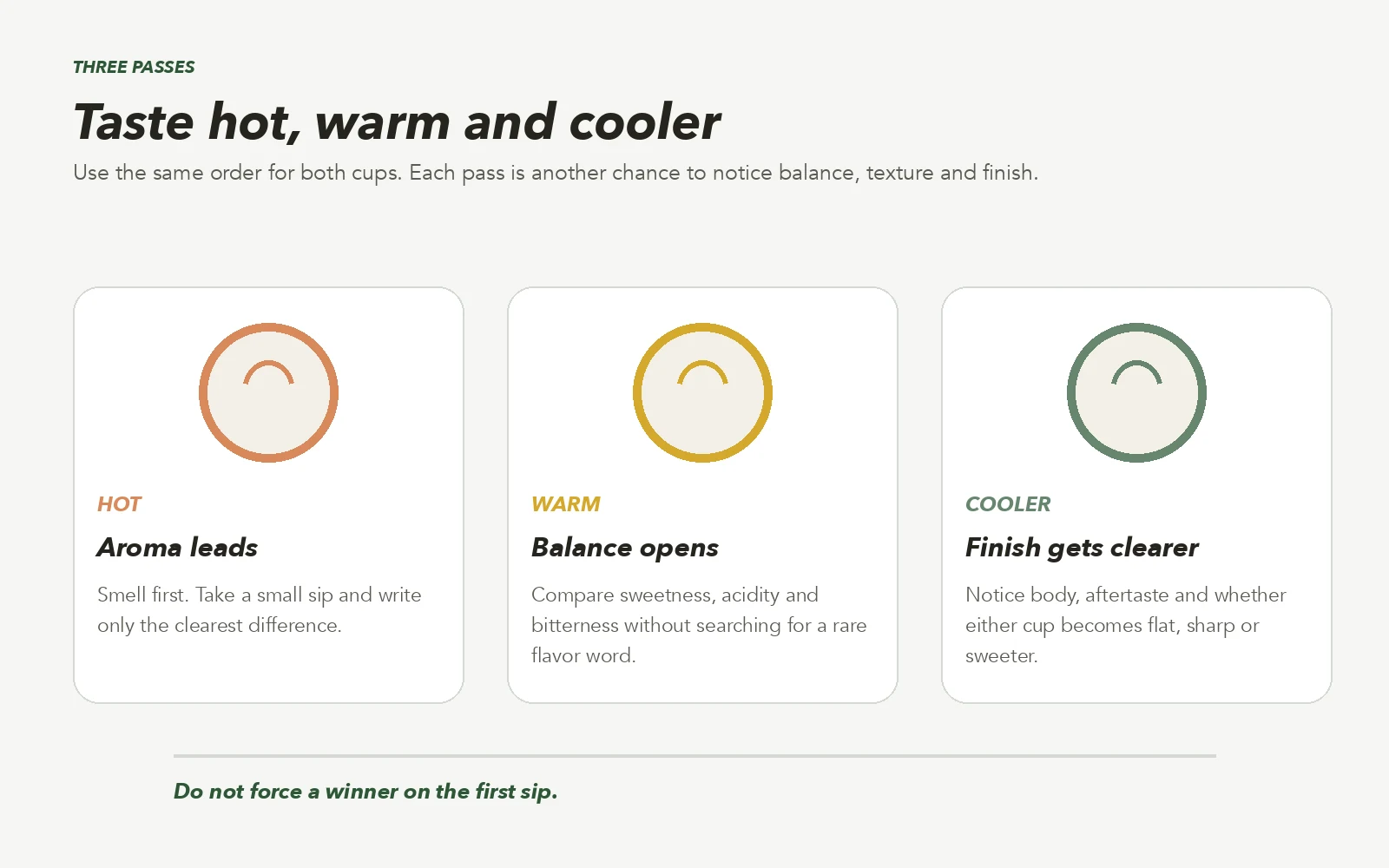
Do not wait for the cups to become unpleasantly cold. “Cooler” means the final comfortable tasting pass. If one cup cools much faster because its cup is thinner or contains less coffee, the comparison has gained another variable.
Describing changes without forcing flavor notes
Begin with structure. Is one cup sweeter, more acidic, more bitter, heavier, lighter or drier? Then choose a broad family such as fruity, nutty, cocoa-like, floral or spicy. Move toward citrus, stone fruit or dark chocolate only when the narrower description fits.
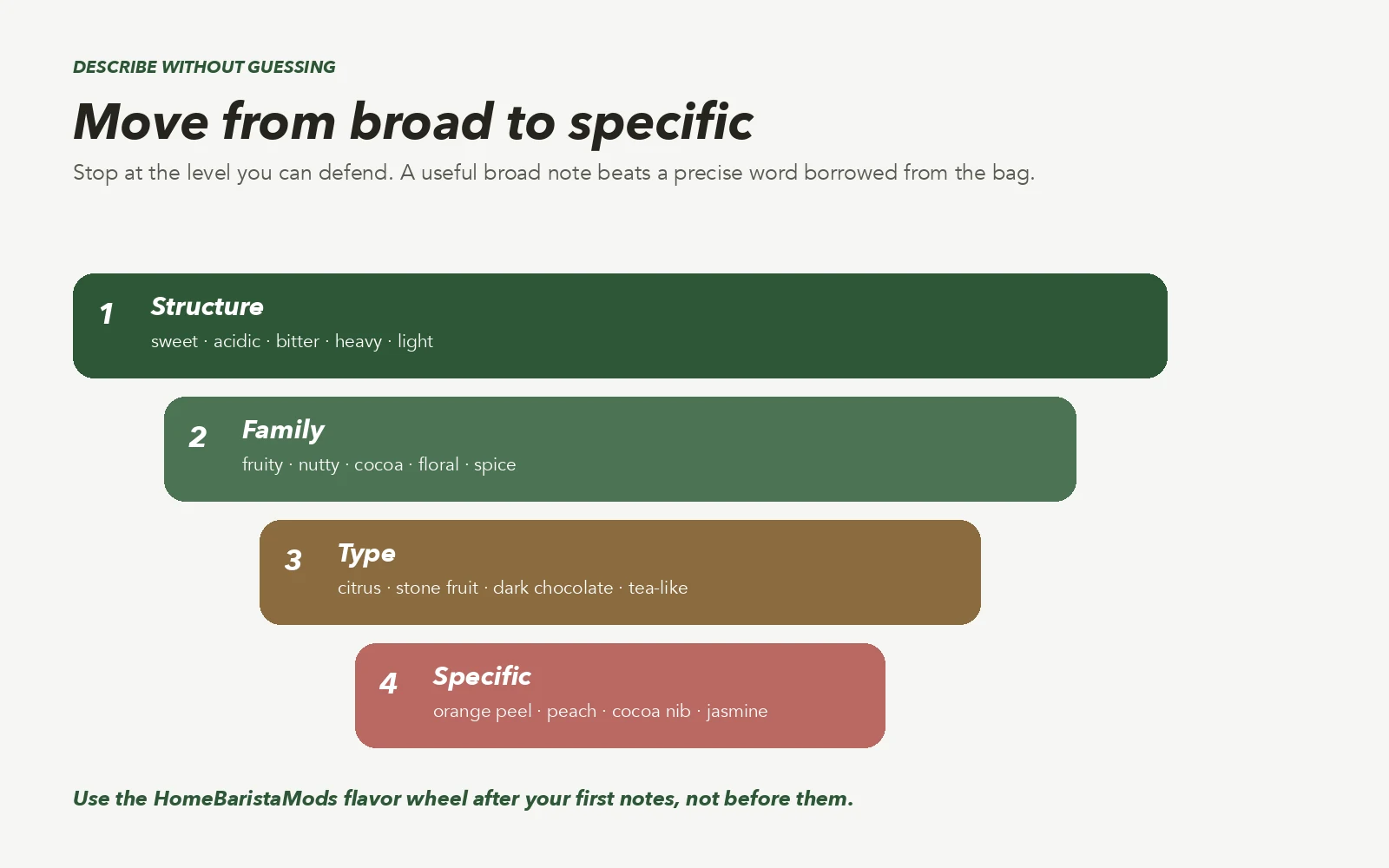
A specific note is an analogy. “Orange peel” may describe a combination of citrus aroma, bright acidity and a slight bitter finish. It does not mean orange was added. Another taster may choose grapefruit or lemon for the same cup. Compare the observations behind the word before arguing about the word itself.
The flavor wheel after the first impression
The Specialty Coffee Association's Coffee Taster's Flavor Wheel moves from broad groups near the center toward more specific words at the edge. World Coffee Research's Sensory Lexicon supports shared sensory language with named attributes and reference materials.
Write your first impression before opening a wheel. Then start in the center and move outward only as far as the cup supports. The HomeBaristaMods interactive coffee flavor wheel can help you explore related terms after that first note.

Do not use the wheel to reverse-engineer origin, process or quality. A word such as berry cannot prove that a coffee was naturally processed. Dark color cannot tell you exactly how the coffee was roasted. Treat the wheel as vocabulary and use the coffee bag guide for the producer's actual origin, process, roast and date information.

Name the broad difference first. The rare flavor word can wait.
Differences are more useful than scores
A short comparison is easier to repeat than a row of precise-looking numbers. “Cup B is sweeter, lighter and longer in the finish” gives your next brew a direction. A score of 8.2 does not help unless you have defined the scale and use it consistently.
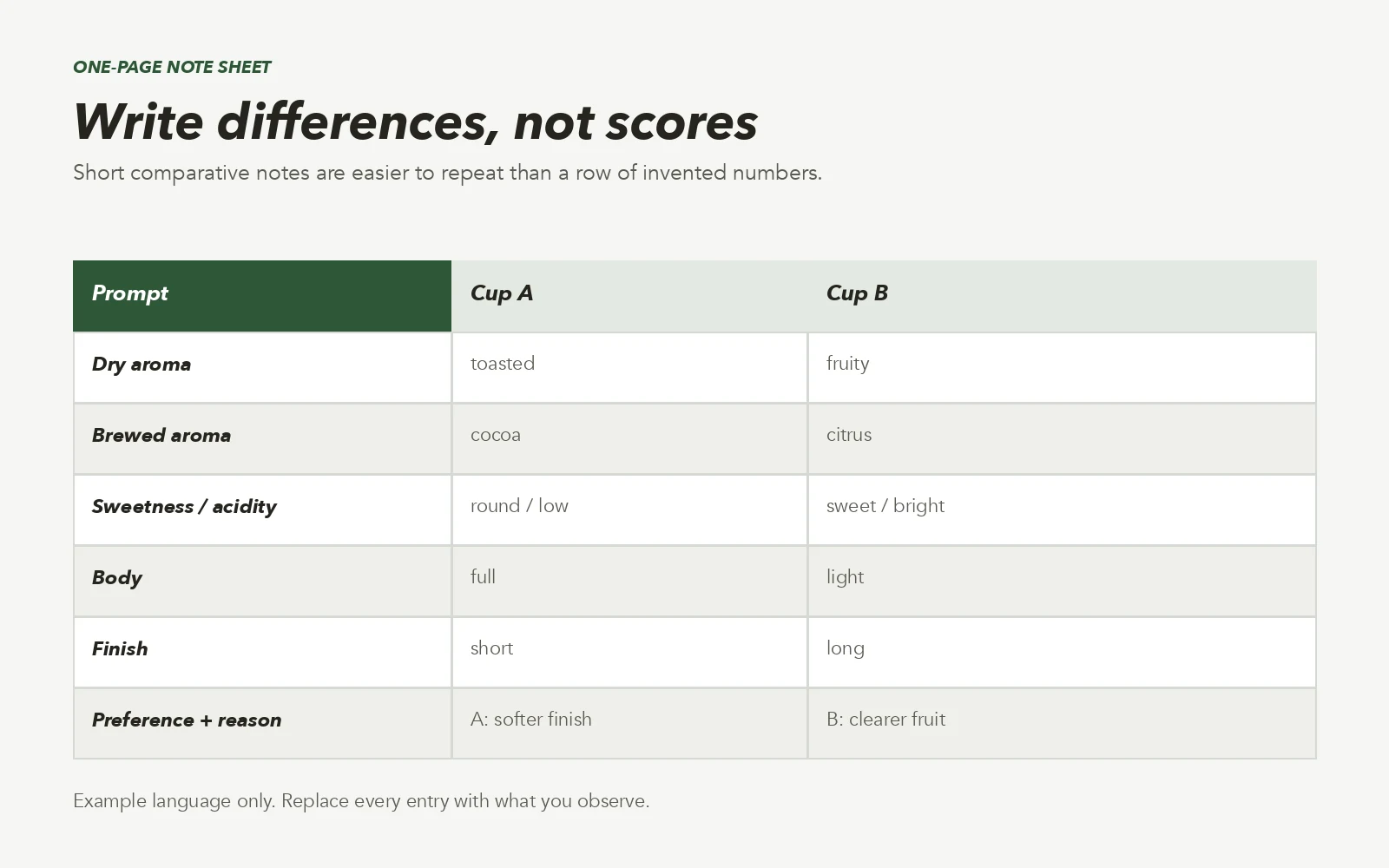
Record the coffee name, roast date, brew date, water, brewer, dose, water amount, grind setting and any recipe change above the sensory notes. That gives you enough context to repeat a useful result. If your grinder or brewer changed between sessions, the old and new notes are not a clean age comparison.
What tasting notes on a coffee bag mean
Bag notes describe sensory comparisons chosen by the roaster or tasting team. They are a direction, not a promise that every brewer will find every word. Extraction, water, grind, serving temperature and personal memory affect what reaches the cup and how you name it.
Read the ingredient list if you need to know whether a coffee contains added flavoring. A plain specialty coffee labeled “peach, cocoa and jasmine” usually uses those words as comparisons. A flavored coffee should identify the added flavoring or ingredients according to the label rules that apply where it is sold.
After the blind pass, reveal the bags and compare your notes with the printed descriptions. A partial match is normal. If your notes say “bright fruit” and the bag says “tangerine,” the tasting succeeded even if you never wrote the exact fruit.
What if both coffees taste the same?
Do not invent a difference. Check whether the samples were labeled correctly, brewed with similar strength, served at a similar temperature and ground shortly before brewing. Strong milk, sugar or syrup can also hide differences if you added them before the first comparison.
| What you notice | Check first | Next comparison |
|---|---|---|
| Both cups taste flat | Roast date, storage, water and brew strength | Repeat with a coffee whose roast date and storage are known |
| Both cups taste bitter and dry | Overly fine grind, long contact or very dark roast | Use a gentler shared recipe before comparing the beans again |
| Both cups taste sharp or thin | Uneven brewing, coarse grind or weak recipe | Stabilize the recipe, then repeat the blind labels |
| The first cup always wins | Order effect and temperature | Reverse the tasting order on the second pass |
| You notice no stable difference | Whether the coffees are genuinely similar | Keep the tie and repeat on another day |
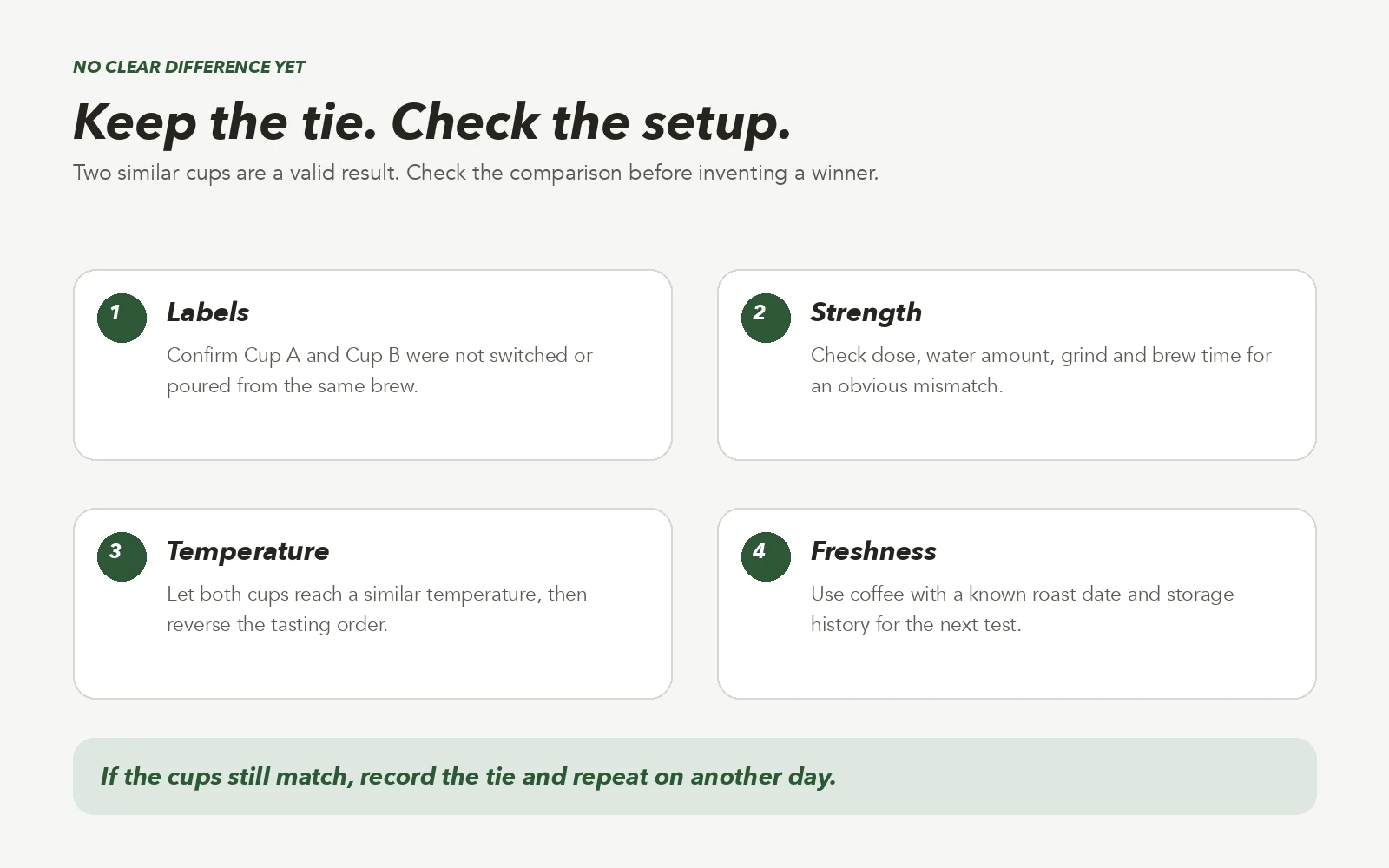
The useful result may be that two coffees are interchangeable for your usual drink. That can save money and simplify buying. Repeat the test on another day before turning a small first impression into a permanent conclusion.
Frequently asked questions
Do I need cupping bowls and special spoons to taste coffee?
You can taste coffee at home with two similar cups, a brewer you know, a scale and a way to label the samples. Matching cups and measured brewing matter more than buying professional tools. Use formal cupping equipment only when you want to learn a specific professional protocol.
Should I taste coffee black?
Taste the first pass without milk, sugar or syrup so the coffee differences remain visible. Add your usual ingredients afterward if your real buying question is which coffee works best in a latte or sweetened drink. Record both results instead of treating one as the only valid preference.
What should I write in coffee tasting notes?
Write aroma, sweetness, acidity, bitterness, body, finish and a preference with a reason. Start with comparisons such as sweeter, brighter, heavier or longer. Add a specific flavor word only when it clarifies the observation. Include the coffee, roast date and brew recipe so the note can be repeated.
Why can I not taste the flavors listed on the bag?
Coffee bag tasting notes are sensory comparisons, and your water, extraction, serving temperature and flavor memory may produce different words. Look for the broader family first. Finding “bright fruit” when the bag lists tangerine is a reasonable match. Recheck the recipe before assuming the coffee is defective.
Is home coffee tasting the same as professional cupping?
Home coffee tasting can borrow controlled comparison and shared vocabulary, but it does not become professional cupping without the defined protocol, preparation and evaluation framework. Use the home method to make a brewing or buying decision. Do not present the result as an official quality score.
References
- Specialty Coffee Association: How to Use the Coffee Taster's Flavor Wheel in Eight Steps
- World Coffee Research: Sensory Lexicon
- Specialty Coffee Association: Coffee Value Assessment
- James Hoffmann: A Beginners Guide to Coffee Tasting
- Featured photo: Bex Walton, CC BY 2.0.

Keep the first note honest. You can always taste again.