
A brand-new Rancilio Silvia can pour watery espresso surprisingly fast even when the grinder is set to its finest number. Before adjusting pump pressure or blaming the machine, prove that the coffee bed can actually create espresso-level resistance.
1. What does Rancilio officially say when espresso runs too fast?

Rancilio Group North America’s current dialing guide gives a simple troubleshooting direction: if the shot is pulling too fast, try a finer grind or increase dose. Its example recipe—18 g in, 36 g out in 28 seconds—is explicitly presented as a standard recipe they enjoy, not a law that every Silvia/coffee must match.
Rancilio’s current Silvia workflow likewise tells the owner to choose the basket, prepare it with ground coffee, brew, and stop at the desired shot. The machine uses a commercial-style 58 mm portafilter and conventional non-pressurized espresso workflow, so the puck—not a pressurized basket outlet—must provide appropriate resistance.
2. What if the grinder is already on its finest setting?
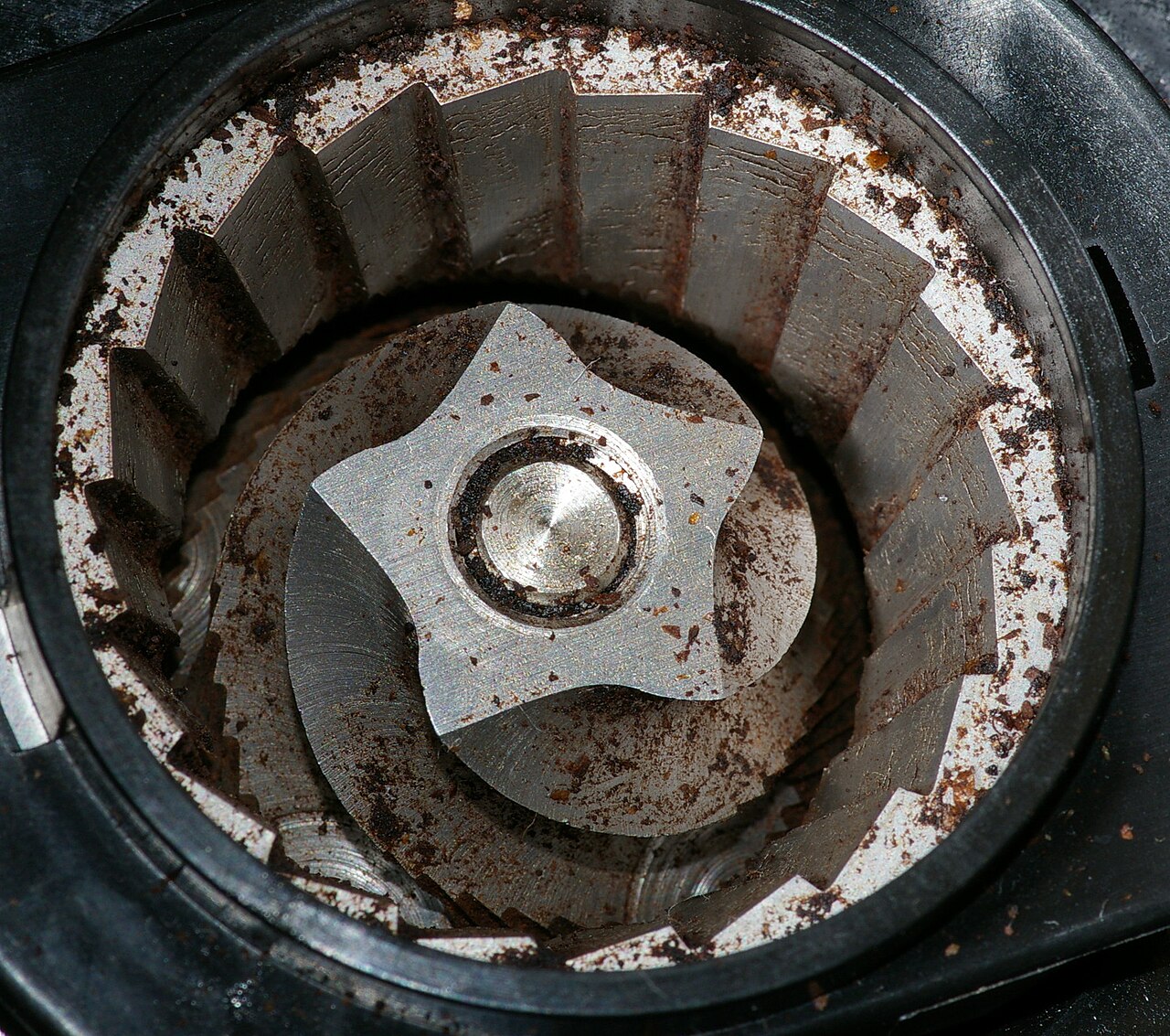
“Finest setting” only means the adjustment dial reached its end. It does not prove the burrs are correctly assembled, undamaged or close enough to grind for your basket and coffee.
A September 2026 new Silvia owner using a standard Baratza Encore reported reaching the grinder’s finest setting while the shot still ran too fast. An August 2026 owner coming from decades of Gaggia use reported the same problem with a Baratza Virtuoso+: even at zero, the Silvia remained watery and fast. Community responders in both cases moved the investigation toward grinder capability and burr/collar condition rather than Silvia pump pressure.
Baratza’s own current product line makes an important distinction: the Encore and the Encore ESP are separate grinders, and Baratza markets the ESP with espresso-focused adjustment. That does not make ordinary Encore/Virtuoso grinders “bad”; it means espresso can expose limits in adjustment range/resolution.
Remove the hopper only according to the grinder’s instructions and inspect the upper burr carrier, tabs/collar, seating and cleanliness. If a plastic carrier is damaged or the burr is not seated correctly, the dial number becomes misleading.
3. How do you prove whether the Silvia or the grinder is limiting the shot?

- Use reasonably fresh whole-bean coffee.
- Identify the exact basket rather than dosing by scoop.
- Weigh the dry dose.
- Prepare/tamp consistently.
- Weigh beverage yield and time the shot using one consistent convention.
- Move finer and repeat without changing several other variables.
- If the grinder cannot go meaningfully finer, inspect its burr system.
- If possible, test with a known espresso-capable grinder or correctly ground fresh coffee as a control.
If a different grinder can choke or strongly slow the Silvia with the same basket, the machine has demonstrated that it can build resistance against a coffee puck. That is much stronger evidence than “the pump sounds powerful.”
| Test result | What it supports |
|---|---|
| Finer grind slows shot normally | Dial-in problem, not machine fault |
| Current grinder at limit; espresso-capable control grinder slows/chokes shot | Original grinder range/condition |
| All coffee gushes despite verified espresso-fine grind | Check dose/basket/puck, then machine-side diagnosis |
| Machine has abnormal no-load/group flow or leaks | Separate machine fault branch |
4. Should you increase dose, tamp harder or adjust the OPV?

Dose can increase puck resistance, and Rancilio lists increasing dose as one response to a fast shot. But dose must fit the actual basket and leave sensible dry headspace. If an 18 g dose hits the shower screw/screen, use the Silvia headspace guide rather than overfilling the basket to rescue a coarse grinder.
Tamping harder is rarely the missing solution once the puck is compressed evenly. Extreme force cannot convert filter/coarse particles into an espresso grind.
Do not adjust pump/OPV pressure first. Rancilio’s manual includes pump-pressure adjustment as a technical service function, but a fast shot from insufficient puck resistance is not evidence that the factory pressure setting is wrong. Establish a controllable grind/dose baseline before touching machine pressure.

5. When is it reasonable to suspect the Silvia itself?

Move to machine-side diagnosis when the evidence stops following the coffee. Examples include abnormal bare-group flow, internal/external leaks, unstable pressure under a repeatable test load, or a verified espresso-fine puck that still cannot create expected resistance despite correct dose and basket.
If shot times change wildly day to day after you already established a workable grind, use the Silvia inconsistency guide. If the group itself has low/no water flow, use the no-water/group-flow diagnosis.
| Symptom | First branch |
|---|---|
| Brand-new setup, always gushes | Grind / dose / grinder capability |
| Grinder already at finest stop | Burr carrier/assembly + espresso range |
| Only one basket/dose gushes | Basket capacity / puck prep |
| Previously dialed machine suddenly changes | Coffee/grinder drift, then machine repeatability |
| Verified fine puck + abnormal machine flow/pressure | Machine-side diagnosis |
The practical rule is simple: prove the grinder and puck can create resistance before you change the machine.
References
- Rancilio Group North America — Beginner’s Guide to Dialing In Espresso
- Rancilio Group North America — Silvia Workflow
- Rancilio — Silvia 120 V user manual
- Baratza — Dialing in Espresso
- Owner case — new Silvia + Baratza Encore, September 2026
Evidence note: Rancilio establishes the fast-shot grind/dose direction and Silvia workflow; Baratza establishes its current grinder families and espresso dial-in principles. Owner cases show the real “finest setting but still gushes” failure pattern; a grinder fault is confirmed only by inspection or A/B testing.