

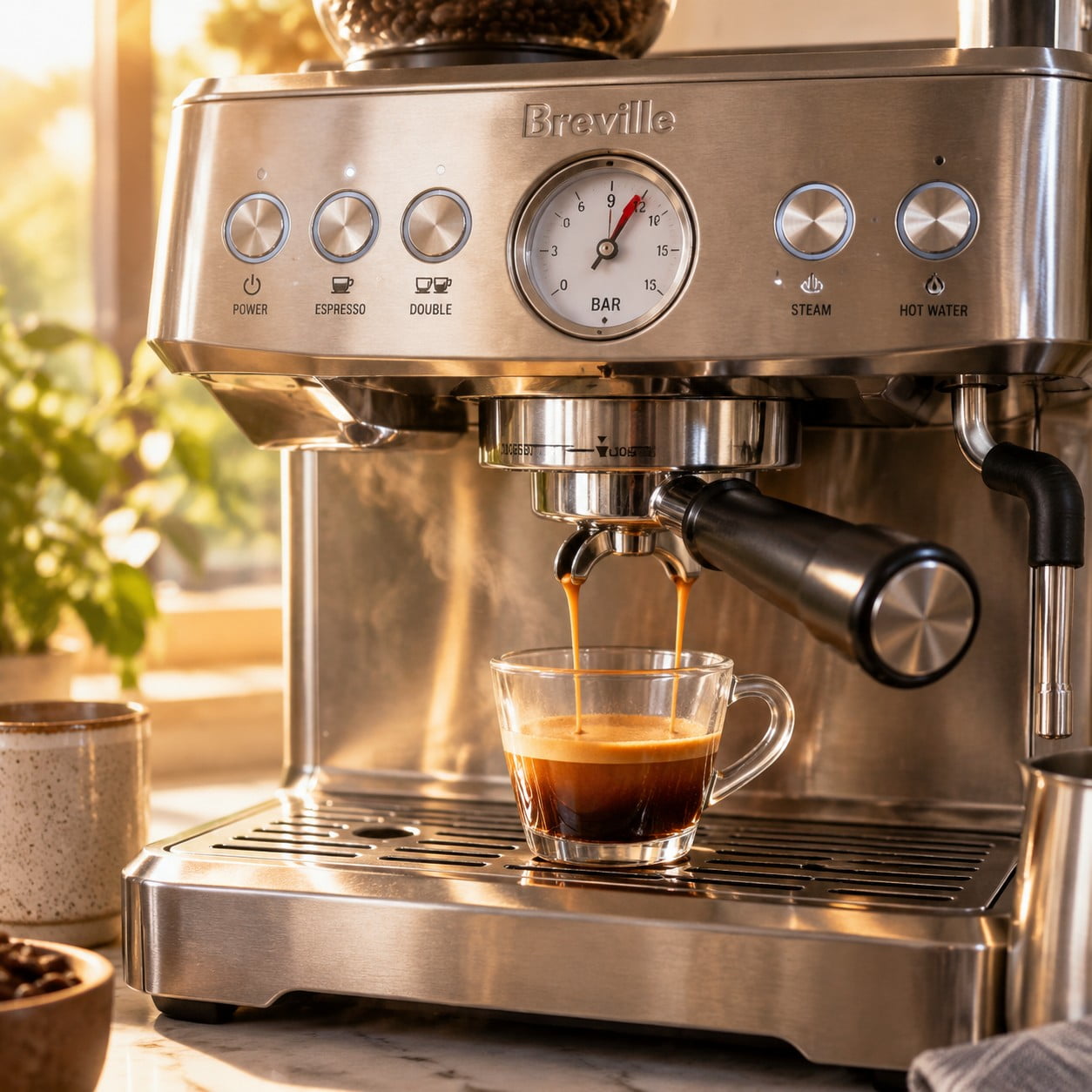
The front gauge on the Breville Barista Express is an analog hydraulic pressure indicator. It measures the physical backpressure created by your tamped coffee puck, not the electrical power of the pump. If the needle stays in the pre-infusion zone (below 8 o’clock) or fails to enter the gray espresso box, the coffee grind is too coarse or the dose volume is insufficient.

How the Pressure Gauge Actually Operates
Many owners assume a low gauge reading indicates a failing vibration pump or a cracked OPV. However, if water flows freely with the portafilter removed, the pump is operational. When pressurized water hits a loose, coarsely ground bed, it flows straight through without meeting resistance. The needle only climbs when water is forced to fight through tightly packed coffee particles. Run a blind rubber cleaning disc: if the needle climbs to the top of the gray zone, your pump and hydraulic lines are healthy.
| Symptom | Probable Root Cause | Test Method | Correction Step |
|---|---|---|---|
| Needle stuck in Pre-Infusion | Grind is far too coarse | Run blind rubber cleaning disc | Adjust outer grind dial finer by 3–5 steps |
| Needle low despite fine dial | Inner top burr setting too coarse | Inspect top burr collar markings | Adjust internal top burr wire from 6 to 3 or 2 |
| Needle erratic / fluctuates | Severe puck channeling / crack | Observe stream with bottomless handle | Use WDT needle tool and level 54 mm tamp |
| Needle low with blind disc | Failing pump or open solenoid | Listen to pump hum under load | Inspect internal tubing and solenoid valve |

Calibrating the Internal Top Burr
The outer grind wheel on the left side of the machine only provides coarse adjustments. If the outer dial is set to step 1 and the gauge still will not rise into the gray box, adjust the internal top burr. Remove the bean hopper, unlatch the wire handle, lift out the conical ring burr, and adjust the internal number setting from the factory position 6 down to position 3 or 2. This physically shifts the upper burr closer to the bottom cone, restoring fine espresso grind capability.
Dose Weight and Puck Consolidation
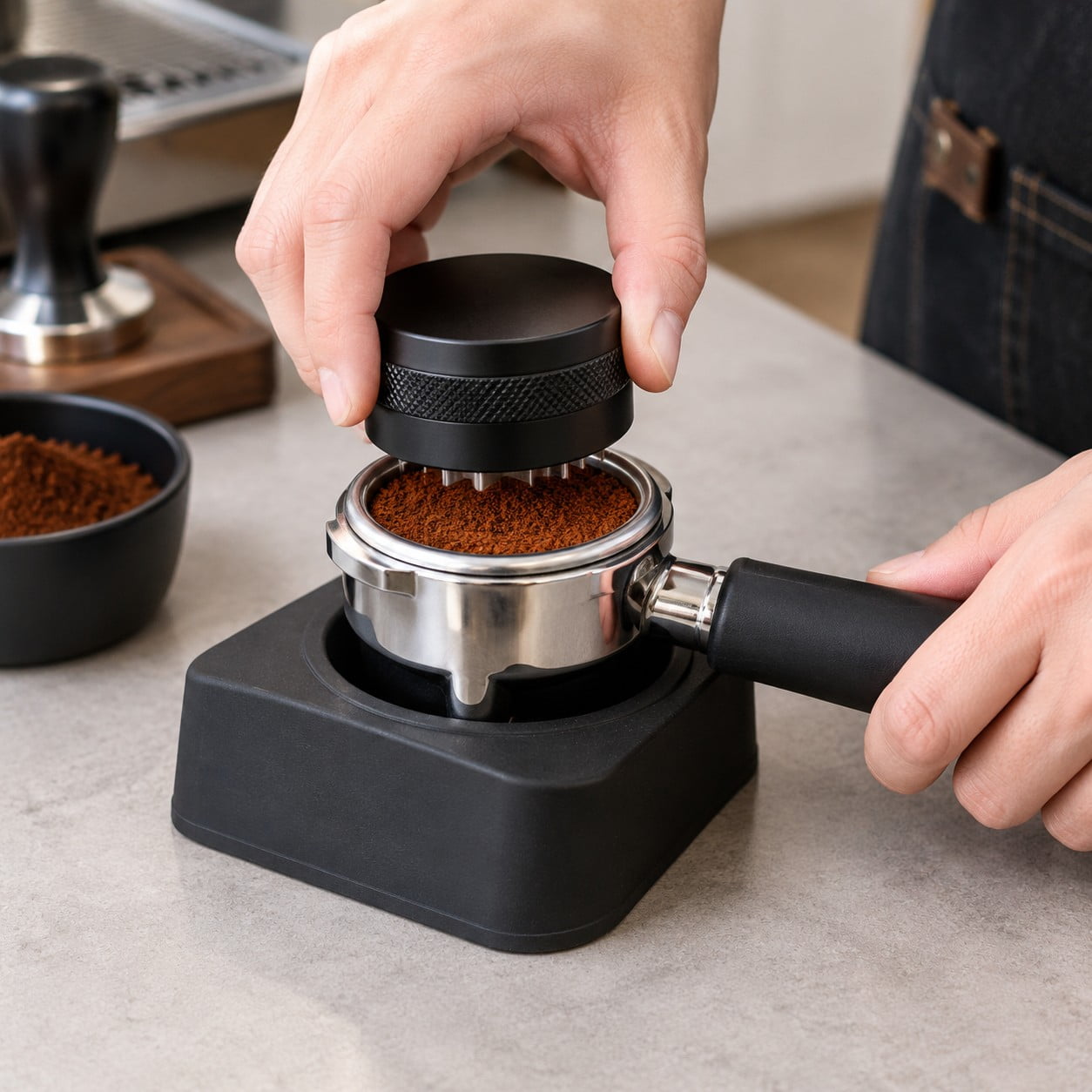
Under-dosing creates excess headspace and lets water flood the bed before resistance can build. Weigh your dry coffee dose on a scale: use 18g to 19g in the standard double single-wall basket. Consolidate the bed evenly with a magnetic distributor and tamp with firm, repeatable pressure using a calibrated spring-loaded tamper.
Frequently Asked Questions
Where should the needle sit on the Barista Express pressure gauge?
During a normal extraction, the needle should sit within the gray ‘Espresso Range’ box, typically between the 11 o’clock and 1 o’clock positions.
Why does the needle reach high pressure with the cleaning disc but not coffee?
The rubber cleaning disc proves the pump and valve hold pressure. If coffee fails to build pressure, the grind is too coarse or the dose is too small.
How do you adjust the internal burr on a Breville grinder?
Empty the hopper, twist it off, pull the metal clip on the top burr, unhook the wire, and move the numbered plastic ring to a smaller number.
Does stale coffee prevent the pressure gauge from rising?
Yes. Stale beans lack CO2 gas expansion when hit with hot water, allowing water to channel through rapidly without resistance.
What is the factory OPV pressure on the Barista Express?
The factory over-pressure valve is calibrated to roughly 14 to 15 bar, meaning any low gauge reading during brewing is caused by the coffee bed.
Related products: Diagnose.