
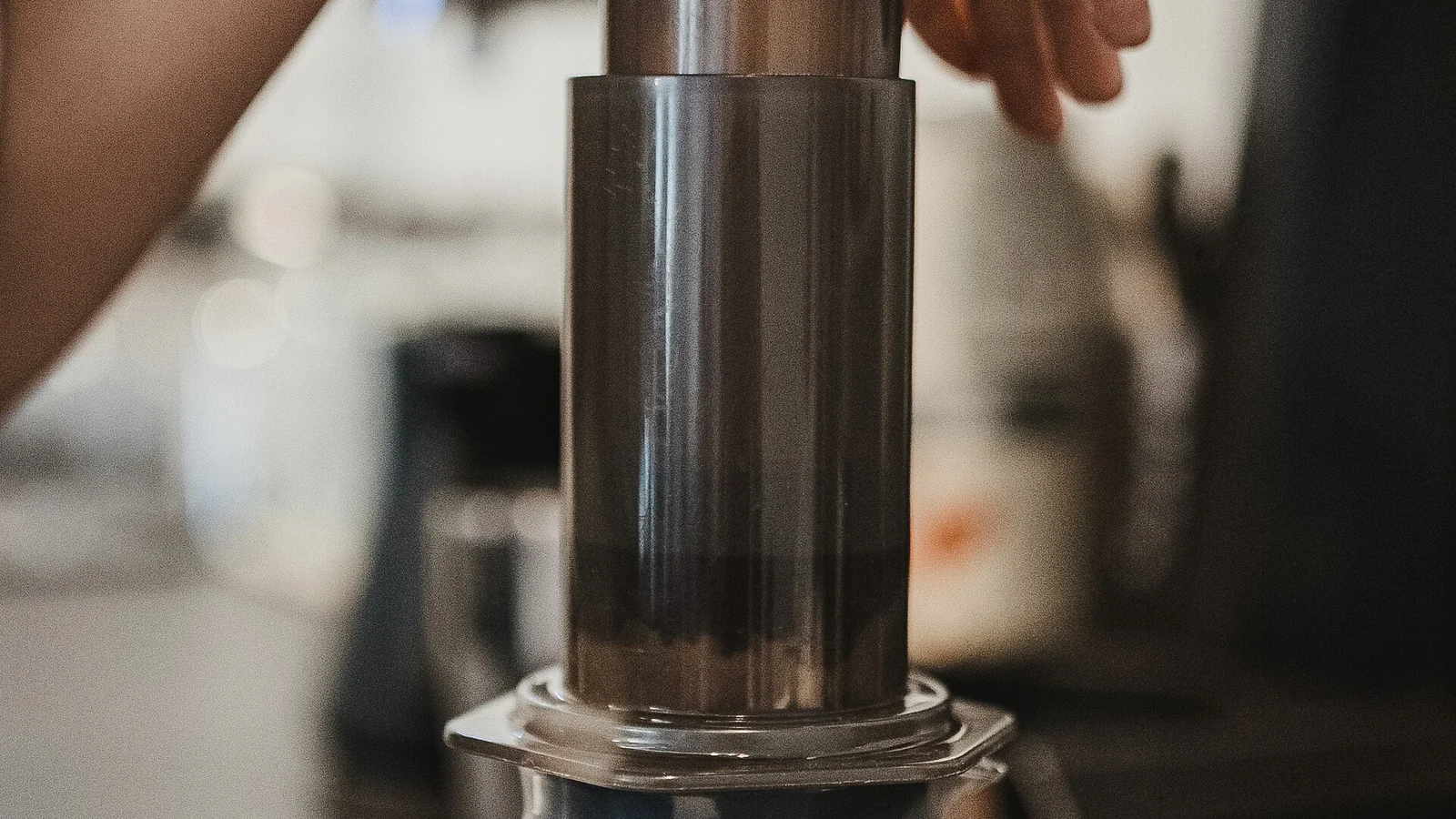
Choose an AeroPress paper filter for a cleaner cup with less sediment and simpler cleanup. Choose a metal filter for more body and a reusable filter you are willing to wash. Before buying, check the size: a Standard filter and an XL filter are not interchangeable.
You do not need to change your whole recipe to compare them. Start with the same coffee, dose, water and brewing routine, then judge the texture and flavor separately. A heavier cup is a preference, not proof that one filter brewed better coffee.
What changes in the cup?
Paper catches fine coffee particles and absorbs some oils. Metal lets more oils and, depending on its openings, some fine particles reach the cup. That is the practical distinction in AeroPress’s filter guide: paper tends toward clarity; metal tends toward a heavier mouthfeel.

Metal does not guarantee a muddy drink. In a side-by-side comparison reported by Perfect Daily Grind, Boot Coffee’s Valerian Hrala described a fuller-bodied metal-filtered coffee with a clean aftertaste. That was his result with one coffee and recipe, not a ranking of every reusable filter.
| Your preference | Start with | What to judge |
|---|---|---|
| Clear flavors and little sediment | Paper | Whether you enjoy the lighter texture |
| More weight in the mouth | Metal | Whether the added texture is pleasant rather than gritty |
| No filter to wash after brewing | Paper | Whether keeping replacement papers is convenient |
| A filter to reuse every day | Metal | Whether rinsing and keeping track of it fits your routine |
Separate sediment from bitterness. Look at what remains in the cup, then taste it. Do not assume a bitter cup needs a different filter before comparing the same recipe. For a related example of fines in a metal-filtered brewer, see the French press sediment guide; its handling steps apply to a French press, not to an AeroPress.
Which filter fits your AeroPress?
Match both the brewer and the cap. The current manufacturer pages list the Standard paper filters and Standard stainless steel filter for Original, Go, standard-size Clear, Premium, Steel and Go Plus. AeroPress also sells a separate XL stainless steel filter.

| Equipment | Filter family | Check before ordering |
|---|---|---|
| Original, Go, standard-size Clear, Premium, Steel, Go Plus | Standard | The listing must name your brewer |
| AeroPress XL | XL | Select the XL variant, not the Standard disc |
| AeroPress Flow Control Filter Cap – Standard | Standard paper or compatible metal | This cap does not accept XL filters or fit XL brewers |
| Third-party filter or valve cap | Product-specific | Follow that maker’s size, gasket and assembly instructions |
“Fits AeroPress” is too vague for a listing that offers multiple sizes. Confirm the selected variant in the basket, not only the product title. For a newer brewer or a third-party cap absent from the compatibility list, ask its maker before assuming a match.
Fine and Super Fine also describe different products. AeroPress’s Gold Tone Super Fine filter is designed to retain more fine particles than its standard stainless steel filter. A result from one metal disc cannot establish how every mesh or laser-cut filter will behave.

Check the brewer and the cap before choosing the filter.
Will a metal filter stop coffee dripping through?
A filter separates grounds from the drink. A valve cap controls when liquid leaves the chamber. Buying a metal disc does not give an ordinary filter cap a valve.
AeroPress’s official brewing instructions describe some initial dripping with the ordinary cap as normal. If the goal is to hold the brew until pressing, the Standard Flow Control Filter Cap has a pressure-actuated valve and still requires a filter. It accepts the manufacturer’s compatible Standard paper or metal filters.
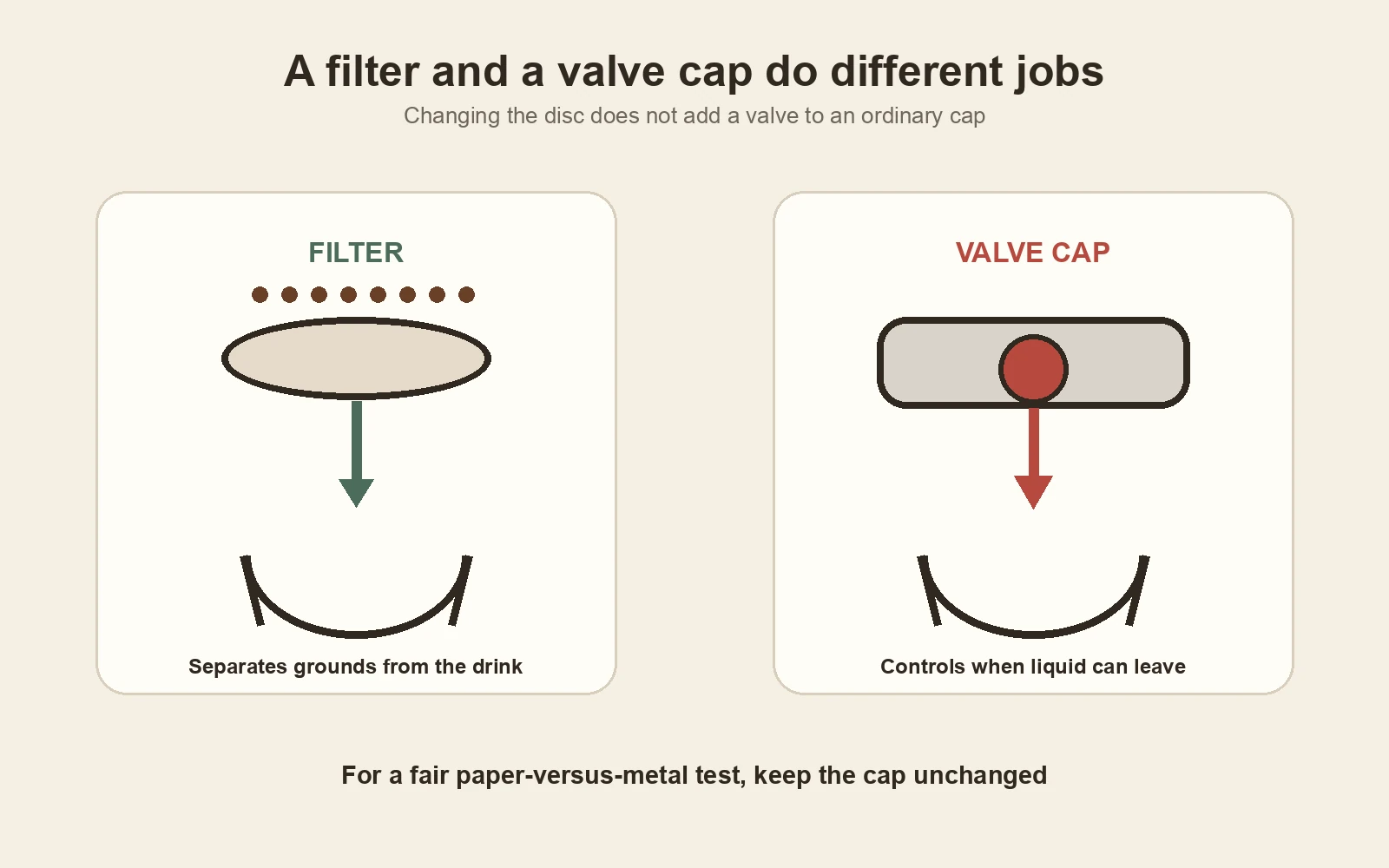
Keep the cap unchanged during your first paper-versus-metal comparison. Otherwise you are comparing two changes at once. Do not make the grind extremely fine or stack unapproved filters merely to stop dripping.
A two-cup comparison before recipe changes
Use a recipe you already enjoy and enough of the same coffee for two fresh brews. This comparison is a way to choose your own filter, not a laboratory measurement of extraction.

- Record the setup. Write down the brewer, cap and exact filter. Keep coffee dose, grinder setting, water source, water amount and temperature the same.
- Brew the paper cup. Use your normal stirring and waiting routine, then press gently. Note the beverage weight and any noticeable drip-through. Keep your usual dilution unchanged.
- Reset and brew the metal cup. Clean the brewer and return it to the same starting condition. Change only the filter. Keep the rest of the routine as close as you can.
- Taste at similar drinking temperatures. Compare texture, clarity of flavor, aftertaste and visible sediment separately. A much hotter cup is a poor comparison partner.
- Repeat with the order reversed. If the first result is close, make the metal brew first next time. Keep the filter that repeatedly makes the cup you enjoy.
When the cups differ in final weight or drip-through, record that difference rather than silently compensating with extra coffee or water. Your first question is what happens when this filter replaces the other in your routine. Once you choose a filter, you can tune its recipe separately.
Use short notes such as “cleaner finish,” “more body,” or “fine sediment I dislike.” If both cups taste wrong, check the coffee and brewing routine before blaming the material.

Choose the cup you prefer, then tune that recipe.
What changes at cleanup and when travelling?
With paper, you can discard the used filter and grounds after following the brewer’s cleanup instructions. With metal, recover the disc before throwing the grounds away, then clean it for the next brew. Allow hot parts to cool before handling them.

For AeroPress’s own stainless steel filter, the manufacturer recommends rinsing and drying and permits the top rack of a dishwasher. Its filter guide also describes occasional soaking to remove buildup. Follow the filter maker’s cleaning instructions and any cleaner’s dilution directions; do not transfer those permissions to an unknown coated or third-party filter.
For travel, ask whether you will have somewhere to rinse and dry a reusable disc. Paper needs a protected supply and a place for used filters. Metal avoids daily paper replacement but remains a small part you can lose. Pack the option whose cleanup you can actually manage.
There is no fixed payback period without your local prices and usage. A simple purchase-cost estimate is the metal filter’s delivered price divided by the price of one paper filter. That counts paper replacements only, not washing, lost parts or environmental impact.
Quick questions
Is metal always better than paper?
No. Keep paper when you prefer its cleaner texture and easy disposal. Try metal when more body and daily reuse sound useful. The comparison above helps you decide without treating a different mouthfeel as an automatic upgrade.
Can I use paper and metal together?
The official Standard Flow Control Filter Cap allows compatible paper and metal together. That does not establish the correct layer order or fit for every third-party cap. Follow your cap maker’s instructions, and compare single filters first.
Does a reusable filter fit the AeroPress XL?
An XL-sized filter does; a Standard disc does not. AeroPress sells a dedicated XL stainless steel version. Check the selected size and exact brewer in the listing.
Will a metal filter turn my AeroPress into an espresso machine?
No. Even AeroPress describes coffee from its Flow Control Filter Cap as espresso-style concentrate rather than real espresso. Pick a filter for the cup and workflow you want, not for a promised machine conversion.
References
- AeroPress: filter materials, cup texture and cleaning
- AeroPress: Standard stainless steel filter compatibility and care
- AeroPress: Standard Flow Control Filter Cap requirements
- AeroPress: model-specific brewing instructions
- Perfect Daily Grind: Valerian Hrala’s paper-and-metal comparison
Keep the filter, cap and recipe in your notes before changing the coffee. When you are ready to compare a new bag, use the coffee beans guide to choose it, then repeat the same brew.