A light layer of fine coffee dust at the bottom of a French press cup is normal. The metal screen separates the main bed of grounds from the drink, but it does not behave like a paper filter. Tiny particles can pass through the mesh or around its edge.
If the cup feels muddy from the first sip, the problem is usually too many fines, rough plunging, an aggressive pour, or a screen that is not seated correctly. Start with the grind and pouring steps before buying another press.
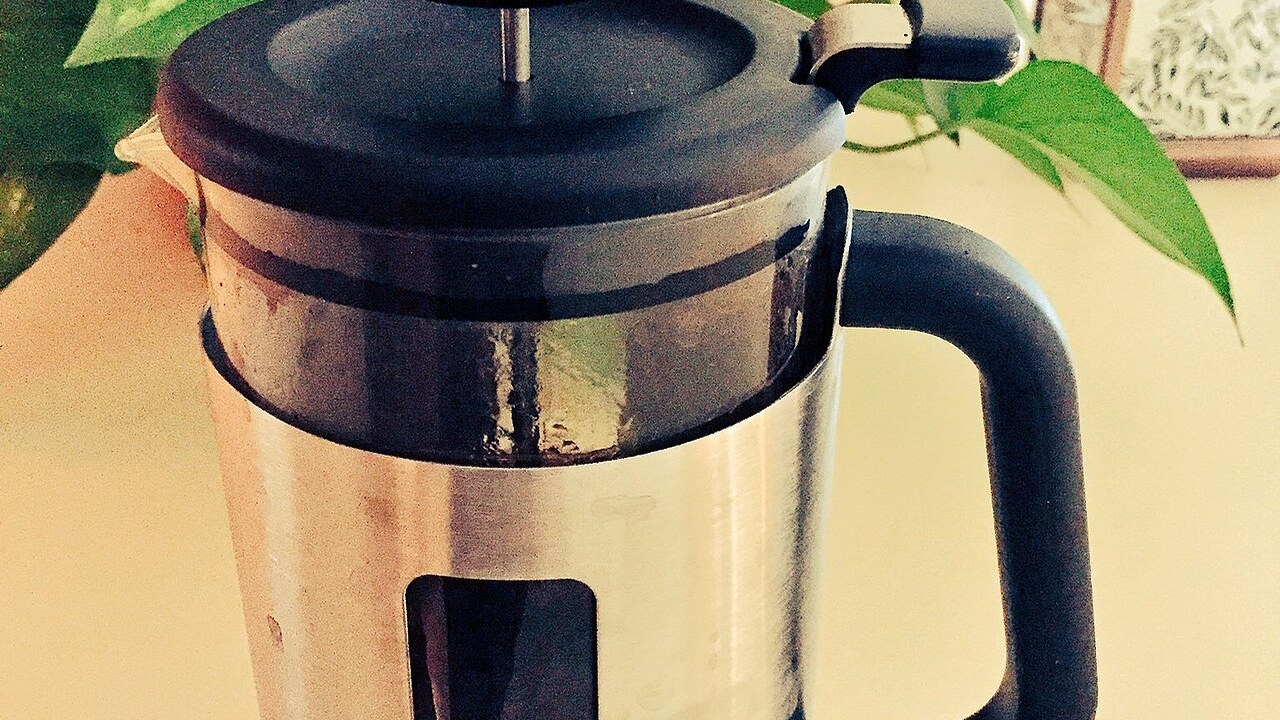
Featured French press photograph by Laura Gilchrist, CC BY 2.0.
Why French press coffee has sediment
A French press uses a perforated plate and mesh screen to hold back the main bed of coffee. The openings are still large enough for some of the smallest particles to reach the drink. Those particles settle in the press, move during plunging and pouring, then collect at the bottom of the cup.

This is part of the method's character: more body and oils than a paper-filtered brew, with less clarity. It does not mean the coffee is under-brewed or that the press is broken. The useful question is whether you see a light dusting near the final sip or a thick layer that makes the whole cup gritty.
How much sediment is normal?
A thin layer of dark dust at the bottom is expected. Leave the last sip behind if it tastes gritty. A thick, mud-like layer deserves a process check, especially when the cup used to be clearer with the same coffee and press.

| What you see | Likely cause | First change |
|---|---|---|
| Fine dust only at the bottom | Normal fines passing through the mesh | Pour gently and leave the last sip |
| Mud throughout the cup | Too many fines or the settled bed was disturbed | Check grind uniformity, then slow the plunge and pour |
| Visible coarse grounds | Screen gap, damaged mesh, or incorrect assembly | Inspect the plunger before changing the recipe |
| Sediment increased after changing coffee | The new bean may produce a different grind distribution | Keep the recipe steady and adjust the grinder one step at a time |

A thicker layer usually points to fines before it points to brew time.
Reducing fines before brewing
Use a burr grinder if you can. A very uneven grind can contain large pieces and powder at the same time; the powder crosses the mesh even when the setting looks coarse overall. Move slightly coarser if your current grind is visibly fine, but do not keep moving coarser until the coffee becomes weak.
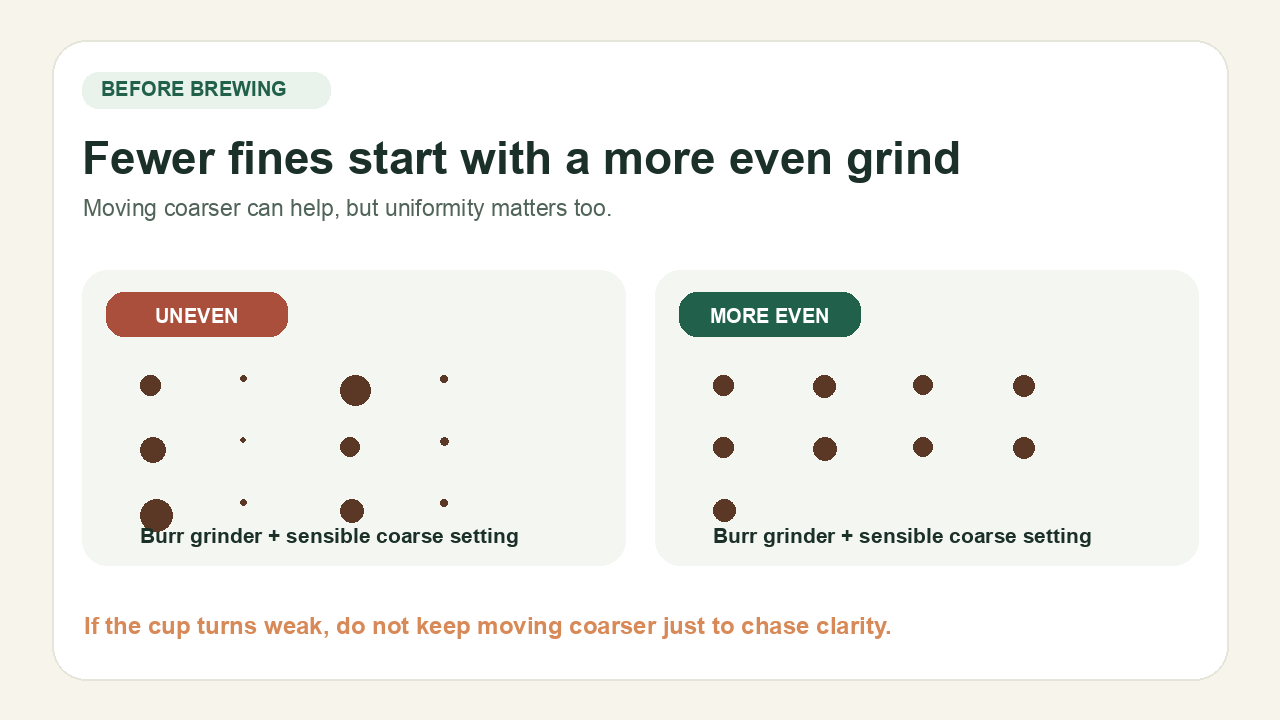
The National Coffee Association uses a coarse grind as its French press baseline. Treat that as a starting point. If the cup has good strength but too much sediment, aim for a more even grind before changing the coffee-to-water ratio. Our French press ratio guide gives a separate baseline for dose and water, so you can change one variable at a time.
Fresh buildup in a grinder can also worsen consistency. If a hand grinder has started producing noticeably more dust, clean it according to its model rather than rinsing the burr assembly by default. The manual grinder cleaning guide explains the dry-first approach and the model-specific water rules.
Letting the brew settle before a gentle pour
Once the brew has had time to extract, avoid turning the final minute into a mixing step. Press straight down with steady, light pressure. If the plunger resists sharply, pull it up slightly and try again instead of forcing it through the coffee bed.
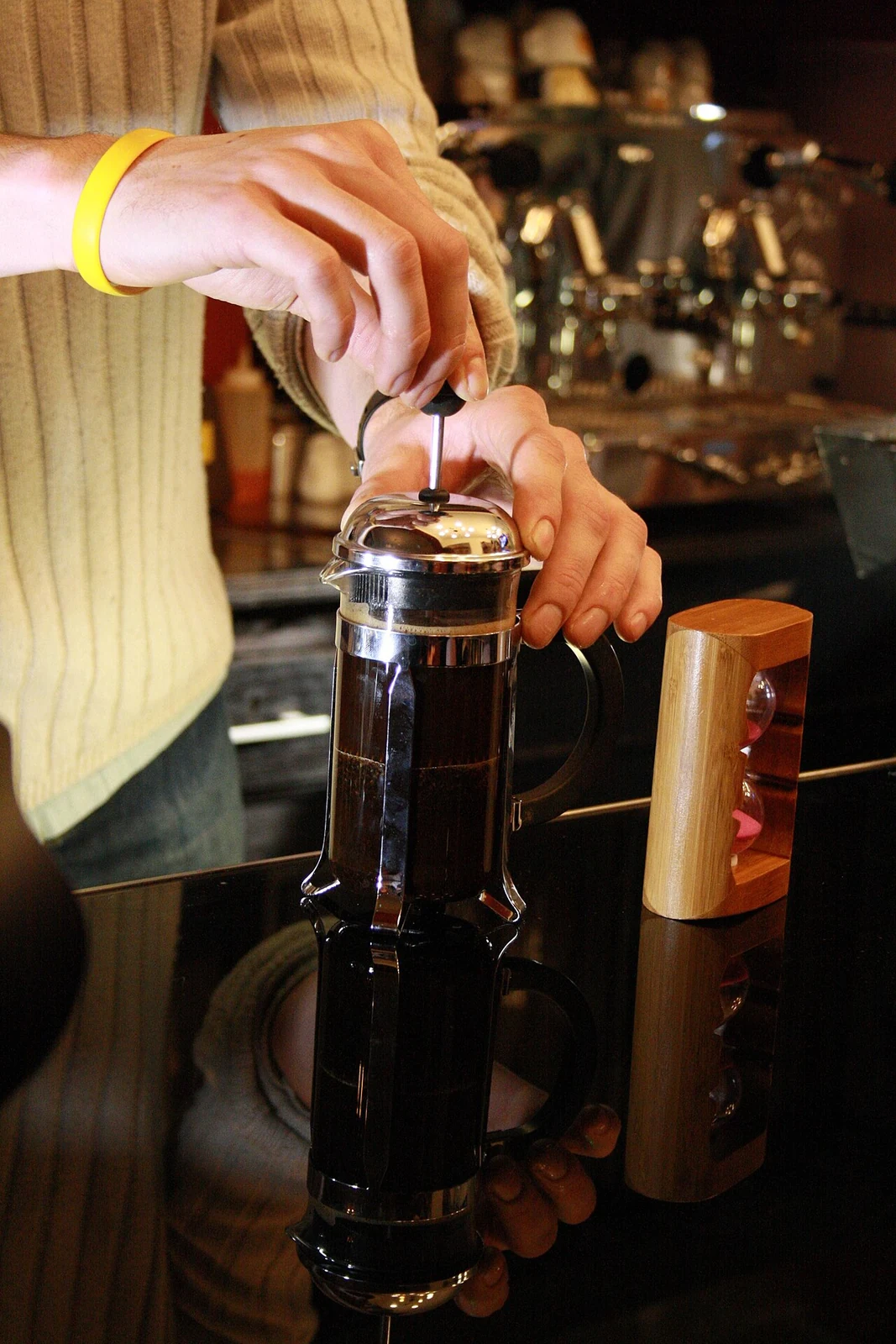
French press photograph by Frettie, CC BY 3.0.
Pour in one smooth motion and stop before the last cloudy portion leaves the press. Do not shake the brewer to recover the final few grams. That small sacrifice usually keeps more settled fines out of the cup.
The National Coffee Association's baseline breaks the crust near one minute, continues brewing to about four minutes, then presses and decants. James Hoffmann's alternative technique breaks and clears the crust after four minutes, waits longer for particles to settle, and pours without pressing to the bottom. Use either routine as a complete method; mixing their timing creates a third method with no clear reference point.
The plunger as the cause of large escaping grounds
When full-size grounds appear in the cup, look at the hardware. Remove the plunger after the press cools. Make sure the mesh is flat, the plates are assembled in the correct order, and the spring edge contacts the glass evenly. Replace torn mesh or a badly distorted edge with the part made for that press.

French press photograph by Infrogmation, CC BY-SA 2.0.
Coffee residue can hold layers apart or block parts of the mesh. Wash the filter components according to the maker's instructions and reassemble them in the same order. A second mesh can reduce grit on some presses, but stacking generic screens can make the plunger bind. ESPRO's purpose-built dual micro-filter is one example of a press designed around lower-grit filtration; it is different from adding an unmatched spare screen.

Full-size grounds call for a filter check before another grind change.
Paper filtering for a cleaner cup
A paper filter catches more fine particles than the standard metal screen. You can pour the finished coffee through a rinsed paper filter, use a brewer designed for paper, or choose a press with a finer purpose-built filter. The result will usually taste clearer and feel lighter, while the metal-filtered cup keeps more texture.

French press coffee is also classed as unfiltered coffee in nutrition research because the metal screen does not remove coffee oils the way paper does. Harvard Health notes that diterpenes in unfiltered coffee can raise LDL cholesterol. That is a separate issue from seeing a few grounds in the cup. If cholesterol management is relevant to you, discuss your overall coffee intake and brewing method with a clinician rather than judging the drink by visible sediment alone.
References
- National Coffee Association: French Press Coffee. Coarse-grind baseline, timing, crust break, pressing and decanting. - James Hoffmann: The Ultimate French Press Technique. Alternative long-settling method shown in the embedded video. - ESPRO P3 French Press. Manufacturer description of its purpose-built dual micro-filter and grit reduction. - Harvard Health: Pressed coffee is going mainstream. Diterpenes and the cholesterol distinction between paper-filtered and unfiltered coffee.