
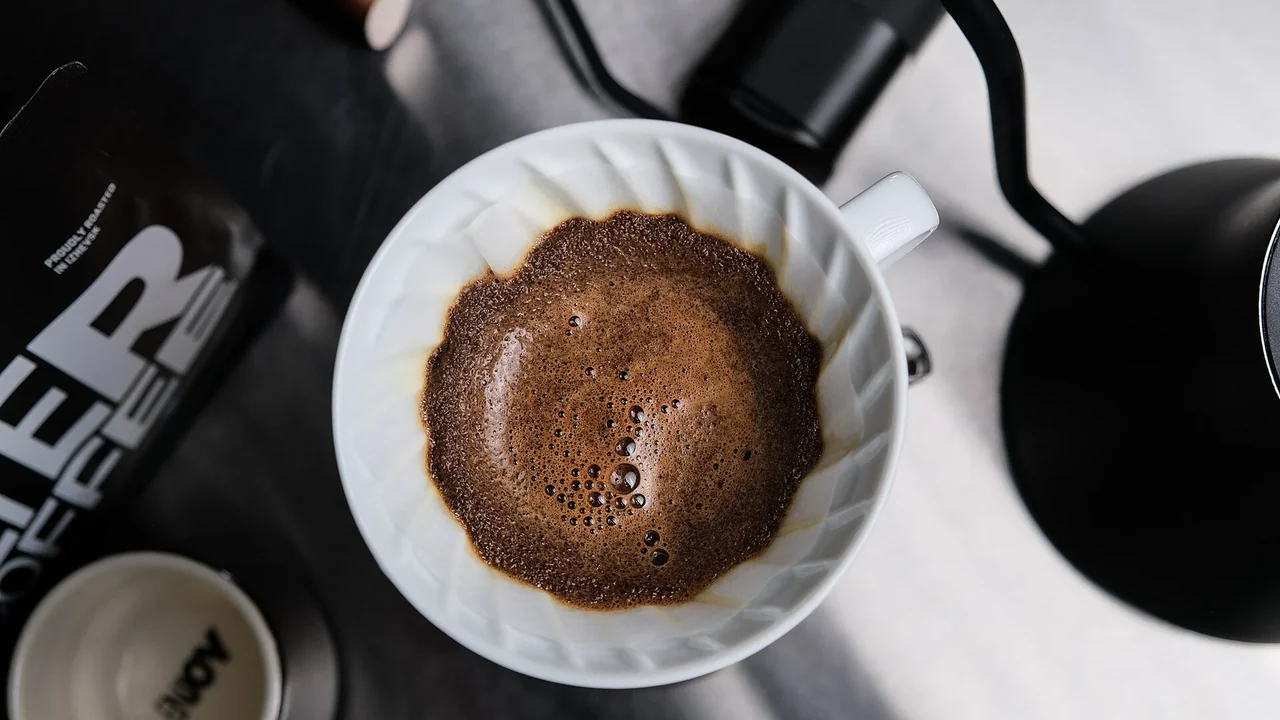
Coffee bloom is the first small pour in a pour-over recipe. Start with enough water to wet every ground and wait about 30 seconds. A very active coffee may suit a recipe that waits closer to 45 seconds.
For water, begin around two grams per gram of coffee. Add more only when dry pockets remain. Aim for complete saturation; bubble height is secondary.
What is coffee bloom?
Coffee bloom is the short pause after the first pour wets the grounds and before the main pour begins. Hot water enters the porous coffee, trapped gas escapes, and the bed may swell or bubble.
Roasting produces gases, including carbon dioxide. Some gas remains inside the bean structure and continues to leave during storage. Grinding and hot water speed that release. A separate first pour gives the grounds time to become wet before the larger pour sets the brew in motion.

How long should coffee bloom?
Use 30 seconds as a dependable starting point. Hario publishes several recipes with a 30-second bloom. James Hoffmann's V60 method waits about 45 seconds, while noting that a café can shorten the pause to 30 seconds.

The clock matters less than repeatability. Start timing when the first water reaches the grounds. Use the same start point for every brew, then judge the cup. If 30 seconds produces complete wetting and a sweet, even result, a longer pause adds little. If the coffee releases gas aggressively or dry pockets remain, follow a tested recipe that allows more time.
A bloom does not need to stop bubbling completely. Gas release can continue during later pours. The pause only needs to prepare the bed for the next part of the recipe.
How much water should you use for coffee bloom?
Start around twice the coffee mass. For 20 grams of coffee, that means about 40 grams of water. If the bed still contains pale dry spots, add enough water to reach them. Many practical methods stay between two and three times the coffee mass.

| Published method | Coffee | Bloom water | Pause | How to use the example |
|---|---|---|---|---|
| Hario W60, paper only | 20 g | 40 g | 30 seconds | A clear 2:1 starting point for that W60 setup |
| Hario W60, mesh only | 20 g | 50 g | 30 seconds | Shows that filter design can change the first pour |
| Hario W60, paper and mesh | 30 g | 70 g | 30 seconds | A little over 2:1 for another official W60 method |
| Hoffmann V60 method | 30 g | Start at 60 g; add more only if needed, up to 90 g | About 45 seconds | A 2:1 start with room to reach dry grounds |
Each row describes one recipe. Dose, grind, dripper geometry and pouring pattern change how quickly water reaches the entire bed. Use the smallest amount that reliably wets the grounds in your setup.
How to bloom pour-over coffee step by step
Use one repeatable sequence: start the timer with the first pour, wet the full bed, correct dry pockets gently, then resume the main recipe at its planned time.
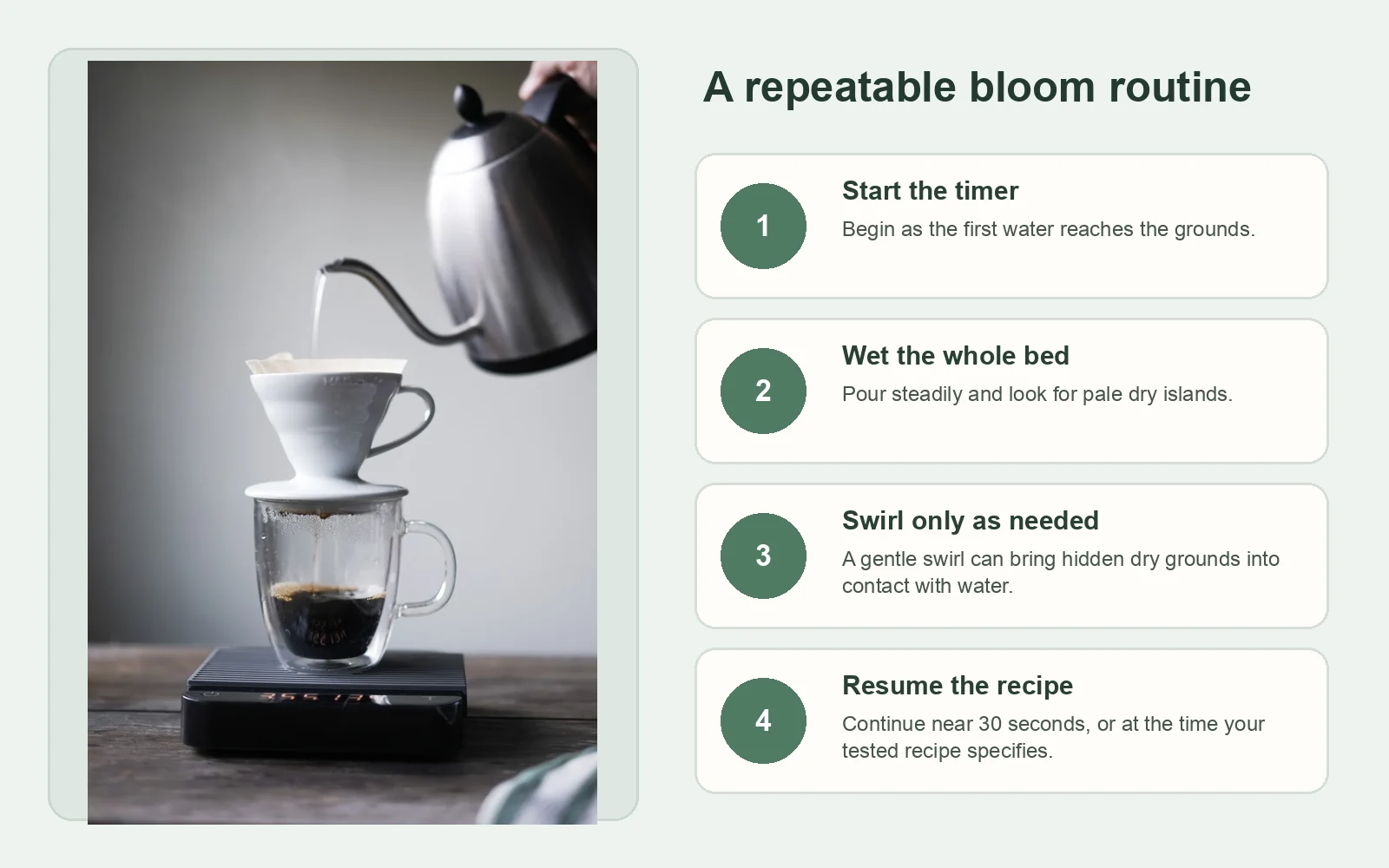
- Prepare the bed. Rinse the paper if your recipe calls for it, discard the rinse water, add the coffee and level the grounds.
- Start the timer with the first water. Pour steadily from the center outward. Avoid dumping the full amount in one spot.
- Inspect the surface and edges. Add a little more water if pale dry grounds remain. A gentle swirl can help water reach hidden pockets, but use only enough movement to wet the bed.
- Pause for the recipe's bloom time. Thirty seconds is the baseline in this guide. Use about 45 seconds when the chosen recipe and coffee call for it.
- Resume the main pour. Keep the later pours unchanged while testing bloom time or water. Changing one variable makes the taste comparison useful.

Even wetting beats chasing the biggest dome.
What do coffee bloom bubbles mean?
Bubbles show that gas is leaving the grounds, but the size of the bloom depends on more than freshness. Roast date, roast style, storage, grind timing, coffee type, bloom-water amount and wetting all affect what you see.

A quiet bloom does not prove that the coffee is stale. First check whether the bed was fully wet. Then check the roast date and storage history. Coffee ground immediately before brewing often releases gas more visibly than coffee ground earlier, but different coffees still behave differently.
The finished cup decides whether there is a problem. If it tastes sweet, clear and even, a modest bloom needs no correction. If it tastes flat or extracts unevenly, compare the same recipe with better water coverage and a coffee with a known roast date. The guides to how long coffee beans last and storing coffee beans help separate age from brewing technique.
Can you bloom coffee for too long?
An unplanned longer pause changes the recipe. The slurry continues to drain and cool, the total brew time grows, and the next pour reaches a different coffee bed. A small timing change does not automatically ruin the brew, but it makes comparisons less useful.
Keep the pause near 30 to 45 seconds unless a tested recipe calls for something else. If a 30-second bloom leaves dry grounds, correct the water amount or pouring pattern first. A 90-second pause is a poor substitute for complete wetting.
Skipping a separate bloom can still produce drinkable coffee, especially with coffee that releases little gas. For a repeatable pour-over, the short first pour is useful because it makes wetting visible and separates that task from the main extraction pour.
Frequently asked questions
How long should you let coffee bloom?
Let pour-over coffee bloom for about 30 seconds as a starting point. Some V60 recipes wait closer to 45 seconds for coffee that releases gas actively. Begin timing with the first water, make sure the whole bed is wet, and keep the timing consistent before changing it by taste.
What is the point of blooming coffee?
Blooming coffee wets the grounds and gives trapped gas a path out before the main pour. That makes dry pockets easier to spot and keeps the first large pour from doing two jobs at once. Coffee bloom does not guarantee a better cup, but it makes a pour-over recipe easier to repeat.
What happens if you bloom coffee too long?
An unusually long coffee bloom changes total brew time and lets the wet bed continue draining before the main pour. The result is not automatically bad, but it no longer matches the original recipe. Stay near 30 to 45 seconds unless a tested method specifies a longer pause.
What happens if you do not bloom coffee?
Without a separate coffee bloom, the main pour must wet the grounds while gas is still escaping. The brew may still taste good, particularly with coffee that releases little gas. A bloom gives you a clearer view of dry pockets and a more controlled starting point for pour-over.
Does blooming coffee make a difference?
Coffee bloom can make the early pour more even and repeatable because the grounds are wet before most of the brew water arrives. The size of the improvement depends on the coffee and the method. Compare two brews with the same grind and pouring pattern before changing the bloom again.
References
- Hario W60 Dripper: three published bloom-water examples with 30-second pauses
- Hario V60 Drip-Assist: official bloom quantities and 30-second timing
- James Hoffmann: The Ultimate V60 Technique
- Smrke et al.: time-resolved measurement of roasted-coffee degassing
- Research on gas transport through roasted coffee
Featured photo: Indigo.udm, CC BY 4.0.

Pair the bubbles with the finished cup.