
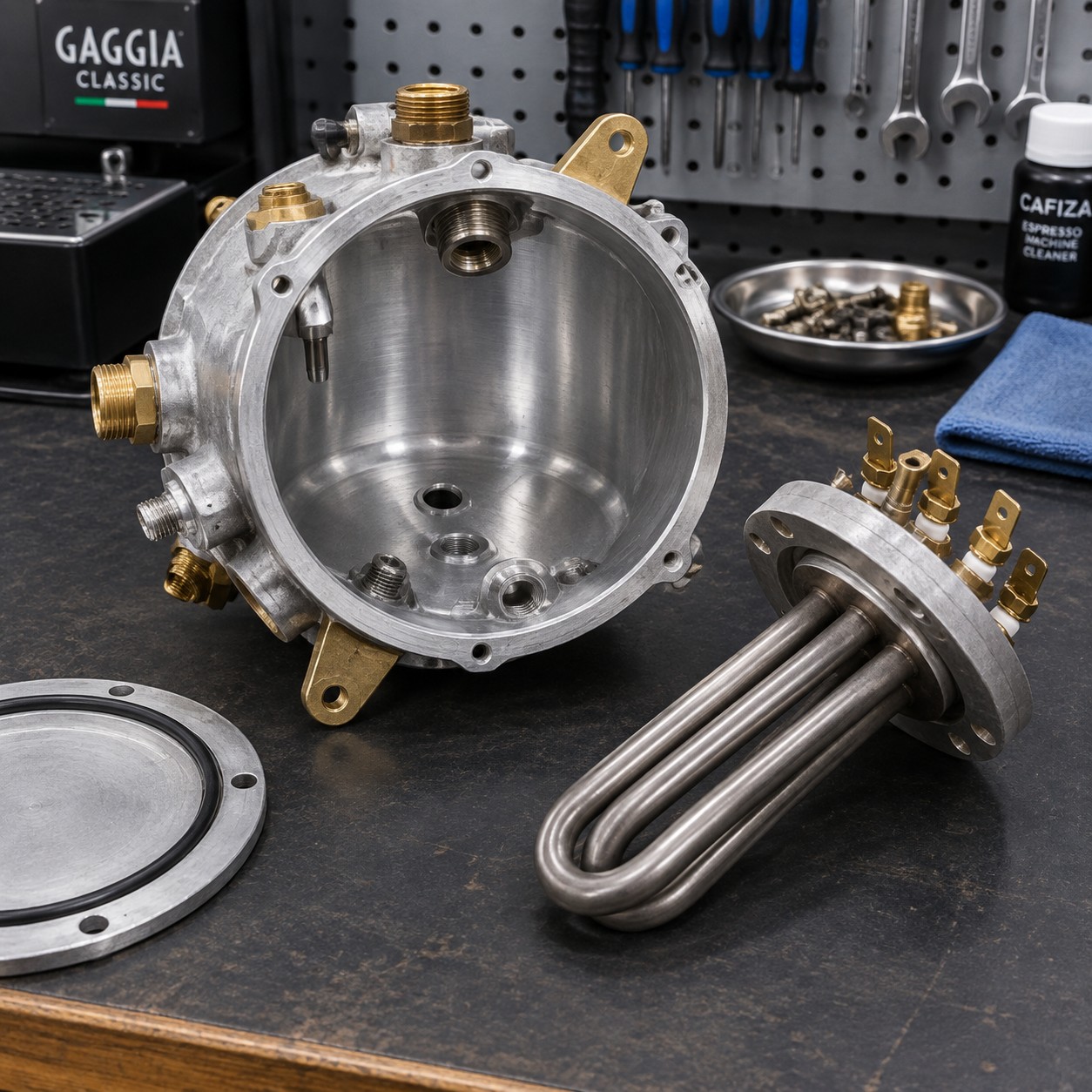
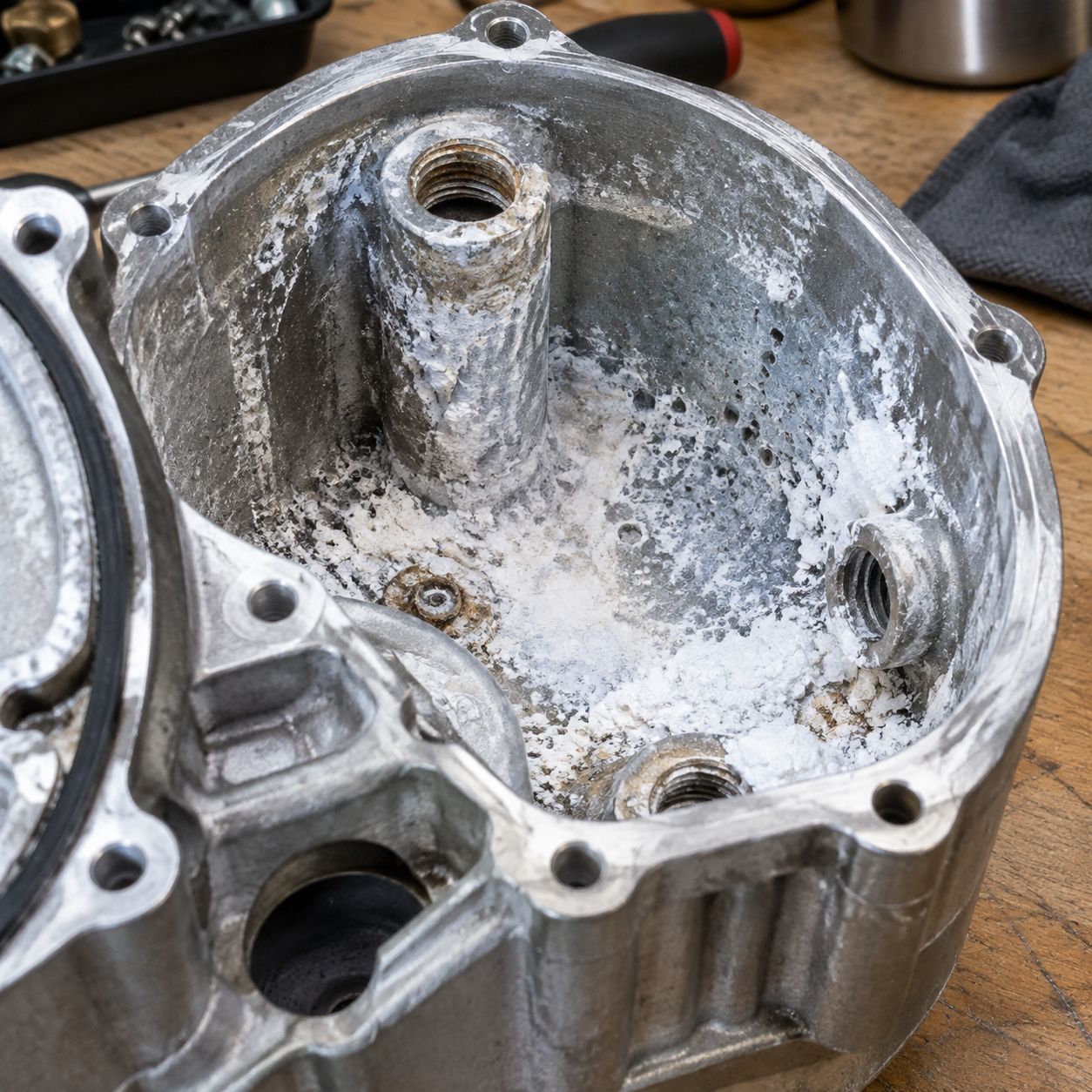
The Gaggia Classic boiler uses cast aluminum bolted directly to a chrome-plated brass group body. This dissimilar metal contact creates galvanic corrosion potential if mineral scale accumulates or harsh acidic descalers remain trapped inside. White chalky flakes in your brew water indicate aluminum oxide pitting rather than simple calcium carbonate.
Galvanic Reactions and Dissimilar Metal Metallurgy
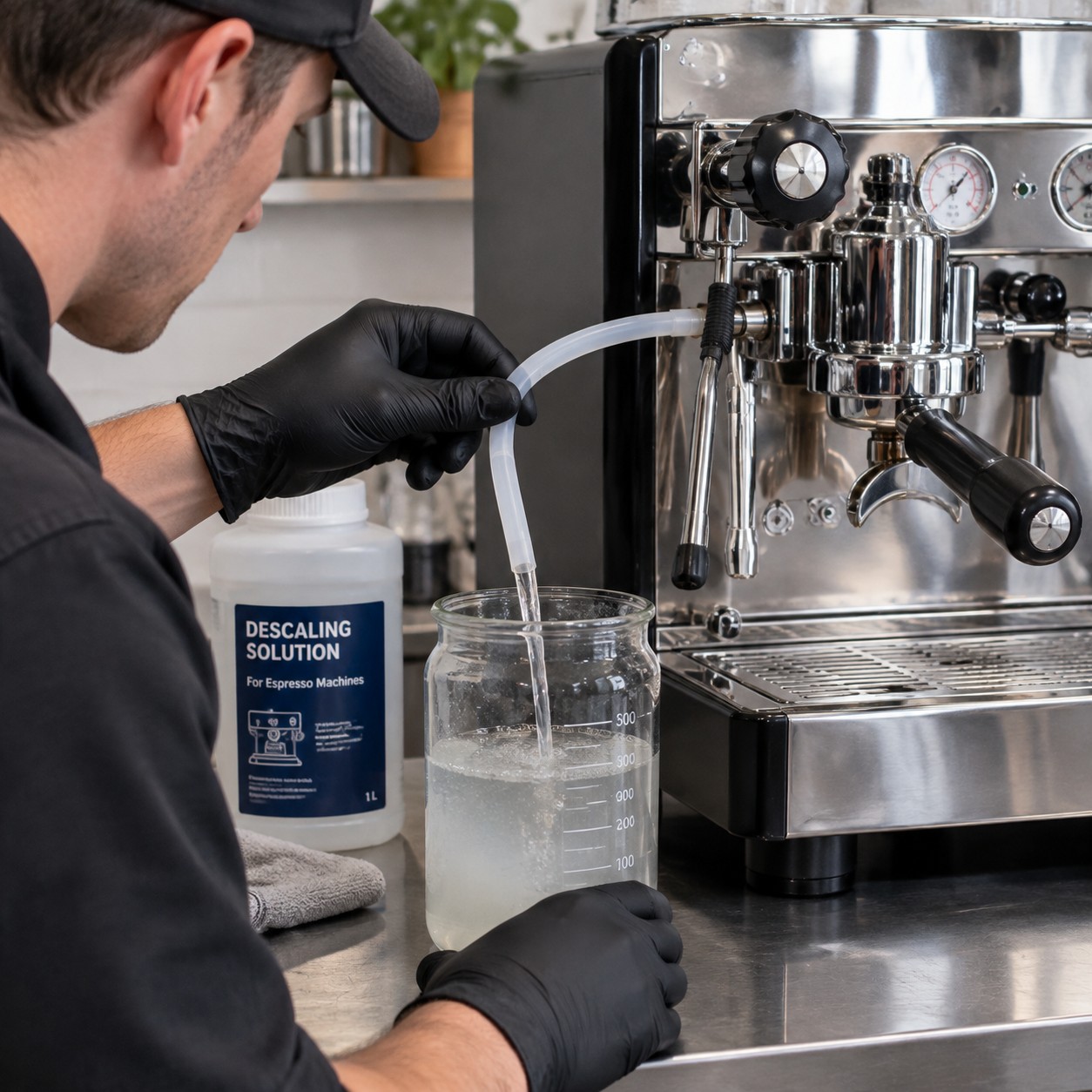
Aluminum and brass have different electrochemical potentials. In the presence of conductive, mineral-rich water, the more active aluminum acts as an anode and slowly oxidizes over years of heating cycles. Vinegar and aggressive citric acid soak treatments accelerate this pitting by stripping the protective passivated aluminum oxide layer. Always use sulfamic-acid-based descaler or genuine Gaggia decalcifier, and never let solution sit in the boiler for hours.
| Chemical / Treatment | Aluminum Boiler Reaction | Brass Group Reaction | Recommendation |
|---|---|---|---|
| White Vinegar (Acetic) | Aggressively pits bare aluminum | Tarnishes brass surfaces | Do not use in Gaggia boilers |
| High-Concentration Citric | Slowly attacks bare aluminum walls | Dissolves surface scale cleanly | Short contact time only; flush fast |
| Sulfamic Acid (OEM Formula) | Safely dissolves scale without deep pitting | Leaves brass seat intact | Recommended standard descaling agent |
| Overnight Chemical Soaking | Causes surface flaking and pinhole leaks | Eats chrome plating layers | Never leave descaler in boiler overnight |
White Flakes and Solenoid Blockages
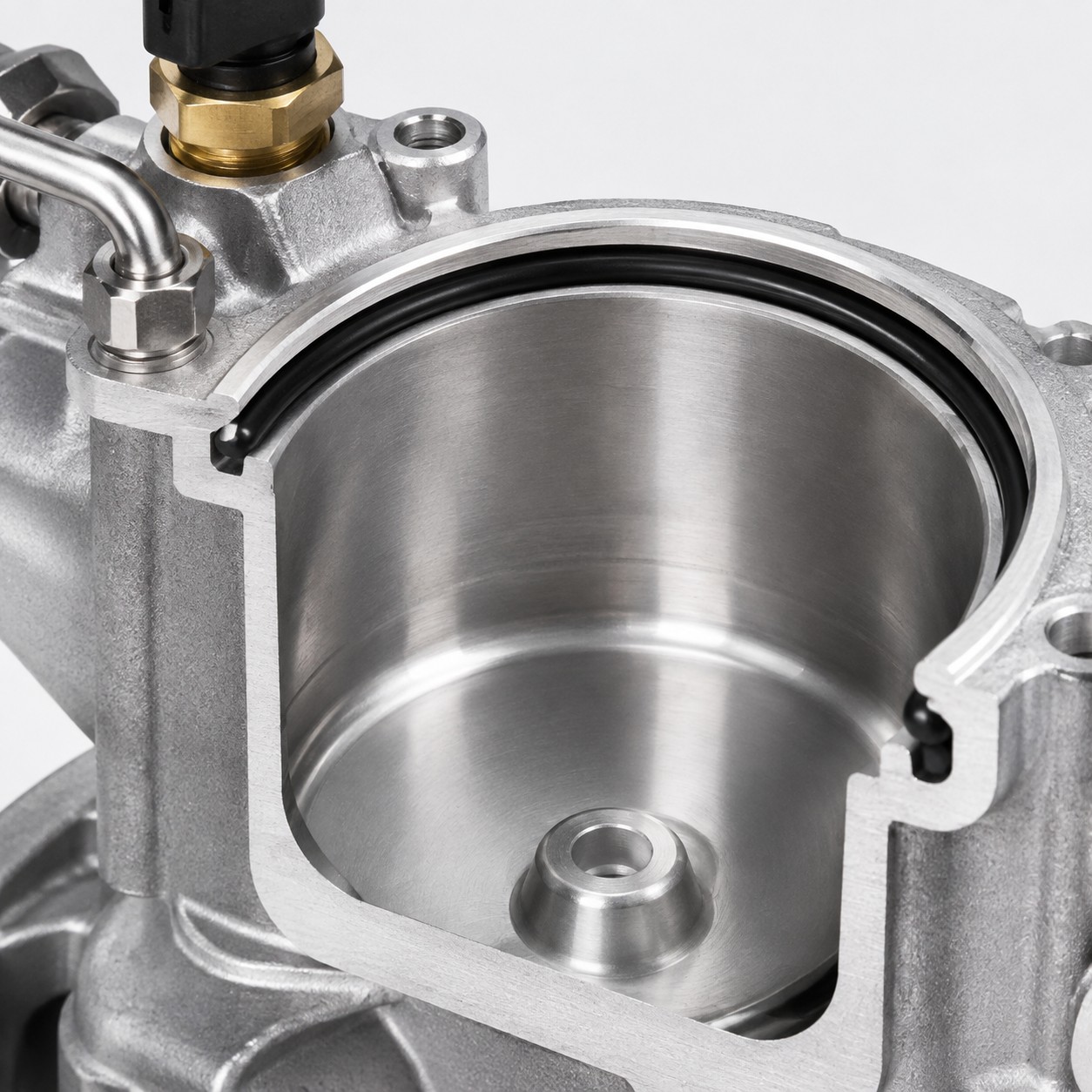
When aluminum pits, loose oxide sediment breaks off and travels directly toward the narrow 1 mm orifice of the three-way solenoid valve. If your brew switch clicks but zero water emerges from the group, loose flakes have wedged inside the valve stem. Routine maintenance with a Gaggia service kit ($24) ensures fresh sealing O-rings and prevents weeping leaks around the boiler mating surface.
Water Chemistry Strategy for Long Boiler Life
Preventing corrosion requires balanced water chemistry. Avoid reverse osmosis (RO) or distilled water without remineralization, as ultra-pure water aggressively leaches ions from aluminum walls. Aim for 50 to 80 ppm total hardness with a neutral pH between 7.0 and 7.8. Stable boiler temperatures managed by a Gaggia PID temperature kit ($169) reduce thermal overshoot stress on internal seals.
Frequently Asked Questions
Why are there white chalky flakes in my Gaggia Classic water?
White flakes are typically aluminum oxide particles shed from pitted boiler walls or calcium carbonate scale deposits.
Can you use vinegar to descale a Gaggia Classic?
No. Acetic acid in vinegar aggressively attacks cast aluminum, accelerating metal corrosion and pitting.
What descaler is safe for aluminum espresso boilers?
Use descalers formulated with sulfamic acid or manufacturer-approved solutions designed specifically for aluminum coffee boilers.
Does a brass dispersion plate stop aluminum boiler corrosion?
A brass dispersion block replaces the stock aluminum plate to improve thermal stability, but the boiler body remains aluminum and still requires safe water.
How often should you descale an aluminum Gaggia boiler?
Every 2 to 3 months depending on water hardness, ensuring thorough fresh-water flushing after each cleaning cycle.
Related products: Maintenance kits.