
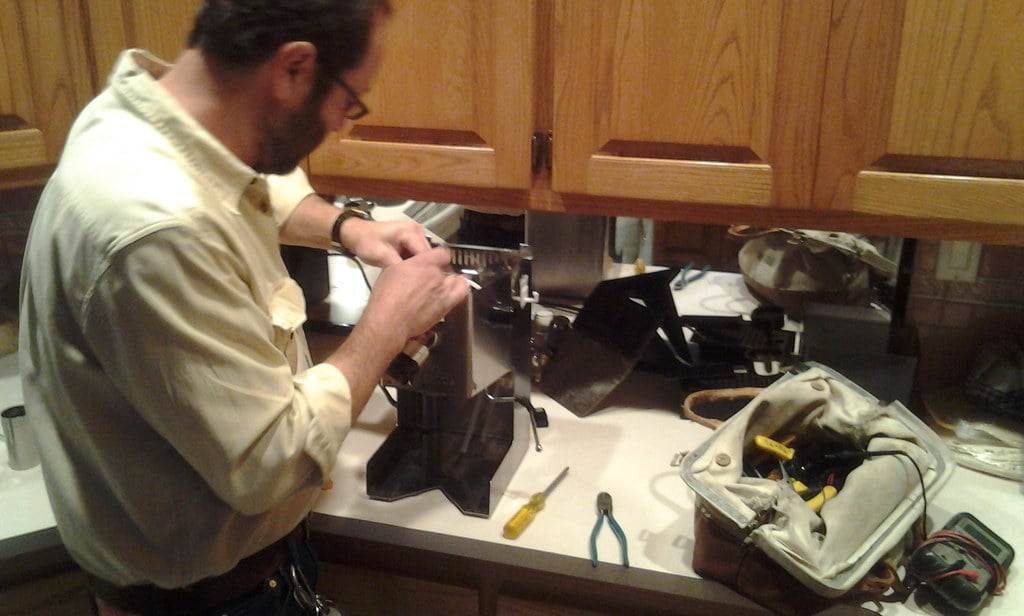
The Classic Evo Pro is a revision of the Classic Pro, not a different espresso platform. In North America, the 2023 Evo added a factory 9-bar OPV, stainless-steel portafilter, revised group cover/mounting hardware and a changed boiler story. If you are shopping new in 2026, the current E24 is the more relevant reference because Gaggia North America now sells it with a brass boiler and 9-bar OPV.
What changed from Classic Pro to Evo Pro?
The core layout stayed familiar: single-boiler, 58 mm commercial-format group, commercial steam wand and three-way-solenoid architecture. The 2023 North American Evo update focused on pressure calibration and stainless-steel hardware around that platform.
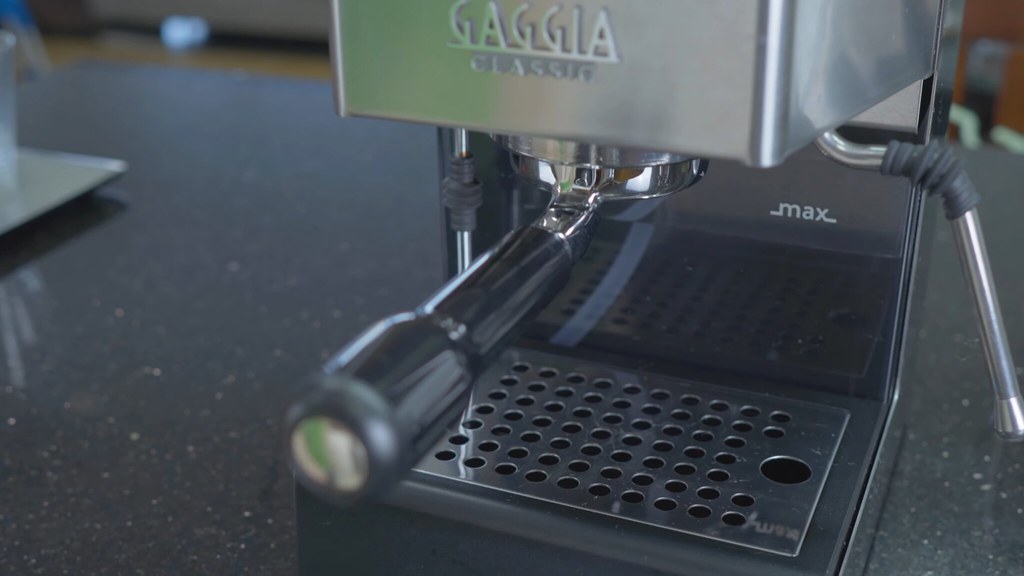
| Area | Classic Pro (2019–2022 context) | Classic Evo Pro (2023 North America) |
|---|---|---|
| Brew pressure | Earlier North American configuration; lowering brew pressure became a common owner modification | 9-bar OPV in the North American Evo configuration |
| Portafilter | Chrome-plated brass commercial portafilter | Polished stainless-steel 58 mm commercial portafilter |
| Group surround / mount | Earlier group-cover and internal mounting design | Stainless group cover with revised mounting support for boiler and pump |
| Boiler | Aluminum-boiler platform | Boiler specification varies by unit/history; original launch material described an anti-scale coating, while some current reseller listings explicitly say uncoated |
| PID / gauge | No factory PID or brew-pressure gauge | No factory PID or brew-pressure gauge |
What happened with the Evo Pro boiler?
The boiler is the part that makes old comparison articles age badly. Gaggia’s 2023 Evo launch materials described an anti-scale boiler coating. A public SaferProducts incident report later documented black flakes from the steam wand of one 2023 RI9380/46 unit; the manufacturer response on that report states no harm was reported and cites product compliance. That report is not a recall and does not establish a failure rate.
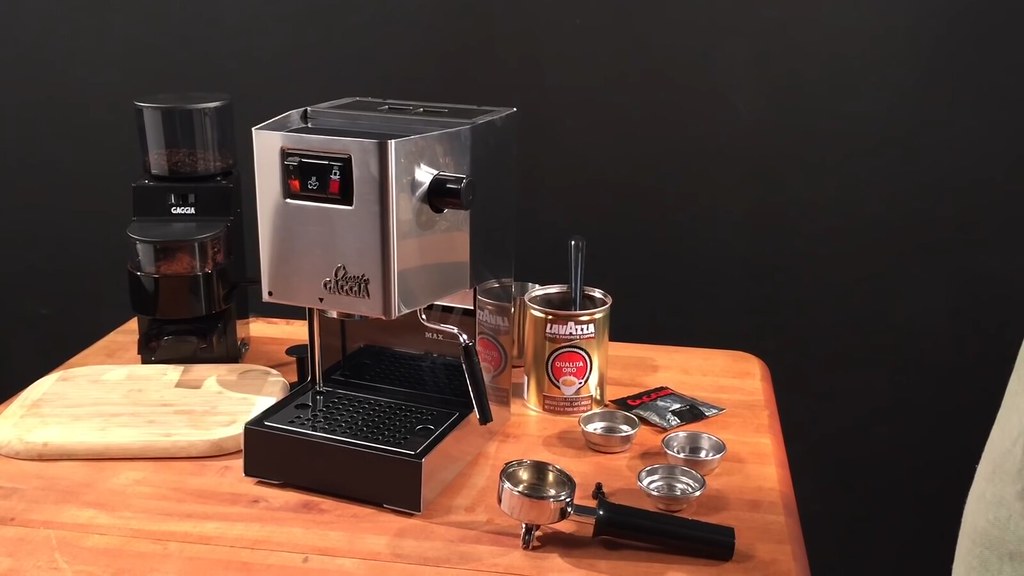
Current Whole Latte Love listings for some Evo Pro units explicitly describe an uncoated boiler, while older Evo listings and limited editions can still show the earlier coating language. The useful buying rule is therefore simple: do not infer boiler construction from the word “Evo” alone. Verify the exact listing, production/service history and what is physically installed.
Gaggia North America also sells a current brass boiler assembly and lists it as compatible with the Classic, Classic Pro and Classic Evo Pro; seals and hardware are separate. That part availability changes the repair path, but it does not tell you what is already inside a used machine.
What should you check when buying either model used?
Condition matters more than the generation label. Ask for the exact model plate, group-flow video, steam test, leak history, water history, service records and any boiler or OPV work. For an Evo, ask specifically whether the boiler was replaced and whether particles were ever reported.
| Used-machine check | Why it matters |
|---|---|
| Readable model label and region | Confirms which manuals and parts apply |
| Group and steam flow | Reveals obvious water-path or pump problems before purchase |
| Boiler/service history | Especially important for an Evo with an uncertain production or repair history |
| Particles in a white-cup flush | Gives a repeatable symptom to investigate instead of relying on seller wording |
| Prior mods | Changes wiring, pressure and parts assumptions |
If a seller reports black particles, use the black-flakes diagnosis before treating the machine as either harmless or automatically defective.
What changes for modding?
The Classic Pro has the longer body of owner documentation for OPV, PID and open-source control projects. The Evo remains closely related, but its North American 9-bar OPV means a pressure-spring change may already be unnecessary, and its exact boiler/service history should be confirmed before internal work.
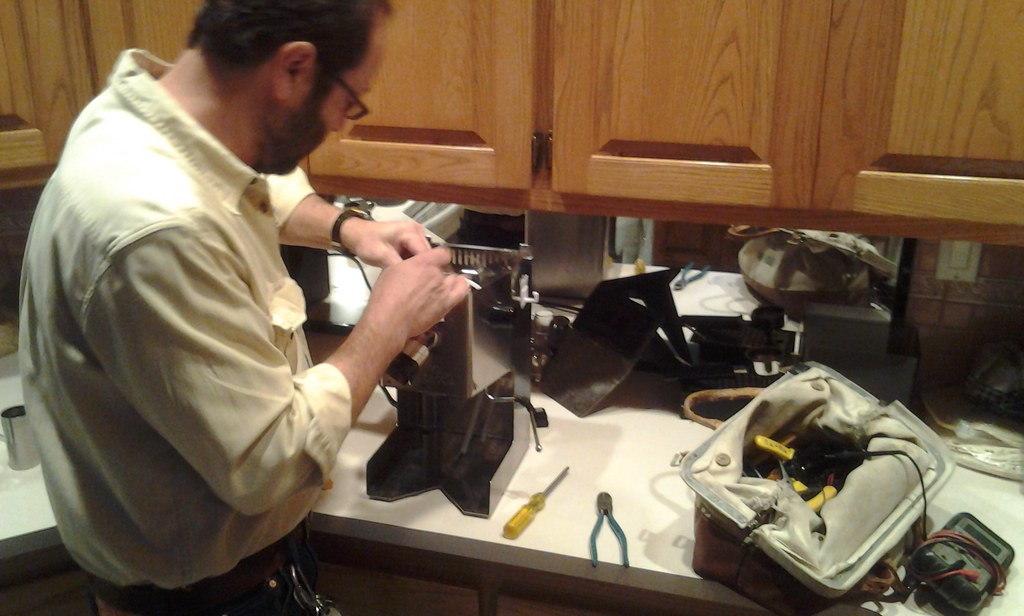
Do not assume a mod guide written for a 2019 Classic Pro transfers unchanged to every Evo or E24. Confirm voltage, connectors, boiler hardware and the exact kit instructions. The Gaggia mod safety matrix covers the stop points before internal electrical work.
Where does the E24 fit in 2026?
For a new machine in North America, the E24 is now the current Classic reference. Gaggia North America lists a solid lead-free brass boiler, 58 mm stainless portafilter, commercial-style steam wand and 9-bar OPV calibration. That makes an old “Pro versus Evo” comparison mainly useful for used machines and older stock.
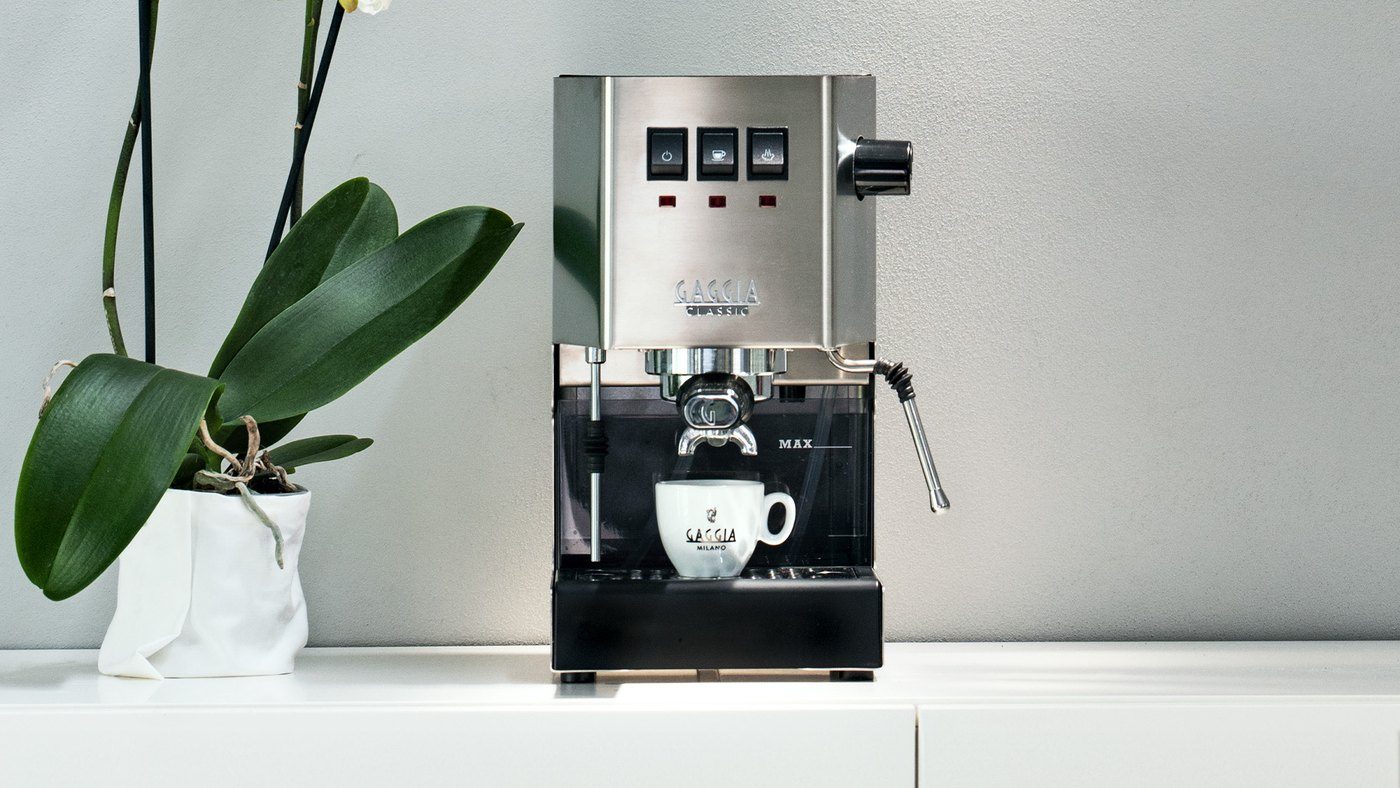
The E24 does not make every used Pro or Evo a poor purchase. It changes the reference point: compare a used machine’s condition and price against a current brass-boiler model with current documentation and support. For a broader generation-by-generation view, use the Gaggia Classic buying guide.
FAQ
Is the Classic Evo Pro just a Classic Pro with 9 bar?
No. The North American Evo also introduced a stainless-steel portafilter, revised group cover/mounting hardware and a changed boiler history. The basic single-boiler Classic architecture remained familiar.
Does every Evo Pro have the same boiler?
Do not assume so. Original 2023 launch material described an anti-scale coating, while some current reseller listings explicitly say uncoated boiler. Service replacements add another variable. Verify the exact unit.
Is the E24 the same as the Evo Pro?
No. The E24 is the current brass-boiler Classic Pro generation in Gaggia North America’s lineup and is listed with a 9-bar OPV.
References
- Gaggia North America — Classic Pro/Evo/E24 manuals and service documents
- Gaggia North America — current Classic Pro E24 specifications
- Whole Latte Love — 2023 Classic Evo Pro launch changes and North American OPV note
- SaferProducts.gov — one 2023 Evo Pro black-flakes incident report and manufacturer response
- Gaggia North America — current brass-boiler replacement compatibility
Image Credits
CC photo credits are shown under reused photographs. The E24 bench image is an existing HomeBaristaMods article asset. No image is used as proof of an internal part that is not visible.
 English
 Deutsch