
If your Lelit Anna PL41TEM worked normally, then immediately after removing/cleaning the shower screen it began spraying around the portafilter, jumping toward very high pressure or trapping the blind basket, treat the maintenance event as evidence. Do not start by adjusting the OPV.
Scope: PL41TEM/Anna PID and closely related PL41 groups. LELIT technical documentation identifies the shower screen as MC137, diffuser as MC191, brewing-group gasket as MC047SIL and another silicone sealing component as MC195. Confirm the exact PL41 revision before ordering parts.
1. Why does “it started right after shower-screen cleaning” matter?
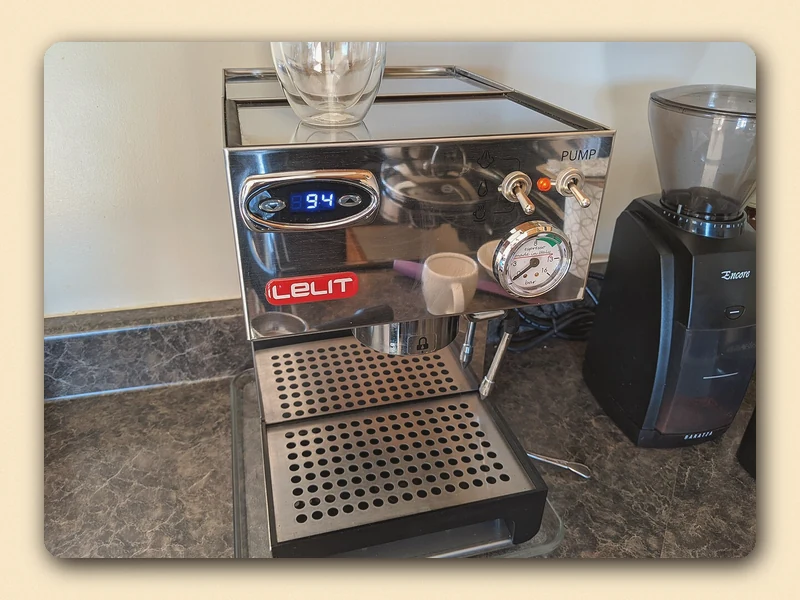
Because it changes the order of diagnosis. If the machine brewed normally before you removed group parts and failed immediately after reassembly, the components that were removed, cleaned, displaced or reinstalled deserve inspection before unrelated pump/OPV changes.
A documented PL41TEM owner case followed this exact pattern: after the first shower-screen cleaning, espresso began sputtering around the side of the portafilter, pressure rose toward roughly 15 bar before falling, and the portafilter became difficult to remove. The owner could reproduce much of the behavior with a blind basket, which is especially useful because it removes grind and puck preparation from the test.
2. What parts are actually in the Anna group stack?
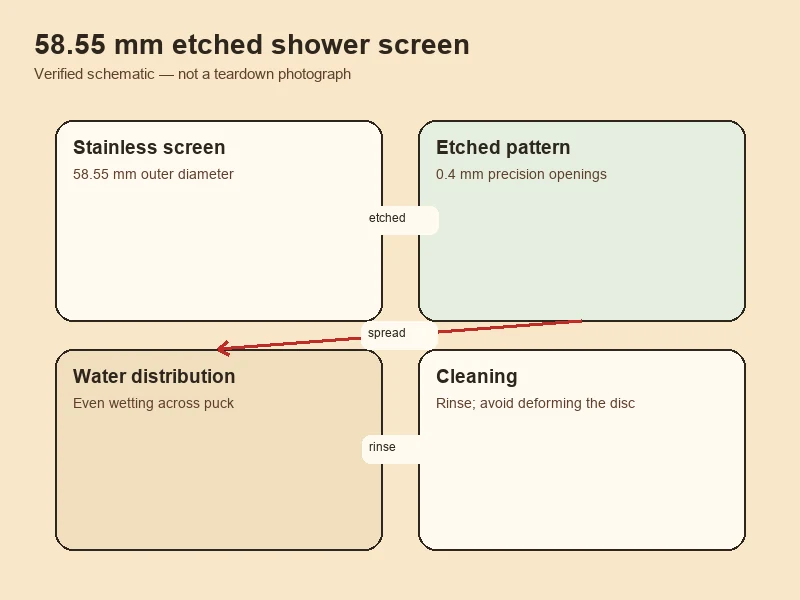
The manufacturer-supplied PL41TEM technical drawing lists the relevant group components rather than leaving us to guess from photographs: MC137 shower screen, MC191 diffuser, MC047SIL silicone brewing-group gasket and associated group/boiler sealing hardware.
That matters because “I cleaned the shower screen” can involve more than one interface. A screen that is not seated as before, debris left at the gasket sealing surface, a disturbed gasket, or an incorrectly assembled diffuser/screen stack can change how the portafilter seals and how water exits the group.
Use the exact diagram for your machine before copying another PL41 owner's orientation or part number. 1st-line hosts the manufacturer-supplied PL41TEM diagram and explicitly recommends identifying parts from the diagram first.

3. First check normal group flow with no portafilter
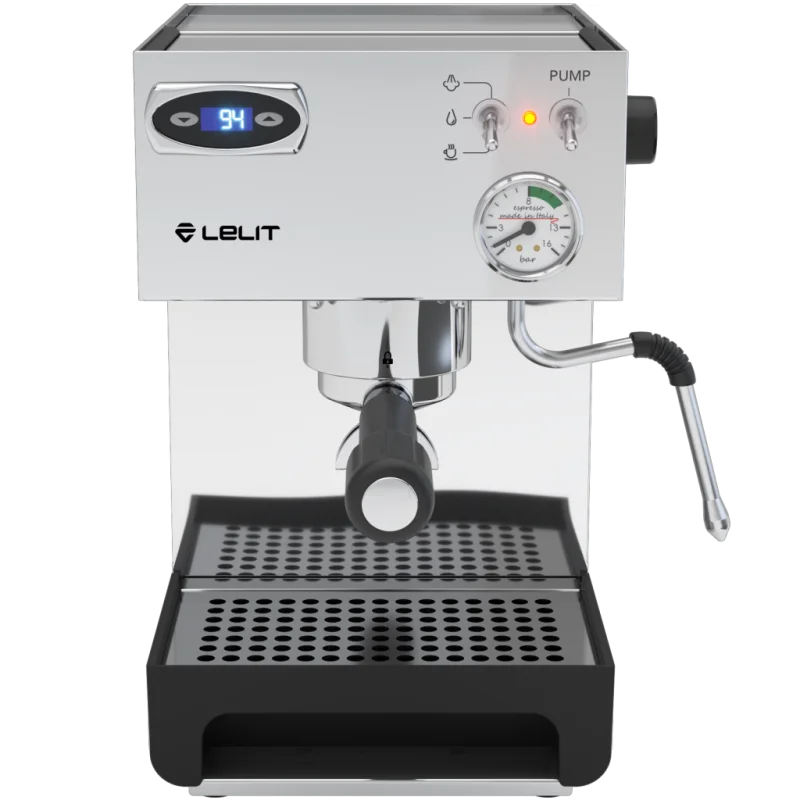
With the machine assembled, tank filled and coffee/steam controls in the normal brewing state, observe a short group-water flow with no portafilter. You are not trying to measure pressure here; you are checking whether water exits the shower area in a broadly normal pattern after reassembly.
If flow is obviously obstructed, strongly asymmetric or absent immediately after the shower work, stop adding coffee variables. Re-check the screen/diffuser cleanliness and assembly. LELIT's troubleshooting specifically lists a dirty brewing-group shower (“douche”) among the causes when no coffee is produced and the gauge exceeds 14 bar.
If open group flow looks normal, continue to the sealing/blind-filter tests rather than assuming the problem is solved.
4. Use the blind filter to separate coffee problems from group problems

LELIT officially supports backflushing this group with a blind filter. The current manual says to install the blind filter, run the coffee switch for about 10 seconds, stop for 10 seconds, and repeat five times during the cleaning sequence. It then instructs the user to clean the brewing group and gasket with a brush/damp cloth and repeat the cycles without detergent.
For diagnosis, the important observation is whether the machine seals and behaves consistently under this manufacturer-supported blind-filter load. If water spurts around the portafilter with the blind filter too, grind size, channeling and coffee dose cannot explain that leak.
| Blind-filter result | What it supports |
|---|---|
| Seals normally; pressure behavior repeatable | Group seal can hold; return to coffee/dose/puck branch |
| Leaks around portafilter rim | Group gasket / filterholder seating / sealing surface branch |
| Portafilter becomes abnormally stuck | Re-check group stack, gasket and filterholder fit before more coffee tests |
| Pressure rises abnormally and flow behavior changed after cleaning | Re-check shower/diffuser cleanliness and assembly |
Do not extend the blind-filter pump-on time beyond the manufacturer's cleaning cycle just to force a symptom.
5. If pressure shoots above 14 bar, do not immediately adjust the OPV
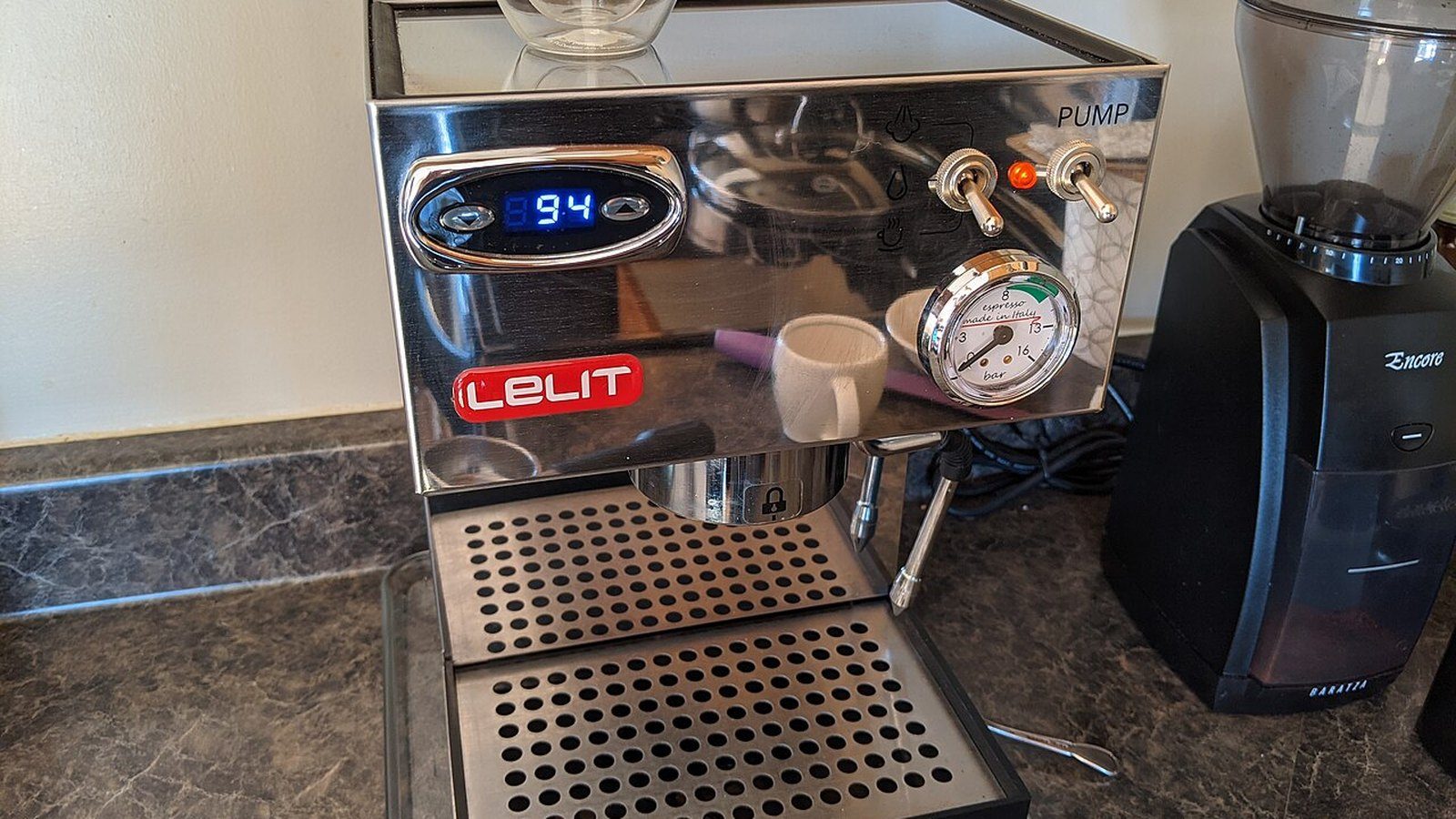
LELIT's own troubleshooting for “no coffee produced; manometer indicates more than 14 bar” lists four causes: grind too fine, too much coffee, tamp too firm, or a dirty brewing-group shower.
After shower-screen maintenance, the fourth cause becomes particularly relevant. And if the same abnormal pressure/sealing behavior appears with a blind filter, the first three coffee causes no longer explain the whole symptom.
Only evaluate OPV calibration after the group is correctly assembled, clean and sealing normally. For a separate pressure-calibration question, use the Anna pressure/blind-basket guide.
6. What if water sputters around the portafilter edge?

The Anna manual's leak troubleshooting lists four relevant causes for water escaping around the filterholder: the holder is not properly inserted, too much coffee, the filterholder edge is dirty, or the brewing-group gasket is worn/damaged.
Immediately after screen cleaning, start with the conditions you can actually verify: clean the basket/filterholder rim and group sealing surface, confirm the basket is fully seated, and inspect whether the group gasket was disturbed or contaminated during cleaning.
Test empty/clean fit before loading coffee. If the empty holder/blind filter leaks after the maintenance event, adding a different grind or reducing coffee cannot repair the sealing interface.
7. Why can the portafilter suddenly become difficult to remove?

Do not assume “stuck” means the same thing in every case. Separate a holder that is mechanically tight before brewing from one that becomes unusually difficult only after pressurization.
If it is tight even when clean, empty and cold, inspect gasket seating and the reassembled group stack. If it becomes difficult specifically after a blind-filter cycle, confirm that you are allowing the machine's normal pressure-release/backflush behavior to complete before forcing the handle.
The 2024 owner case is valuable because the blind basket also became extremely stuck after the shower cleaning. That makes “coffee puck expanded too much” an inadequate explanation for the entire problem.
Never use excessive force against a still-pressurized portafilter. Hot water released at the group can cause burns.
8. Should you remove the shower screen again?
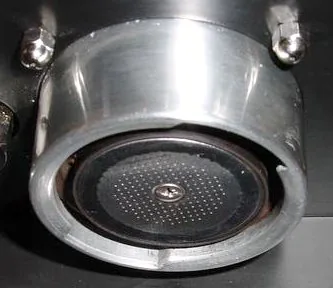
If the symptoms began immediately after reassembly and the tests above point back to the group, a powered-down inspection is reasonable. Unplug the machine and allow it to cool. Compare the shower screen, diffuser, screw and gasket area against the exact PL41TEM parts diagram; remove coffee debris from sealing surfaces and make sure the components sit as designed.
Do not use the screw as a way to “tune pressure,” and do not stack improvised washers/spacers because another espresso machine uses them. The technical drawing gives the actual Anna parts stack.
If a gasket is visibly cut, displaced, hardened or damaged, replace it with the correct part for the revision. If everything appears correctly assembled but the machine still leaks or traps pressure under a blind-filter test, move to service rather than repeatedly dismantling a hot pressurized group.
9. What cleaning method does LELIT actually recommend?

For routine group maintenance, LELIT recommends cleaning at least weekly, using a brush to clean the shower and spaces around the gaskets, plus the documented blind-filter backflush. Removable filters/filterholder can be cleaned separately; the machine itself should be unplugged and cooled for manual cleaning and should not be immersed.
This matters because you do not need to remove the shower screen every time you want to keep the group clean. Use the manufacturer's routine first, and reserve disassembly for maintenance that actually requires it.

10. A safe post-cleaning recovery sequence
- Stop changing OPV/grind settings.
- Unplug and cool the machine; inspect the group parts you just touched.
- Confirm shower screen/diffuser/gasket area is clean and correctly assembled for your PL41 revision.
- Run a short open-group flow check after reassembly.
- Test the clean stock filterholder/basket fit without coffee.
- Run only the documented blind-filter on/off cycle and watch sealing/pressure behavior.
- If the blind filter seals normally, return to coffee and diagnose dose/grind separately.
- If the blind filter also leaks/sticks or pressure behavior remains abnormal, stay in the group/gasket/assembly branch.
- Do not force a pressurized portafilter loose.
- Escalate to service if correct reassembly/cleaning does not restore normal behavior.
References
- LELIT Anna manual — cleaning, backflushing and troubleshooting
- LELIT PL41TEM Technical Documentation Rev.07 — group parts and seals
- Manufacturer-supplied PL41TEM parts diagram hosted by 1st-line
- Owner case — leak, high pressure and stuck portafilter immediately after shower-screen cleaning
Evidence boundary: LELIT documentation establishes the cleaning/backflush method, >14-bar troubleshooting and exact group components. The owner case supplies the maintenance-triggered symptom pattern; it does not prove which component was misassembled or damaged in every machine.