
Moka pot vs AeroPress is a choice between two very different ways to make a strong, small-batch coffee. The Moka pot uses stovetop pressure for a dense, bold cup. The AeroPress uses immersion, air pressure, and a micro-filter for a cleaner, faster brew. Neither makes the same drink as a pump espresso machine.
How a Moka pot and an AeroPress brew differently
A Moka pot has a bottom chamber, a funnel-shaped coffee filter, and an upper collector. Bialetti explains that steam pressure in the heated bottom chamber pushes water through the coffee and up into the collector. The company describes the Moka at about 1.5 bar, far below the roughly 9 bar used by espresso machines.
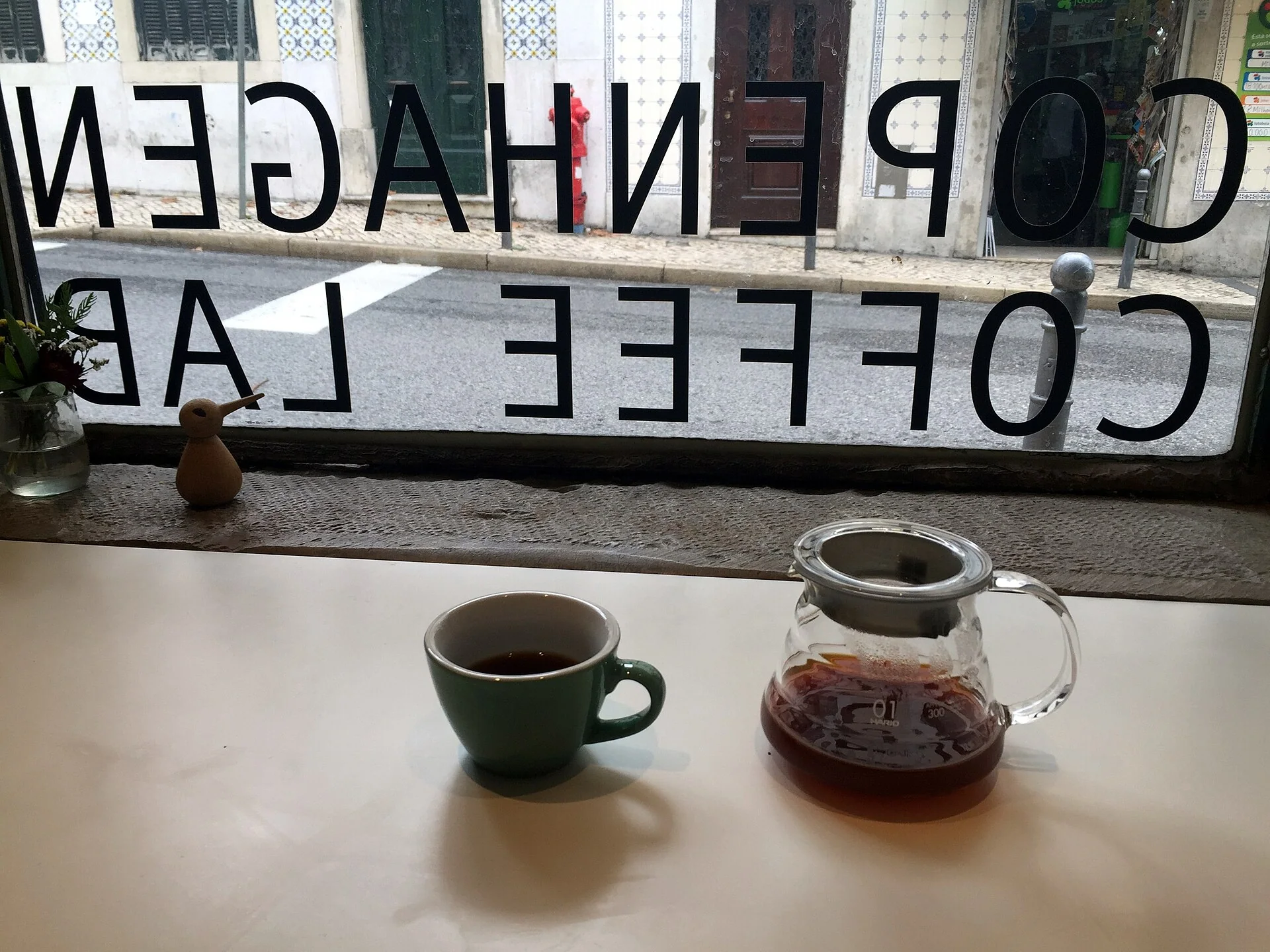
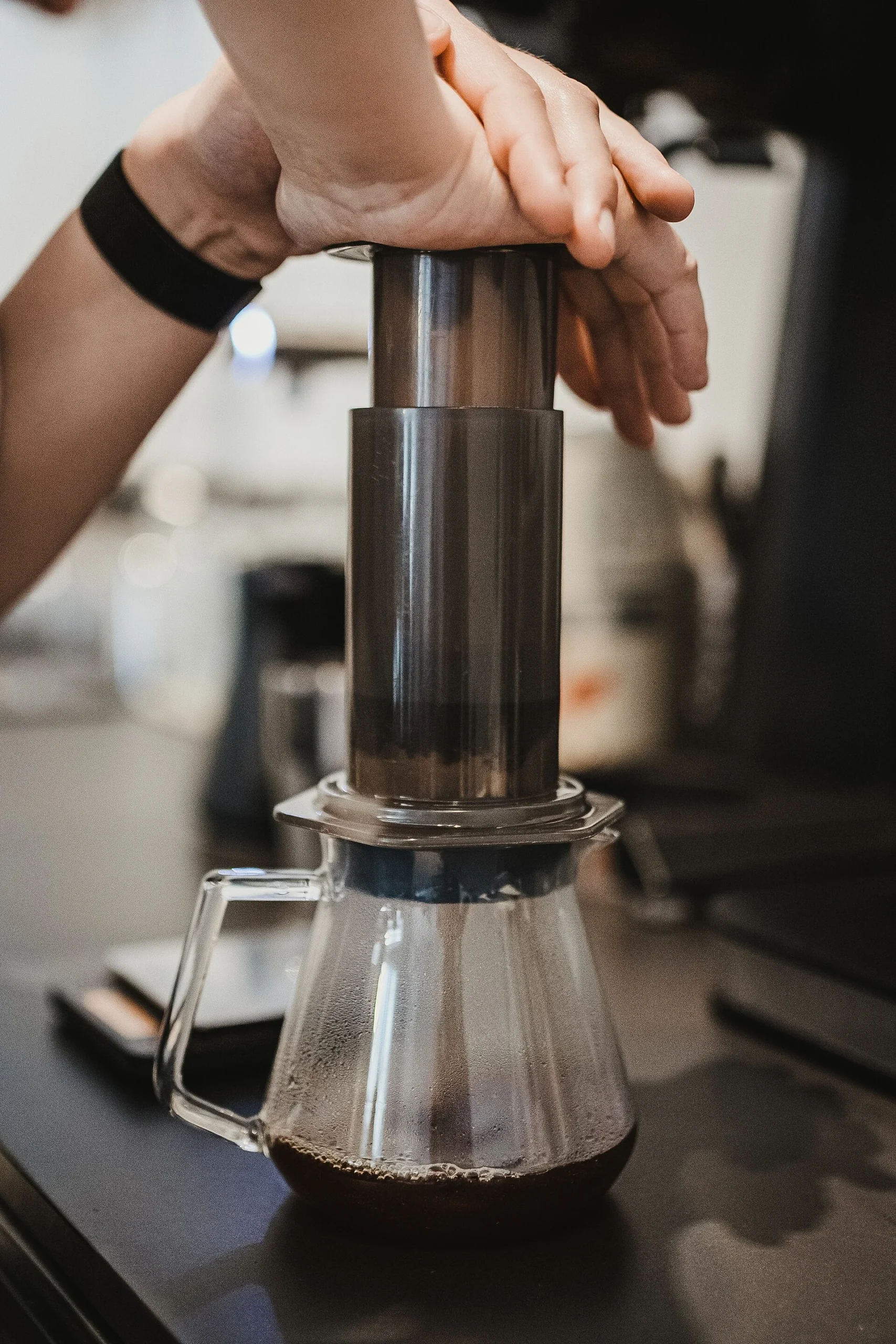
An AeroPress combines immersion with air pressure and micro-filtration. You steep coffee and water in the chamber, then press the plunger. The pressure speeds the final pass through the paper filter, which catches fine grit and much of the coffee oil. That is why the cup can taste clean even when the brew is fairly strong.

Taste and texture: bold body versus a cleaner cup
Moka coffee usually has more weight and a roasted, concentrated feel. It works well when you want something close to an Italian-style stovetop coffee or a strong base to dilute with hot water. It is not espresso crema, and the pressure is not the same as an espresso machine.
AeroPress coffee can be light and tea-like or short and intense, depending on dose, grind, water, steep time, and whether you use a paper or reusable filter. The paper micro-filter usually leaves less sediment. If you enjoy changing one variable at a time, the AeroPress gives you a wider adjustment range without changing the brewer. For another immersion comparison, see AeroPress vs French press; for the stovetop alternative, compare the Moka pot vs French press workflow.
Grind, water, and a sensible starting recipe
Start with coffee ground finer than a typical drip grind for both brewers, then adjust from the taste. Moka coffee should flow steadily without a packed or tamped bed. AeroPress recipes vary widely, so begin with a medium-fine grind, a measured dose, and a short steep. Your coffee grind size chart is useful for setting a first range, not for locking you into one number.
Use water you already trust. Hard or heavily mineralized water can change flavor and leave scale; distilled water on its own can taste flat and is not a universal answer. For a controlled comparison, use the same filtered water, weigh both doses, and write down the grind and brew time.

Keep the filter and water consistent before you judge the cup.

Speed, cleanup, and portability
The AeroPress is usually the easier weekday brewer. It heats no water on a stove, packs into a small bag, and the used coffee puck and paper filter can be pushed into the bin. Rinse the chamber and plunger, then let the parts dry.
A Moka pot asks for more attention at the stove. Low to medium heat gives the water time to rise, and you should remove the pot when the brew is nearly finished rather than letting it sputter dry. Let it cool, separate the parts, rinse them, and follow the maker’s care instructions for the seal and valve. Do not treat a Moka pot like an espresso machine backflush routine.

Which brewer works better for milk drinks?
Pick the Moka pot if you want a naturally strong cup that can stand up to warm or textured milk. It gives you a fuller base, but the result is still moka coffee, not a nine-bar espresso shot. For a latte-style drink, keep the milk amount modest so it does not flatten the coffee.
Pick the AeroPress if you want a quick small serving and do not mind making a concentrated recipe before adding milk. It is also a good option when you do not have a stove, or when you want one brewer that can make both a long black-style cup and a lighter filter-like cup.

Measure the dose first; change the recipe second.
The repeated routine as the deciding factor
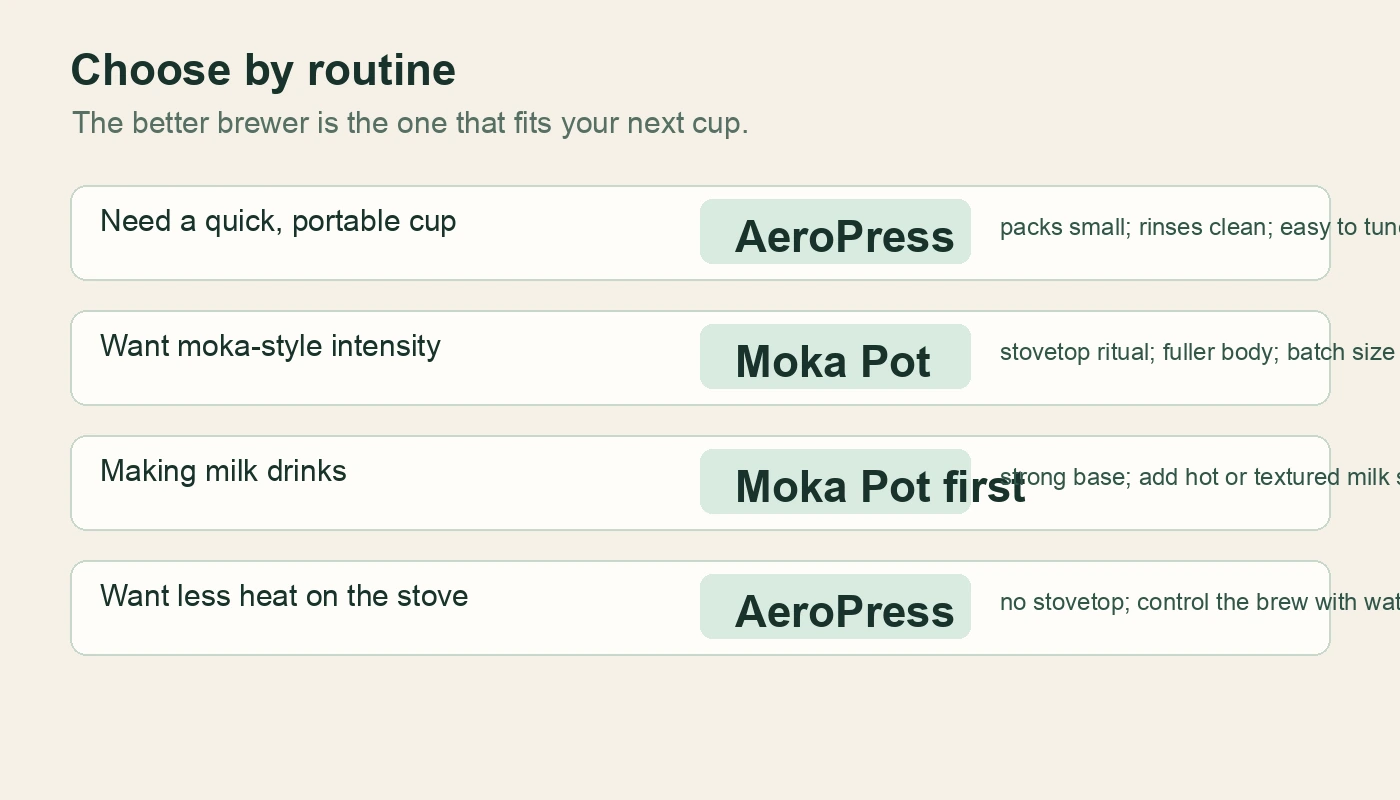
- Choose a Moka pot for bold body, stovetop brewing, and a strong milk-drink base.
- Choose an AeroPress for travel, fast cleanup, low mess, and easy recipe changes.
- Choose neither for true espresso; use a pump machine or a manual espresso maker designed for espresso pressure.
If you are still undecided, brew each with the same beans for one week. Keep the cup you reach for on a busy morning. That answer is usually more useful than chasing a universal winner.
Common questions
Is AeroPress coffee stronger than Moka pot coffee?
It can be, but the brewer does not decide strength by itself. Dose, water, grind, steep time, and final drink volume all matter. Moka pot coffee normally feels heavier, while an AeroPress can be concentrated or diluted. Compare both at the same served volume before calling one stronger.
Can either brewer make real espresso?
No. A Moka pot and an AeroPress can make concentrated coffee for milk or long drinks, but they do not reproduce the pressure, puck, flow control, or crema of a pump espresso machine. Treat “espresso-style” as a description of intensity, not proof that the drink is espresso.
Which one is easier to clean?
The AeroPress usually wins because the puck and paper filter leave the chamber together. A Moka pot has a funnel, gasket, valve, and upper collector to rinse. Never put an aluminum Moka pot in a dishwasher unless the maker explicitly says that model allows it.
References
- AeroPress: How AeroPress Works
- AeroPress: Getting Started
- AeroPress: Moka Pot vs AeroPress
- Bialetti: How the Moka Works
- Bialetti Moka Express manual