Listen to the comparison
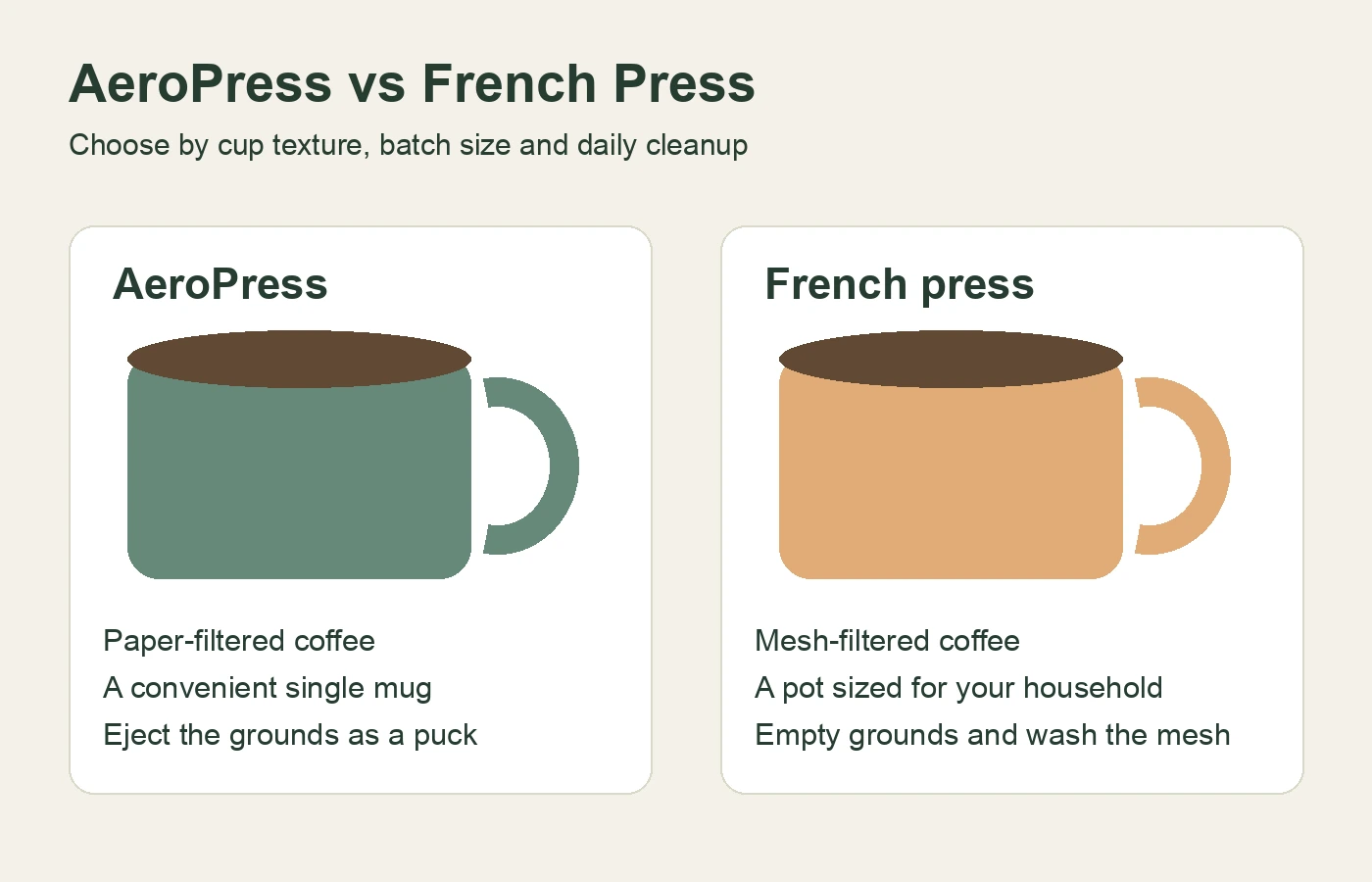
Choose an AeroPress with a paper filter if you mainly make one mug and dislike fine sediment. Choose a suitably sized French press if you want to share a pot and enjoy a fuller cup. Batch size, filtration and cleanup usually decide this purchase more clearly than a claim that one brewer makes “better” coffee.
The comparison here uses the AeroPress Original and a conventional mesh-filter French press. AeroPress metal filters, larger models and different French press sizes change the choice. Neither method guarantees sweetness, low acidity or freedom from bitterness regardless of the beans and recipe.
Which brewer fits your daily routine?
For a single coffee drinker who wants a relatively clear cup and a compact brewer, the AeroPress Original with paper is our first choice. For two people who drink coffee together, a French press sized for both mugs is usually the more convenient starting point. Those are practical preferences, rather than results from an HBM tasting test.

| Your priority | AeroPress Original with paper | Conventional French press |
|---|---|---|
| A clear cup with little fine sediment | Paper filtration is the stronger fit. | Expect a heavier texture and some fine particles. |
| One mug at a time | A compact, convenient option. | Choose a small press rather than a pot much larger than your brew. |
| Coffee for two or more people | Use repeated brews or an appropriate concentrate-and-dilute recipe. | A larger pot can serve everyone from one batch. |
| Quick disposal of wet grounds | Push out a compact puck after the cap has cooled. | Empty loose grounds and wash the carafe and mesh. |
| No disposable paper filters | A compatible metal filter changes the cup texture. | The usual metal mesh is reusable. |
If you already like your French press coffee, buying an AeroPress solely because it is popular has little purpose. Consider a second brewer when you can name the problem you want to solve: a cleaner cup, a smaller travel setup, or less time handling loose grounds.
Paper and mesh make the clearest taste difference
The filter is a useful place to start. AeroPress explains that its paper micro-filter holds back oils, while its stainless steel filter allows more through. A conventional French press uses metal mesh, so the cup has more oil and can contain fine coffee particles. That often feels fuller on the tongue.
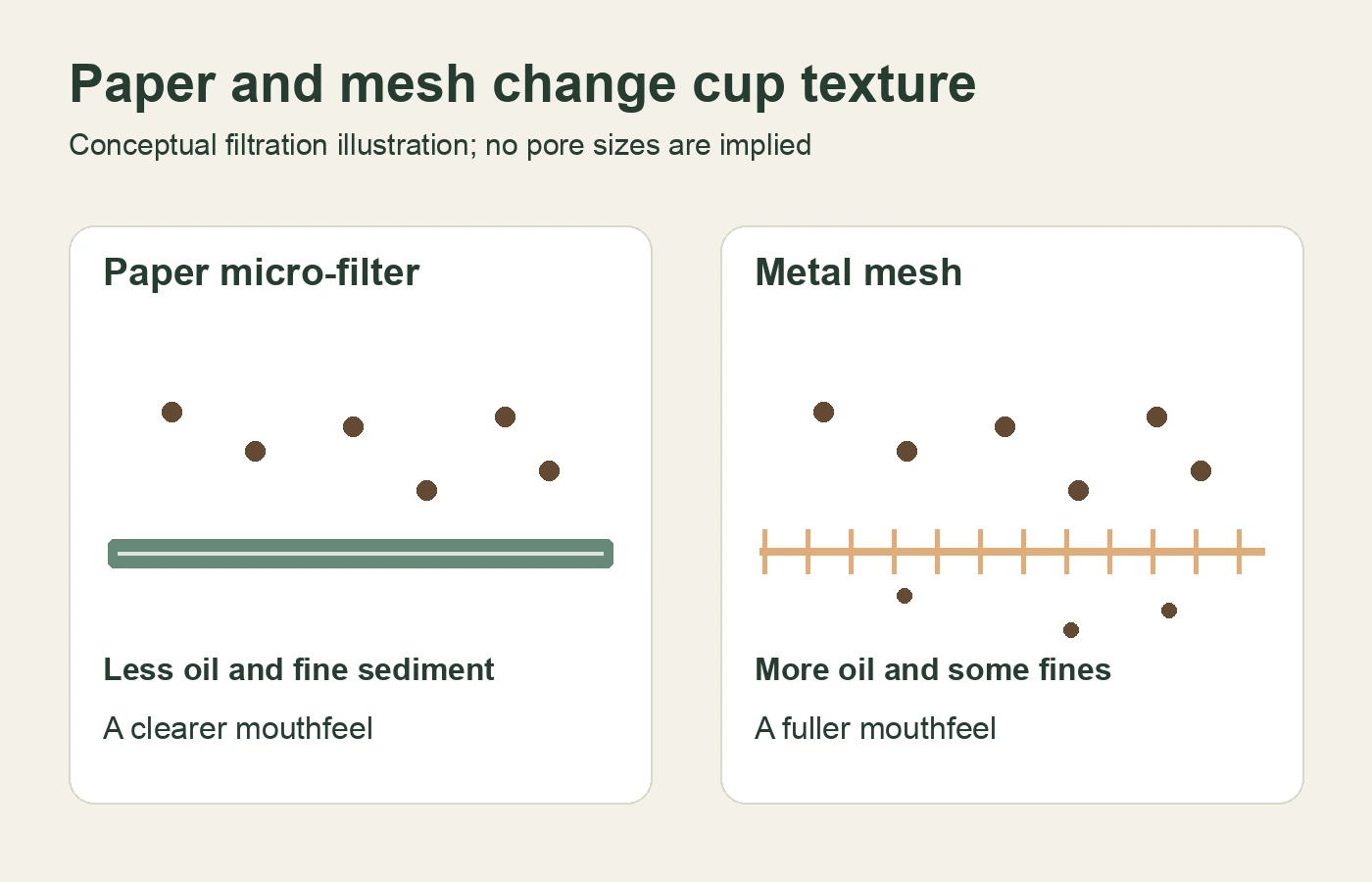
A clear cup can make individual flavors easier to notice, while a heavier cup can feel more satisfying to someone who enjoys that texture. Neither preference makes the other cup defective. The roast, grind and recipe still affect the flavor; paper does not automatically rescue a harsh brew.
In Driftaway Coffee’s comparison, filtration and body are central differences. An AeroPress with a metal filter narrows that texture gap. It still has a different chamber, recipe and pressing routine, so changing filters does not make the two brewers identical. Our AeroPress paper versus metal filter guide covers that choice separately.
Strength and taste are separate judgments
Use the same beans, water and final serving size. Start with a suitable recipe for each brewer, using its recommended grind rather than forcing both to use the same setting. Taste them as they cool. Note the texture, cup-bottom sediment, sweetness and aftertaste. A much more concentrated sample can seem “bolder” even when you would prefer the other cup at a comparable strength.
If grit is your only complaint about a French press, try the steps in our French press sediment guide before buying another brewer. Some fine sediment is characteristic of mesh filtration; large grounds in the cup warrant checking the filter assembly and pouring technique.

How much coffee can you make in one batch?
The current AeroPress Original page gives a 10 oz capacity for a brew that sends all its water through the grounds. Larger finished drinks can use concentrate followed by added water. AeroPress also publishes a multiple-serving concentrate-and-dilute method; its finished servings are not the chamber’s capacity.
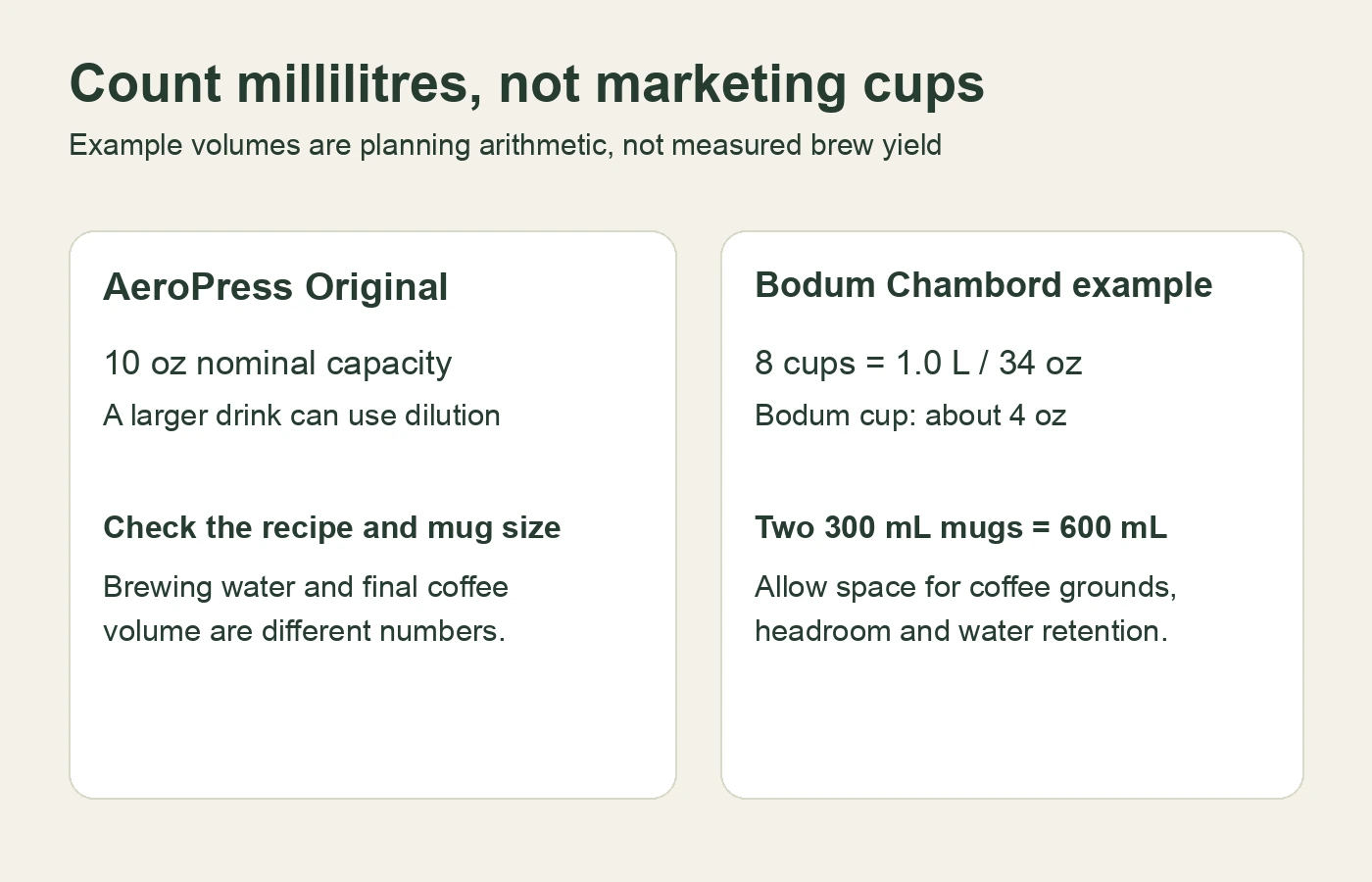
For comparison, the Bodum Chambord 1928-16US4 is labelled 8 cups, 1.0 L or 34 oz. Bodum uses small European coffee cups, approximately 4 oz each. That label does not mean eight large mugs, and the water you put into a brewer is not all recovered as coffee.

Measure the mugs you use. Two 300 mL servings require 600 mL of finished coffee, with additional allowance for water held by the grounds. Choose a pot with enough usable space and follow its fill limit. Bodum’s instructions require at least 2.5 cm of headroom; filling a 1 L vessel to its rim is not a brewing plan.
A French press has the easier routine for a shared pot. An AeroPress can still serve two people, but decide whether you are comfortable with dilution or consecutive brews. If you prefer to press a larger full-strength batch directly, check the specifications of the exact larger AeroPress model rather than applying Original figures to it.
Brewing and cleanup as one routine
A brew-time comparison can hide the work around it. You still need to heat water, prepare coffee, serve the drink and empty the grounds. French press steeping leaves you some hands-free time; AeroPress brewing adds a pressing step but leaves a compact puck to dispose of afterward.

For an upright AeroPress brew, fit the filter and secure the cap, put the chamber on a sturdy mug, add coffee and water, then follow the chosen stir and steep sequence. Press with gentle, steady pressure. Let the hot cap cool before handling it, then eject the grounds and rinse. AeroPress’s current instructions and official video below demonstrate an Original recipe.
Watch the AeroPress demonstration on YouTube if the player cannot load.
For the Chambord, Bodum instructs you to add coarsely ground coffee, add hot water with headroom, stir with a non-metal spoon and steep for four minutes before lowering the plunger slowly. That is the manufacturer’s starting method for this example, rather than a rule for every French press recipe. For a measured starting dose, see our French press coffee ratio guide.
After serving, empty the loose grounds and wash the carafe and filter. Check the mesh for trapped particles and follow the brewer’s cleaning instructions. If you choose a metal AeroPress filter, washing that filter becomes part of the routine too.
Press gently with either brewer. Bodum warns that excessive force can break the glass and release hot liquid. AeroPress advises using a sturdy mug or suitable carafe and avoiding thin, delicate glassware. Stop and check the setup if the plunger meets unusual resistance.
Travel, materials and the cost of filters
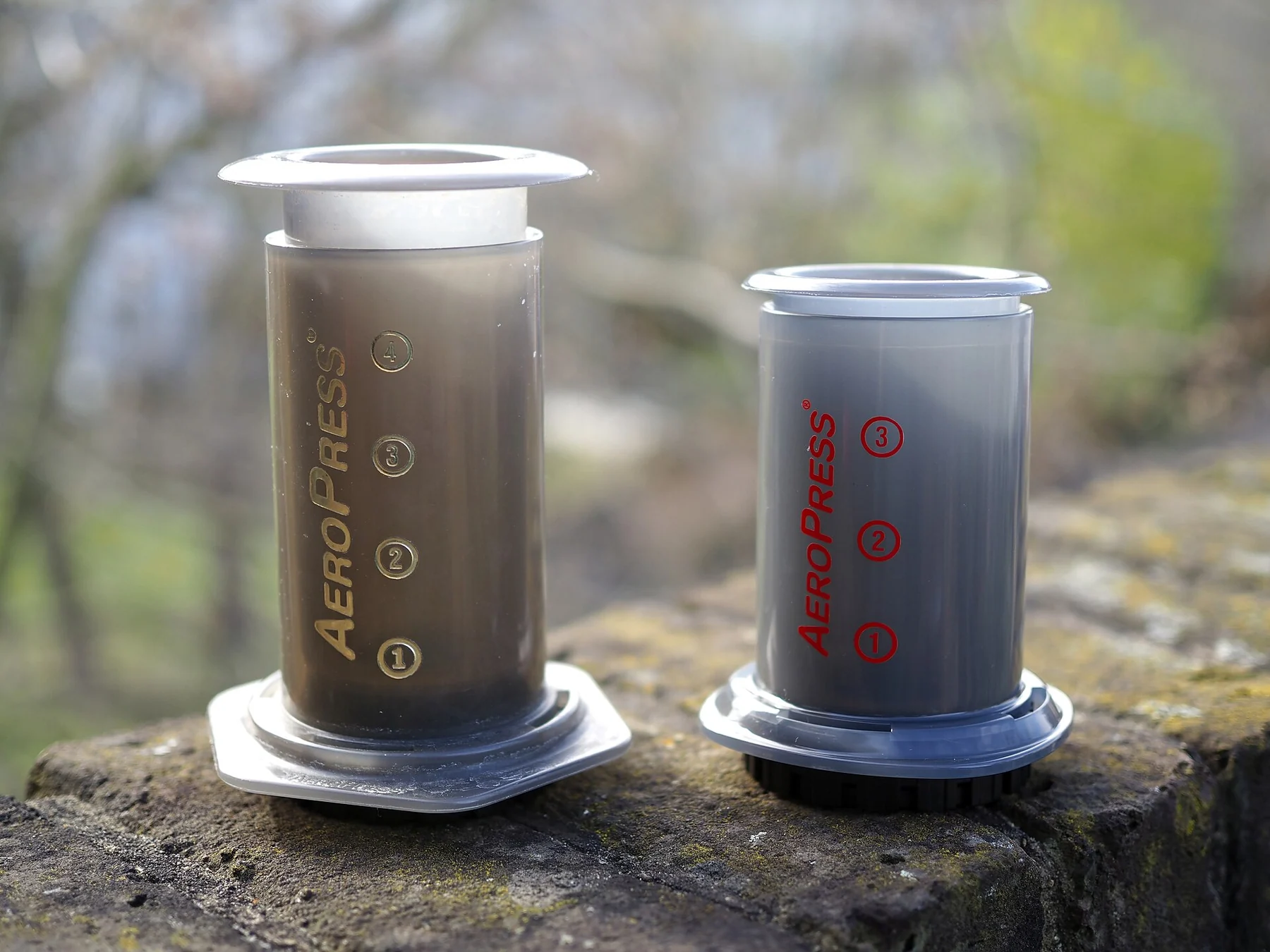
The AeroPress Original is a compact plastic brewer, which makes it a sensible option for one person away from home. You still need hot water, coffee, a stable brewing surface and a suitable cup. The smaller Go and other models have their own capacities and accessories.
A glass French press needs careful packing. A stainless steel French press may be a better fit when you want a shared batch without travelling with a glass vessel. Compare the exact construction, capacity and weight before buying; “French press” does not describe one material or size.
Paper adds a recurring purchase to an AeroPress routine. A compatible reusable filter avoids that purchase but changes filtration and needs cleaning. A French press normally uses its built-in reusable mesh, though replacement glass, seals or filter parts may still be needed over time. Current local prices and replacement-part availability are more useful than a fixed universal cost estimate.
Choose the setup whose small daily tasks you will accept. Carrying paper filters may be trivial for you; washing loose grounds at an office sink may be the part you want to avoid. For a home brewer, a suitably sized shared pot can outweigh the convenience of a smaller single-cup device.
What if you mainly want lattes?
You can add milk to coffee from either brewer, and AeroPress offers concentrate recipes described as espresso-style. Those drinks do not turn an AeroPress or French press into an espresso machine. If your goal is a conventional espresso-based latte with steamed microfoam, plan for an espresso brewer and a suitable way to steam milk.

For black coffee, choose paper-filtered AeroPress when a clear single cup is your priority. Choose a French press when sharing a fuller-textured pot matters more. If you already have one, change the recipe or filtration to solve a specific complaint before adding another brewer.
Common questions
Does AeroPress make stronger coffee than French press?
AeroPress can make a concentrated drink, but either brewer can produce stronger or weaker coffee depending on the dose and final water volume. French press body and fine sediment can also make the cup feel heavier. Compare a similar finished strength before deciding which flavor you prefer.
Can you use the same grind for AeroPress and French press?
Start with the grind specified by each recipe. Bodum’s Chambord method uses coarse coffee, while AeroPress’s Original instructions include medium or medium-fine coffee depending on the recipe. One grind setting is not a universal comparison standard. Change one variable at a time and judge the resulting cup.
Is AeroPress with a metal filter the same as French press?
A metal AeroPress filter lets more oils through than paper and can give a fuller mouthfeel. The brewers still differ in chamber size, recipe and how the drink passes through the filter. If you already have an AeroPress, changing filters can be a smaller first step than buying a French press.
Which should a beginner buy?
For one person who dislikes sediment, start with an AeroPress Original and paper filters. For a household that wants coffee from one shared batch, choose a French press sized for the mugs you use. Begin with the manufacturer’s method and a measured dose, then adjust according to taste.
References
- AeroPress Original specifications and multiple-serving guidance.
- AeroPress paper and stainless steel filter differences.
- AeroPress brewing instructions and safe mug and carafe guidance.
- Bodum Chambord 1928-16US4 specifications and Bodum French press user manual, English section.
- Driftaway Coffee: AeroPress versus French press.