“30-second espresso” is incomplete information unless you know when the clock started. Some baristas time from brew activation / pump-on. Some scales start at the first drop in the cup. Both can be repeatable—but they are not the same measurement.

Should you start the espresso timer at pump-on or first drip?
Two valid clocks—but two different numbers
Counts puck wetting and any active pre-infusion from the beginning of the brew cycle.
Ignores the delay before espresso reaches the cup and times only from visible / detected beverage flow.
Clive Coffee’s current 2026 extraction guide defines its common 1:2 / 25–30 second starting point from the moment you start the pump. Its Acaia Lunar guide also says it generally recommends starting when water touches the coffee, while noting that first-drop auto-timing can still be used if you account for the difference.
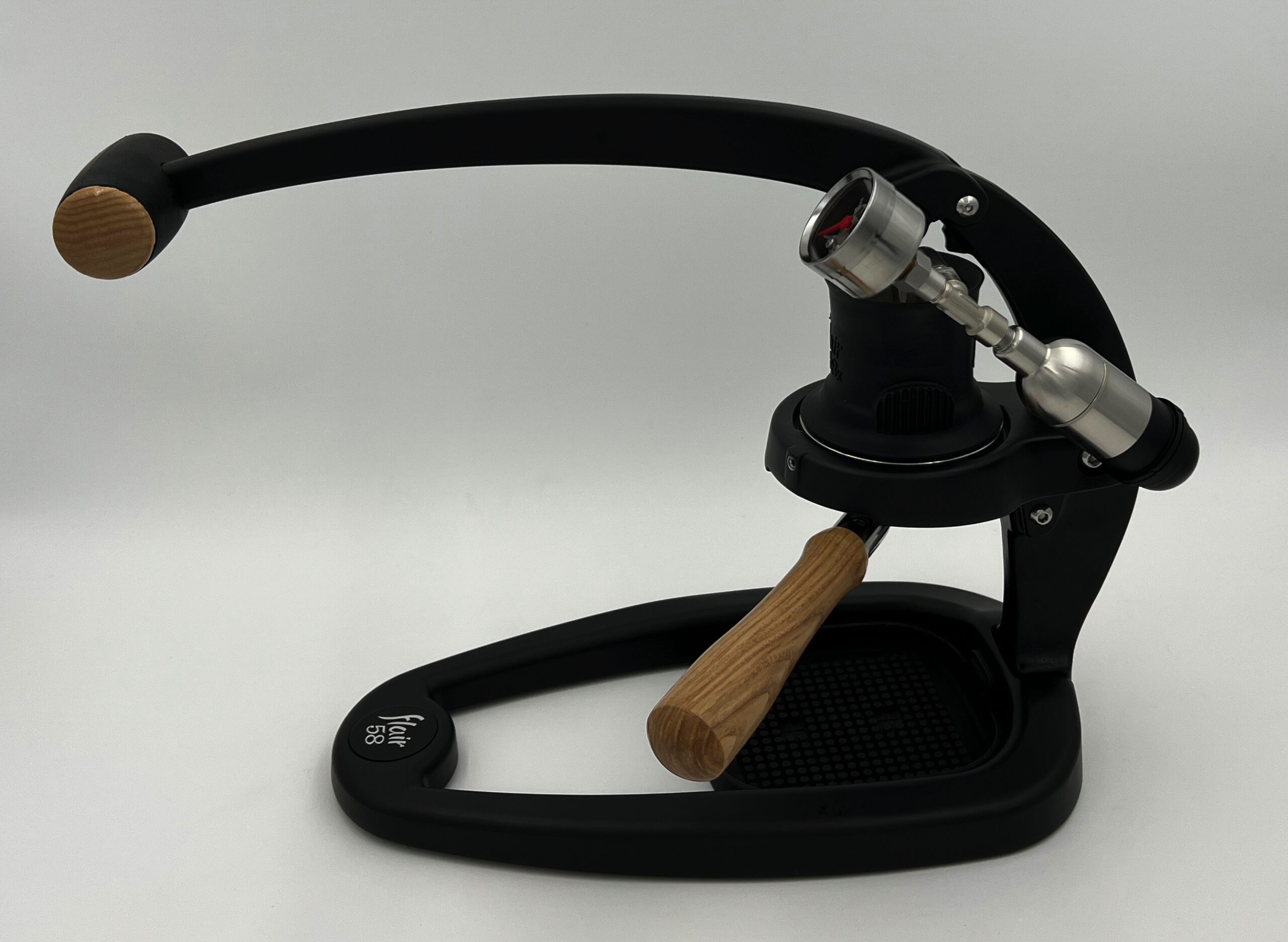
Flair takes a different practical approach on its Brew Scale: its Auto and Pre-Infusion modes start the timer at the first drip. That makes sense for a manual lever workflow where the user may spend time ramping pressure before beverage appears.
Breville’s current Bambino and Dual Boiler manuals add another useful reference point: they describe an initial infusion / pre-infusion period before visible flow, with espresso typically beginning to appear after several seconds. On the Dual Boiler, Breville explicitly says the 8–12 second delay includes pre-infusion time. That reinforces why pump-on time and first-drop time cannot be compared as if they were the same measurement.

Why can two “30-second shots” be completely different?
Imagine two people pull the same espresso. Water reaches the puck at 0 seconds and the first drops appear at 7 seconds.
One physical shot, two recorded shot times
first drip: 7 s
stop: 32 s
Pump-on convention: 32 s. First-drop convention: 25 s. Nothing about the actual extraction changed—only the clock definition did.
This is why copying “grind until you hit 28 seconds” from someone else’s recipe can send you in the wrong direction. You first need dose, yield and the timing convention.
What changes when your machine uses pre-infusion?
Pre-infusion makes the timing convention more important because the period before first drip is now part of the recipe rather than just pump fill and puck wetting.
With pre-infusion, record more than one useful time
The important boundary is that machines do not all count this the same way. For example, Clive’s current Profitec GO 2.0 manual describes programmed “shot time” as total pump activity and excludes the passive pre-infusion pause. That is yet another reason not to assume a built-in shot timer means the same thing as your scale timer.
For the pressure side of this topic, use What Is Espresso Pre-Infusion?.
Which timing convention should a beginner use?
If you are using a normal pump machine without a long manual pressure profile, timing from brew activation is the easiest convention to document and compare. It also matches the pump-start convention used in Clive Coffee’s current baseline espresso recipe.
If your scale only auto-starts when espresso hits the cup, use first-drop timing rather than fighting the tool. Just write it down. Consistency is more valuable than forcing every device into the same workflow.
Should first drip always happen at the same second?
No universal first-drop second exists. Grind, dose, coffee age, puck prep, machine flow, pump type and pre-infusion all influence how quickly beverage appears.
What matters is whether the first-drop delay changes unexpectedly inside your own stable recipe. If a coffee that normally drips at 6–7 seconds suddenly takes 13 seconds, something changed: grind, dose, retention, puck resistance or machine flow.

Does the timer tell you when to stop the espresso?
Not by itself. Stop the shot at the target beverage yield, then use the resulting time as diagnostic information. This keeps brew ratio in control of the recipe rather than letting the stopwatch decide cup volume.
If you are starting with 18 g in and 36 g out, the 1:2 brew-ratio guide explains why the target yield matters. If it reaches 36 g too fast or too slowly, adjust grind while holding dose and yield stable.
What should you ask when someone says “aim for 30 seconds”?
Once those three details are known, shot time becomes useful. Without them, “30 seconds” is mostly a loose hint.

Can an automatic scale give a misleading shot time?
It can give a different shot time, which is not the same as a bad measurement. First-drop auto-start modes deliberately omit the seconds before liquid lands in the cup.
Clive’s Acaia Lunar overview explicitly notes this difference and says you can account for it after a few shots. Flair’s own Brew Scale is designed around first-drip timing in its espresso modes. Understand the mode, then use it consistently.

FAQ
Should espresso take 25–30 seconds from pump-on?
That is a common modern starting convention. Clive Coffee’s current baseline recipe uses 1:2 in about 25–30 seconds from pump start. It is a starting range, not a flavor guarantee.
Is 25 seconds from first drip too long?
Not automatically. If there were 6–8 seconds before first drip, that might be a 31–33 second pump-on shot. Judge it using the recipe, timing convention and taste together.
Do built-in machine timers start at pump-on?
Many start with brew activation, but internal rules vary. Some machines count only pump activity, some include a programmed phase, and some scales start at first detected liquid. Check the manual.
Should I count pre-infusion in espresso shot time?
You can count it in total brew-on time, but record that convention. For advanced dial-in, logging both total time and first-drip delay is more informative.
What matters more: shot time or yield?
For a repeatable recipe, target yield tells you when to stop; shot time tells you how quickly you got there. Use both, with taste as the final decision.
References
- Clive Coffee — Espresso Extraction Time & Ratio: A Complete Guide (2026)
- Clive Coffee — Acaia Lunar Scale Overview
- Flair Espresso — Brew Scale timing modes
- Breville Bambino manual — infusion time and visible-flow guidance
- Breville Dual Boiler manual — visible flow after 8–12 seconds including pre-infusion
- Flair Espresso — Product Guide: time extraction from first drip
- Profitec GO 2.0 / Clive Coffee — programmed shot-time and pre-infusion timing behavior
Evidence boundary: espresso machines and scales define timer start behavior differently. HomeBaristaMods does not convert a pump-on recipe to a first-drop recipe by assuming a fixed delay; use the actual timing behavior of the machine and scale in front of you.