Espresso pre-infusion means wetting and saturating the coffee puck at low pressure before full brewing pressure arrives. The goal is a gentler, more even start—not simply adding extra seconds to every shot.

What is the difference between pre-brew, pre-infusion and pressure profiling?
These terms are often mixed together, but La Marzocco’s current technical explanation separates them clearly.
Three different ways to soften or shape pressure
Short water-on → pause → full brew. The puck gets a softer initial wetting.
Continuous low-pressure water saturates the puck before full pressure arrives.
Pressure is deliberately changed throughout more of the shot, not just at the beginning.
La Marzocco defines pre-brew as an interrupted on-off-on wetting sequence, while pre-infusion is a continuous low-pressure saturation phase. That distinction matters when you compare recipes from different machines.
Why can pre-infusion reduce channeling?
Dry coffee does not wet instantly or perfectly evenly. A gentler low-pressure phase gives water more time to spread through the puck before full pressure pushes hard against any remaining weak spots.
Barista Hustle describes pre-infusion as a way to reduce dry spots and make extraction more uniform. Flair similarly says low-pressure saturation can help minimize channels before the higher-pressure phase begins.
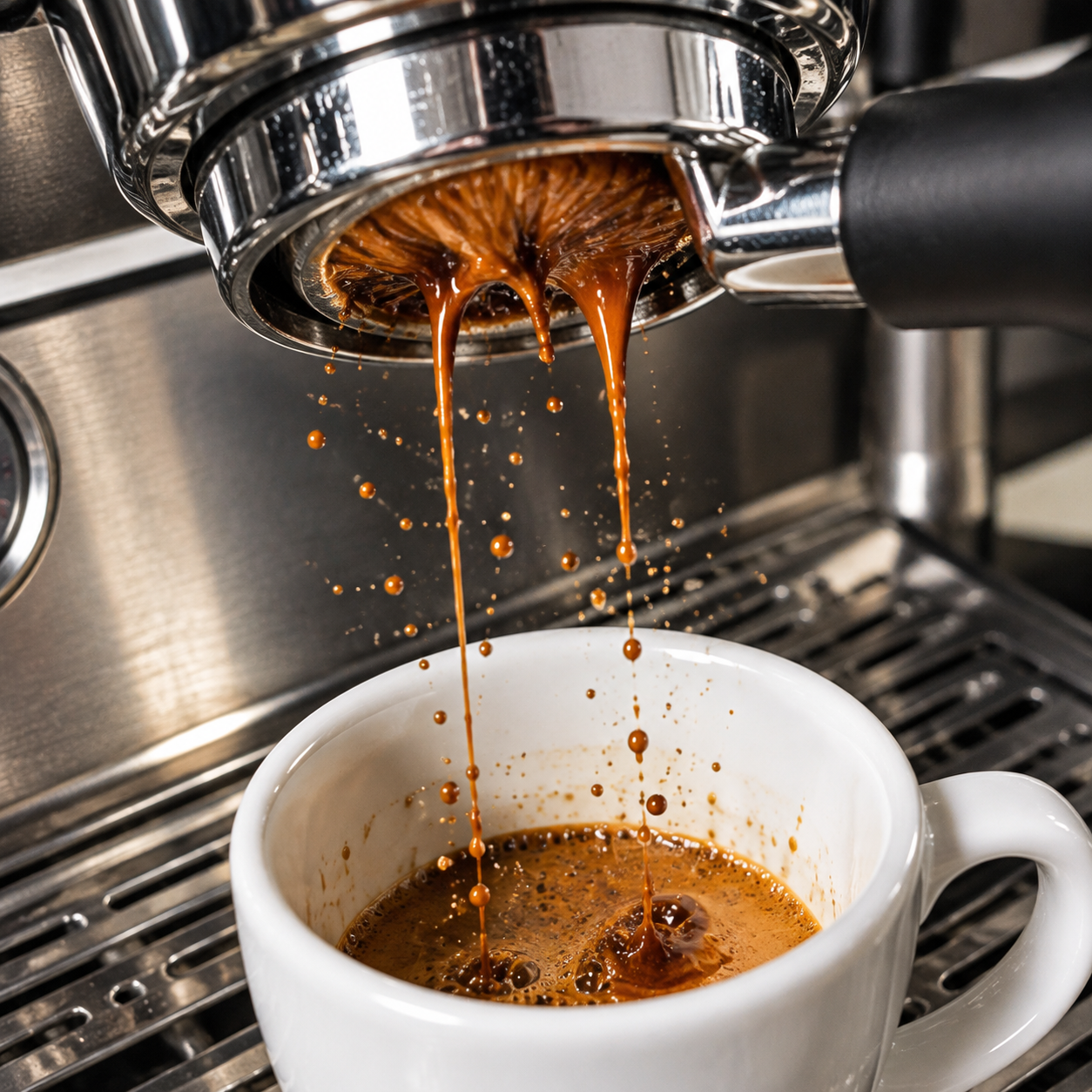
If your extraction is already spraying or visibly unstable, still fix the basics in the espresso channeling guide. Pre-infusion is a support tool, not a replacement for distribution and a level tamp.
How long should espresso pre-infusion last?
There is no universal number because different machines create pre-infusion differently.
| Source / machine context | Published guidance | What not to assume |
|---|---|---|
| La Marzocco GS3 MP-style true pre-infusion | La Marzocco suggests experimenting around 2–8 seconds | Do not copy that as a universal pump-machine standard |
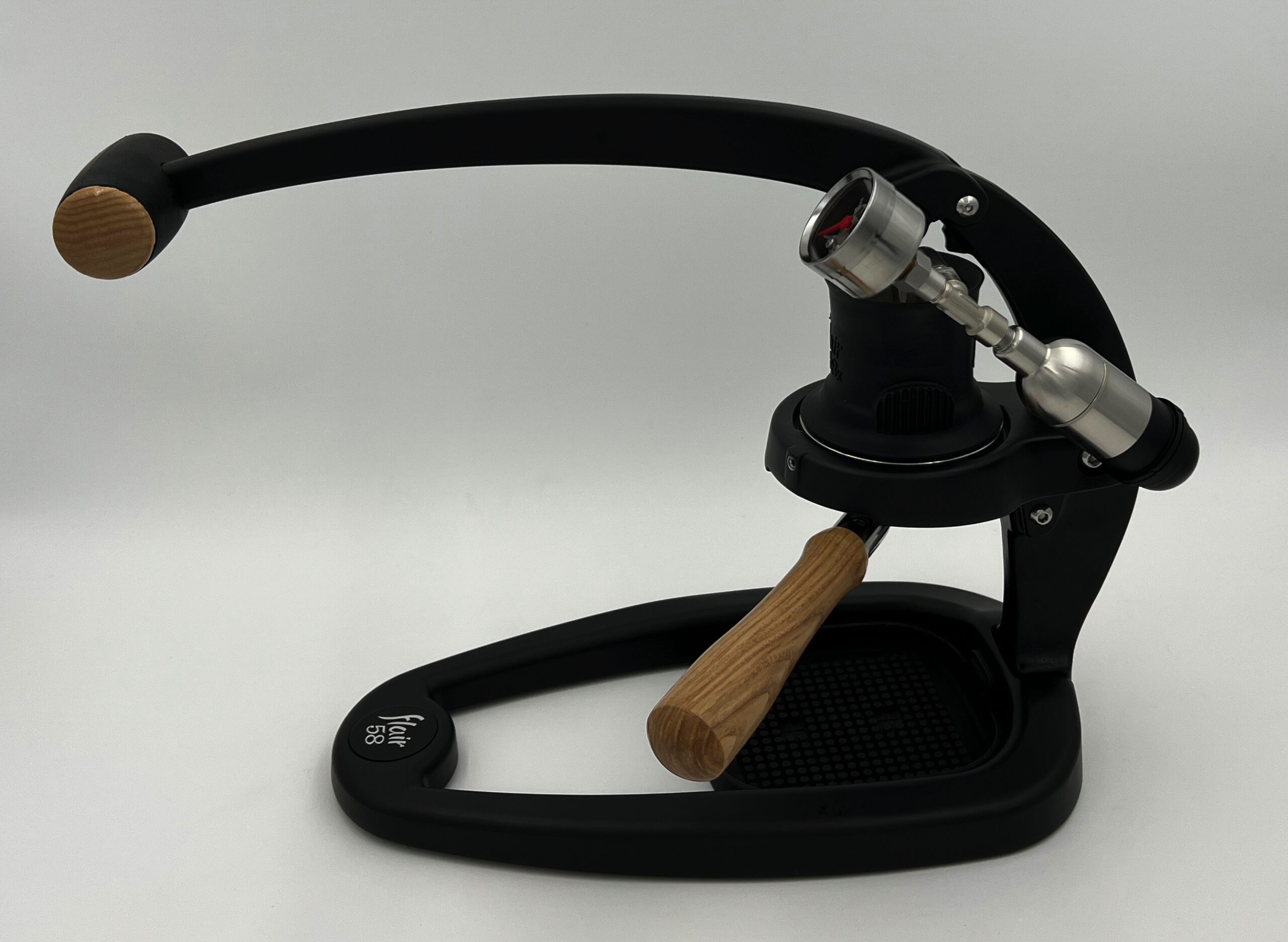
| Flair lever workflow | Flair support describes roughly 1–2 bar for about 8–10 seconds | Manual lever control is not the same hydraulic system as an electric machine |
| Older Flair brew guide | Shows a 1–2 bar pre-wet held roughly 10–15 seconds | Model/generation guidance can change; use the current guide for your exact Flair |
| La Marzocco pre-brew | Short on/off timing rather than a continuous low-pressure soak | Pre-brew seconds are not directly comparable to true pre-infusion seconds |

Does pre-infusion make total shot time longer?
Usually, yes, if you start timing from pump-on or first water contact. But this is partly a measurement problem: some recipes include the pre-infusion phase in total shot time and others focus on the higher-pressure extraction phase.
Pick one timing reference and keep it consistent. A 35-second shot that includes 8 seconds of low-pressure pre-infusion is not directly comparable to a 35-second shot that starts the clock at first drip.
Same recipe, different clock interpretation
Pressure rises quickly, so pump-on time and main extraction are close together.
Low-pressure wetting adds time before the main pressure phase. Record where your timer starts.
Does pre-infusion change the grind setting you need?
It can. Barista Hustle notes that wetting the puck makes it more permeable, and one benefit of pre-infusion is that it can allow a finer grind than a hard full-pressure start.
That means adding pre-infusion to an already dialed-in recipe can change the shot. Do not assume you can add 10 seconds of pre-infusion and leave every other variable untouched.
Keep the dose appropriate for the basket, then use the Dose vs Grind guide to re-establish flow if the shot changes.
Is longer pre-infusion always better for light roasts?
No. Light roasts can benefit from more extraction work, and pre-infusion can be one useful tool, but “longer” is not automatically “better.” A long low-pressure phase changes the shot’s flow, contact time and extraction before full pressure begins.
Use taste and repeatability. If a longer pre-infusion improves sweetness and reduces harsh unevenness, keep it. If the shot becomes thin, dull or difficult to repeat, shorten it or return to the machine’s baseline.
When should you try pre-infusion?
Use pre-infusion after the basic recipe is stable
Pre-infusion is most informative when the rest of the shot is already controlled. If every shot has a different dose, ratio and tamp, you will not know whether pre-infusion actually helped.
Should you manually toggle the pump to create pre-infusion?
Only if the machine manufacturer explicitly supports that workflow. Some machines have a documented pre-brew function or a manual low-pressure mode; others do not.
Do not rapidly switch pumps, valves or brew controls on and off just because another machine uses an on-off-on routine. The same button sequence does not imply the same hydraulic behavior.

FAQ
Is pre-infusion the same as pre-brewing?
Not in La Marzocco’s terminology. Pre-brew is an interrupted wet-pause-brew sequence; pre-infusion is continuous low-pressure water before full pressure.
Does pre-infusion prevent all channeling?
No. It can help wet the puck more evenly, but large distribution errors, tilted tamping or poor basket dosing can still create channels.
Should I include pre-infusion in shot time?
You can, as long as you record the timing convention consistently. “30 seconds from pump-on” and “30 seconds from first drip” are different measurements.
What pressure should pre-infusion use?
Use the machine’s documented method. Flair commonly teaches about 1–2 bar in its lever workflow; La Marzocco describes around 3 bar or line pressure for some true pre-infusion systems. Those are platform-specific examples, not a universal target.
Can pre-infusion help light roast espresso?
It can help with even saturation and may allow a finer grind, which can support higher extraction. But it is one variable among grind, ratio and temperature—not a guaranteed fix.
References
- La Marzocco — Pre-Brew/Pre-Infusion, and Pressure Manipulation Explained
- Flair Espresso — What is pre-infusion?
- Flair Espresso — Brew Better Espresso at Home with Pre-Infusion
- Barista Hustle — Preinfusion
- Flair Espresso — PRO brew guide (historical model-specific guidance)
Evidence boundary: pre-infusion pressure, duration and timing logic depend on the machine’s hydraulic design and control system. HomeBaristaMods does not turn one machine’s seconds or bar target into a universal espresso rule.