
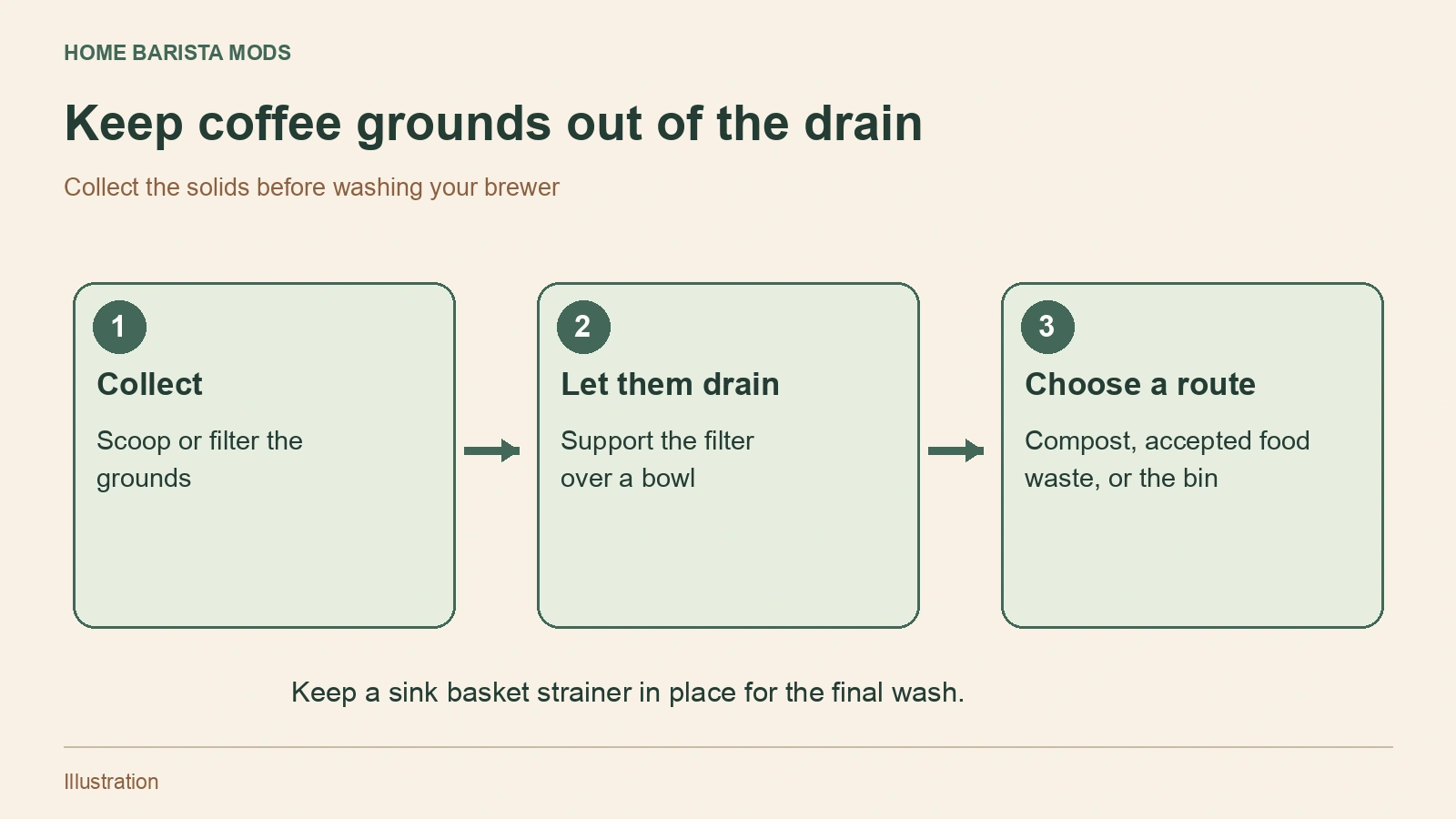
Keep used coffee grounds out of the sink. Collect the solids before washing your brewer, then put them in compost, an accepted food-waste collection, or general waste. A filter-lined sieve is useful for the wet sludge left in a French press.
Water Corporation specifically advises against pouring coffee grounds down drains and recommends a sink strainer. The awkward part is getting the last sediment out of the brewer without sending it down the plughole. You can separate that slurry before the final wash.
Collecting the grounds before washing
A normal sink drain is a poor destination for a batch of spent grounds. Water Corporation lists coffee grounds among the food scraps to keep out of drains; Thames Water gives the same advice even when plenty of soapy water is used. These authorities recommend collecting the solids; the effect of an accidental rinse depends on the plumbing.

A garbage disposer has its own operating instructions. Read the manual for the exact model and follow your local wastewater or septic-service advice as well. A disposer does not turn a local instruction to collect coffee waste into permission to rinse it away. Keeping a small waste container beside the brewer avoids having to settle that question at every wash.
Do not use coffee grounds as a drain cleaner. If the sink smells or drains slowly, address that problem separately. Adding another batch of grounds does not establish what is causing the symptom.
Emptying a French press through a filter-lined sieve
Let the brewer and remaining coffee cool enough to handle. Put a fine-mesh sieve securely over a bowl and line it with a paper coffee filter. The bowl catches the liquid while the filter collects the wet grounds; the sink does not have to hold the whole slurry.

- Scoop the bulk of the grounds into your waste container with a utensil suitable for the brewer.
- Add a little room-temperature water to loosen the remaining sludge. Swirl gently, then pour it into the supported, filter-lined sieve.
- Let the collected grounds drain before lifting the filter. Support it from beneath if it is heavy or fragile.
- Dispose of the drained solids using the route accepted where you live. Dispose of the remaining liquid according to local wastewater guidance.
A mesh strainer alone may let fine sediment through. If you can see brown particles collecting in the bowl beneath it, add the paper filter and pass that liquid through again. Collect the visible waste. The sources here do not establish a universally safe spoonful for the drain.
After the solids are out, wash the beaker and plunger according to the brewer's care instructions. Keep a sink basket strainer in place for the final rinse, and empty anything it catches into your waste container. This disposal routine also works for loose grounds left in a reusable filter. It does not replace the filter's cleaning instructions.
If your French press also leaves sediment in the cup, our French-press sediment guide covers brewing and pouring changes. Cup sediment and waste disposal are separate jobs.

Paper filters and coffee pucks belong together
Pour-over and drip brewers already collect the grounds in a paper filter. Once the filter is safe to handle and has drained, lift it with the grounds still inside. Carry it over a bowl or directly to your waste container so a torn filter does not scatter wet coffee across the counter.

AeroPress instructions describe removing the filter cap and pushing out the spent puck. Eject it over the waste container, then discard the filter and rinse the brewer as directed. Keep a reusable metal filter out of the waste container and clean it according to its instructions.
For an espresso basket or moka pot, follow the machine or brewer's instructions before removing hot or pressurized parts. Collect the bulk grounds first, then catch the residue during washing. This guide does not prescribe a pressure-release or disassembly procedure.
If you are deciding between brewers, AeroPress versus French press compares their brewing and cleanup routines. A compact puck is easier to transfer than loose slurry, but both still need a waste destination.
Compost, food-waste collection and general waste
The US EPA lists coffee grounds and paper filters as materials for backyard composting. Add them to a managed compost system with other suitable materials. Mix wet additions with dry leaves or other browns rather than leaving a dense layer of grounds on top. Follow the composting instructions for your system.
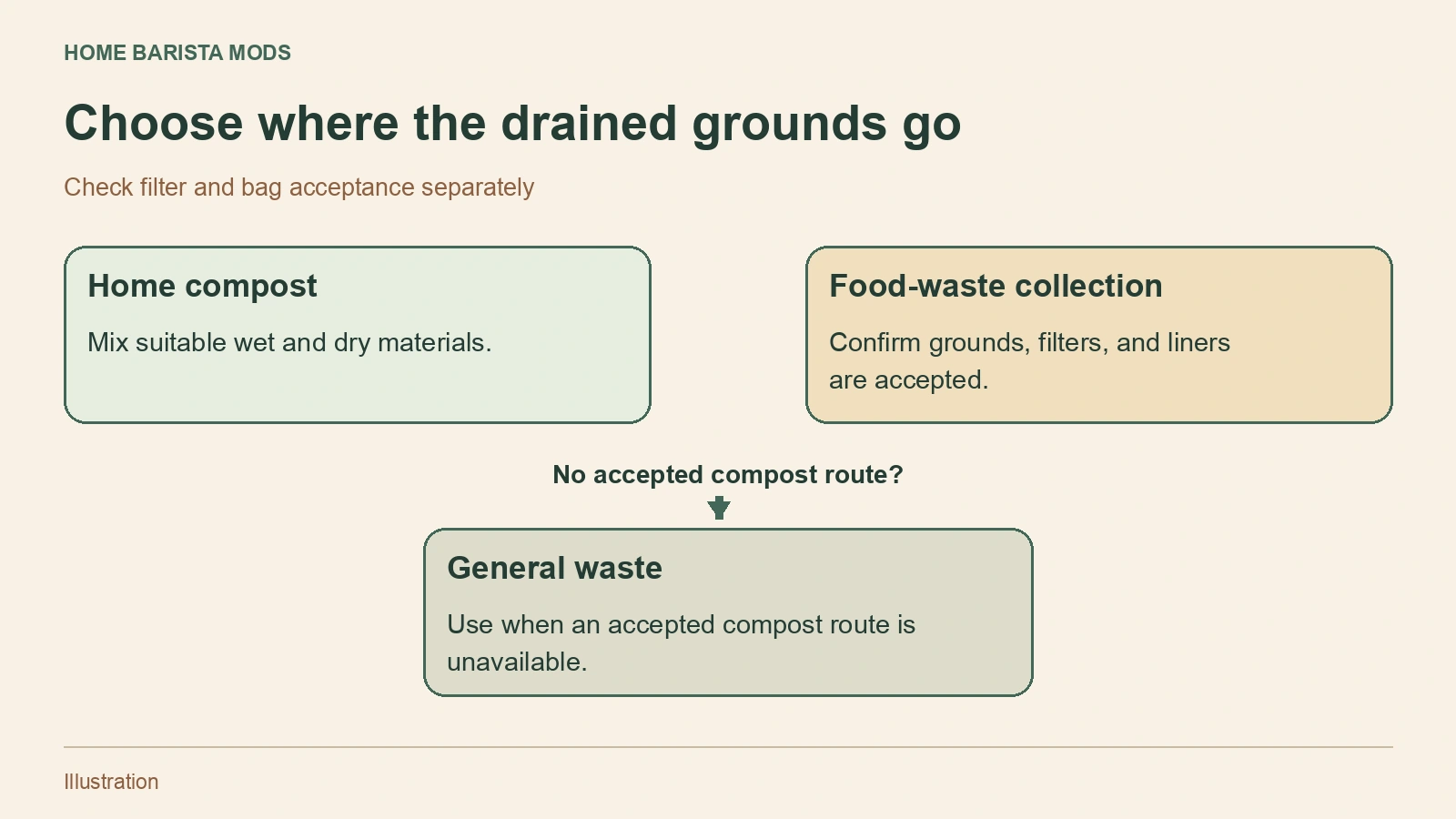
Municipal food-waste collections have their own acceptance rules. Check coffee grounds, paper filters, liners, and any compostable packaging separately. A filter accepted in a backyard compost pile is not proof that every collection service accepts the same filter or bag.
When neither compost nor an accepted food-waste service is available, use general waste as directed locally. Let wet grounds drain first, particularly if your collection requires a paper bag. Keep the container near your brewing area and empty it as part of cleanup.
Spent grounds and finished compost are different materials. The EPA's compost guidance supports adding grounds to a composting system; it does not establish a universal dose for putting fresh grounds directly around every houseplant.

If grounds have already gone down the drain
Stop adding grounds and collect any solids still visible in the sink strainer. Normal drainage after an accidental rinse does not tell you how much material remains farther along the pipe. Change the cleanup routine rather than testing the drain with another batch.

If water drains slowly, stands in the sink, or backs up, stop pouring more liquid into it and seek plumbing or building-maintenance help. Describe what went down the drain and when the symptom began. Coffee grounds may be part of the history, but the symptom alone does not identify the blockage or its location.
Do not follow a coffee-waste tip that promises a fix from boiling water or bleach. Thames Water says those approaches do not resolve the problem. Keep hands out of a garbage disposer; InSinkErator's user-maintenance instructions explicitly prohibit reaching inside and specify their own servicing precautions. Use the exact appliance instructions or qualified help for a jam.
Frequently asked questions
Is a tiny amount of coffee sediment safe to rinse away?
There is no universal safe quantity established by the sources here. Water Corporation recommends keeping coffee grounds out of drains. Remove the bulk grounds, use a filter to collect visible sediment, and keep a sink strainer in place for the final wash.
Can a paper coffee filter go in compost with the grounds?
The US EPA lists coffee grounds and paper filters among backyard-compost ingredients. Follow your compost system's instructions and check the filter material. If you use a collection service, confirm its rules for filters and bags rather than assuming backyard-compost acceptance applies.
Should I flush coffee grounds down the toilet instead?
Use compost, an accepted food-waste collection, or general waste. A toilet is not an alternative coffee-waste route. Water Corporation's wastewater guidance excludes food scraps, including coffee grounds, from material that should be flushed or poured into drains.
References
- Water Corporation: food scraps, strainers, and disposal options
- US EPA: coffee grounds and paper filters in home composting
- AeroPress: ejecting the spent puck and cleaning the brewer
- InSinkErator Ultimate C7000 US: operating and user-maintenance instructions
- Thames Water: coffee grains and blocked-drain prevention