
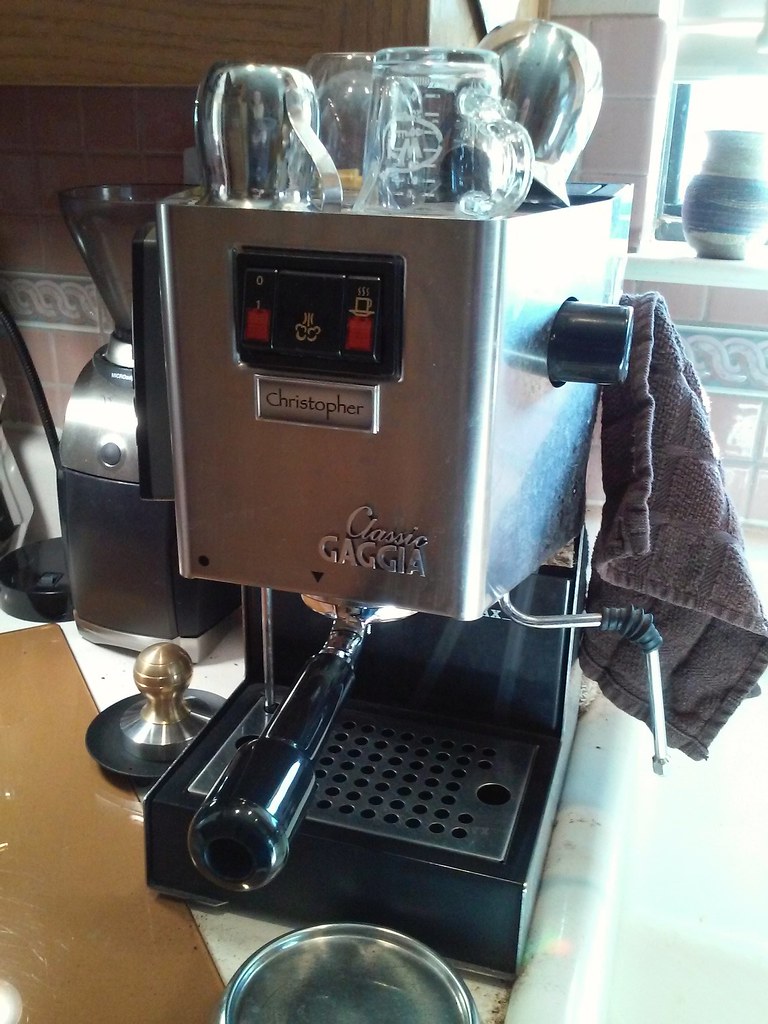
A Gaggia Classic boiler replacement makes sense when the boiler or its sealing surfaces are no longer serviceable. Weak flow, scale, a thermostat fault, or a blocked solenoid can feel like a boiler failure without requiring a new boiler.
Before ordering parts, identify the exact Classic generation, separate maintenance faults from physical boiler damage, and check the current parts documentation. Gaggia North America now lists a 2024 brass boiler assembly for the Classic E24 and says that assembly is compatible with the Gaggia Classic, Classic Pro, and Classic Evo Pro; the listing also says seals and hardware are sold separately.
When does a Gaggia Classic boiler need replacement?
Replace the boiler when inspection shows physical damage that cannot be returned to a reliable sealing and operating condition. Do not use “old machine” or “poor flow” as the diagnosis.
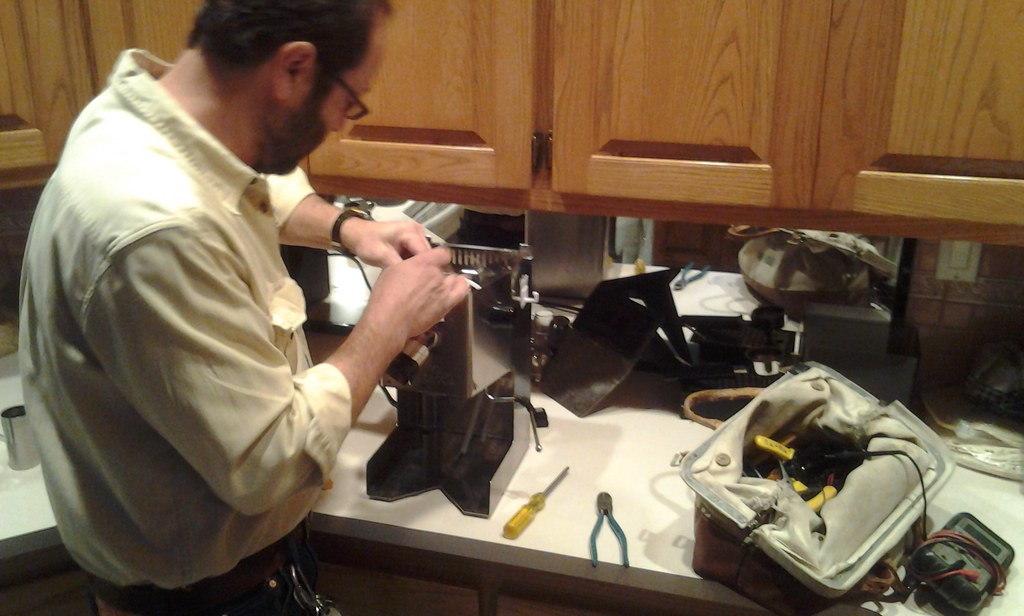
Photo: insidious_plots via Flickr, CC BY 2.0. Service context only; it does not establish the condition of every Classic boiler.
Whole Latte Love’s current Classic Pro boiler support article says visible pitting on the boiler or grouphead is a sign that the affected part will likely need replacement. A 2005 Classic repair documented by ElectroKev reached the same kind of decision only after corrosion had made the boiler/group assembly effectively unserviceable.
That is a different situation from:
- scale that can still be addressed through the correct maintenance path;
- a blocked three-way solenoid;
- a failing brew or steam thermostat;
- a pump that is not moving water correctly;
- a leak from a gasket or fitting rather than the boiler casting itself.
If the symptom is black material from the steam path, use the existing black-flakes diagnosis first. If the group has no flow, use the no-water diagnostic before deciding that the boiler is the failed part.
Should you descale or clean the machine before replacing the boiler?
If the problem is scale, restricted flow, or maintenance history rather than confirmed physical boiler damage, diagnose and service the water path before buying a boiler.
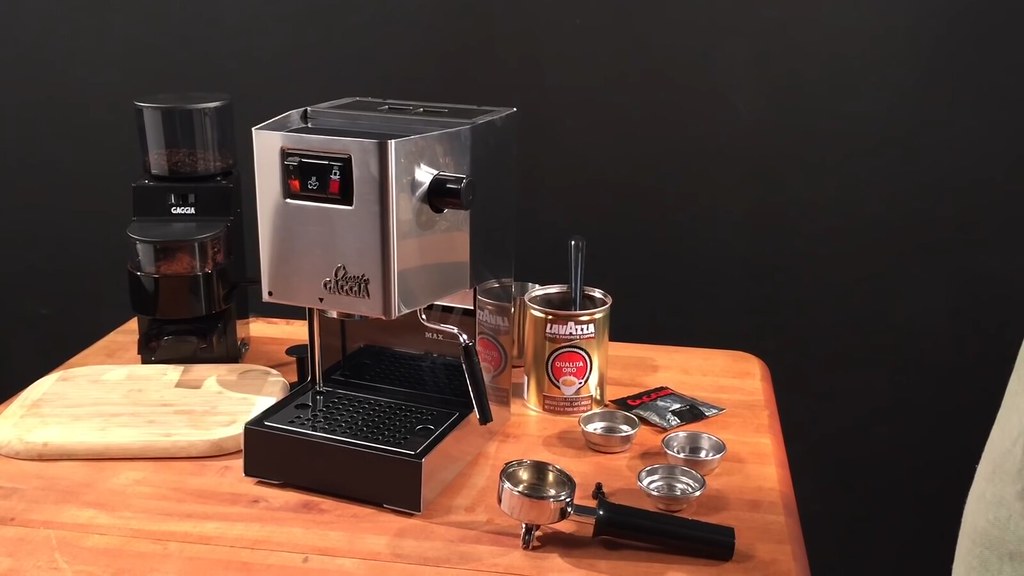
Photo: coffee-rank via Flickr, CC BY 2.0.
External descaling and opening the boiler are not the same job. The Gaggia Classic descaling guide covers the normal scale-removal path. The Gaggia service manual, by contrast, treats boiler disassembly as service work on a mains-powered appliance with hot and pressurized parts.
A useful order is:
- Identify the symptom.
- Confirm normal water supply and pump behavior.
- Separate scale from a blocked valve or thermostat problem.
- Use the documented maintenance procedure when the machine is still serviceable.
- Move to boiler inspection or replacement only when evidence points there.
This order matters because replacing the boiler will not fix a separate pump, solenoid, wiring, or thermostat fault. If the machine trips a breaker or shows an electrical fault, stop using the boiler decision tree and use the breaker-trip diagnosis instead.
Which boiler generation does your Gaggia Classic use?
Start with the machine label and the matching Gaggia manual or parts diagram. “Gaggia Classic” covers different generations, regions, voltages, and boiler revisions. The Gaggia Classic hub keeps the broader generation and platform context in one place.
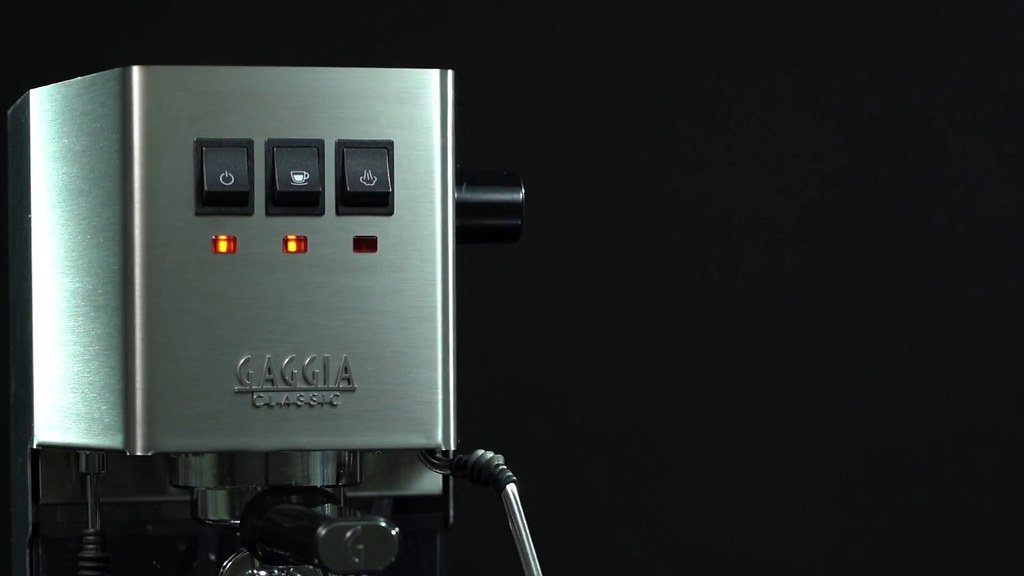
Photo: coffee-rank via Flickr, CC BY 2.0.
Gaggia’s September 2023 service manual for the 2019 Classic and Classic Evo Pro lists an aluminum boiler. The current Pro/Evo/E24 manuals page now provides a separate E24 user manual plus the service manual and current exploded parts diagram. The exploded diagram includes both coated aluminum and brass boiler entries.
| Machine / document | Boiler starting point to verify | What to do before ordering |
|---|---|---|
| Older Classic | Use the older Classic manual/parts diagram | Match the exact model and existing assembly |
| 2019 Classic Pro | Service manual lists aluminum boiler | Check model/region and current replacement listing |
| Classic Evo Pro | 2023 service manual lists aluminum boiler | Check whether you are replacing like-for-like or moving to the current brass option |
| Classic Pro E24 | Current platform uses brass boiler | Match current E24 documentation and replacement assembly |
Do not infer the correct boiler from case color, purchase year alone, or a forum photo. The model label and current parts documentation are stronger evidence.
Can the current brass boiler replace an older aluminum boiler?
Gaggia North America currently sells brass boiler assembly GA-642001010420 and lists it as compatible with the Gaggia Classic, Gaggia Classic Pro, and Gaggia Classic Evo Pro. The page describes it as the brass boiler for the Classic E24.
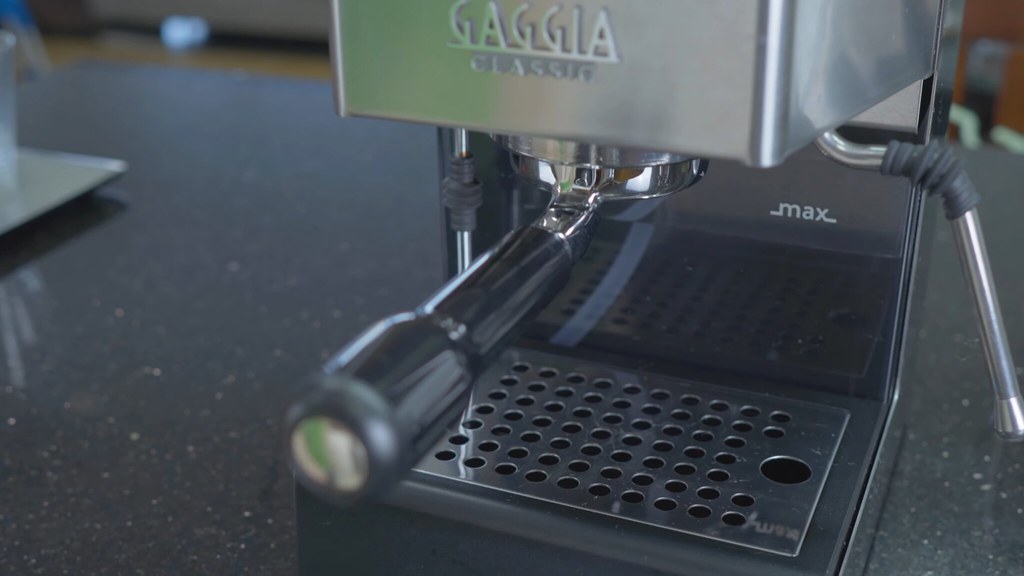
Photo: coffee-rank via Flickr, CC BY 2.0.
The same product page says boiler only and states that seals and hardware are sold separately. The current exploded parts diagram also shows brass and aluminum boiler lines within the Classic Evo/E24 parts family.
The video above is useful for seeing the current E24 platform and brass-boiler context. It is not a retrofit instruction for every older Classic.
Treat the official compatibility statement as the starting point, then confirm:
- the exact machine model and sales region;
- the replacement boiler assembly;
- the required seals and hardware;
- whether the rest of the group, steam, and solenoid interfaces are serviceable;
- any modifications attached to the boiler or thermostat locations.
Compatibility does not mean every older machine automatically needs the brass upgrade. If the existing boiler is healthy, replacement is still a repair/upgrade decision with labor and safety consequences.
What changes if your Gaggia Classic has a PID or other modification?
A modified Classic needs an extra documentation step before boiler work because sensors, wiring, brackets, or controls may no longer match the stock service layout. Use the Gaggia Classic modding guide to identify the wider modification path before treating stock service documentation as complete.
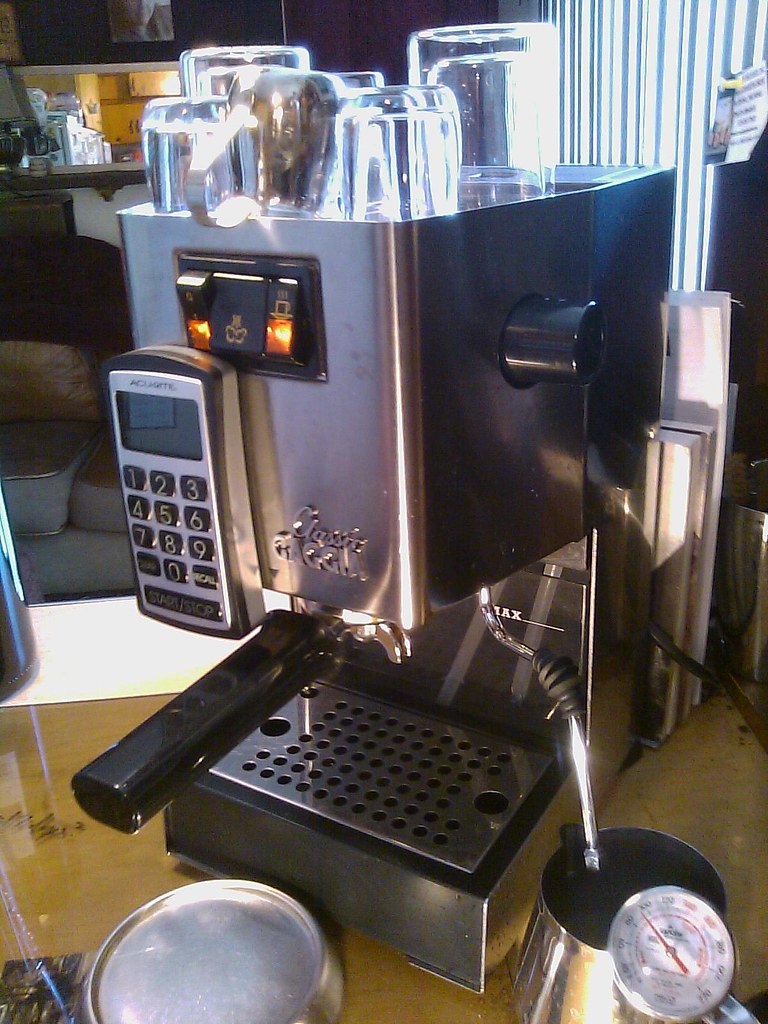
Photo: insidious_plots via Flickr, CC BY 2.0. The visible machine is modified; the photo is not a boiler-install guide.
The stock Gaggia service manual shows that boiler service interacts with the thermostats, steam faucet, solenoid valve, inlet connector, and group assembly. If a PID kit replaces a thermostat with a sensor, or another modification adds wiring near the boiler, the stock diagram no longer describes the whole installation.
Before service:
- Photograph the current installation.
- Identify the exact PID, Gaggiuino, or other kit and revision.
- Keep its current removal and reinstallation instructions with the Gaggia service documentation.
- Do not rely on wire colors from another year or country.
- Do not assume a stock-machine teardown video covers added sensors or wiring.
This article does not publish a universal modified-machine boiler procedure. The correct path depends on both the Gaggia revision and the installed modification.
What should be checked before the machine returns to normal use?
A boiler replacement is not complete when the machine merely powers on or heats. The repaired machine has to be safe, leak-free, and operating normally under the correct service procedure.

Photo: insidious_plots via Flickr, CC BY 2.0. Normal-use context only; it does not certify a repair.
Gaggia’s service manual states that maintenance and repair should be carried out by qualified persons trained to work with electrical devices. It also warns about hot and pressurized parts, requires disconnecting mains power before repair, and recommends electrical safety testing before and after repair.
For that reason, HomeBaristaMods does not reduce post-boiler service to “turn it on and check for water.” A qualified repair needs to verify the reassembled water path, seals, heating/control behavior, protective earth and electrical safety before the machine goes back into normal service.
If you are not equipped to perform the manufacturer’s service checks, use a qualified espresso-machine technician. This is especially important after a boiler job on a modified machine.
FAQ
Does black material from an Evo Pro automatically mean I need a new boiler?
No. Black particles are a symptom, not a complete diagnosis. Identify the machine revision and source path first. The dedicated black-flakes article separates coating, scale, coffee debris, and other possibilities before a replacement decision.
Can I put the E24 brass boiler in a Gaggia Classic Pro or Evo Pro?
Gaggia North America’s current brass-boiler listing says the assembly is compatible with the Gaggia Classic, Classic Pro, and Classic Evo Pro. Confirm the exact model/region and the required seals/hardware before ordering.
Should I replace the boiler just because my group flow is weak?
No. Weak flow can come from the pump, scale, inlet path, or three-way solenoid. Diagnose the water path first; a boiler replacement is not a generic low-flow fix.
Are seals included with the current brass boiler?
The current Gaggia North America listing says the boiler is sold by itself and that seals and hardware are sold separately. Use the current parts diagram for the exact machine before ordering the rest of the service parts.
References
- Gaggia North America — 2024 brass boiler assembly compatibility and boiler-only scope
- Gaggia North America — Classic Pro / Evo / E24 manuals, service manual and parts diagram
- Gaggia — Classic 2019 / Evo Pro service manual, Rev. 04
- Whole Latte Love — Classic Pro boiler cleaning and replacement support
- ElectroKev — documented 2005 Gaggia Classic boiler replacement case
