

For a ready-to-drink cold brew, combine 80 g of medium-coarse coffee with 1,000 g of cool water. Cover the container, refrigerate it for 12–14 hours, then filter. Pour it over ice without another dilution step.
If you want concentrate, use a separate recipe: start with 100 g of coffee and 500 g of water. After filtering, mix one part concentrate with one part water or milk in the glass, taste it, and adjust the serving.
A cold brew recipe you can repeat
This first batch makes ready-to-drink cold brew. You need a covered jar or pitcher, a scale, a grinder if you use whole beans, and a fine mesh strainer or coffee filter.
| Batch size | Coffee | Water | Starting steep |
|---|---|---|---|
| Small | 40 g | 500 g | 12–14 hours in the refrigerator |
| Medium | 60 g | 750 g | 12–14 hours in the refrigerator |
| Large | 80 g | 1,000 g | 12–14 hours in the refrigerator |

Cold brew ratio: ready-to-drink or concentrate?
A ratio describes coffee mass compared with water mass. At 1:12.5, every gram of coffee receives 12.5 g of water. Weighing both ingredients avoids the large differences caused by scoops, bean size and roast density.
The National Coffee Association lists 1:4 to 1:5 for cold brew concentrate. That is much stronger than the ready-to-drink recipe above. Calling both recipes “cold brew” without naming the intended drink is why online instructions can appear to disagree.
Start with ready-to-drink cold brew if you want to pour from the pitcher without measuring each glass. Choose concentrate if refrigerator space matters, several people prefer different strengths, or you want to add milk without making the drink too weak.
How to make cold brew coffee step by step
- Weigh the coffee and water. For the medium batch, use 60 g coffee and 750 g water.
- Grind medium-coarse. The grounds should be larger than a typical drip grind but more even than large chunks.
- Add water gradually. Pour enough to wet the coffee, stir gently, then add the rest. Break up dry pockets without vigorous shaking.
- Cover and refrigerate. Start the timer after the grounds are wet. Steep for 12–14 hours.
- Filter. Pour through a fine mesh strainer. Use a paper filter for a cleaner cup if sediment remains.
- Serve or store. Pour the ready-to-drink batch over ice, or keep it covered in the refrigerator.

The right grind size and steep time
Start between medium-coarse and coarse. Fine coffee exposes more surface area, produces more small particles and can make filtering slow. Very coarse coffee may taste thin at the same ratio and steep time.

Cold brew time depends on grind, ratio, temperature and equipment. The National Coffee Association gives about 12 hours as a typical contact time. A Steampunk Coffee recipe uses 13–14 hours in the refrigerator, while the Hario FIC-70 manual uses 8 hours with its own 55 g, medium-fine dark-roast recipe.
Those recipes can all work because the other controls differ. For this jar method, keep the first test at 12–14 hours. If the cup is weak, check the ratio before leaving every future batch for a full day.

Weigh this batch before timing it.
If you are choosing a grinder for both espresso and cold brew, the conical vs flat burr guide explains the larger decision. Burr shape alone does not supply a universal cold brew setting, so record the actual setting on your grinder.
How to filter and store cold brew
Pour the brew through a fine mesh strainer without squeezing the grounds. Let gravity do the work. If the liquid is gritty or cloudy, run it through a rinsed paper coffee filter. The National Coffee Association also recommends a second strain when needed.
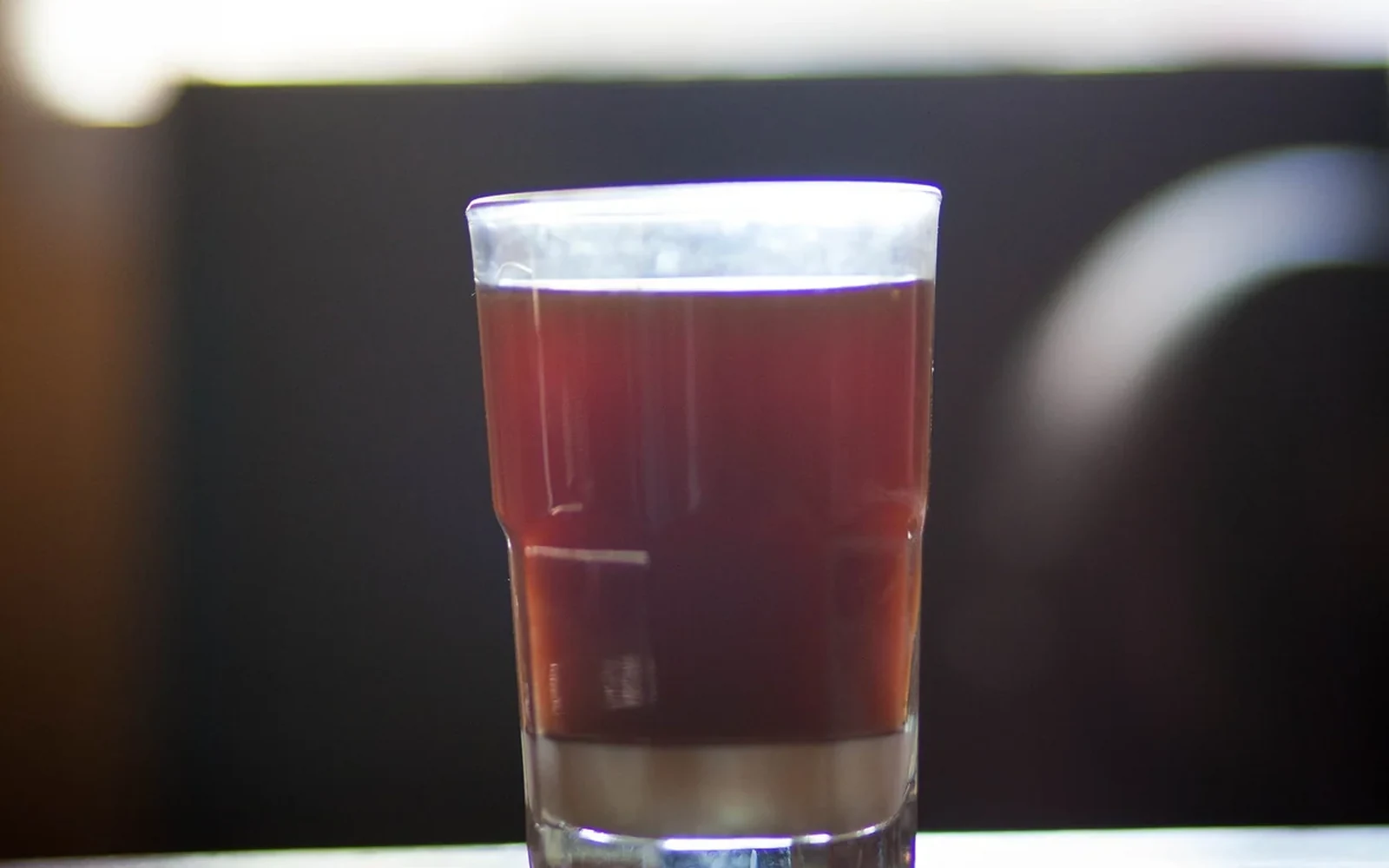
Transfer the coffee to a clean covered container and refrigerate it promptly. For a cautious home baseline, make a batch you can finish within 2–3 days. Hario gives that window for its FIC-70 recipe and warns that quality changes with time even under refrigeration.
If you use a French press as the steeping vessel, leave the plunger raised during brewing and press slowly after the steep. A paper filter can still clean up the cup. For hot immersion coffee, use the separate French press ratio guide; the ratios here are for cold brew.
How to serve ready-to-drink cold brew
Pour the 1:12.5 batch over ice and taste it before adding water. If you prefer milk, begin with a small amount so you can judge whether the brewed coffee already has the strength you want.

Ice changes the drink as it melts. Use fewer cubes for a slower change, or freeze some finished cold brew into cubes when ordinary ice makes the last half of the glass too weak.
How to dilute cold brew concentrate
Start with equal parts concentrate and water or milk. For one glass, combine 100 g concentrate with 100 g water, then add ice. This 1:1 serving is a practical first test, not a rule that changes the 1:5 brewing ratio.
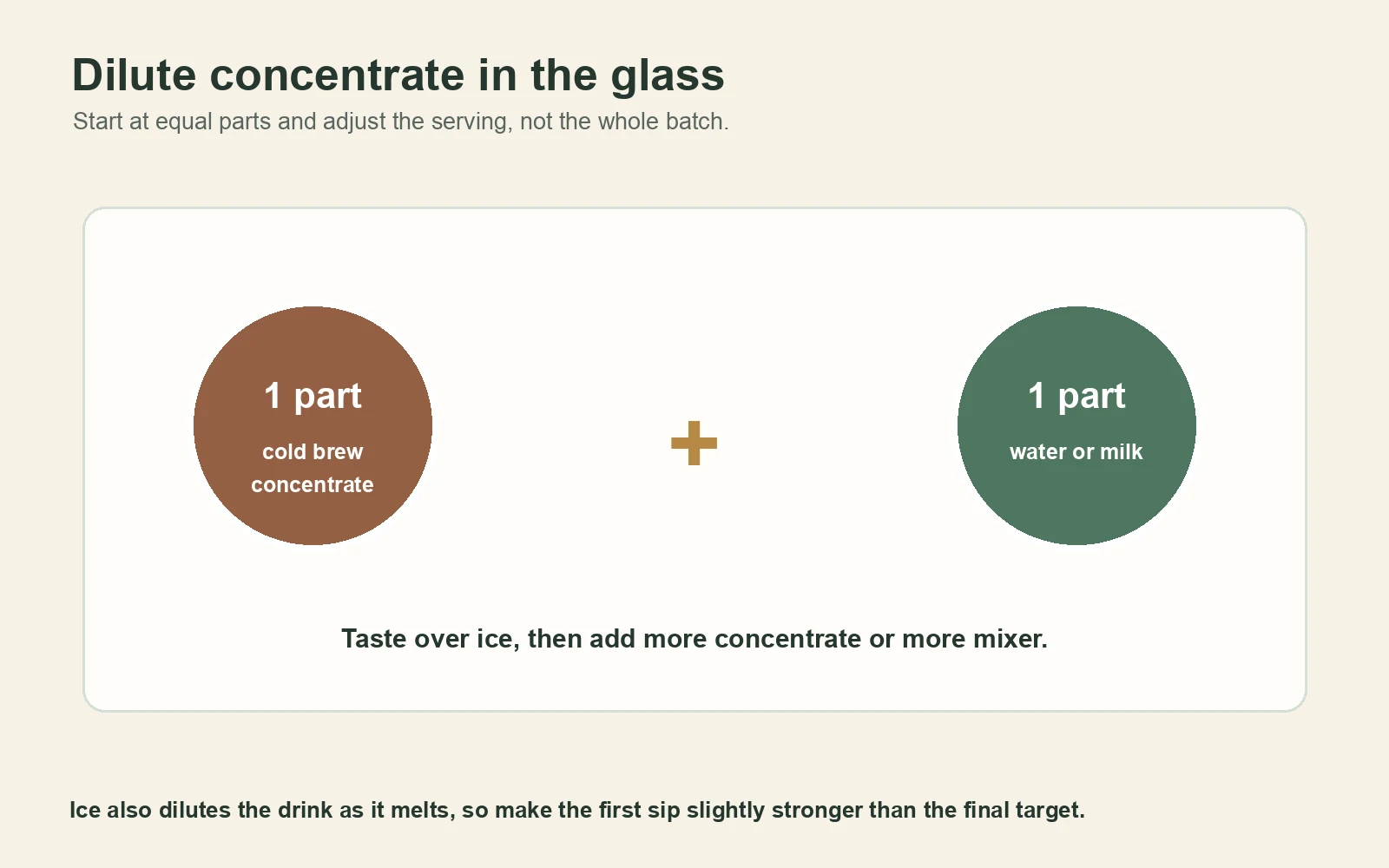
If the drink is too strong, add water or milk in small amounts. If it is too light, add more concentrate. This keeps the stored batch useful for black coffee, milk drinks and different glass sizes.
Causes of weak, bitter or muddy cold brew
Write the ratio, grind setting, steep time and refrigerator or room-temperature method on the container. Without those notes, the next change becomes a guess.

- Weak or hollow: confirm that you used the intended ratio. Next time, add more coffee, grind slightly finer, or extend the steep by one or two hours. Choose one change.
- Bitter or drying: grind coarser or shorten the steep. If the batch sat at room temperature, run the next test in the refrigerator before changing several controls.
- Muddy or gritty: use a more even, coarser grind, pour gently, and finish with a paper filter. Do not press or squeeze the wet grounds into the drink.
- Fine but too strong: check whether you brewed concentrate. Dilute one serving before changing the brewing recipe.
Water quality also matters. Use clean water you would drink on its own. The brewing and water hub covers water choices without turning the first cold brew batch into a chemistry project.
Frequently asked questions
What is the best coffee-to-water ratio for cold brew?
A useful ready-to-drink cold brew ratio is 1:12.5 by mass, such as 80 g coffee to 1,000 g water. For cold brew concentrate, start near 1:5, then dilute each serving. Keep the two recipes separate because concentrate is intentionally too strong to drink at the brewing ratio.
How long should cold brew steep in the refrigerator?
Steep cold brew in the refrigerator for 12–14 hours as a first test with medium-coarse coffee and a 1:12.5 ratio. Equipment-specific recipes can differ; Hario uses eight hours for its FIC-70 bottle. Keep the ratio and grind fixed when comparing a shorter or longer steep.
Can I use regular ground coffee for cold brew?
You can use regular ground coffee for cold brew, but a typical medium preground coffee may filter slowly and leave more sediment than a medium-coarse grind. Use a paper filter after the first strain, keep the steep near 12 hours, and judge the next change from taste and clarity.
Do I need a cold brew coffee maker?
You do not need a cold brew coffee maker. A clean jar or covered pitcher, a scale and a fine mesh strainer can make the same basic immersion brew. A dedicated brewer combines the container and filter, which can make cleanup easier, but it does not replace the ratio and timer.
How do I dilute cold brew concentrate?
Dilute cold brew concentrate with equal parts concentrate and water or milk for the first glass. Taste it over ice, then add more concentrate for a stronger drink or more mixer for a lighter one. Adjust each serving so the remaining concentrate can work for several drink styles.
References
- National Coffee Association: cold brew method, concentrate ratio and typical contact time
- Hario FIC-70 manual: brewer-specific recipe and storage guidance
- Steampunk Coffee: one-cup refrigerator cold brew recipe
- CoffeeGeek: grind, steep-time and filtering observations
- Seattle Coffee Gear: five home cold brew methods
Featured photo: Bex Walton, CC BY 2.0.

Label the batch before changing the recipe.