

A latte usually has the most milk and the mildest coffee flavor. A cappuccino is smaller and carries more aerated foam. A flat white is usually small, glossy and coffee-forward, often with two espresso shots. These are useful café patterns, not worldwide rules.
If a menu gives no details, ask two questions: How many shots are in it, and what cup size do you use? Those answers tell you more than the drink name alone.
Latte vs cappuccino vs flat white at a glance
The clearest difference is the balance of espresso, liquid milk and foam. Cup size and shot count can change the result enough that two cafés may serve different drinks under the same name.
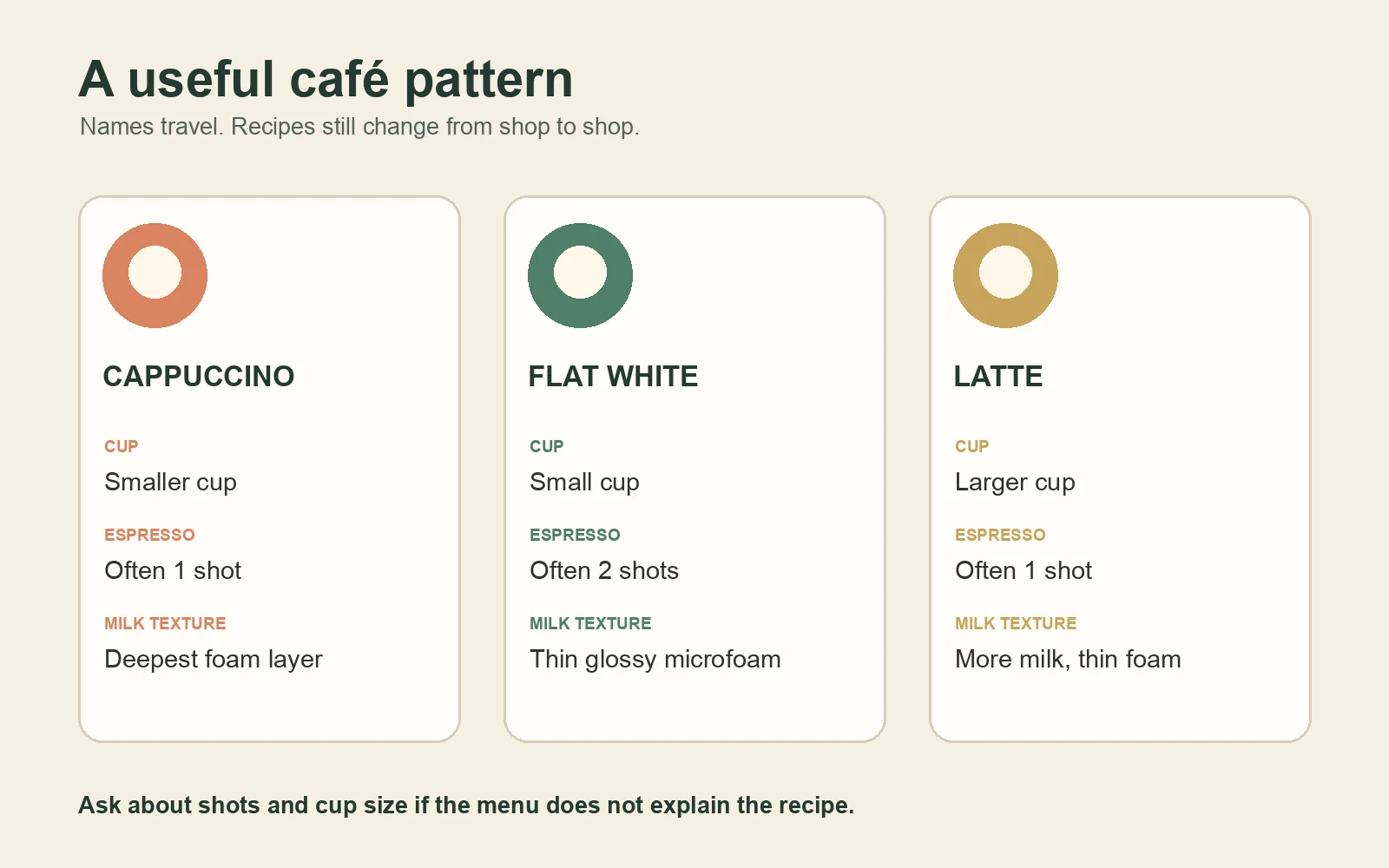
| Drink | Common cup pattern | Espresso pattern | Milk texture | What you notice first |
|---|---|---|---|---|
| Cappuccino | Small to medium | Often one shot, sometimes two | The most aeration and the deepest foam layer | A light, cushioned texture with clear espresso underneath |
| Flat white | Small, often cappuccino-size or smaller | Often two shots | Thin, glossy microfoam with little dry foam | More coffee flavor through a silky milk texture |
| Latte | Usually the largest | One or two shots | More liquid milk with a thin foam layer | A softer, milk-forward cup that lasts longer |
Why the recipe changes from one café to another
There is no single global recipe that every café follows. The shop chooses its espresso dose, cups and milk workflow. Regional habits also travel and change as chains and specialty cafés adapt them.
A Starbucks at Home comparison uses one espresso shot for a cappuccino and latte, two for a flat white, and 165 to 175 ml of warmed milk. It changes the frothing time for each drink. European Coffee Trip documents another café pattern: a single-shot cappuccino in a 150 to 200 ml cup, a double-shot flat white in a cappuccino cup or smaller, and a single-shot latte around 300 ml.
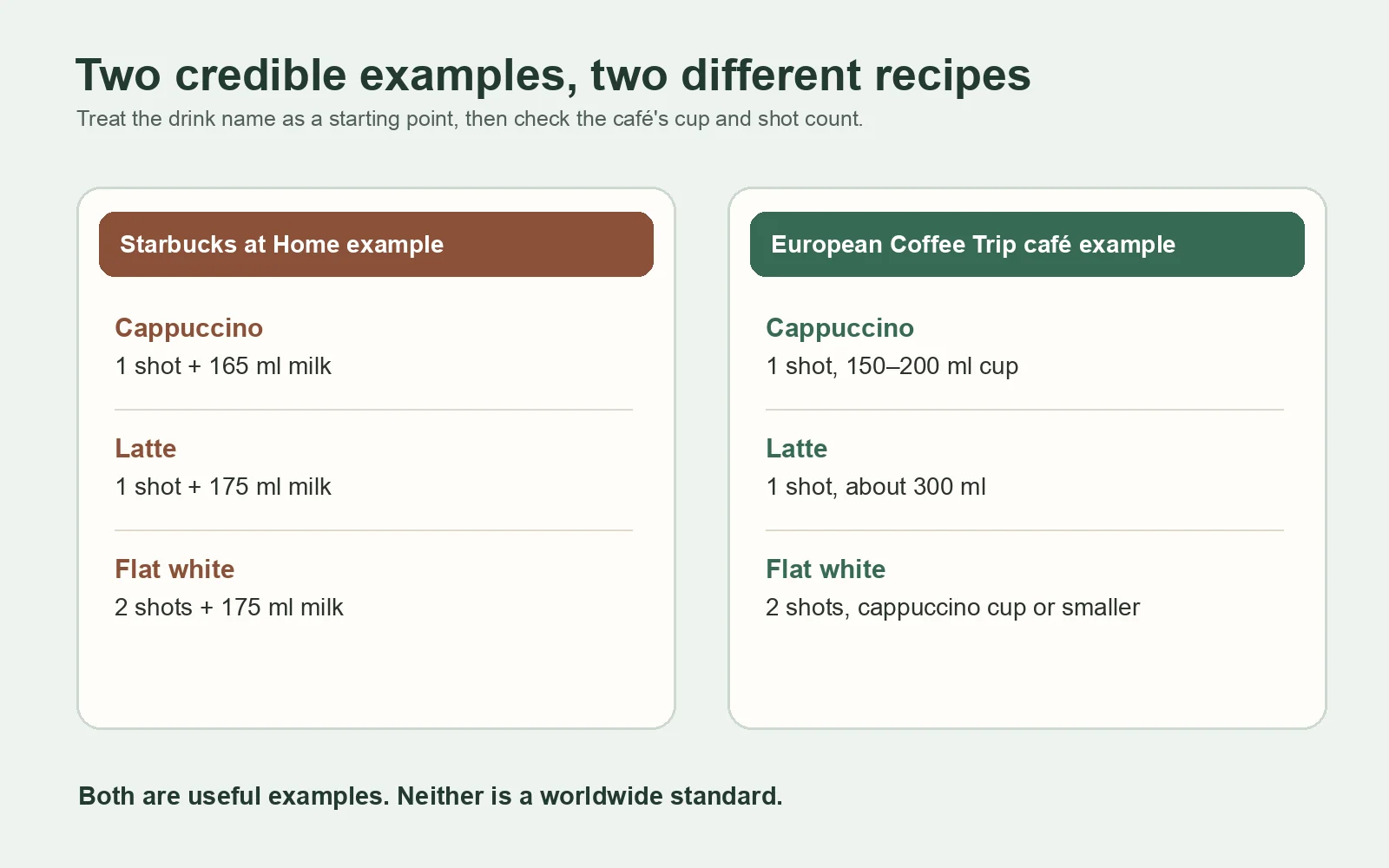

Ask about shots and cup size before ordering by name.
Cappuccino: the most aerated texture
A cappuccino uses espresso and steamed milk with more incorporated air than the other two drinks. The foam should feel fine and cohesive. Large soap-like bubbles or a stiff spoonful sitting on thin milk point to poor texturing, not a better cappuccino.
Because the cup is normally smaller than a latte, the espresso can remain clear even with a generous foam layer. Modern specialty cafés often pour integrated microfoam rather than building three sharply separated layers. A classic Italian or chain recipe may look different again.
Flat white: thin microfoam and a smaller cup
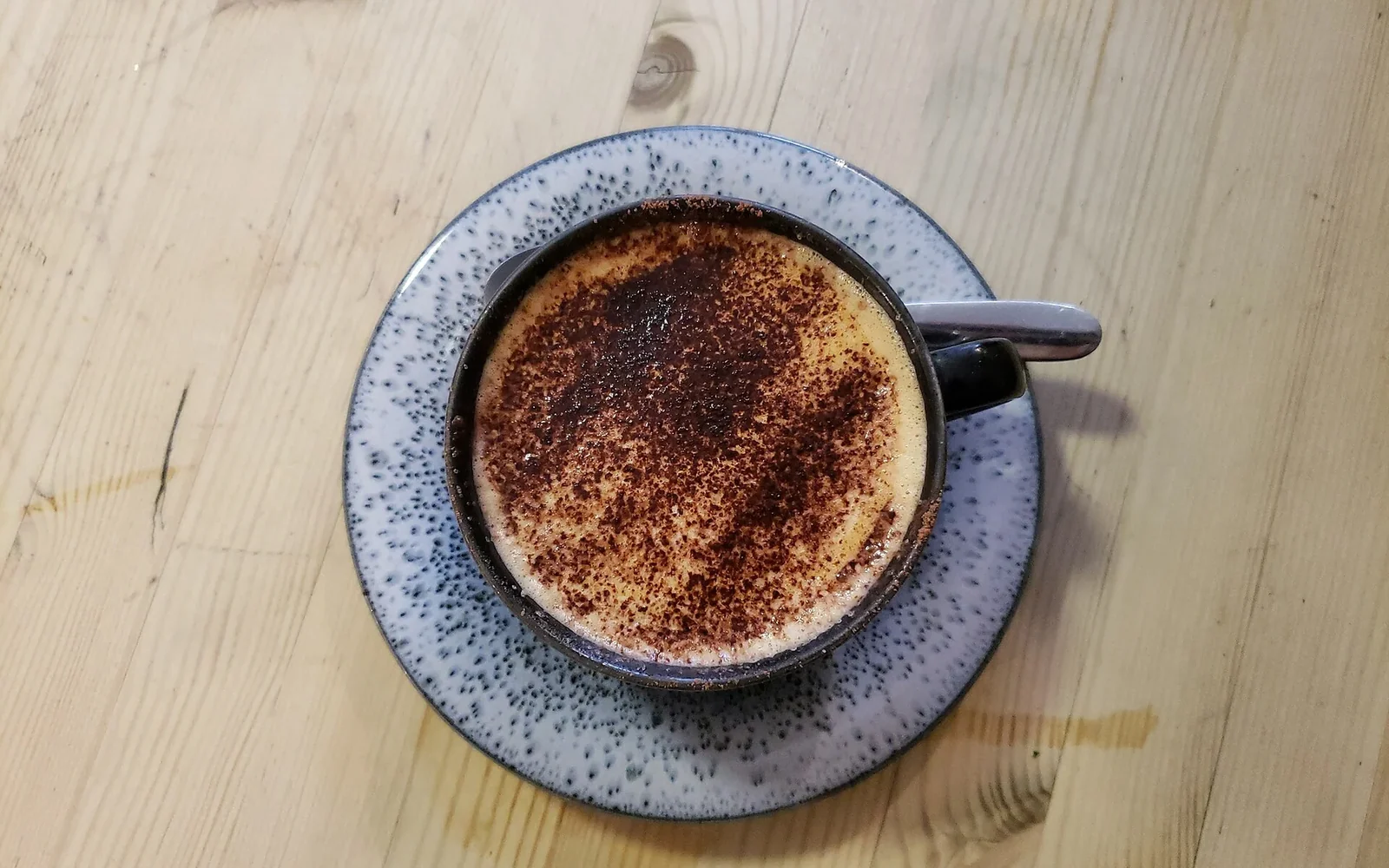
A flat white is usually served in a small cup with a thin layer of glossy microfoam. Many cafés use two espresso shots, which gives it more coffee flavor than a single-shot latte with more milk. The surface looks flatter than a cappuccino, but the milk is still textured.
A flat white is not defined by latte art. A heart or dot can appear on any well-textured milk drink. The useful checks are a small cup, a low-foam pour and the café's espresso dose.

Latte: more milk and a longer drink
A latte uses more liquid milk and a larger cup. The foam is thinner than a cappuccino's, though the milk should still be smooth and glossy. More milk softens the espresso and makes the drink feel sweeter without adding sugar because milk sweetness becomes more prominent.
Do not assume every latte contains less espresso than a flat white. Some cafés put two shots in both. In that case, the latte usually tastes milder because the larger cup contains more milk, while the caffeine can be similar.

Which drink is stronger, and which has more caffeine?
“Stronger” can mean two different things. Coffee intensity is how concentrated the espresso tastes after milk is added. Caffeine depends mainly on the espresso dose and shot count. Foam changes texture, not caffeine.

A typical double-shot flat white in a small cup will taste more coffee-forward than a single-shot latte. A two-shot latte may contain the same espresso as that flat white while tasting softer because it has more milk. A single-shot cappuccino may taste punchy because it is small, yet still contain less espresso than either two-shot drink.
How to make all three at home without guessing
Use a controlled comparison before chasing café labels. Pull the same espresso recipe for each trial. Steam a separate milk portion for every drink so you can change both milk volume and aeration without holding old foam in the pitcher.
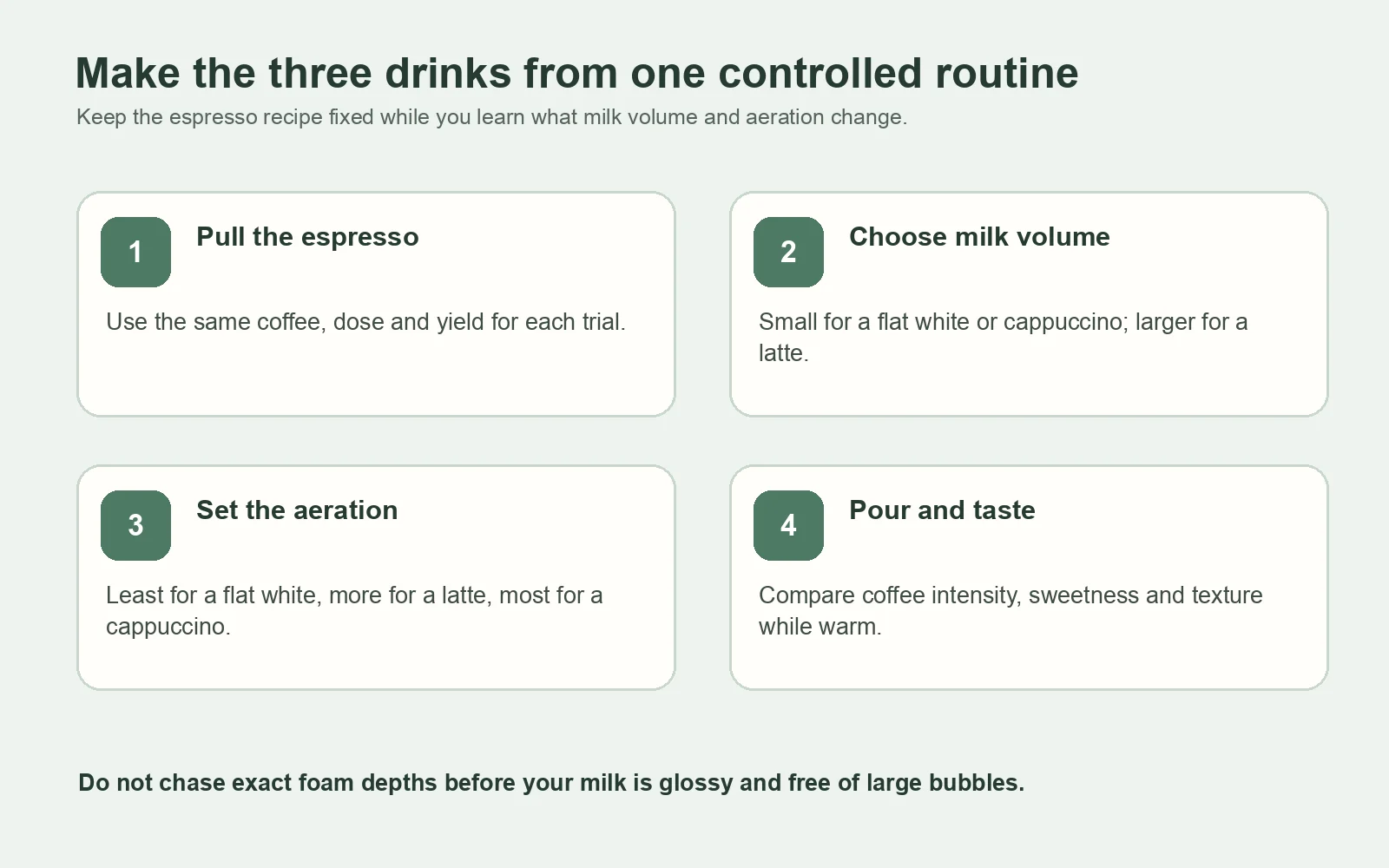
- Flat white: add the least air and keep the milk glossy. Pour into a small cup.
- Latte: add a little more air and use more milk in a larger cup.
- Cappuccino: add the most air while keeping the bubbles fine, then pour into a small or medium cup.
- Taste before changing the espresso: decide whether the difference comes from milk volume, texture or shot count.
If the milk turns dry or separates, fix the texture before comparing drinks. The guide to silky microfoam instead of dry foam covers steam-tip position, stretching and rolling. For plant milk, start with the separate oat-milk frothing guide because different formulations behave differently.
Which one should you choose?
- Choose a cappuccino when you want the lightest, most aerated texture in a smaller cup.
- Choose a flat white when you want silky milk, a compact drink and clear espresso flavor.
- Choose a latte when you want more milk, a longer drink and a gentler coffee flavor.
When the café's recipe does not match that pattern, the shot count and cup size settle the choice quickly. If you prefer espresso with water and no milk, compare an Americano with a long black.
Is there one official flat white, latte or cappuccino ratio?
No single recipe is used everywhere. That is not a mistake in your memory; the definitions genuinely vary.
Breville's current flat-white recipe describes a small drink built on espresso, mostly hot milk and a thin layer of microfoam. Its latte recipe uses a larger milk-forward format, while its cappuccino recipe puts more emphasis on a visible layer of velvety foam.
De'Longhi publishes a classic cappuccino description of roughly one-third espresso, one-third hot milk and one-third froth. But its flat-white FAQ describes a version made with hot milk and essentially no foam. Those two manufacturers are already enough to show why an internet chart should not be treated as an international law.

Do you need different steaming techniques for all three drinks?
The foundation is the same: start cold, add air near the surface, then move slightly deeper and create a vortex so the bubbles integrate. What changes is how much air you add before the roll phase.
- Flat white: stop stretching early. You want minimal expansion and very fine microfoam.
- Latte: add a little more air, but keep the texture fluid enough to pour smoothly.
- Cappuccino: allow more expansion, but still roll the milk so the foam remains fine and creamy rather than dry and spoon-like.
If your milk is already dry, bubbly or separating before you choose the drink, fix the steaming technique first with the silky microfoam troubleshooting guide.

Can you make all three with plant-based milk?
Yes, but the texture window can change. Oat, soy and almond products vary by formulation, and “barista” versions are often designed to foam more predictably. De'Longhi's current support guidance specifically includes oat, soy and almond among plant-based options for milk drinks.
Keep the product cold, avoid overheating it, and adjust the amount of air by what you see in the pitcher rather than assuming a dairy timing will transfer perfectly.
Frequently asked questions
Which is stronger: latte, cappuccino or flat white?
A flat white often tastes strongest because many cafés put two espresso shots in a small cup with less milk. A cappuccino can also taste intense because it is small. Check the recipe: a two-shot latte can contain the same espresso and caffeine as a two-shot flat white while tasting milder.
Which drink has the most milk?
A latte usually has the most milk because it is served in the largest cup. Flat whites and cappuccinos are commonly smaller. The exact amount changes by café, so compare the cup sizes on the menu rather than relying only on the drink names.
Is a flat white just a small latte?
No fixed rule separates every flat white from every latte, but the common pattern is useful. A flat white is smaller, uses thinner microfoam and often carries two espresso shots. A latte normally uses more milk in a larger cup and may use one or two shots.
Which is healthier: cappuccino or latte?
Neither name guarantees a healthier drink. Calories and nutrients depend on cup size, milk type, milk quantity, sweeteners and espresso dose. A smaller unsweetened cappuccino often contains less milk than a large latte, but the café's actual recipe gives the useful comparison.
Is a latte only espresso and milk?
A plain latte is espresso with steamed milk and a thin foam layer. Syrups, sauces and toppings make flavored versions, but they are additions rather than part of the basic drink. Shot count and milk volume still vary by café.
Can oat milk make all three drinks?
Yes. Oat milk can make a latte, cappuccino or flat white when it forms stable microfoam. The brand and formulation affect how much air it accepts and how quickly the foam separates. Use less aeration for a flat white and more for a cappuccino, then adjust from the result.
Why does my café's flat white look different from another café's?
Because drink definitions vary by café, country, equipment and house recipe. Even major manufacturers publish slightly different flat-white descriptions. Use the name as a style direction, not as a guaranteed international formula.
Does a cappuccino need dry foam?
No. Modern manufacturer guidance still describes good cappuccino foam as fine, creamy or velvety. More foam does not mean large, dry bubbles.
References
- Starbucks at Home: one brand's espresso, milk and frothing comparison
- European Coffee Trip: café demonstration of espresso and milk drinks
- La Marzocco Home: milk steaming position, timing and sensory cues
- Breville — Essential Flat White
- Breville — Essential Café Latte
- Breville — Essential Cappuccino
- Breville USA — How to make a flat white at home
- De'Longhi — How do I make a Cappuccino?
- De'Longhi — How do I make a flat white?

Pick the cup you want, then confirm the recipe.
 English
 Deutsch