

Your pitcher feels too hot to hold, but the latte is lukewarm. Did you stop steaming too soon, or did the cup cool everything down? Start by measuring the milk itself. Your hand cannot answer that question reliably.
For a dairy-milk latte, use about 60°C (140°F) as a first trial, then adjust within the guidance for your machine and your taste. Breville’s Barista Express manual recommends 60–65°C (140–149°F). Measure the milk in the pitcher, stop the steam before removing the wand, and check the finished drink separately.
How hot should milk be for a latte?
Start near 60°C (140°F) for dairy milk, and use your machine manual to set the upper end. The Breville Barista Express BES875 manual recommends 60–65°C. La Marzocco's Linea Mini guide suggests no more than 60°C when well-structured foam is the goal. These are maker-specific starting points, not competing laws of coffee.

If you prefer a hotter drink, change one thing at a time. Measure the milk at your usual stopping point, note how the drink tastes, then move the target slightly if your machine's guidance allows it. A cup that is too cold can make a correctly steamed pitcher seem wrong. Check that before heating the milk further.
Temperature also changes texture. La Marzocco warns that foam above 65°C (150°F) can lose structure more quickly. That is a quality warning in its guide, not a claim that every drink becomes unsafe at a single number. A drink can be hot enough for you while still below that point.
How do you measure milk while steaming?
Use a clean milk thermometer with its sensing tip in the milk, away from the side and bottom of the metal pitcher. Read it while the milk is moving. If the display reacts slowly, compare its reading immediately after stopping with the reading you saw just before stopping. Use the same thermometer and fill level for several drinks.
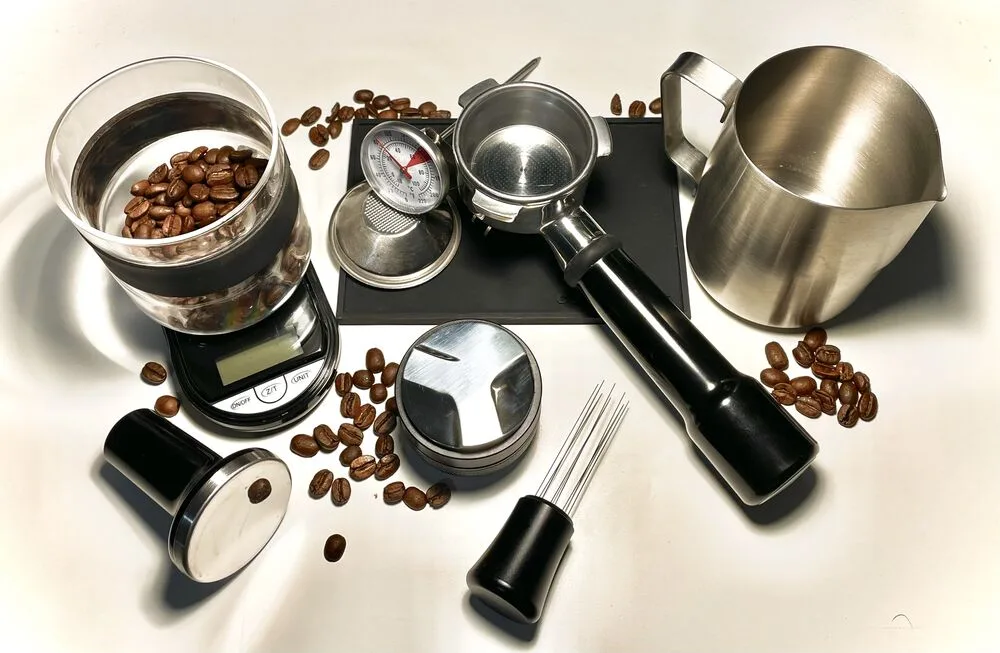
Touch is useful after you calibrate it. It is not the calibration. Stainless-steel thickness, where you hold the pitcher, and your sensitivity to heat all change what “too hot to hold” means. In one espresso-owner discussion, people describe getting more consistent milk after switching from hand feel to a thermometer. Their results are personal reports, not proof of a universal hand-temperature rule.
A thermometer also cannot tell you whether the milk has fine microfoam. Look at the surface and how the milk pours. The temperature reading helps you repeat the heating part of the process; the texture needs a separate check.

Measure the milk once. Then teach your hand what that temperature feels like.
When should you add air, heat, and stop?
Start with cold milk and the amount recommended for your pitcher and machine. Purge the wand according to your manual. Introduce air while the milk is still cool, then keep the surface moving as the milk heats. Once the texture is there, watch the thermometer rather than adding more air. Turn off steam before lifting the wand out.
For the Barista Express, Breville describes a vortex, a brief air-introduction phase, then a submerged-tip phase that keeps the milk moving. The manual says to stop the steam before withdrawing the wand, wipe and purge it, tap out larger bubbles, swirl, and pour. That sequence gives you more useful checkpoints than timing an arbitrary number of seconds. A small home machine and a commercial wand will not heat the same amount of milk at the same rate.
Use the Breville milk-texturing demonstration if you want to see the wand position and spinning milk. It demonstrates a Barista Express, so follow your own machine's steam controls if they differ.
Why does a correctly steamed pitcher make a lukewarm latte?
Check the finished drink before changing your milk target. A cool cup, cooler espresso, a long wait before pouring, and the drink's milk-to-espresso ratio can all lower the temperature you experience. Breville's troubleshooting table names an unheated cup and insufficiently heated milk as separate causes of cold coffee.

Try a controlled repeat. Keep the milk volume and measured stopping temperature the same. Warm the cup with hot water, empty and dry it, then pour as soon as the milk is ready. If that cup tastes warmer, the cup was part of the problem. If it still tastes cool, check whether the espresso sat for a long time or whether the milk measurement was taken correctly. One home-barista thermometer discussion raises the same cold-cup issue. Treat it as a useful test idea, not a measured effect size.
| What you notice | Check first | Next drink |
|---|---|---|
| Pitcher feels hot; thermometer shows milk below your target | Hand feel is stopping you early | Use the thermometer and record the milk temperature at stop |
| Milk reaches your target; drink cools quickly | Cold cup or serving delay | Warm the cup and pour promptly, without changing the milk target |
| Milk gets very hot but foam thins or separates | More heat is working against texture | Stop at a lower temperature and compare the pour |
| Temperature is repeatable; foam is coarse | Air-introduction and wand position | Keep the same temperature and adjust the texturing phase |
What does overheated milk look or taste like?
Look for milk that tastes less pleasant to you, loses its smooth flow, or develops foam that breaks down quickly. These observations are a reason to lower your stopping temperature on the next drink. They are not a way to infer an exact temperature after the fact. Measure before diagnosing the cause.
La Marzocco notes weaker foam structure as heat rises above 65°C in its Linea Mini guidance. Your milk, pitcher and drink may behave differently. If the thermometer shows a high value but the drink still seems cool, revisit the cup and espresso rather than pushing the milk hotter. If the reading looks implausible, check the thermometer's placement and instructions.
If temperature is stable but your milk still looks like a layer of stiff bubbles, read our microfoam troubleshooting guide. Air and temperature are related, but turning up the heat is not a repair for a wand position that adds too much air.
Should you use the same temperature for oat or other plant milk?
Do not transfer the dairy-milk target without checking the drink and the carton. Plant-based products vary by formulation. Breville's cappuccino recipe advises staying below 55°C (130°F) for non-dairy milk because it can separate or curdle. That is Breville's recipe advice, not a tested limit for every oat, soy or almond product.
Start with the maker's instructions for your milk and machine. Test a small amount. Keep the temperature and milk brand in your notes so you can tell whether a better pour came from a lower stopping point or from a different carton. If the texture collapses despite a sensible temperature, the formula may be part of the problem. Changing the steam setting cannot make every plant milk behave like dairy.
A short routine for your next latte
- Choose one milk and one pitcher fill level. Start with cold milk.
- Warm the serving cup. Pull the espresso when you are ready to make the drink.
- Purge the wand, then add air early and keep the milk moving as it heats.
- Read the milk thermometer. For a dairy first trial, aim near 60°C unless your machine manual says otherwise.
- Turn off steam before removing the wand. Wipe and purge it as your manual directs.
- Swirl and pour promptly. Taste the finished drink, then write down the milk temperature and one thing to change next time.

Want to decide whether this milk suits a latte, cappuccino or flat white? Compare the milk and foam amounts in our drink-style guide. Keep the temperature test separate from that choice.

Good milk, warm cup, no race against the clock.
Frequently asked questions
Is 65°C the best milk temperature for every latte?
No. Breville's Barista Express manual recommends 60–65°C for milk on that machine. La Marzocco's Linea Mini guide suggests no more than 60°C when well-structured foam is the priority. Use a measured starting point, your equipment guidance and the taste of your finished drink.
Can I steam milk without a thermometer?
Yes, but first measure a few drinks if you want a reliable hand-feel reference. Pitcher thickness and personal heat sensitivity vary. A thermometer helps you separate underheated milk from a cold serving cup. Once your routine repeats well, you can decide whether to keep using it.
Why is my pitcher too hot to hold before the milk tastes hot enough?
The outside of a metal pitcher is not the milk temperature. Measure the liquid away from the pitcher wall. If the milk is at the target you chose but the finished latte still feels cool, warm the cup and shorten the delay before pouring before raising the milk temperature.
Does a hotter milk target fix large bubbles?
No. Large bubbles usually call for a change in the air-introduction phase or wand position. Hold the milk temperature steady while you adjust texture. A hotter finish can make the foam less stable, as La Marzocco's milk-steaming guidance explains.
Sources
- Breville Barista Express BES875 instruction manual, milk texturing and cold-coffee troubleshooting.
- La Marzocco, steaming milk on the Linea Mini, temperature and foam guidance.
- Breville cappuccino recipe, dairy and non-dairy texturing notes.
- Espresso owners discussing thermometer use, first-person experience, not a product specification.
- Espresso owners discussing cold cups and milk temperature, first-person experience.