
Pour-over and automatic drip coffee use the same basic idea: hot water passes through ground coffee and a filter. Pour-over gives you direct control over water delivery. An automatic drip brewer runs a programmed cycle and can handle a larger batch with less attention.
Choose pour-over if you enjoy making one or two cups and want to tune the pour. Choose automatic drip if several people need coffee or your morning works better with a start button. Either method can make a sweet, balanced cup. Coffee, water, grind, ratio and execution matter more than the label on the brewer.
Pour-over vs drip coffee at a glance
| Buyer check | Pour-over | Automatic drip |
|---|---|---|
| Best fit | One or two cups and a hands-on routine | Several cups and a low-attention morning |
| Water delivery | You control each pour | The brewer controls the cycle |
| Repeatability | Depends on keeping your pouring steady | Usually easier once dose, water and grind are fixed |
| Batch size | Usually a smaller brew | Often designed for a carafe |
| Equipment | Dripper, filters, kettle and a scale | Brewer, matching filters and a scale |
| Adjustment | Grind, temperature, pour rate and agitation | Grind, ratio, basket setup and machine settings when available |
How pour-over and automatic drip coffee work
Both methods are filter brewing. Water moves through a bed of coffee, carries soluble material into the cup or carafe, and leaves most particles behind in the filter.
With pour-over, you heat the water and decide when, where and how quickly it reaches the grounds. With an automatic drip brewer, the machine heats and distributes the water. The basket shape, showerhead and programmed flow determine how the bed is wetted.

A programmed cycle is not automatically even, and a careful hand pour is not automatically even either. Check the spent coffee bed, drawdown and finished taste before assigning the result to the brewer type.
Does pour-over taste better than drip coffee?
Pour-over does not guarantee better coffee. It can make a clear, precise cup when the grinder, filter, water and pouring method work together. The same manual control can also create dry pockets, uneven flow or a different brew every morning.
A well-designed automatic brewer can deliver water consistently and repeat the same cycle. A weak machine may run too cool, wet the bed unevenly or move through the basket too quickly. The model and recipe matter, so the word drip cannot tell you how the coffee will taste.
A 2020 controlled drip-coffee study tested brews at 87°C, 90°C and 93°C. When brew strength and extraction were matched, trained tasters found little sensory effect from the three temperatures. The study did not compare pour-over with automatic drip. It does show why one isolated variable, or one brewer label, cannot predict the cup without the rest of the recipe.

If your coffee tastes thin, harsh or flat, keep the dose and water amount fixed before making one adjustment. Our guides to coffee water temperature and burr grinder differences cover two variables that affect both methods.
Control and repeatability
Pour-over lets you change the bloom, pour height, pour rate, number of pours and agitation. Those controls are useful when you change one at a time and write down the result. Changing several of them by feel makes it hard to repeat a good cup.
Automatic drip removes most pouring decisions. Once you settle on the coffee dose, water amount, grind and filter, pressing the same button can give you a cleaner comparison from day to day. Some brewers add batch-size or bloom settings, while basic models run one fixed cycle.

If your pour pattern changes every morning, control has become another source of variation. Lock the recipe before deciding which brewer tastes better.
Time, attention and batch size
Pour-over asks you to stay near the dripper. You rinse or seat the filter, add coffee, pour the bloom and continue the brew. The routine can be calm and enjoyable, but it still occupies your hands.
An automatic brewer shifts most of that attention to setup. Add water, coffee and the correct filter, then start the cycle. That makes it practical when breakfast, work or several cups need to happen together.
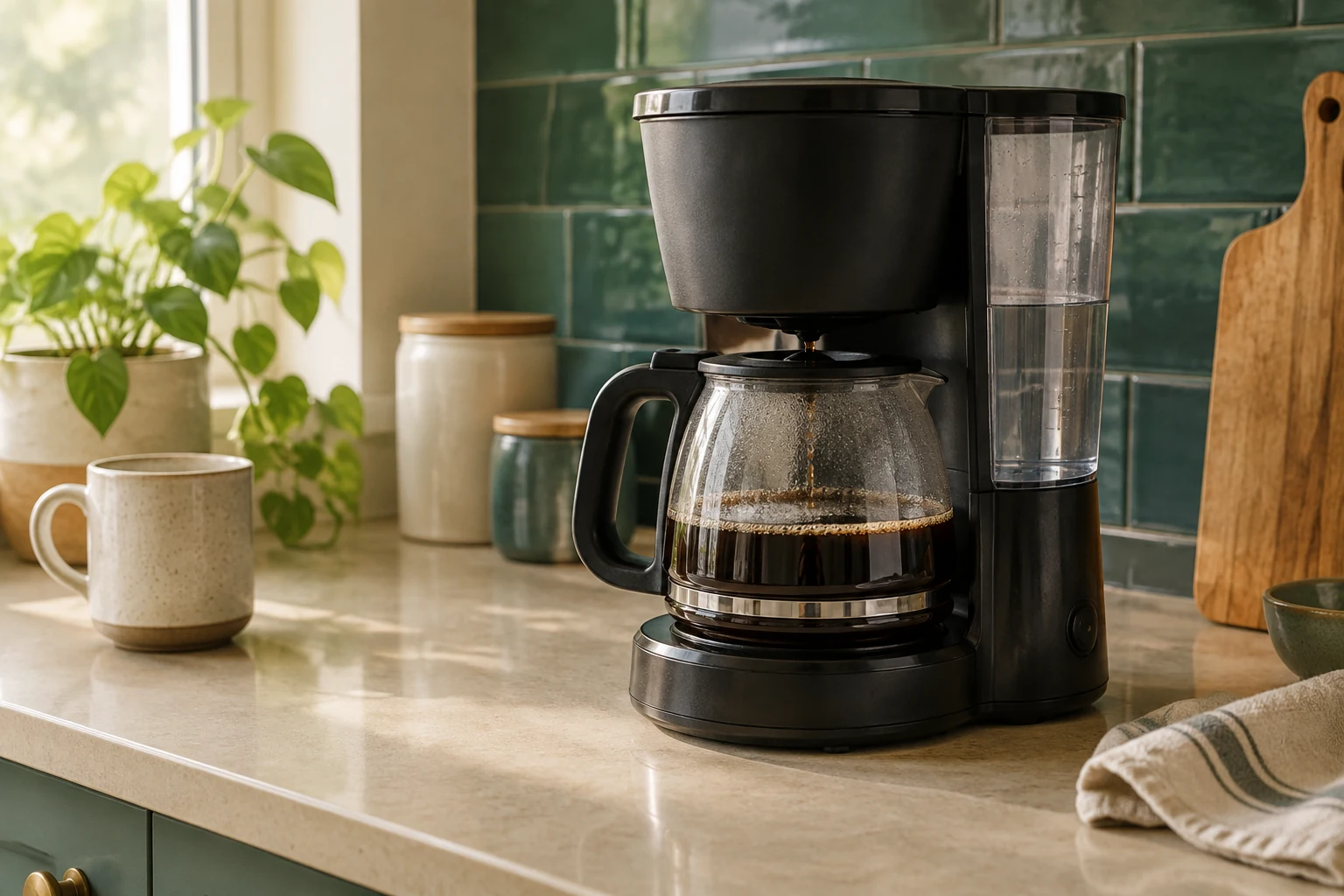
Capacity varies by brewer. Read the reservoir and basket limits instead of treating a printed cup count as a standard serving size. If you normally make one mug, a large machine may be more cleanup than you need. If three people want coffee at once, a single-cup dripper becomes a queue.
Equipment and ongoing cost
A basic pour-over setup can start with a dripper, compatible papers and an ordinary kettle. A gooseneck kettle makes slow, directed pouring easier, but it is not a requirement for trying the method. A scale helps you repeat the coffee and water amounts.

An automatic drip brewer puts the heater, water delivery and carafe into one appliance. Entry prices vary, and a brewer that handles temperature and wetting well may cost more than a simple machine. Both methods still need coffee, filters when the brewer uses paper, a grinder and cleaning.
Check filter availability before buying. A common paper format is easier to replace than a proprietary size that only one retailer stocks. The coffee filter size guide explains how to match numbered cone, V60, CHEMEX, AeroPress and basket papers.

Whichever brewer you choose, weigh the coffee and water for a week. Repeatable inputs reveal whether the machine or the technique needs attention.
Which coffee method should you choose?
Choose pour-over when the brewing process is part of the pleasure. It suits someone who makes a small amount, enjoys tasting adjustments and has time to stay with the dripper.
Choose automatic drip when the routine must work before you are fully awake. It suits a household batch, a shared office pot or anyone who wants to prepare the basket and let the machine finish the cycle.
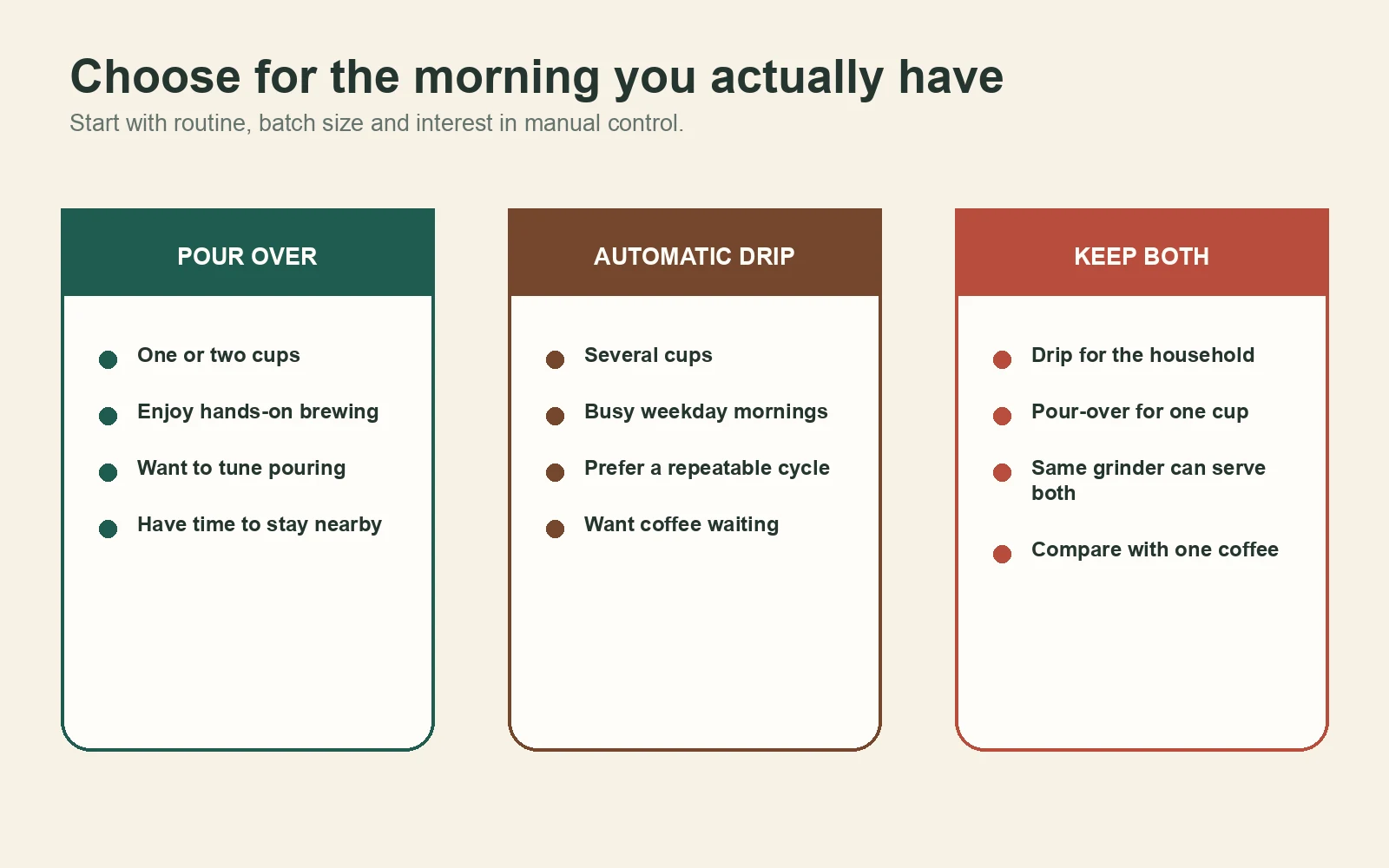
If you already own a drip machine, try improving the coffee before replacing it. Use fresh coffee, the correct filter, a measured ratio and a grind that does not stall or race through the basket. If you already own a dripper, improve repeatability before adding more pouring stages.
How to compare both brewers fairly
- Use one coffee. Brew both batches from the same bag on the same day.
- Match the coffee-to-water ratio. Weigh both amounts. Use a batch size that each brewer can handle comfortably.
- Start with the same grind. Adjust only if one brewer drains far too quickly or slowly for its design.
- Keep water comparable. Use the same water source and preheat the manual dripper if its recipe calls for it.
- Taste at a similar temperature. Compare sweetness, acidity, bitterness, dryness and body after both cups cool enough to taste clearly.

Do not force identical brew times. The two brewers may use different basket shapes and flow patterns. If one cup is clearly better, repeat the winning recipe once. One excellent or poor brew can still be an execution error.
If the pour-over cup is uneven, review the coffee bloom guide and simplify the pouring pattern. If the automatic cup is weak across repeated batches, inspect the spray pattern, basket fit, water amount and grind before assuming that all drip machines behave the same way.
Frequently asked questions
Is pour-over coffee stronger than drip coffee?
Pour-over coffee is not automatically stronger than automatic drip coffee. Strength depends mainly on the coffee-to-water ratio and how much material the brew extracts. Either method can produce a concentrated or light cup. Weigh the dose and finished water amount before comparing strength by taste.
Does pour-over coffee have more caffeine?
Pour-over coffee does not always contain more caffeine than automatic drip coffee. Caffeine in the serving depends on the coffee dose, bean, extraction and serving size. A large carafe serving can contain more caffeine than a small pour-over even when the smaller cup tastes stronger.
Can an automatic drip coffee maker make specialty coffee?
An automatic drip coffee maker can make excellent specialty coffee when it heats and distributes water well and the recipe suits its basket. Use fresh coffee, a measured ratio, the correct filter and an appropriate grind. A machine with poor wetting or temperature control can limit the result.
Do I need a gooseneck kettle for pour-over coffee?
You do not need a gooseneck kettle to try pour-over coffee. A regular kettle can work if you pour carefully. A gooseneck gives finer control over flow and placement, which can make a repeatable method easier. Buy it after you know that manual brewing fits your routine.
Is pour-over coffee cheaper than automatic drip?
A simple pour-over dripper often costs less than an automatic drip brewer, but the full setup may include a kettle, scale and grinder. Automatic brewers also span a wide price range. Compare the complete setup, paper availability, batch size and the time you want to spend brewing.