

Some owners reuse AeroPress paper filters, and older Aerobie instructions describe how. AeroPress’s current filter guide classifies paper as single-use. Use fresh paper by default; choose a compatible metal filter if you want a filter designed for daily reuse.
There is no verified number of reuses that makes every paper filter suitable for another cup. If you choose to reuse an intact sheet, rinse it, let it dry flat, and replace it when fit, condition or brewing changes. The method below explains the old ordinary-cap routine and its limits.
Why old and current instructions differ
The older Aerobie instruction sheet includes a section on reusing micro-filters. It describes rinsing the paper and keeping it flat while it dries. That explains why long-time owners remember being told they could use a filter again.
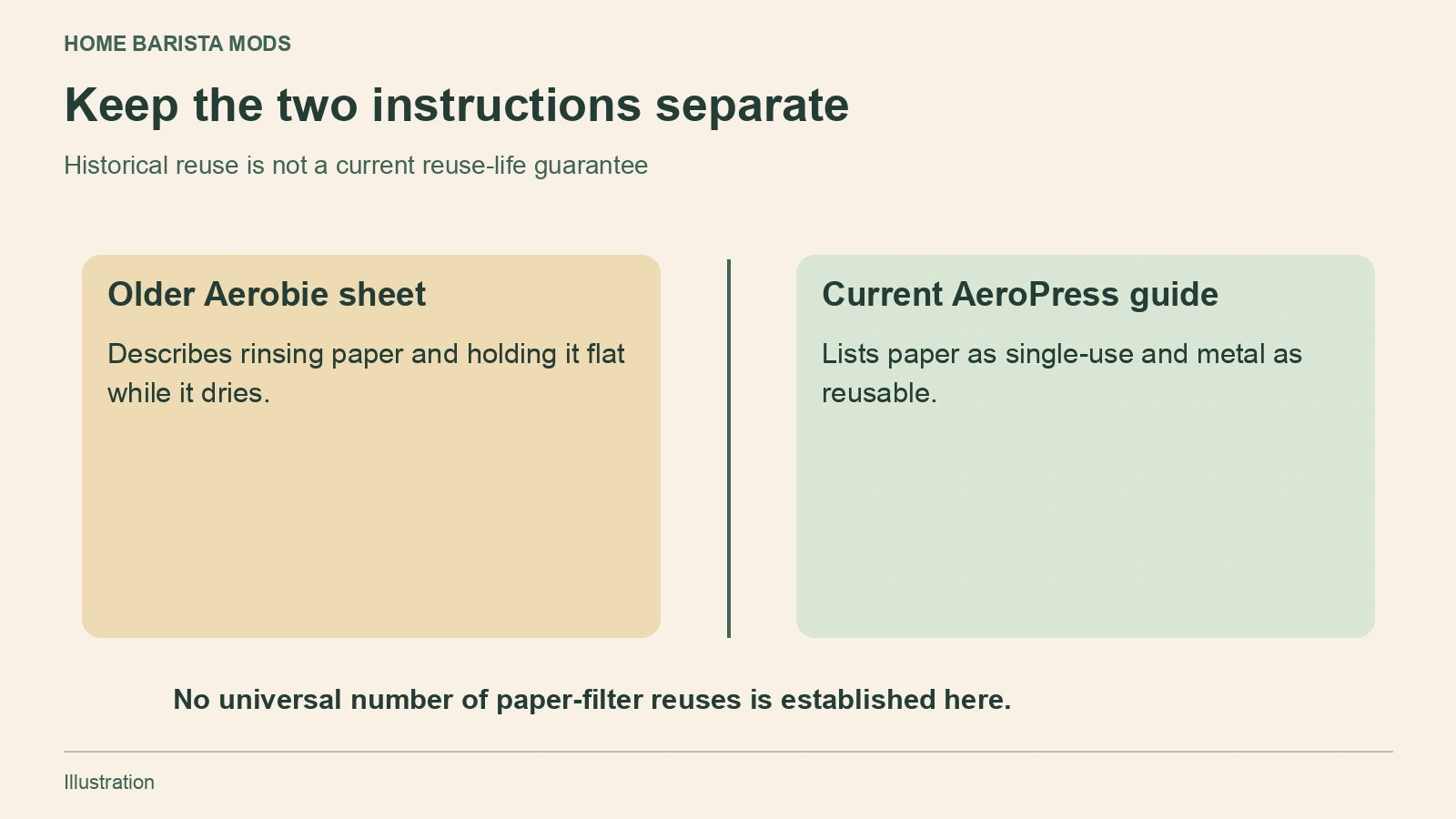
AeroPress’s current filter guide lists paper micro-filters as single-use and metal filters as reusable. Treat a fresh paper filter as the default for the current range. The old instructions do not establish a tested reuse life for every paper sold today.
Owner reports cover everything from a second cup to weeks of use. Those reports describe individual routines, not a verified safety limit or a guarantee of unchanged taste. You do not need to match someone else’s reuse count.
If you reuse one, rinse it and keep it flat
The historical method applies to an AeroPress with its ordinary filter cap. Start after the brew is finished and the parts are cool enough to handle. A used filter that is already damaged should be replaced.

- Separate the paper from the spent grounds gently. Collect the grounds before rinsing the paper.
- Rinse away the visible grounds under running water without scrubbing or stretching the wet paper.
- For the ordinary cap arrangement described in the old sheet, remove the plunger and attach the cap containing the wet paper to the empty chamber. This holds the paper flat as it dries.
- Before the next brew, inspect the paper and check that it sits flat in the correct cap. Replace it if you cannot fit it without a crease or gap.
Keep the paper in a clean, ventilated place while it dries. Avoid folding it into a travel case while wet. These handling checks cannot prove that a used filter is hygienically safe; if its cleanliness or storage is uncertain, use fresh paper.
Use your model’s current instructions for brewing, cleanup and storage. The old drying arrangement is not a reason to transfer old dishwasher advice to newer models or to treat a valve cap as an ordinary cap.
Damaged paper and a hard press
Use a new filter when the old one is torn, has a damaged edge, will not sit flat, or has been stored in conditions you cannot account for. Rinsing does not repair a hole. A brown tint alone cannot tell you how many more brews a filter will tolerate.
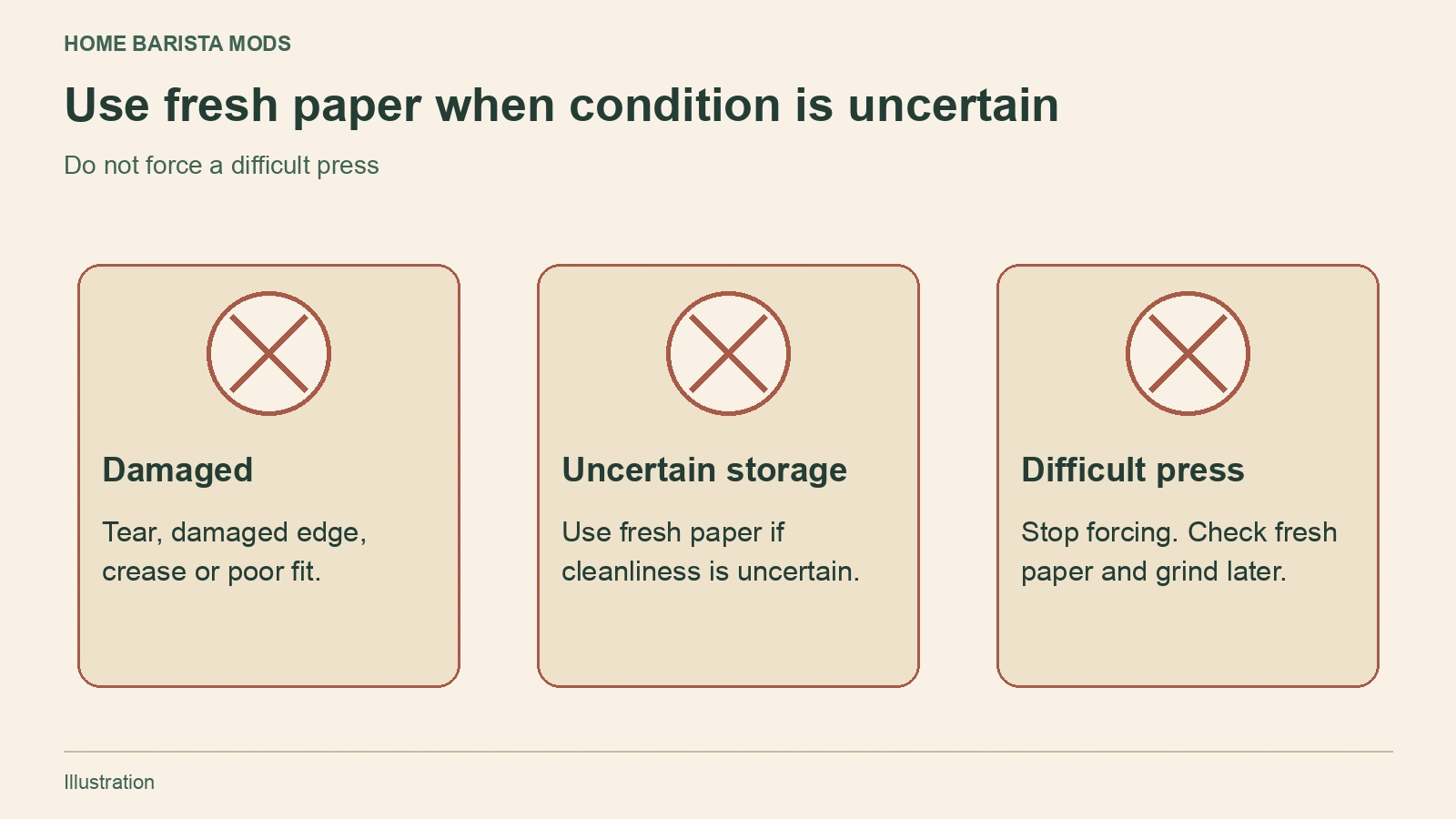
A reused filter may behave differently, but hard pressing also has other causes. AeroPress’s pressing guidance explains that fine particles and forceful pressing can compact the coffee bed and restrict flow. Press gently; do not compensate for resistance by leaning harder on the plunger.
If the setup becomes unusually difficult to press, stop forcing it. Keep it stable, let it cool, and follow the brewer’s instructions before handling the cap or remaining liquid. For a later brew, try fresh paper with your normal recipe. If resistance persists, check the grind and brewer rather than continuing to reuse the same sheet.

The next cup with fresh paper
If an intact reused filter still fits, a fresh-filter comparison can help you decide whether the extra handling is worth keeping. This is a home preference check; it does not establish a safe reuse count or prove that the paper caused every change.

Use the same coffee, dose, grinder setting, water, cap and brewing routine. Make one brew with fresh paper and a separate brew with the rinsed, dried paper. Keep the brewer upright on a sturdy, suitable mug and use gentle pressure for both.
Compare the coffee at similar drinking temperatures. Note taste, visible sediment and any difference in pressing resistance. Repeat in the opposite order before treating a small difference as dependable. If a brew requires force, stop that comparison rather than finishing it for the sake of a taste test.
Choose fresh paper if it gives you a cup you prefer or saves cleanup you do not want to do. If you need help keeping dose consistent, see the coffee scale guide.
James Hoffmann discusses filter reuse in this AeroPress Q&A. Use the current manufacturer guidance above for the paper-filter classification. Watch on YouTube.

Fresh paper or a reusable filter
Fresh paper is the convenient choice when you want to eject the grounds and start the next brew with an unused sheet. A compatible metal filter is designed for repeated washing, but it changes the cup: AeroPress says its stainless steel filter lets oils through for more body, while paper holds back oils.

Match the exact filter size and cap before buying. AeroPress’s current FAQ assigns Standard filters to Original, Clear, Go, Go Plus, Premium and Steel, and XL filters to the Original XL and Clear XL. Check a third-party filter against its own compatibility list.
For the taste and fit comparison, continue with AeroPress paper versus metal filters. For the spent grounds and filter, use a disposal route that keeps coffee grounds out of the drain.
Frequently asked questions
How many times can you reuse an AeroPress paper filter?
No universal reuse count is established by the manufacturer sources here. Older instructions described reuse without a fixed count, while the current guide classifies paper as single-use. Individual reports cannot set a guaranteed lifespan for your filter.
Can I leave a used filter wet in its travel holder?
Drying the paper flat is part of the old reuse method. A closed travel holder is not that drying arrangement. Use fresh paper when a used filter’s cleanliness or storage is uncertain; a normal appearance does not prove hygienic safety.
Does rinsing a new filter mean it has been reused?
No. Rinsing new paper before brewing is preparation; reusing paper means brewing through a sheet that has already held coffee. For the separate preparation question, follow your brewer’s recipe and filter instructions.