
Cold brew usually steeps coffee in cool water. Iced coffee, in the comparison here, is brewed hot and then chilled. Choose hot-brewed iced coffee when you want a fresh cold drink without an overnight wait. Choose cold brew when preparing a batch ahead fits your routine.
The ice in the glass does not identify the brewing method. Check how the coffee was extracted, then check whether the recipe makes a finished drink or a concentrate. Those two questions prevent most dilution mistakes.
Header photograph: bottled cold brew by Bex Walton, CC BY 2.0.
What changes between cold brew and iced coffee?
The National Coffee Association distinguishes the methods by brewing temperature. Traditional cold brew uses room-temperature or cooler water and a longer extraction. Hot-brewed iced coffee is chilled after extraction; flash brewing cools it directly over ice.

| Check | Cold brew | Hot-brewed iced coffee |
|---|---|---|
| Planning | Allow the recipe’s steeping time before serving. | Flash brew can be prepared when you want the drink. |
| Equipment | A suitable covered container and a way to filter. | A hot-coffee brewer and a heat-safe vessel for cooling. |
| Water accounting | Separate brewing water from later serving dilution. | Include cooling ice when following a brew-over-ice recipe. |
| Useful first choice | A prepared batch for later servings. | A freshly brewed cold cup without a long steep. |
Recipes are more specific than the names. Counter Culture’s cold brew method begins with a hot-water bloom before adding room-temperature water and refrigerating. That hybrid is different from a completely cool-water steep. Follow one complete recipe rather than combining another method’s temperature, timing and dilution.

How do you avoid watery iced coffee?
For brew-over-ice coffee, reserve some of the recipe’s water for cooling. Pouring an ordinary full-strength hot brew over an unmeasured pile of ice adds an uncontrolled amount of water as the ice melts.
A home brewer’s watery Japanese iced coffee is a useful example of the problem: changing the ice weight alone did not explain the whole cup. Start with a complete recipe that accounts for the coffee dose, hot water, cooling ice and grind.
Counter Culture’s flash-brew recipe gives a concrete starting example: 30 g coffee, 335 g hot water and 165 g ice. The ice goes in the carafe; the hot water passes through the grounds. Use its complete pouring instructions for that recipe.

The arithmetic is 335 + 165 = 500 g of water and ice added. The grounds retain water, so that does not promise a 500 g drink. Cooling ice and extra serving ice also have different jobs: adding more ice to the finished glass can continue to change its concentration.
- Start with an iced-coffee recipe. Check that its dose, hot water and cooling ice are all specified.
- Prepare the filter first. When rinsing is part of the method, discard that water before weighing the cooling ice.
- Measure both water portions. Keep the ice weight separate from the hot-water pour target.
- Taste before adding extras. Record additional ice, water or milk so you can repeat the serving.
Use a vessel intended for the hot-water and ice combination in your brewer’s instructions. Keep it stable; an ordinary cold drinking glass is not automatically suitable for direct hot brewing. The kitchen-scale checklist helps you measure the recipe without buying unnecessary equipment.
James Hoffmann demonstrates his own iced-filter method. His preference for it over cold brew is a tasting judgment, not a rule for every coffee. Keep his quantities separate from the Counter Culture example. Watch on YouTube.
Does cold brew always need water added?
Check whether you made or bought concentrate. Cold brew can be prepared for drinking as it is, or as a stronger batch intended for dilution. The brewing method alone does not tell you which is in the bottle.
That distinction causes real confusion. In one cold-brew discussion, the brewer had followed a pitcher routine without knowing whether the result needed dilution. The recipe’s intended serving method is more reliable than the drink’s color or the size of the container.
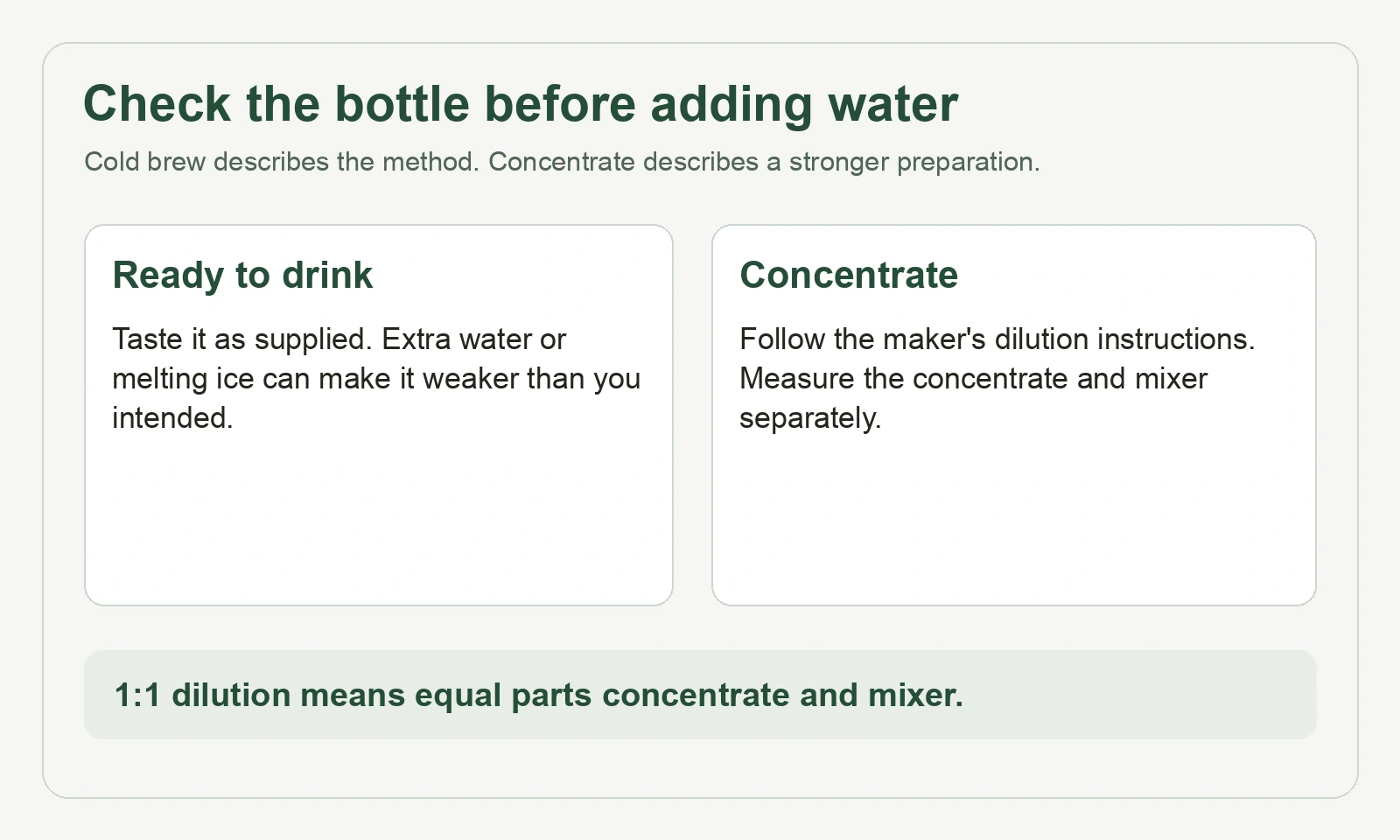
Counter Culture recommends equal parts of its finished concentrate and water as a first serving. That 1:1 serving ratio means, for example, 100 g concentrate plus 100 g water. It does not mean brewing dry coffee with an equal mass of water. Another concentrate can require a different dilution.
Measure one serving before changing the whole batch. If the recommended serving tastes too concentrated, add a little more water and record the amount. If it is already pleasant, keep that dilution. For a jar method with separate ready-to-drink and concentrate options, use the cold brew recipe guide.
For bottled coffee, read the preparation and storage directions. Do not infer a dilution ratio or storage life from the size of the bottle. Keep home equipment clean, follow the recipe’s refrigeration guidance and label the batch so you know when it was made.
Which one will you prefer?
The NCA describes cold brew as generally smoother and more mellow. Treat that as a direction to explore, not a guarantee that every cold brew is sweet or every iced coffee is bitter. Compare the coffee you plan to drink, prepared well by each method.

Use the same bag and water source for your first comparison, but follow a complete recipe suited to each method. Record the dry coffee, brewing water, ice and serving dilution. Keep the cups and final serving temperatures similar. This compares two practical recipes; it does not isolate brewing temperature as a laboratory experiment.
Taste both black first. Note the difference you can describe clearly: sweetness, bitterness, a lighter or heavier feel, or an aftertaste you enjoy. Then add the same measured milk or sweetener if that is how you normally drink coffee. Repeat a close result before changing your equipment.
Also record the work involved. Did you enjoy making the fresh iced cup, or was having a filtered batch ready more useful? A small taste preference can matter less than a method you will use consistently. The home tasting guide gives you a way to keep those observations separate.

Quick questions
Can you make cold brew by chilling hot coffee?
That makes hot-brewed iced coffee. Chilling changes the serving temperature, not the extraction that already happened. A recipe using a hot bloom before a cool steep should be identified separately.
Is cold brew always stronger?
No. A concentrate and a ready-to-drink serving are different things. Compare the dilution and the drink you actually serve. A concentrated taste is not a measurement of caffeine; check product-specific information when caffeine matters to your choice.
Do you need different beans for the two methods?
You can begin with the same coffee for both. Use a suitable recipe and grind for each method, then judge the finished drinks. Comparing different beans on the first attempt makes it harder to know whether you preferred the method or the coffee.
References
- National Coffee Association: cold brew definition and preparation
- Counter Culture Coffee: measured flash-brew recipe
- Counter Culture Coffee: hybrid cold-brew recipe and serving dilution
- r/Coffee: a home brewer troubleshooting watery Japanese iced coffee
- r/coldbrew: owner confusion about concentrate and ready-to-drink batches
- James Hoffmann: iced-filter coffee demonstration