
Rinse a paper coffee filter when your chosen recipe calls for it; it is not a requirement for every brewer. Start with the instructions for your brewer and paper. The V60 recipe discussed below includes a rinse, Chemex calls prewetting optional, and AeroPress’s basic instructions do not list a separate pre-rinse step.
Keep three questions separate: does your chosen recipe call for wet paper, do you want to preheat the equipment, and do you prefer the taste after rinsing? Those questions can lead to different answers without either brewer being wrong.
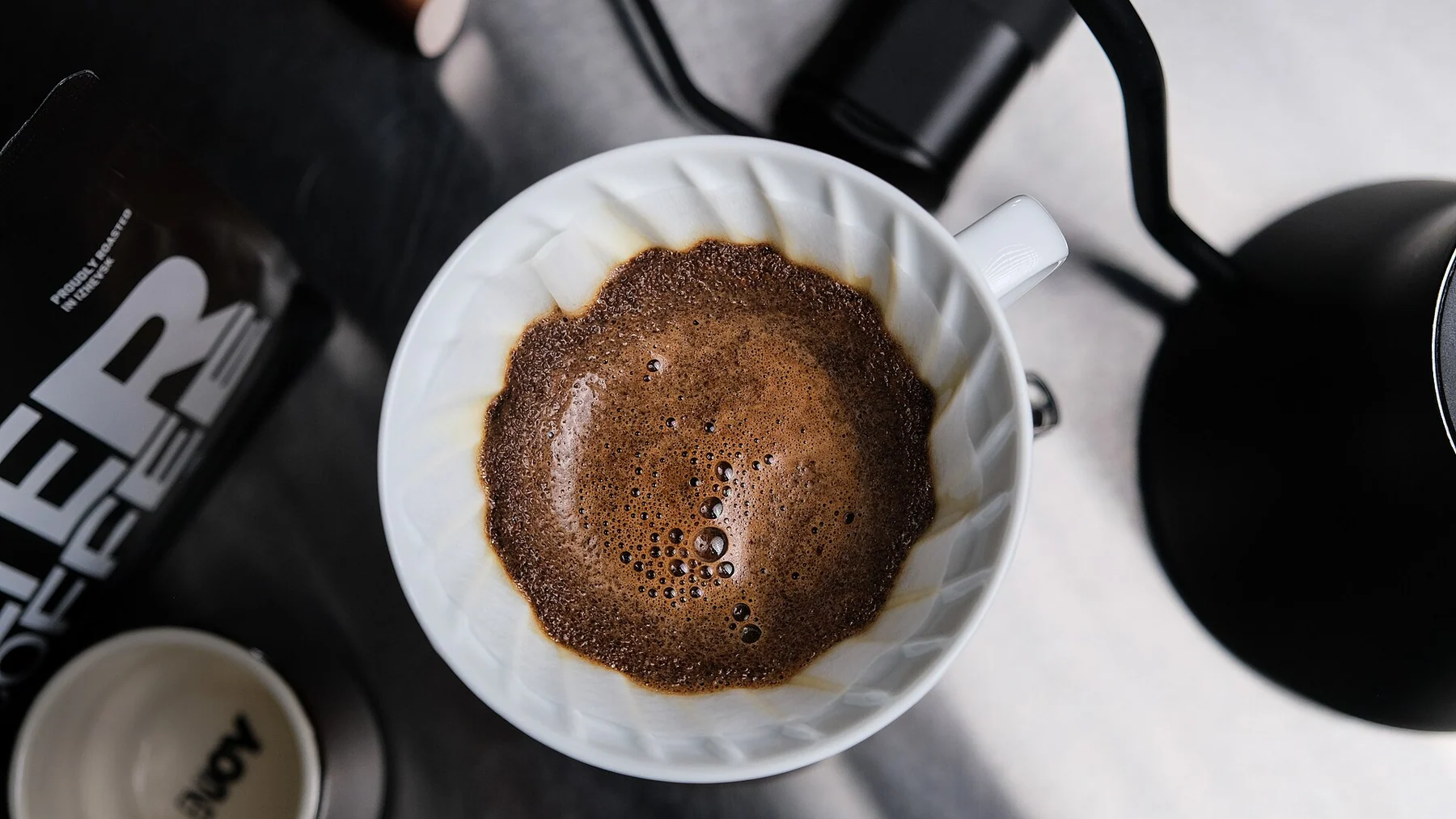
Header: V60 paper during a pour-over brew. Photo by Indigo.udm, CC BY 4.0.
What do Hario, Chemex and AeroPress say?
| Brewer or method | Published guidance | Your starting point |
|---|---|---|
| Plastic V60, Hario-hosted Hoffmann recipe | A hot-water rinse is part of preparation. | Keep it when following that recipe. |
| Chemex with its paper filter | Prewetting is optional. | Decide whether the rinse or preheating is useful. |
| AeroPress basic brewing sequences | No separate pre-rinse step is listed. | Do not add a requirement the sequence does not state. |
Hario Europe’s published plastic-V60 recipe uses hot water on the paper before grounds are added. That is evidence for this recipe, not a rule covering every V60 material, filter paper or brewing method. Hario USA also hosts a V60 walkthrough with a rinsing step.
The Chemex FAQ explicitly makes prewetting optional. It also tells users to discard the water before brewing. A routine can include this step for convenience without making it essential to every cup.
In AeroPress’s basic instructions, paper goes into the cap before assembly and coffee. Some other recipes differ: Charlene de Buysere’s archived 2012 recipe expressly wets the paper. Follow the particular recipe rather than turning “AeroPress” into an always-or-never rule.
Are you rinsing paper or preheating the brewer?
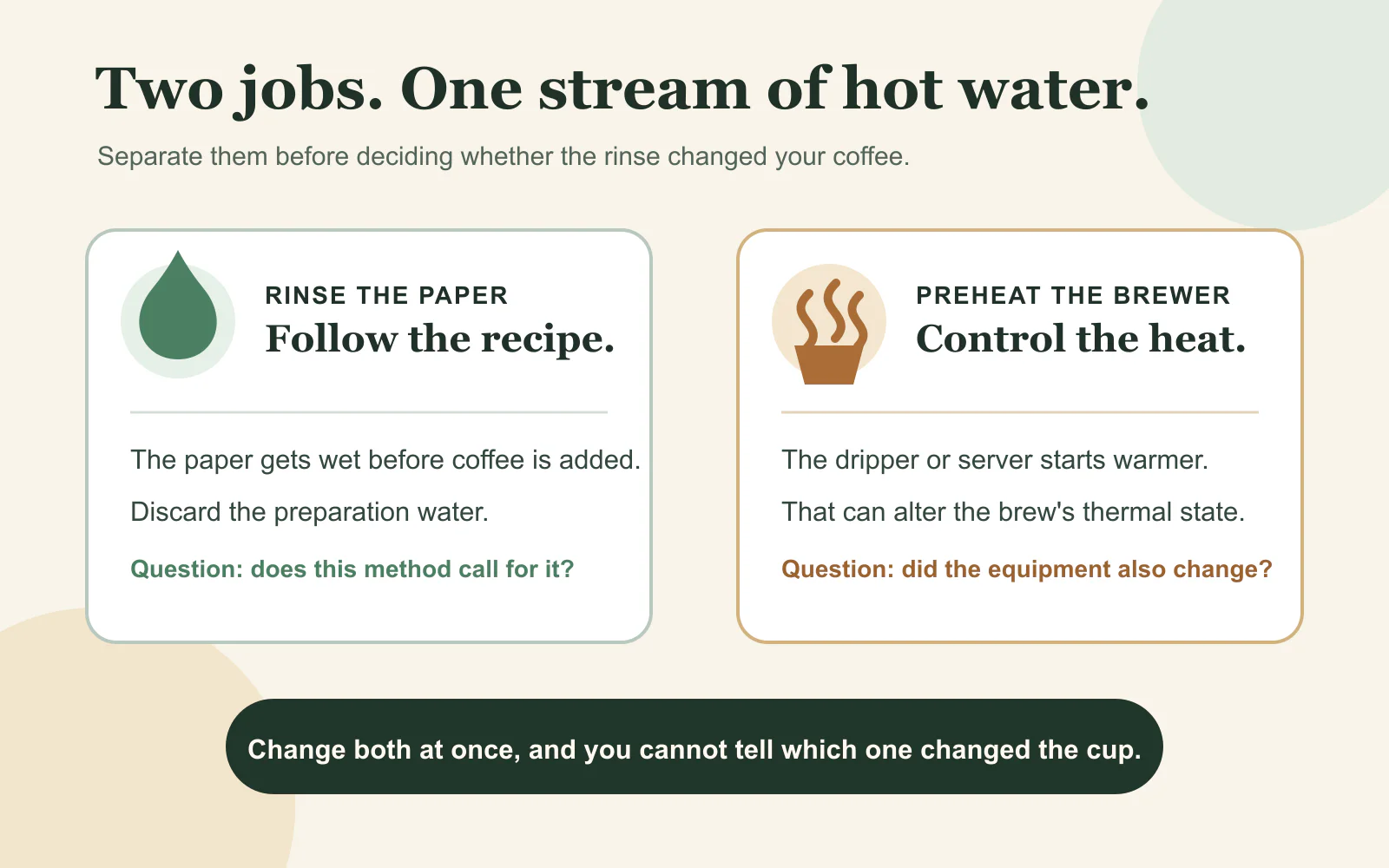
A hot-water rinse can also warm the equipment. Hario’s named recipe identifies both paper preparation and preheating as reasons for the step. If you stop rinsing and stop preheating at the same time, a changed cup cannot tell you which change mattered.
Choose the purpose before adjusting the routine. To reproduce a recipe, follow its preparation. To compare taste, keep the other brewing choices steady and write down any difference in preheating. To make mornings simpler, look for a step you can omit without losing a result you value.
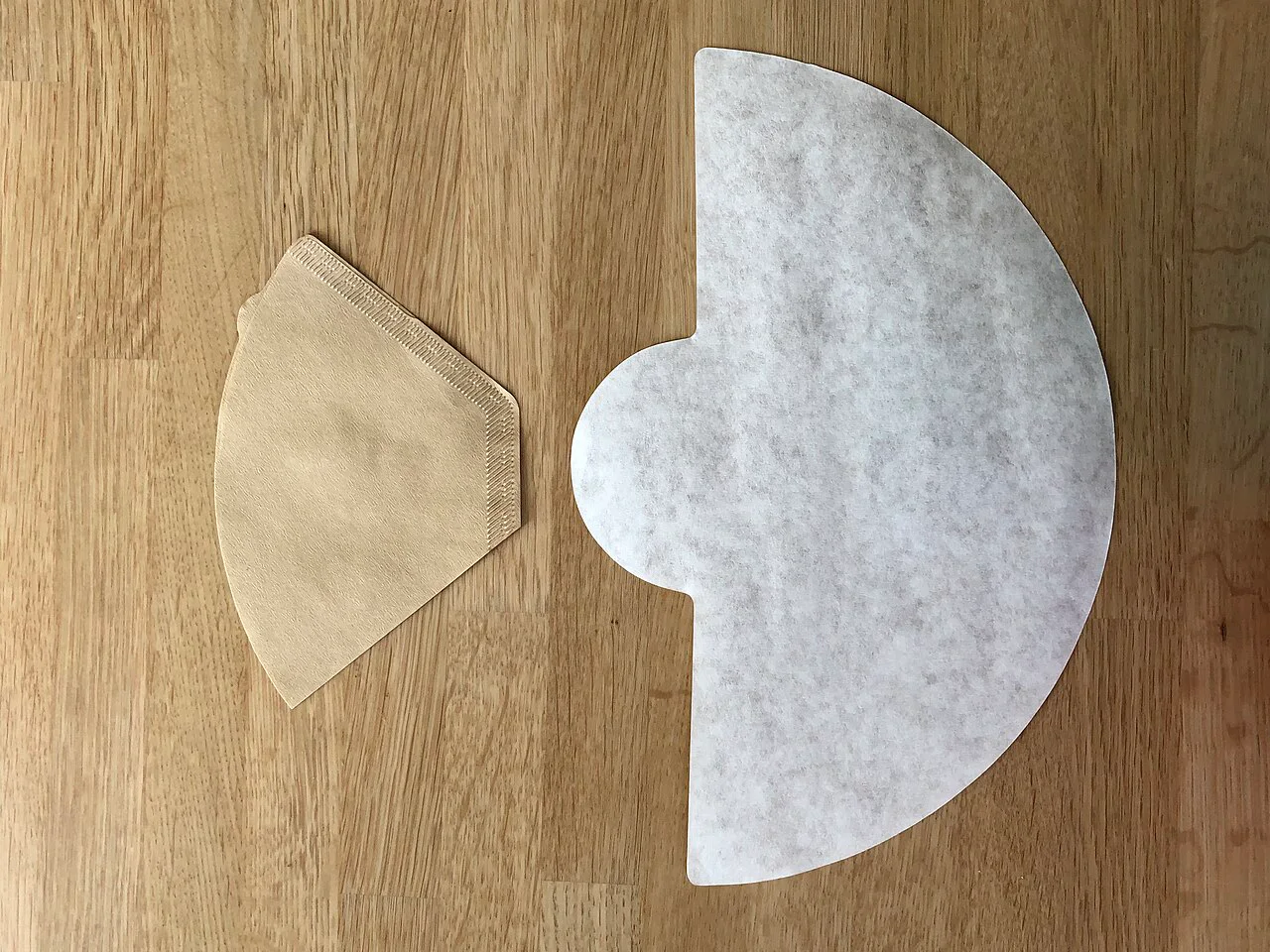
Do not turn a papery description into a safety claim. This comparison does not establish that unrinsed filters are dangerous, that brown paper is safer, or that a rinse removes all processing residues. A flavor preference cannot answer those questions.
- PaperDoes the filter or recipe call for wetting?
- EquipmentDoes the method include preheating?
- PreferenceDo you repeatedly prefer the finished cup?
How do you rinse without changing the brew recipe?
When your recipe includes rinsing, finish preparation before adding coffee. Keep the hot brewer stable and keep your hands out of the draining water.
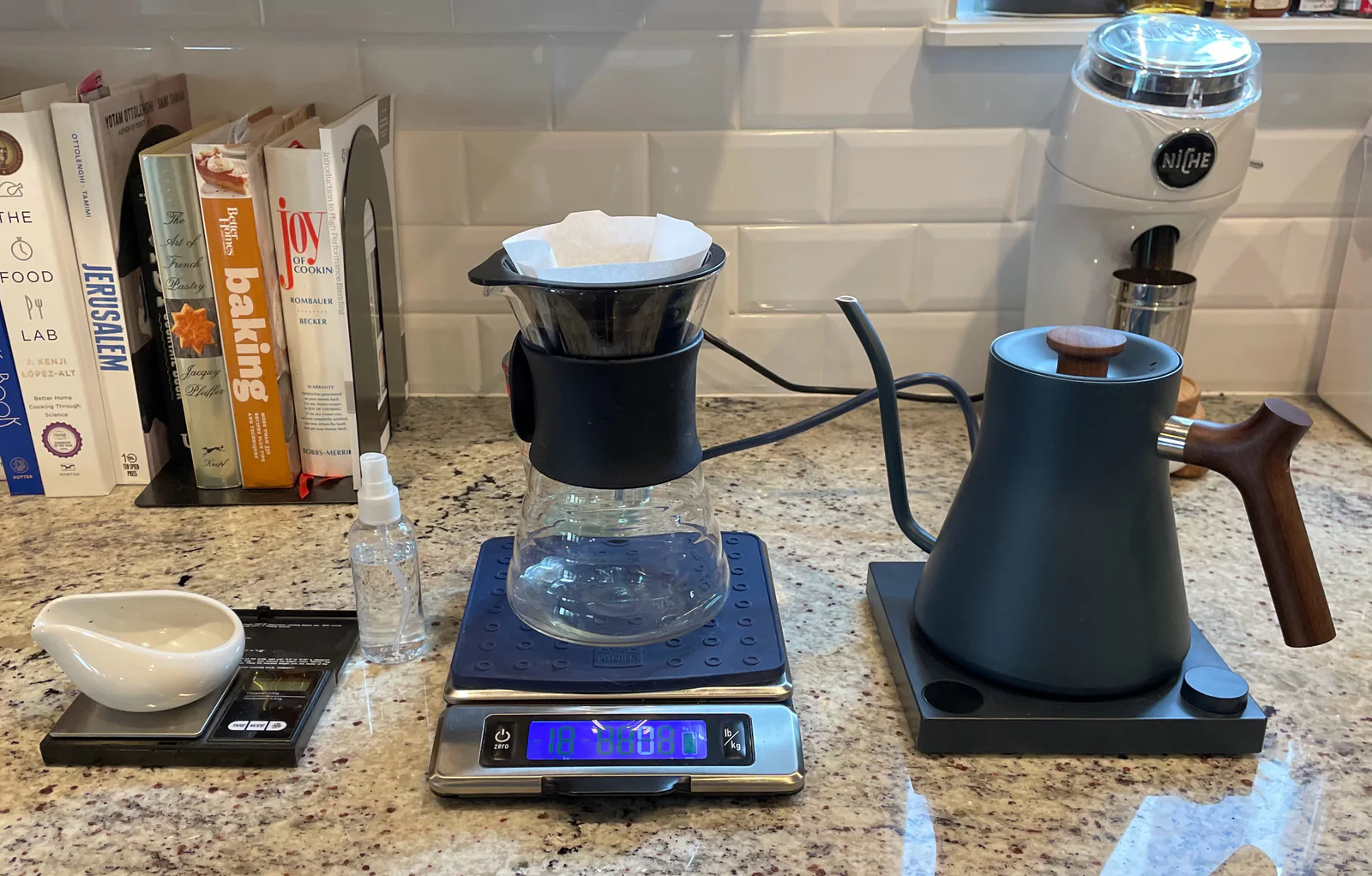
- Fit the correct paper. Check the brewer size and the filter’s own instructions. Do not force a similar-looking paper into an incompatible holder.
- Rinse as the recipe directs. Use your brewing water and the method’s stated temperature where one is given. There is no single rinse volume or duration established by these sources for every brewer.
- Discard the preparation water. Do this before grounds are added. For a separate dripper and server, move the dripper only when stable and safe to handle; avoid carrying a hot, filled setup unnecessarily.
- Check the paper again. It should remain positioned as its instructions require, rather than folded over or covering a needed vent.
- Begin the coffee recipe. Add the measured coffee, then measure the water specified for brewing. Keep discarded rinse water out of that measurement.
For the Chemex filter arrangement described in its FAQ, the three-layer side faces the spout so that the spout can remain an air channel. Correct placement is a separate check from deciding whether to prewet.
For AeroPress, stay with the manufacturer’s upright method while testing this detail. Its FAQ discourages inverted brewing because of instability and hot-liquid risks. You do not need an upside-down setup to compare rinsing.
Hario USA links this V60 walkthrough alongside a rinse-before-coffee instruction. It demonstrates that recipe, not a universal rule for Chemex or AeroPress. Open on YouTube.

How can you tell whether the optional step is worth keeping?
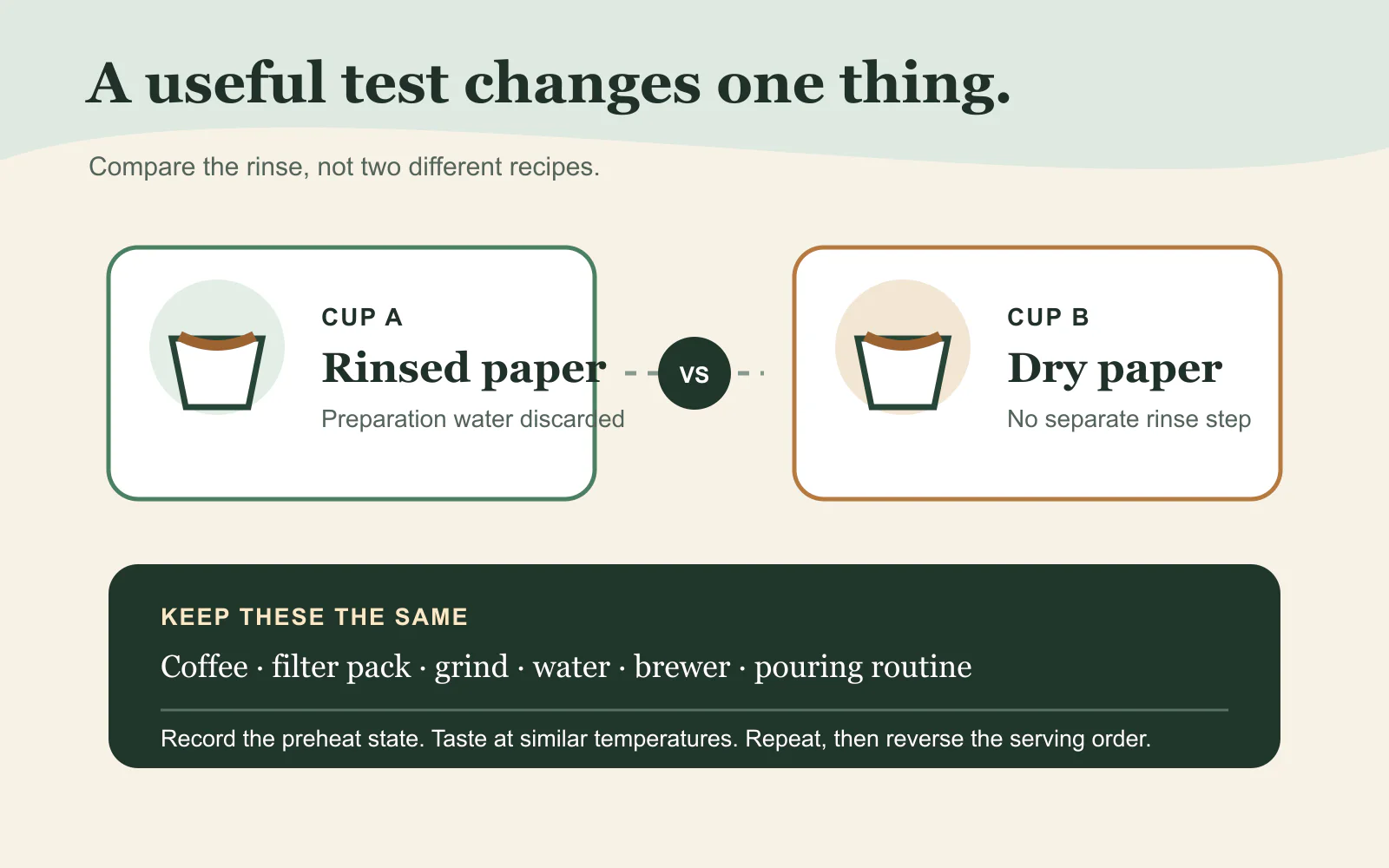
Use a small, repeatable comparison when your brewer allows either approach. This is a home preference check, not an experiment proving that paper alone caused a difference.
- Keep the supplies fixed. Use fresh filters from the same pack, the same coffee and water, and the same brewer.
- Write down the preparation. Record rinsed or unrinsed and whether the equipment was preheated. Keep preheating as similar as practical. If it differs, keep that limitation in your conclusion.
- Repeat the recipe. Hold dose, grinder setting, brew-water amount, starting water temperature and pouring routine steady. Do not improve one cup’s recipe while testing the other.
- Compare at similar drinking temperatures. Ask someone to label the cups A and B without identifying the preparation when practical. Write down what you notice before asking which is which.
- Reverse the order next time. Repeat once before treating a small difference as a reason to change your daily routine.
Keep the rinse when you repeatedly prefer that preparation. Where it is optional, omitting it can be reasonable when you notice no useful difference. An unclear result is also a result: you have not established a dependable preference with that coffee and setup.
A comparison with a different filter brand or a different coffee answers a different question. Change those only after finishing the first comparison. For more help keeping cups comparable, use the home coffee tasting guide.
When should you check something other than rinsing?
If you forgot the rinse, judge the finished cup before discarding it. If a cup tastes wrong, do not change the filter, grind and water all at once; choose one next check so that the result teaches you something.
| Observation | Useful next check |
|---|---|
| Different taste after dropping the rinse | Was preheating also removed? Repeat with the same coffee and recipe. |
| Slow or flooded Chemex brew | Check the spout’s air channel and filter position; the manufacturer also identifies an overly fine grind. |
| No clear preference between cups | Keep the simpler permitted routine, or repeat before changing anything else. |
| New filter pack behaves differently | Confirm the exact filter and its instructions before applying results from the old pack. |
Rinsing empty paper and blooming coffee are different stages. The first happens before the grounds go in. For what happens after water meets coffee, continue with the coffee bloom guide. For a change of filter material rather than preparation, see AeroPress paper versus metal filters.
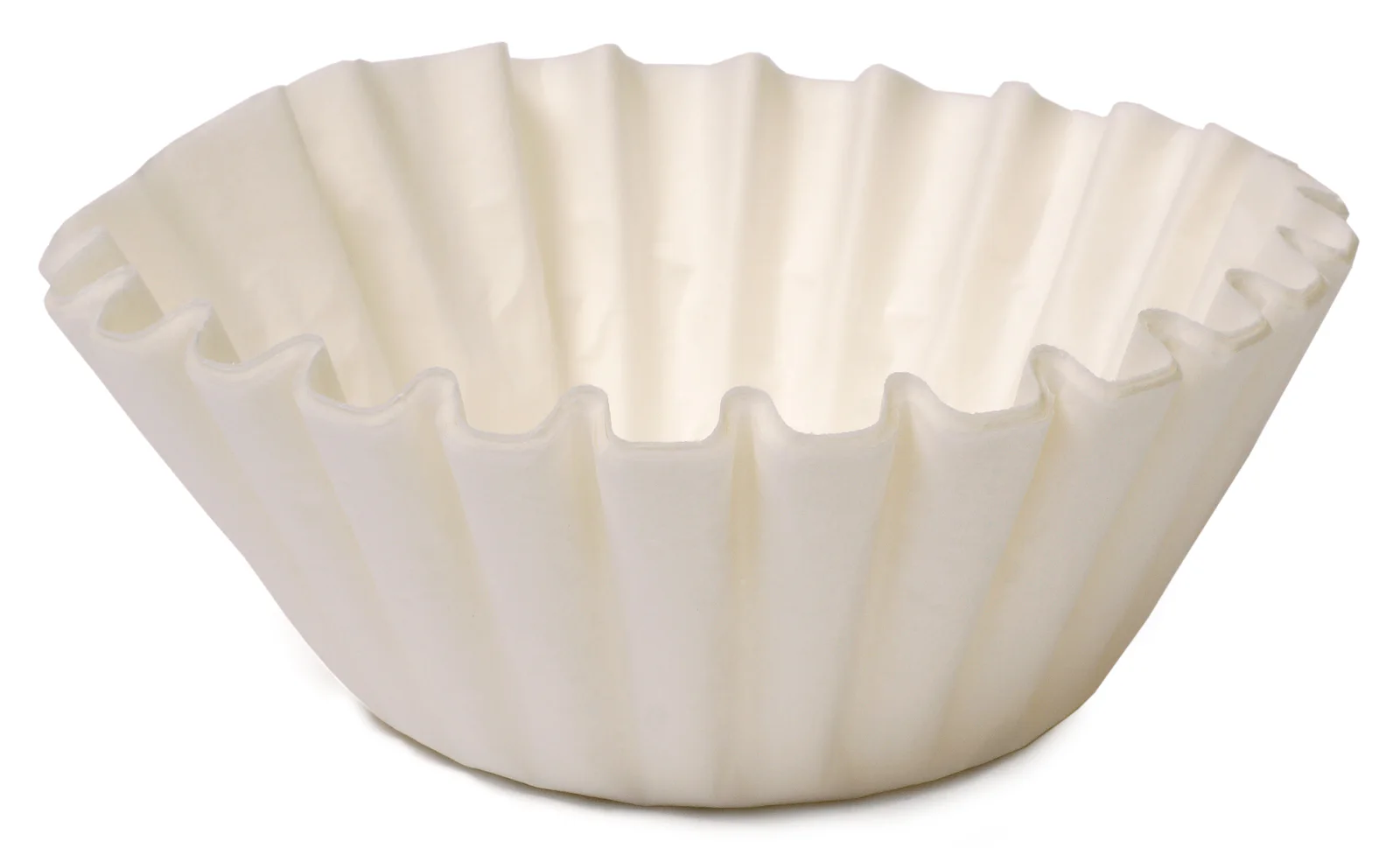
Unsure whether the paper fits in the first place? Check the coffee filter size guide before testing a rinsing change.

Quick questions
Must every paper filter be rinsed?
No single instruction covers every paper and brewer. Use the exact method’s directions; the manufacturer examples above differ.
Does rinsing count as bloom water?
No. Discarded water that passed through empty paper has not wetted the coffee bed. Measure the coffee recipe separately.
Should I rinse more until I can no longer smell paper?
Do not invent a long washing ritual from a smell alone. Follow the filter’s instructions and compare the finished coffee. The sources here do not establish a universal rinse time or quantity.