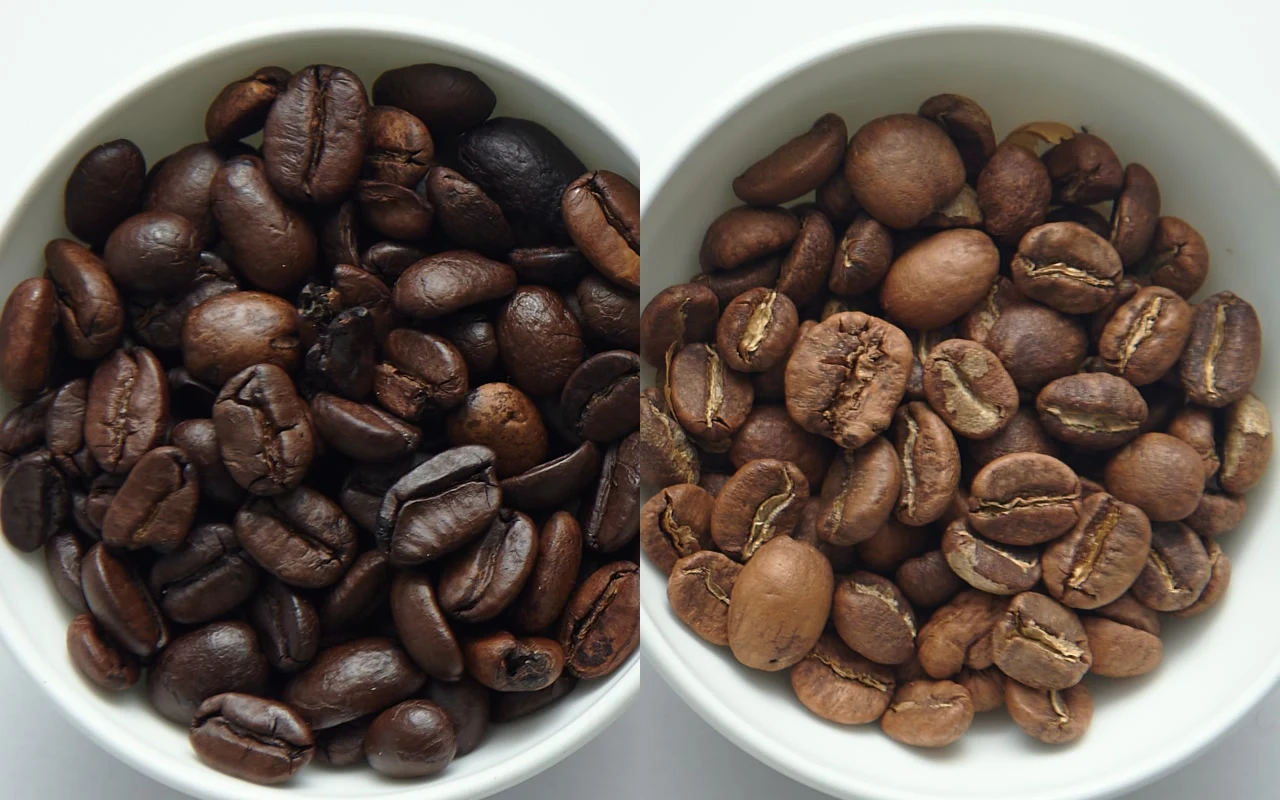
Dark-roast espresso usually needs a gentler extraction strategy than light roast. Darker roasting makes coffee easier to extract, so pushing temperature, ratio and contact time too hard can turn a sweet chocolatey shot into something dry, ashy or harsh.

Why does dark-roast espresso extract more easily?
La Marzocco's current traditional-espresso guide describes darker roasted blends as highly soluble and quick to break down under heat and pressure. That is why its conventional starting direction is lower temperature and smaller ratios than the modern-light-roast workflow.
Clive publishes the same broad relationship: dark roasts extract faster, so lower temperatures and tighter ratios are useful starting tools for avoiding bitterness.
Start with a shorter ratio and lower temperature
What brew ratio should you use for dark roast espresso?
For a dark or traditional espresso roast, a shorter ratio is a strong starting point. La Marzocco demonstrates a classic 1:1 ristretto with a traditional roast. Clive's coffee-bag guide gives 1:1 to 1:1.5 as a starting range, while warning that a dark-roast label does not guarantee that recipe will suit the coffee.
This does not mean every dark roast must stop at 1:1. If the shot is syrupy but too intense, you can increase yield slightly. Start with a concentrated shot and compare a slightly longer yield before adopting a 1:2.5 recipe.

Use the espresso brew-ratio guide if 1:1, 1:1.5 and 1:2 are not yet intuitive.
What temperature should you use for dark roast espresso?
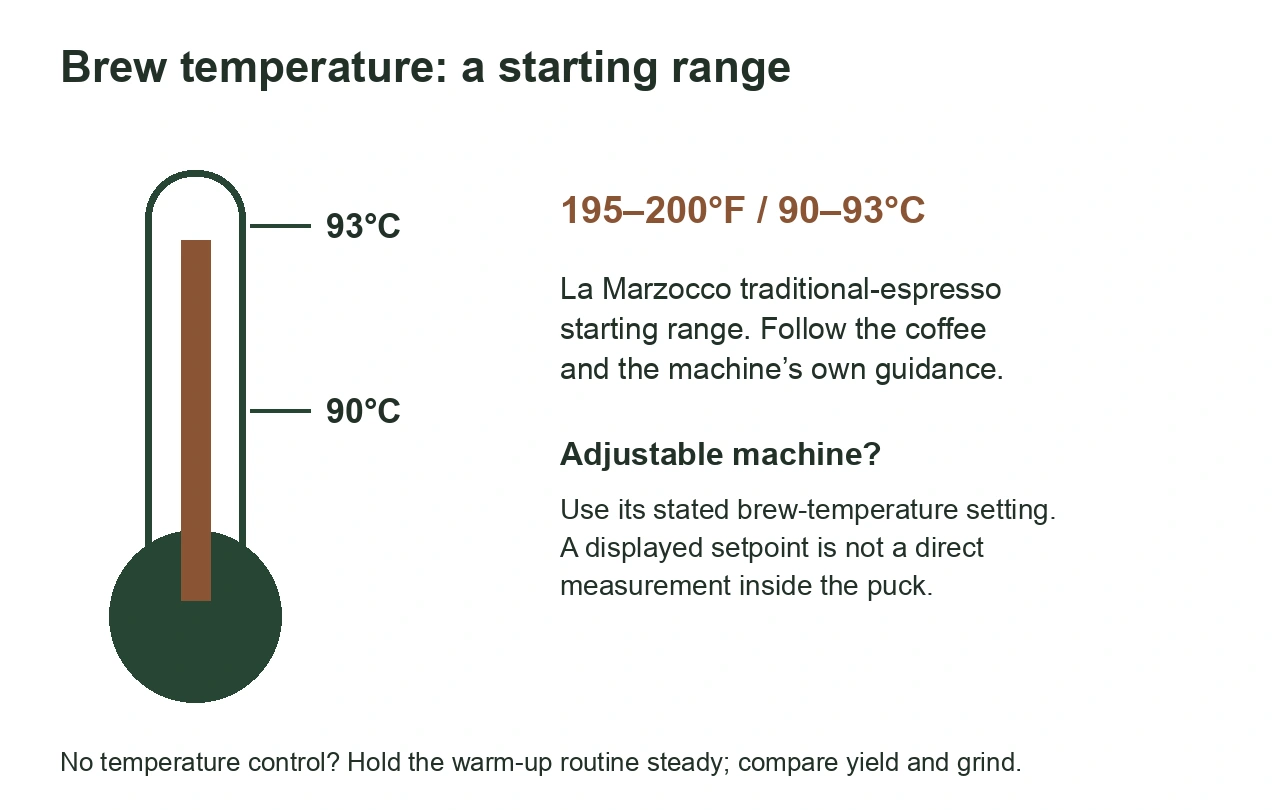
A conventional starting band around 195–200°F / 90–93°C is supported by both La Marzocco's traditional espresso workflow and Clive's current roast-level guidance.
Start at the lower end if the coffee tastes roasty, dry or bitter. Move upward only if the shot tastes flat, hollow or underdeveloped after ratio and grind are stable.

Should dark-roast espresso grind be coarser?
Often it will end up a little coarser than a difficult light roast because you do not need the same extraction push, but the correct grind is still the one that produces the target yield with stable flow and good taste.
La Marzocco's traditional recipe starts fine enough to build a thick, syrupy ristretto. So “dark roast = coarse” is too simple. Use grind to control flow after you choose the dose and ratio.
Use Dose vs Grind: Which Should You Change First? for that sequence.
How long should a dark-roast espresso shot take?
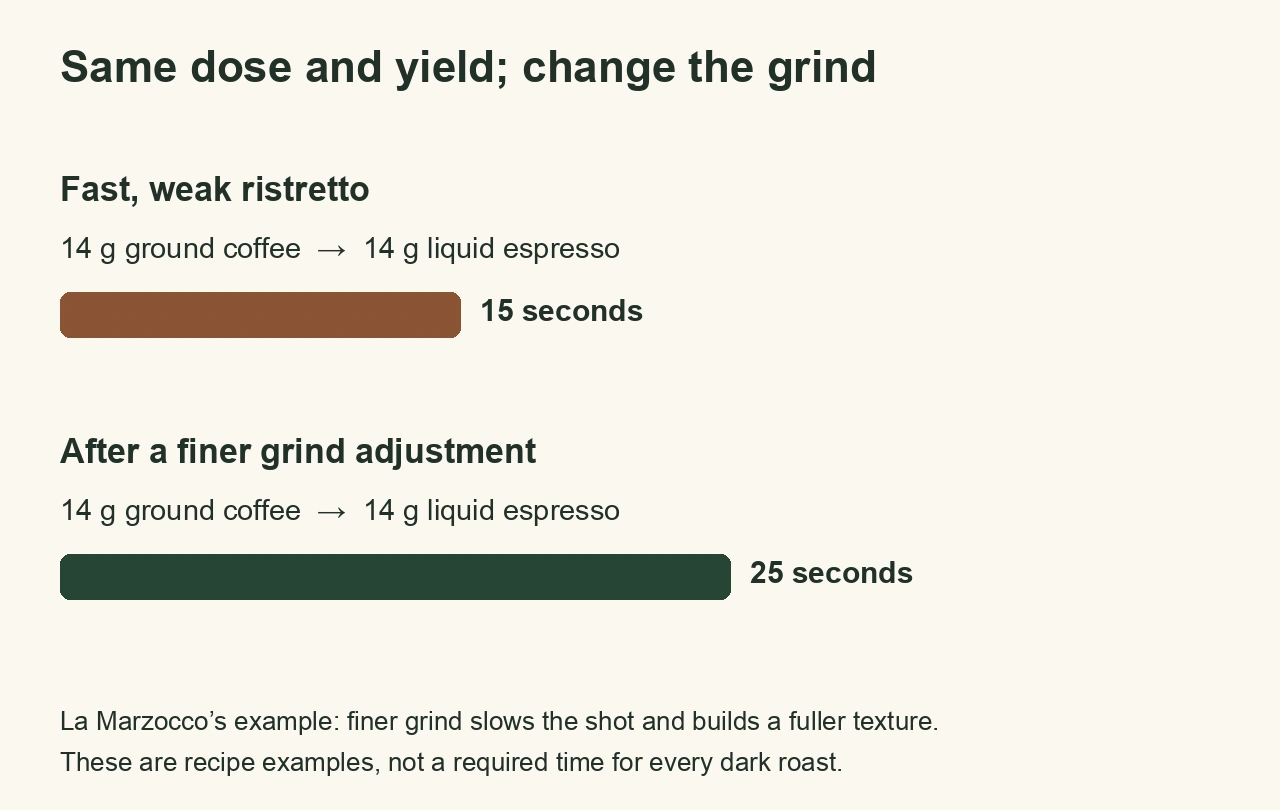
Do not chase one global time. La Marzocco's traditional examples include a 1:1 ristretto around 25 seconds after grind adjustment and a small lungo around 20–25 seconds. Clive's coffee-bag guide gives 25–30 seconds, but its specific dark-roast demonstration uses 20g in, 30g out at 195°F in about 22 seconds. Those are starting recipes for different coffees, not competing definitions of a correct shot.
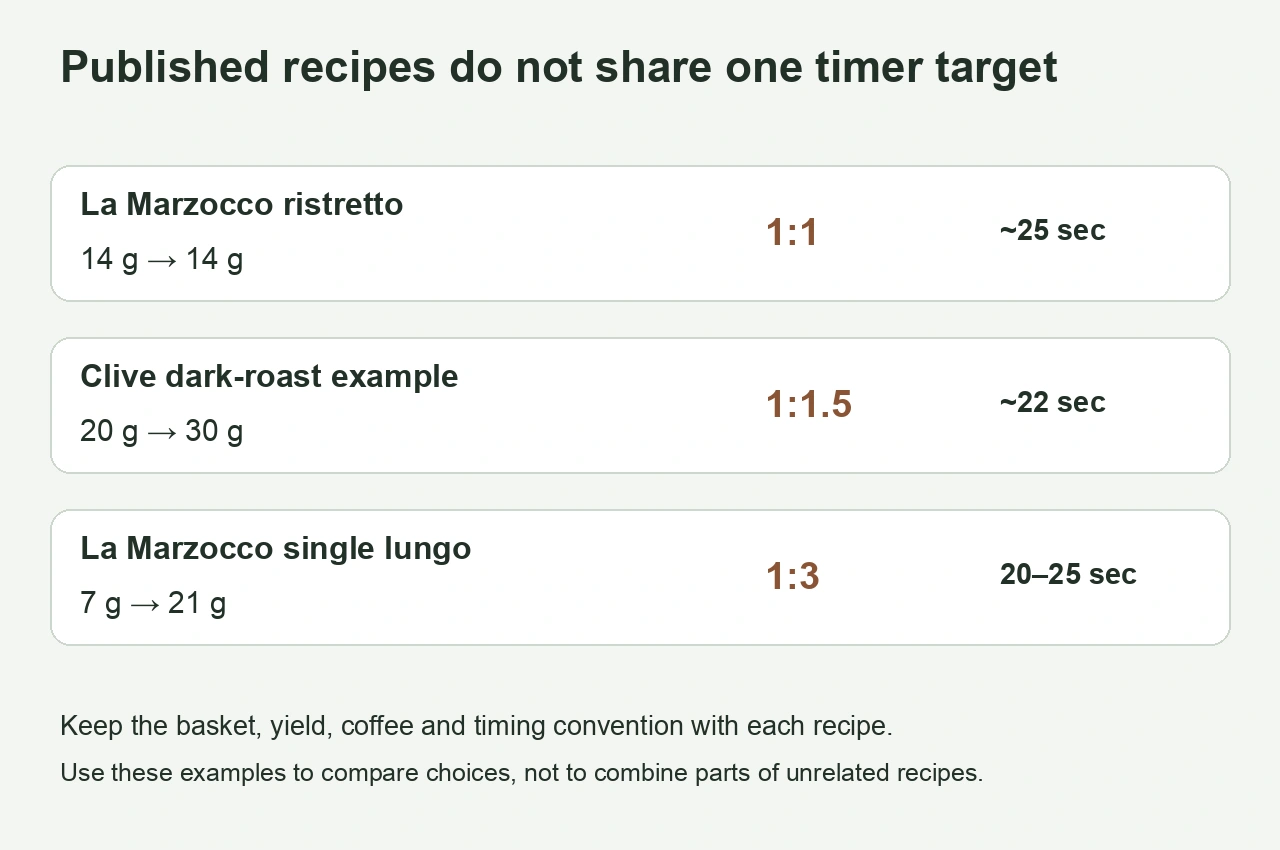
The ratio and timing convention matter. A 25-second 1:1 shot and a 25-second 1:2 shot are different recipes. So are 25 seconds from brew-on and 25 seconds from first drip.
Use the shot-timer convention guide when comparing recipes from different sources.
A clean dark-roast dial-in order
Why does dark roast sometimes taste bitter even at a normal shot time?
Because time does not measure extraction style by itself. The coffee may be very soluble, the temperature may be high, the ratio may be long, or the roast itself may contain strong smoky/roasty flavors.
If the shot tastes dry, ashy and harsh, keep a note of the dose, yield, time and temperature setting. Choose one change for the next shot:
- lower brew temperature;
- shorten the beverage yield;
- grind slightly coarser if flow is very slow;
- check that channeling is not creating both harsh and hollow flavors.

What if the dark roast tastes weak instead of bitter?
A short ratio can still under-extract if the grind is too coarse and water races through the puck. La Marzocco demonstrates this directly: a 1:1 shot that runs in roughly 15 seconds can taste weak, and grinding finer to extend contact time can produce the thicker balanced shot expected from a ristretto.
Keep the same dose and yield while testing a finer grind. If the shot becomes fuller and sweeter, record that setting before changing another variable.
Dark roast taste map
Does pre-infusion help dark roast espresso?
Keep your machine’s normal pre-infusion setting unchanged while you establish dose, yield and grind. The recipe times above belong to their source workflows; adding a different soak changes the comparison. Dark roast alone does not tell you how many seconds of pre-infusion to use.
Follow the machine’s instructions if you choose to test pre-infusion, and record whether the shot time includes it. See What Is Espresso Pre-Infusion?.
How is this different from dialing in light roast espresso?
| Variable | Light-roast direction | Dark-roast direction |
|---|---|---|
| Temperature | Often higher, around 200–205°F conventional start | Often lower, around 195–200°F conventional start |
| Ratio | Often 1:2 toward 1:3 | Often 1:1 toward 1:1.5 / 1:2 |
| Grind | May need finer grinding to extract enough at the chosen ratio | Fine enough for a controlled flow at the chosen ratio |
| Pre-infusion | Keep the machine’s routine consistent while comparing recipes | Keep it fixed during dial-in; test changes separately |
| Main failure mode | Sharp, thin, under-extracted sourness | Dry, roasty, harsh over-extracted bitterness |
Read the companion Light Roast Espresso Dial-In Guide to see the opposite strategy side by side.
FAQ
What ratio is best for dark roast espresso?
Start around 1:1–1:1.5 for a very traditional dark roast, then lengthen if the cup is too intense. Clive and La Marzocco both support shorter ratios as a dark/traditional starting direction.
What temperature is best for dark roast espresso?
About 195–200°F / 90–93°C is a strong conventional starting band. Go lower within the machine's safe range if the coffee tastes harsh or roasty.
Why is my dark roast espresso bitter at 1:2?
The ratio may be longer than that coffee needs, the temperature may be too high, or the grind may be too restrictive. Test a shorter yield or lower temperature one change at a time.
Should dark roast espresso be ground coarser?
Often coarser than a difficult light roast, but not automatically. Use grind to hit stable flow for the chosen dose and ratio.
Can dark roast espresso still taste sour?
Yes. A shot can still under-extract if it runs very fast, channels badly or uses too little contact. Dark roast being soluble does not make it immune to under-extraction.
References
- La Marzocco — Dialing in a Traditional Espresso
- Clive Coffee — What's on My Coffee Bag & Why It Matters
- Clive Coffee — How to Brew Dark, Medium & Light Roast Coffee
Roast labels are not standardized. A coffee labeled “dark” by one roaster may resemble another roaster's medium roast. Start with the roaster's recipe when available. Record dose, yield, time and taste, then change one setting for the next shot.