
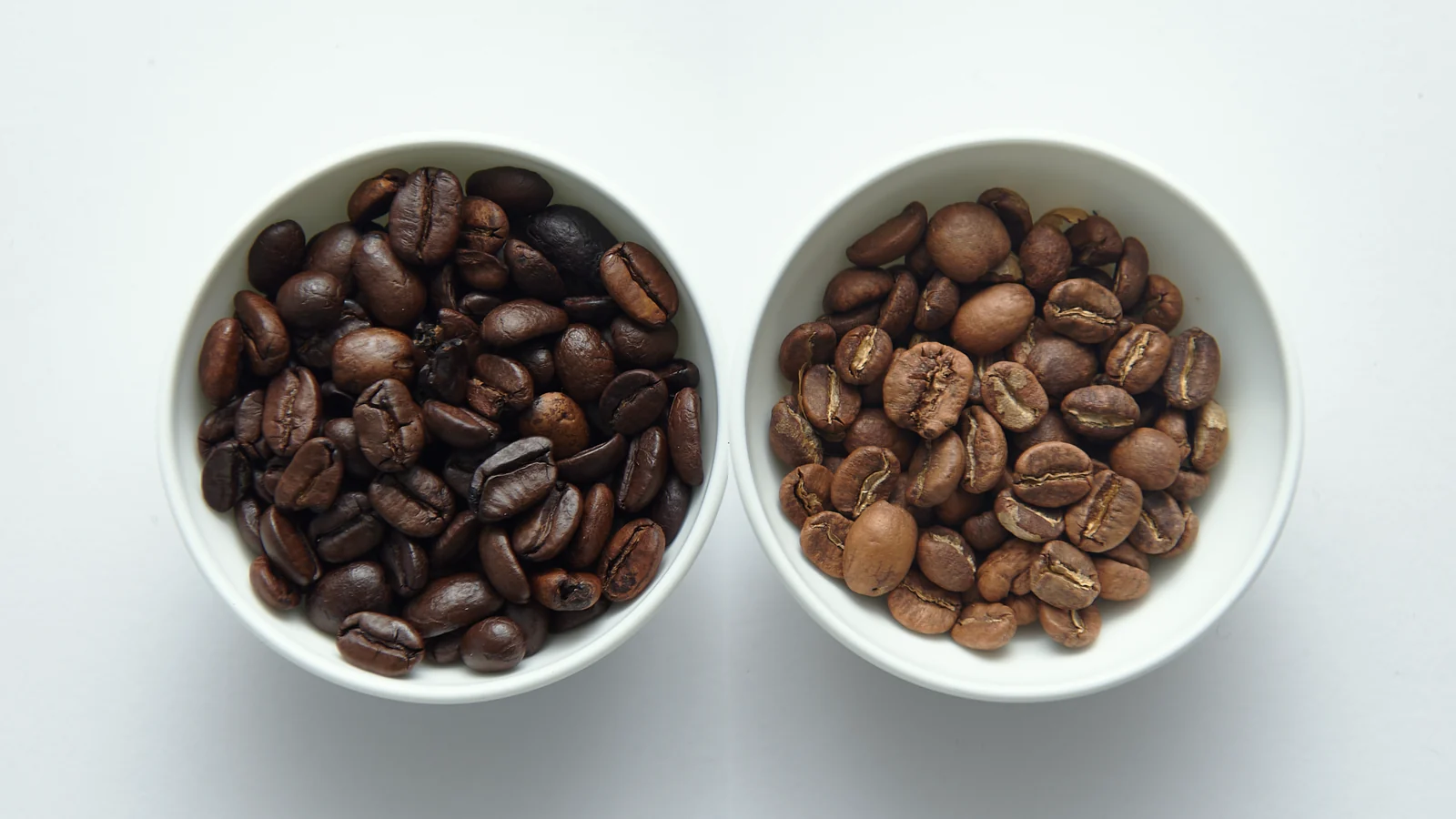
Light-roast espresso often needs more extraction work than a traditional darker espresso roast. The beans are typically denser and less soluble, so a recipe that tastes balanced with a darker roast can make a light roast taste sharply sour, thin or unfinished.
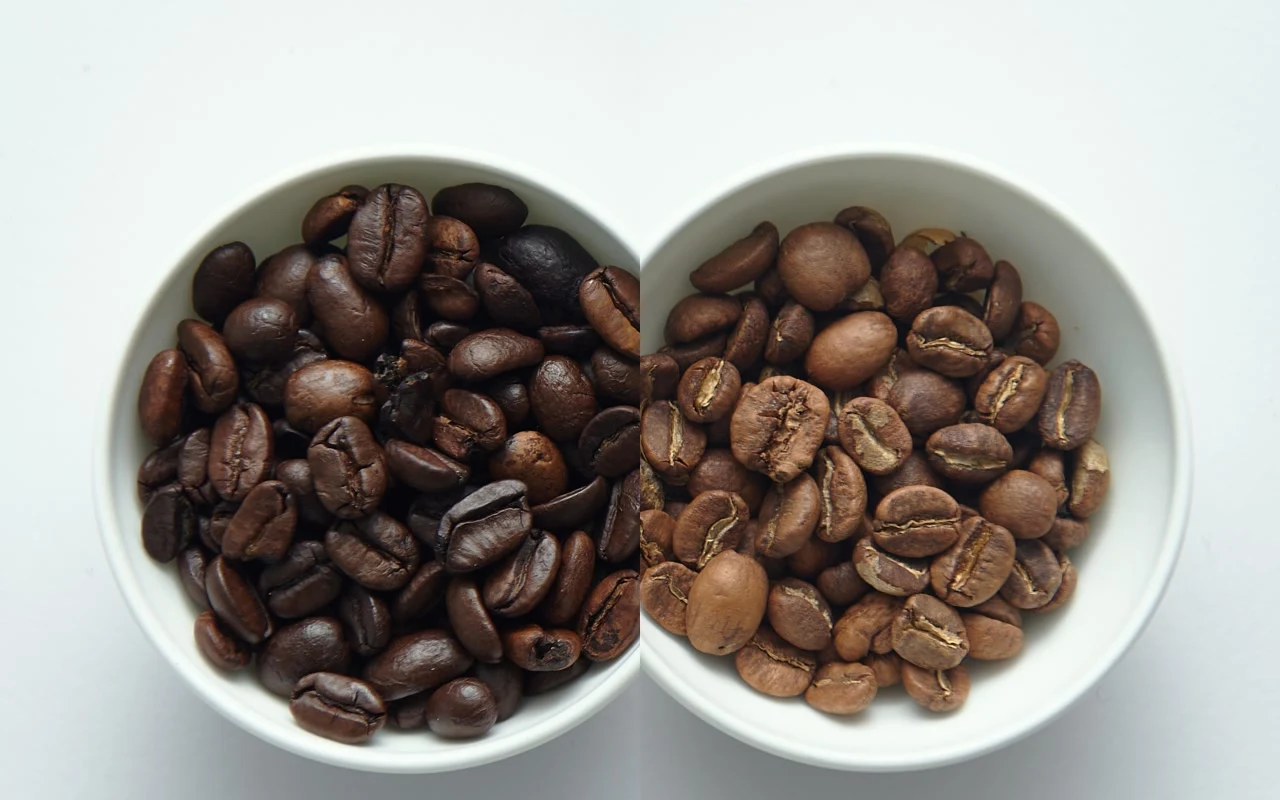
Why is light-roast espresso harder to dial in?
La Marzocco’s modern-espresso guide describes light roasts as dense coffees that require more “work” from temperature and grind. Its suggested conventional starting direction is a very fine grind and roughly 200–205°F / 93–96°C.
That does not mean every light roast should automatically be brewed at 96°C. It means light roasts often need more extraction help than darker coffees. The useful tools are grind, ratio, temperature, pre-infusion and—on advanced machines—pressure/flow profiles.
Four levers that make light roast easier to extract
What brew ratio should you start with for light roast espresso?
Start with a measured recipe rather than a drink name. A 1:2 ratio is a useful baseline because you can compare it cleanly with the next shot.
If the 1:2 shot is concentrated but sharply sour or feels unfinished, a longer ratio is one of the cleanest next experiments. La Marzocco explicitly demonstrates moving from 1:2 toward 1:3 for a modern light-roast espresso. Clive’s current 2026 guidance similarly places light-roast espresso in roughly the 1:2 to 1:3 starting region.

Use the 1:2 espresso brew-ratio guide if dose and yield are still unfamiliar.
Should you grind light-roast espresso finer?
Often, yes—within a conventional espresso profile. A finer grind increases surface area and can raise extraction, which is why La Marzocco’s modern-espresso guide pushes grind quite fine as an initial direction.
But “finer” has a limit. If the puck begins channeling, the shot chokes, or flow becomes erratic, continuing finer can make extraction less even rather than more complete.
If the basket dose is already correct, use Dose vs Grind: Which Should You Change First? before using dose as a shortcut.

What temperature should you use for light roast espresso?
For a conventional pump-machine recipe, 200–205°F / 93–96°C is a defensible starting band from current La Marzocco guidance, and Clive publishes the same general range for light roasts.
Move temperature only after dose, yield and grind are reasonably stable. If you change temperature and grind at the same time, the next cup tells you much less.
Also keep the machine-specific reality in mind: a PID display value is not always the exact puck temperature, and different machines use different offsets and thermal designs. Follow the exact machine’s manual or proven workflow rather than copying another machine’s setpoint.
Is a longer shot time normal with light roast espresso?
It can be. La Marzocco’s modern-espresso examples include 1:2 shots around 40–55 seconds and a 1:3 example around 45 seconds, with timing beginning when water contacts the puck and including pre-infusion/pre-brew.
Clive’s more conventional 2026 baseline is shorter, roughly 28–34 seconds for light roast. Those different examples are useful because they prove the real point: there is no single mandatory light-roast shot time.
Always record your timing convention. The Pump-On vs First-Drop shot-timer guide explains why two “35-second shots” can describe different physical extractions.
A clean light-roast dial-in order
Does pre-infusion help light-roast espresso?
It can. Pre-infusion gives the puck time to saturate more gently before full pressure arrives, which can reduce uneven wetting and may support a finer grind.
But use the implementation your machine actually supports. Flair, La Marzocco, E61 systems and Decent profiles can create very different low-pressure starts. Do not copy another platform’s seconds or pressure target.
Use What Is Espresso Pre-Infusion? for the machine-independent boundary before changing this variable.
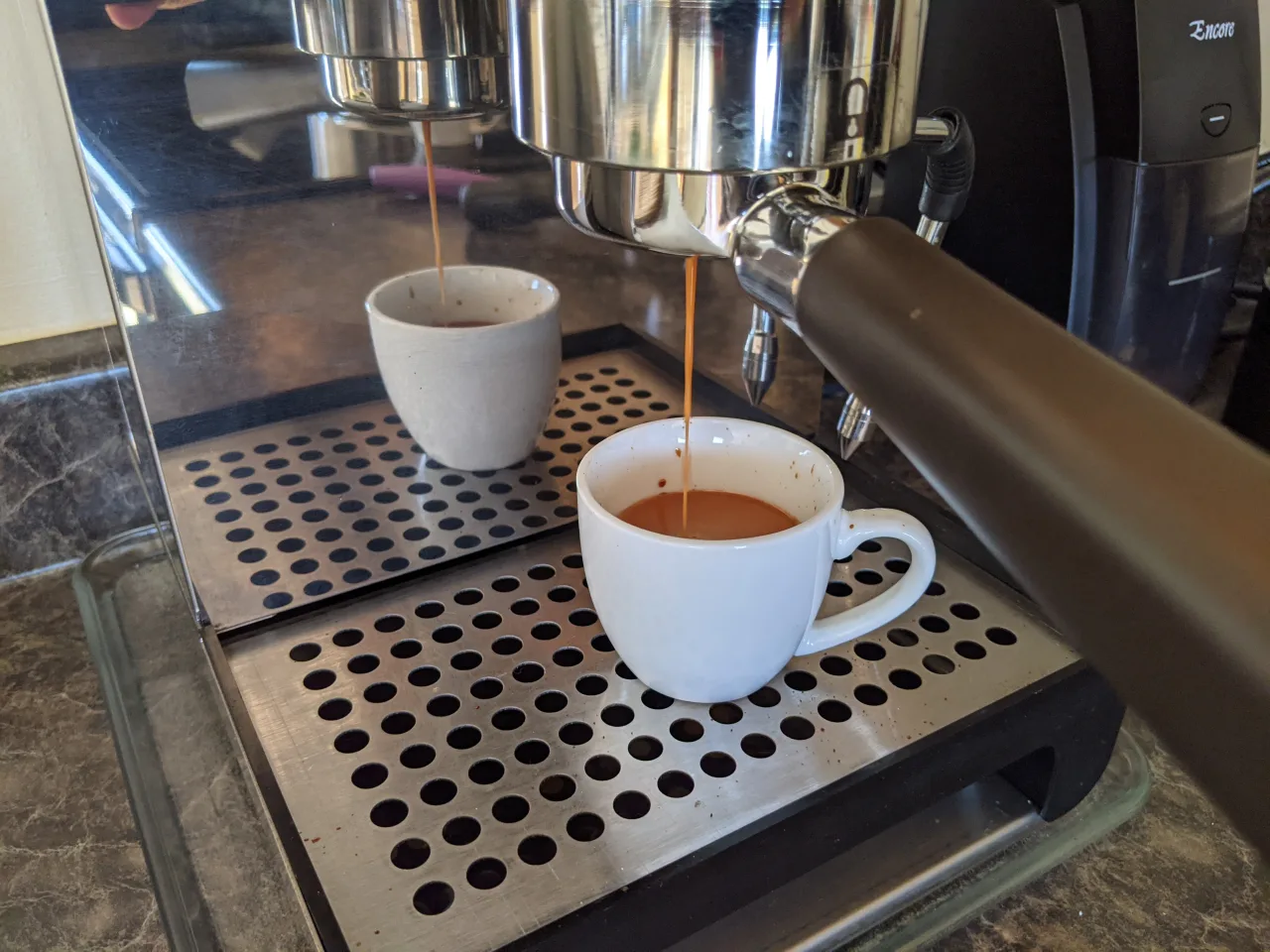
Do all advanced light-roast recipes use high temperature and long shots?
No. This is an important exception.
Decent Espresso’s profile library includes light-roast approaches that deliberately use lower pressure, fast “turbo” flow or unusual temperature curves. Its Allongé-style profiles can use very long ratios, while other profiles use extended pre-infusion. These are different extraction strategies, not contradictions that can be collapsed into one universal recipe.
What should you change when light roast tastes too sour?
Do not erase acidity—separate good acidity from unfinished sourness
If the shot lands in a normal time but remains sharply sour, use Why Does Espresso Taste Sour Even When Shot Time Looks Right?.
How fresh should light-roast beans be for espresso?
Do not assume “fresher is always better.” Very fresh coffee can contain enough gas to make espresso harder to stabilize. Follow the roaster’s guidance, and keep roast age consistent while dialing in so bean degassing does not masquerade as a grinder problem.
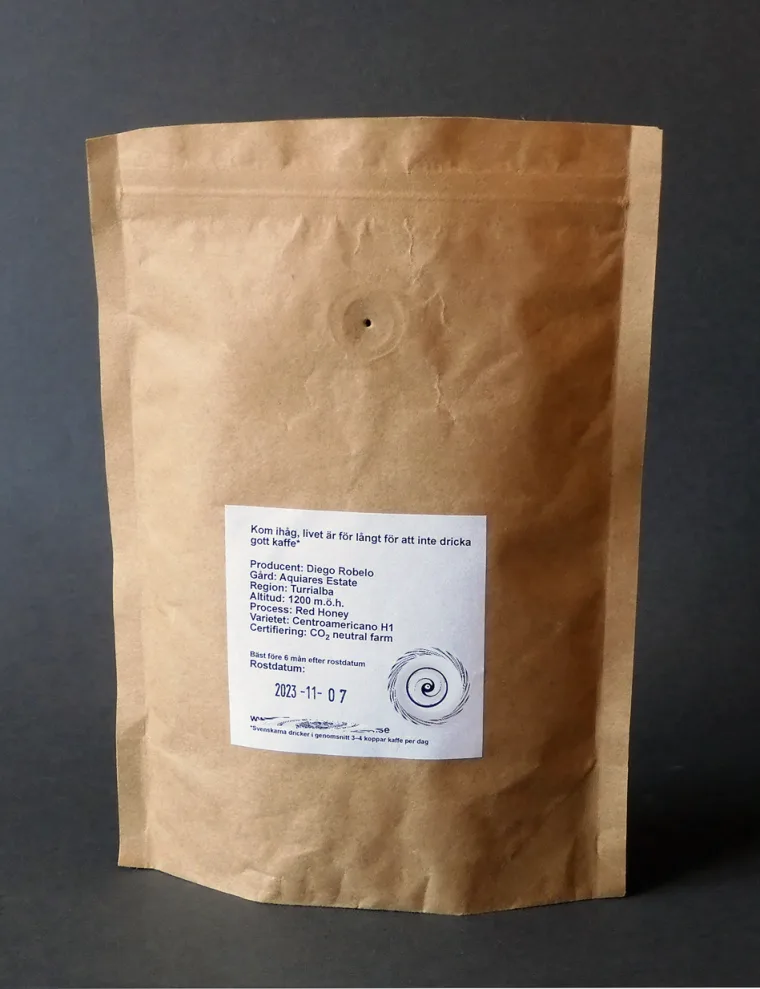
For the broader freshness workflow, use How Long Should Coffee Rest Before Espresso?.
What if the coffee is supposed to taste acidic?
Light roast often preserves more origin-driven acidity, florals and fruit character. The goal is not to remove all acidity. A balanced light-roast espresso can be distinctly bright and still taste sweet, structured and complete.
What you are trying to remove is the sensation of unfinished extraction: sharpness without sweetness, thin body, hollow mid-palate or a very short unpleasant finish.

FAQ
What is a good starting ratio for light roast espresso?
Start around 1:2, then test 1:2.5 or 1:3 if the cup stays sharp or concentrated. La Marzocco and Clive both support larger ratios as a common light-roast direction.
Should light roast espresso be ground finer than dark roast?
Often, in a conventional espresso recipe. Light roasts are less soluble and a finer grind can increase extraction. Stop going finer if flow becomes unstable or channeling increases.
What temperature should I use for light roast espresso?
For a conventional profile, around 200–205°F / 93–96°C is a strong starting range from current La Marzocco and Clive guidance. Machine-specific offsets still apply.
Should I always use pre-infusion for light roast?
No. It is a useful tool, not a requirement. Stabilize dose, ratio and grind first, then compare the machine-supported pre-infusion workflow.
Why is my light roast still sour at 30 seconds?
Thirty seconds does not guarantee enough extraction. Check the timing convention, ratio, grind, temperature, channeling and the coffee’s intended flavor profile.
References
- La Marzocco Home — Dialing in a Modern Espresso
- Clive Coffee — What’s on My Coffee Bag & Why It Matters
- Decent Espresso — Profile Guide
- Decent Espresso — Five Espresso Profiles for Light-Roasted Coffee
Evidence boundary: “light roast” is not one standardized solubility level, and advanced espresso profiles can deliberately break conventional temperature, pressure and time rules. Use the roaster’s recipe when available and change one variable at a time.