
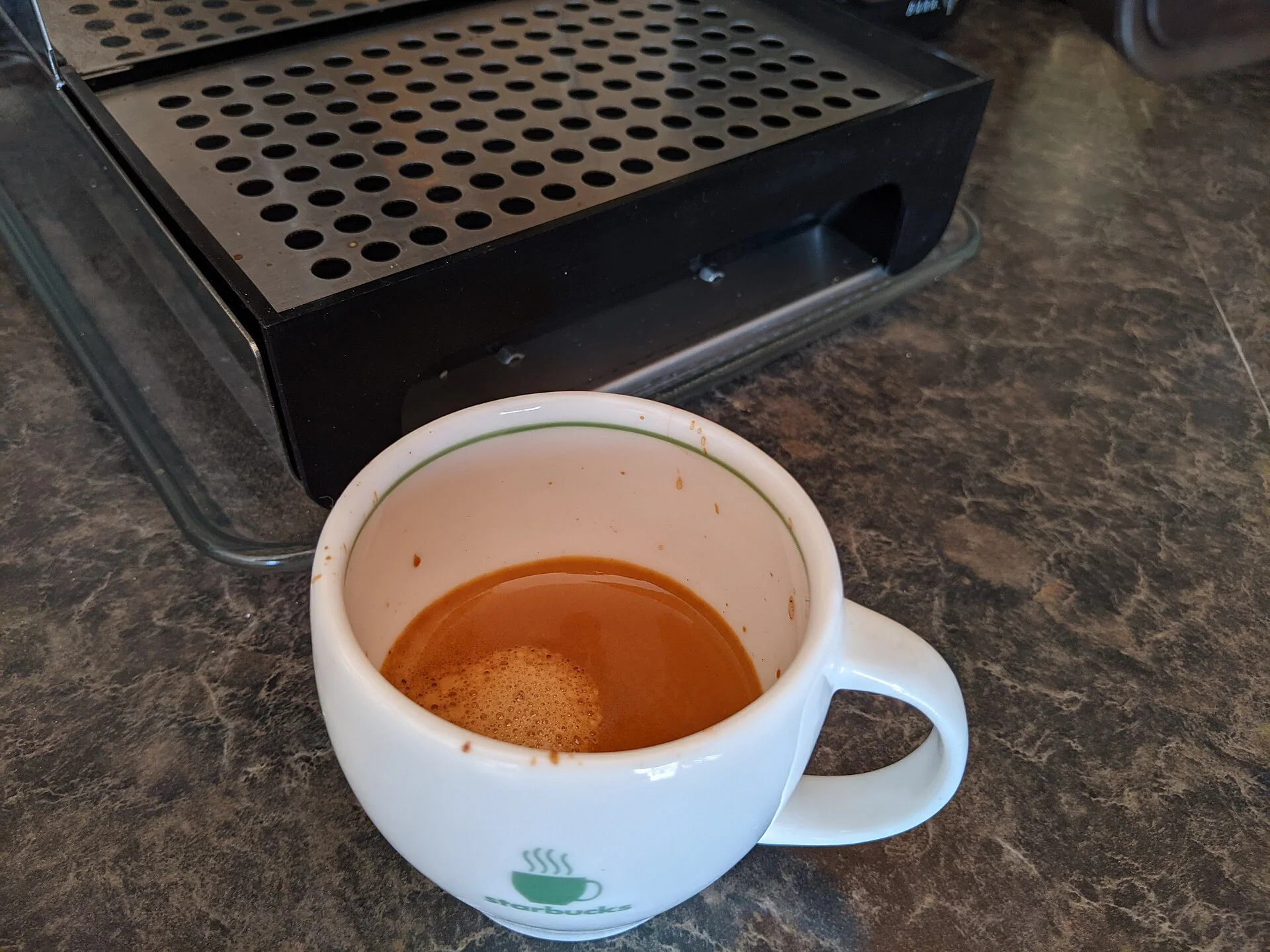
A 30-second espresso can still taste sour. Shot time is useful because it tells you something about flow and resistance, but it does not tell you whether the coffee reached a balanced extraction.

Why is 25–35 seconds not a guarantee of good espresso?
Because time is only one part of the recipe. La Marzocco's dial-in guidance starts with dose and beverage yield, then uses grind size to shape flow and shot time. La Marzocco uses 18 g in and 36 g out as an example for its Coffee Station setup, with a 25–35 second target. Treat that as a recipe for comparison; a different coffee or basket may need a different dose or ratio.
The same 30 seconds can describe very different shots
You stopped the shot early. The timer looks normal, but the recipe may still be too concentrated or under-extracted for that coffee.
Channeling can let some areas over-extract while others stay under-extracted. Average time hides the unevenness.
Dose, yield, grind and puck prep line up, so time supports the recipe instead of replacing it.
Start the timer at the same event for every comparison: pump activation or the first drops, according to the recipe you are following. Write down which one you used. Keep any pre-infusion setting unchanged. The same shot can show different times when one timer starts with the pump and another starts at the first drops.

What should you lock before changing the grind?
Start with a repeatable recipe. Weigh the dry dose, weigh the espresso yield and keep both the same while you make the first grind adjustment. That makes the next shot comparable to the previous one.
A cleaner dial-in order
If you change grind, dose, yield and temperature together, you may improve the cup but you will not know why. That makes the next bag just as hard to dial in.

If the dose does not suit the basket, correct that before starting the comparison. Use the dose-or-grind guide to separate that correction from a grind test. A coffee scale lets you check both weights before buying other tools.

If the shot is sour, should you always grind finer?
A small finer grind adjustment is a useful first test when the shot is flowing too quickly or tastes thin and sharply sour. Breville's extraction tutorials and Clive Coffee's guide both use finer grind as the first correction for fast, sour espresso.
But “sour” is not a perfect diagnosis by itself. Some light-roasted coffees are naturally bright and fruit-driven. A coffee can also taste sharp because the brew path is too cool, the yield is too short, or water chemistry is exaggerating acidity.

Can a longer yield fix a sour shot even when time is already normal?
Yes, sometimes. If dose stays fixed, allowing more beverage yield gives the water more opportunity to extract soluble material. That can reduce a sharp under-extracted impression without forcing you to chase a slower timer.
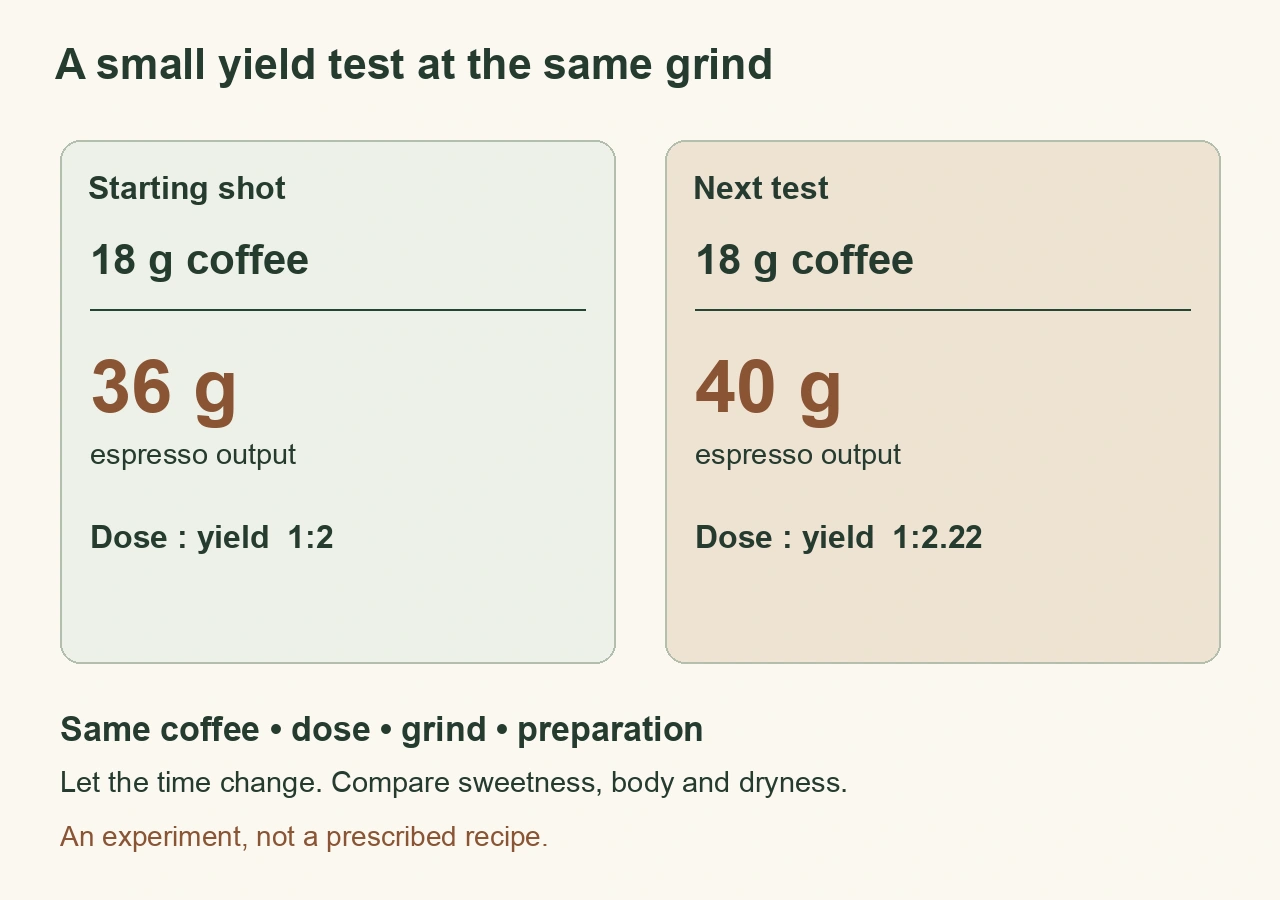
Keep the same dose and grind, increase the output modestly, then taste again. For example, compare 18 g in and 36 g out with 18 g in and 40 g out. The second shot is an experiment, not a prescribed recipe. Let its time change as you reach the new output weight. If it tastes sweeter, the original yield may have been too short for that coffee.
Stop increasing yield if the coffee becomes thinner, more bitter or drying.
Can temperature make a 30-second shot taste sour?
Yes. A machine can hit the expected flow time while the actual brew path is still cooler than intended. Check the warm-up routine when the first shot is sour but later shots taste more balanced.
Temperature should usually come after you have stabilized dose, yield, grind and puck prep. If those variables repeat but a light roast still tastes aggressively sharp, a slightly higher brew temperature can be a reasonable next test.
If you use a Gaggia Classic, the machine-specific warm-up issue is covered separately in How Long Should You Preheat a Gaggia Classic?.
Use the warm-up procedure and user-accessible temperature controls specified for your machine. Some machines have no adjustable brew-temperature setting. On those, keep the preparation routine consistent before changing the recipe; do not copy a PID temperature from a different machine or adjust an internal thermostat to correct one sour shot.

What does channeling taste like?
Channeling can occur even when shot time falls within your usual range. Water finds an easy path through part of the puck while other areas receive less flow. The cup can taste thin, hollow, sour and bitter at the same time because different parts of the puck extracted differently.
Do not diagnose channeling from taste alone. Look at puck prep, flow behavior and repeatability. A bottomless portafilter can make obvious jets or side sprays easier to see, but even a spouted portafilter can produce uneven extraction.

Could the coffee itself be the reason?
Yes. Roast level, processing, origin, freshness and the roaster's intended recipe all affect how acidity presents. A light, fruit-forward coffee can taste bright even when it is well extracted. Compare its acidity with its sweetness, body and finish before changing the recipe.
If the coffee is very fresh, it can also behave differently during dial-in. If you are unsure whether roast age is part of the problem, use How Long Should Coffee Rest Before Espresso?.
Water can shift perceived acidity too. If you are using distilled or very low-mineral RO water, see Can You Use Distilled or RO Water in an Espresso Machine?.
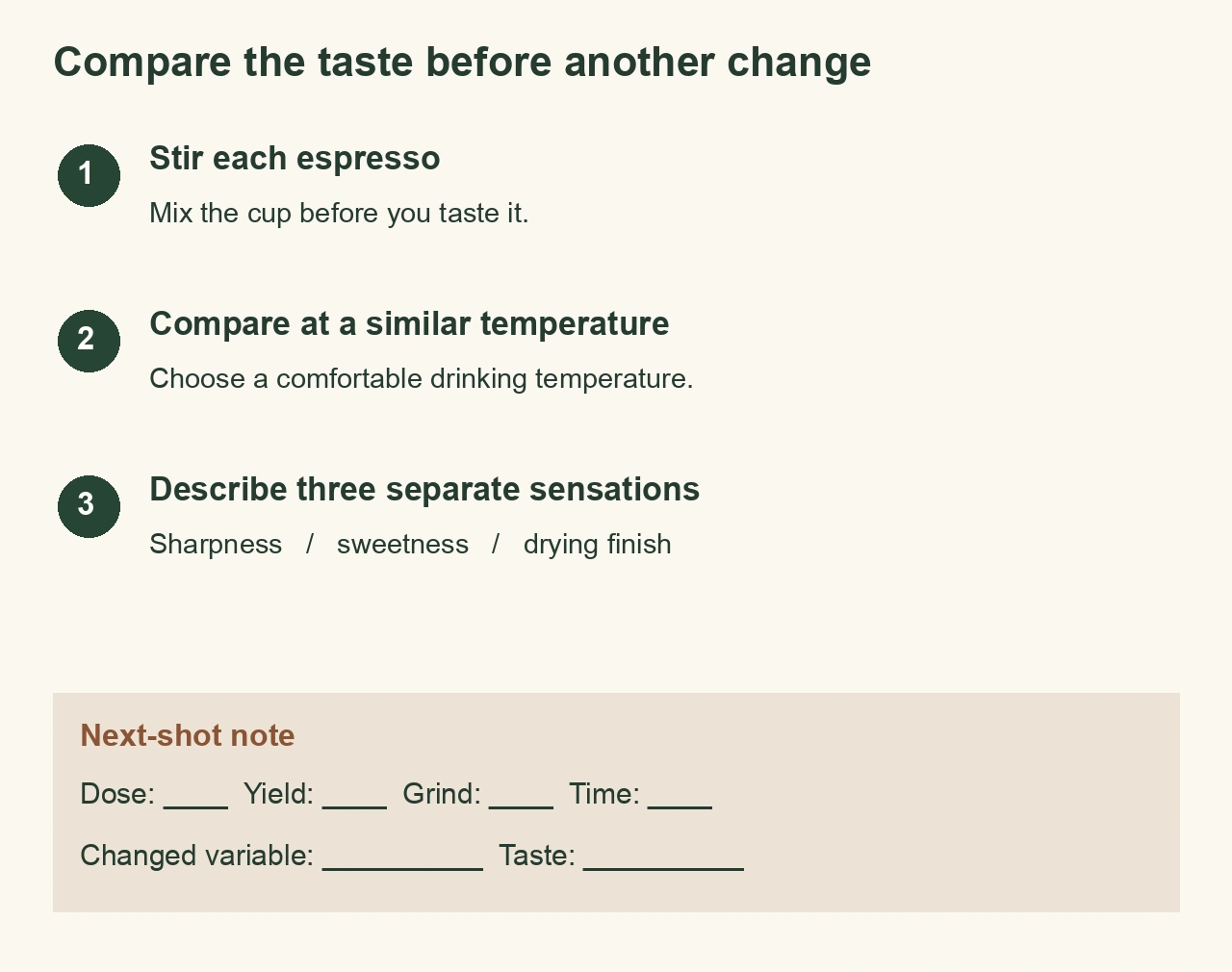
Stir each espresso before tasting and compare at a similar comfortable drinking temperature. Write separate notes for sharpness, sweetness and a drying finish. A cup can be bright and sweet; a drying sensation is a different observation. A simple home tasting comparison can help you name the difference before changing another setting.
What should you change first if the timer looks right?
| What you observe | First test | Keep fixed |
|---|---|---|
| 30 s shot, sour and yield is very short | Increase yield modestly | Dose and grind |
| 30 s shot, sour and flow looked fast early | Grind slightly finer | Dose and target yield |
| 30 s shot, sour only on the first shot | Improve warm-up consistency | Recipe |
| 30 s shot, sour + bitter / inconsistent | Improve puck prep and check channeling | Dose, yield and temperature |
| 30 s shot, bright but clean and sweet | Do not “fix” acidity just because it is noticeable | Keep the recipe; compare the acidity with the roaster’s tasting notes |

FAQ
Is 30 seconds the ideal espresso time?
It is a common starting zone, not a universal target. La Marzocco uses roughly 25–35 seconds as a useful normal-range example while still defining the recipe by dose and yield first.
Why does my espresso taste sour at 18 g in, 36 g out?
The ratio may be a good starting point but still wrong for that coffee or setup. Test grind, puck prep and temperature. If the coffee is light roasted, a slightly longer yield may also improve balance.
Should I grind finer or increase the yield first?
If the shot is obviously fast or thin, grind finer first. If the shot time and flow already look reasonable but the cup still tastes short and sharp, test a modestly longer yield while keeping dose and grind fixed.
Can sour espresso be caused by low temperature?
Yes. A cooler brew path can reduce extraction even if the shot time looks normal. Stabilize the machine and recipe before using temperature as the next variable.
Can channeling make espresso both sour and bitter?
Yes. Uneven flow can under-extract some areas and over-extract others, which can create a confusing mixture of sharpness, bitterness and hollowness.
References
- La Marzocco — Dialling-In with Coffee Station
- La Marzocco — Dialing in a Traditional Espresso
- Breville — Ideal Coffee Extraction
- Breville USA — Complete extraction guide
- Clive Coffee — Why Is My Espresso Sour or Bitter? (May 2026)
Cover photo: Espresso shot in a cappuccino cup by massage-techniques, CC BY 2.0.